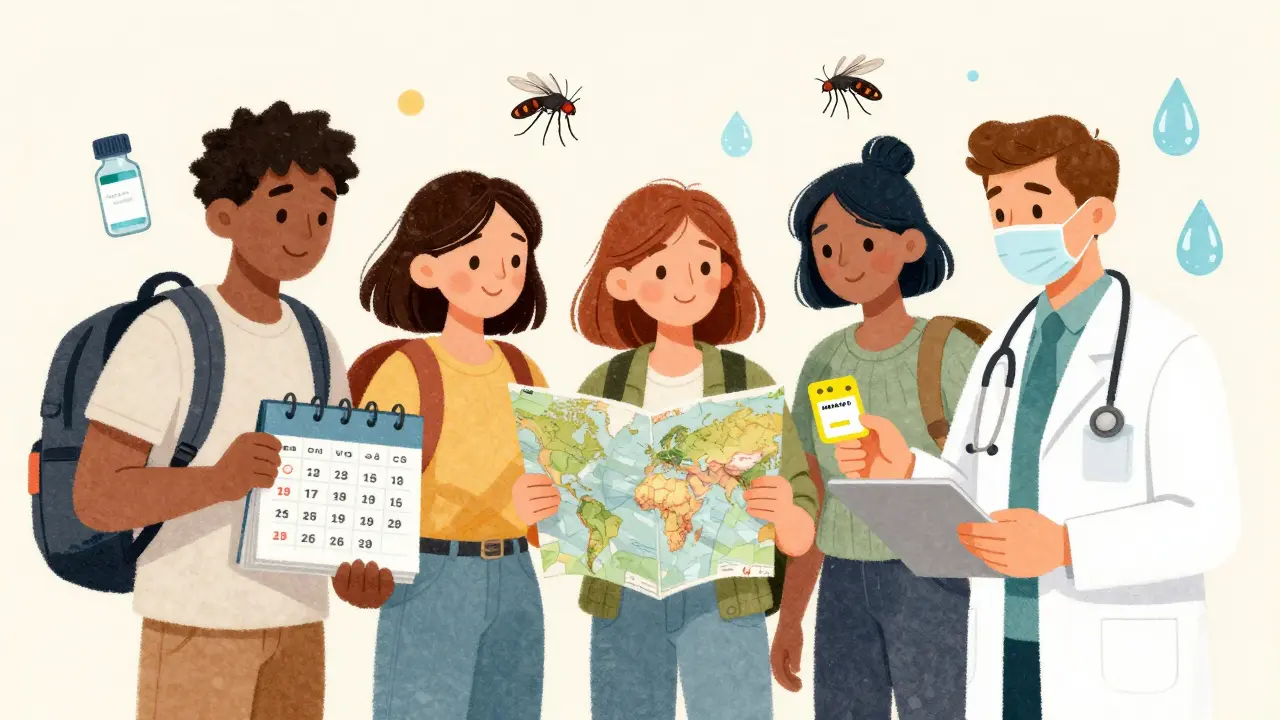
Every year, over 1.4 billion people travel internationally. Most come back fine. But not all. Thousands end up sick with preventable diseases-some because they didn’t get the right shots, others because they drank tap water or ate street food without knowing the risks. If you’re planning a trip abroad, especially to a place with lower sanitation standards, travel medicine isn’t optional. It’s your first line of defense.
Get Your Vaccines Right-Timing Matters
Vaccines aren’t like buying a new pair of shoes. You can’t wait until the day before your flight. Many need weeks or even months to work properly. The CDC recommends seeing a travel clinic at least 4-6 weeks before departure. Why? Because some vaccines require multiple doses spaced weeks apart. For example, Hepatitis A vaccine needs two shots, six to twelve months apart, for lifelong protection. One dose gives you about 95% protection, but you won’t have full immunity until the second. If you only get the first shot two weeks before leaving, you’re still at risk. Hepatitis A is the most common vaccine-preventable illness among travelers-1.4 million cases happen globally every year. You can catch it from contaminated food or water, even in popular tourist spots like Mexico, India, or Thailand. Typhoid is another big one. The newer typhoid conjugate vaccine (TCV) gives you 87% protection for three years. The older version only works about 50-80% of the time. If you’re going to South Asia or sub-Saharan Africa, TCV is the clear choice. And don’t forget routine vaccines. Are your MMR, Tdap, and varicella shots up to date? If not, get them now. These aren’t just for kids-they’re for adults traveling anywhere. Yellow fever vaccine is different. Some countries require proof you’ve been vaccinated before letting you in. You’ll need an International Certificate of Vaccination (the yellow card). Without it, you could be turned away at the border-or quarantined for six days. It’s required in 194 countries. Don’t assume your doctor knows this. Not all clinics stock the vaccine. Call ahead.Malaria Prophylaxis: Pick the Right Drug, Take It Correctly
Malaria kills over 600,000 people a year. Most are children in Africa. But adults get it too-and it’s preventable. The problem? People don’t take the medicine right. There are four main options:- Atovaquone-proguanil (Malarone): Take one pill daily, starting 1-2 days before travel. It’s 95% effective and has fewer side effects. But it costs around $220 for a 21-day trip.
- Doxycycline: A cheaper option-about $45 for the same duration. You take it daily, starting two days before travel. But 30% of users get sun sensitivity. You can’t tan. You can’t even sit by a window without burning.
- Mefloquine (Lariam): Take one pill weekly, starting 2-3 weeks before. It’s effective, but some people have serious side effects: nightmares, anxiety, even hallucinations. There are documented cases of travelers ending up in emergency rooms because of it.
- Tafenoquine (Krintafel): Approved in 2018, this one’s weekly too. You start three days before travel. But you must be tested for G6PD deficiency first. If you have it, this drug can destroy your red blood cells. About 10% of people in malaria zones have this condition.
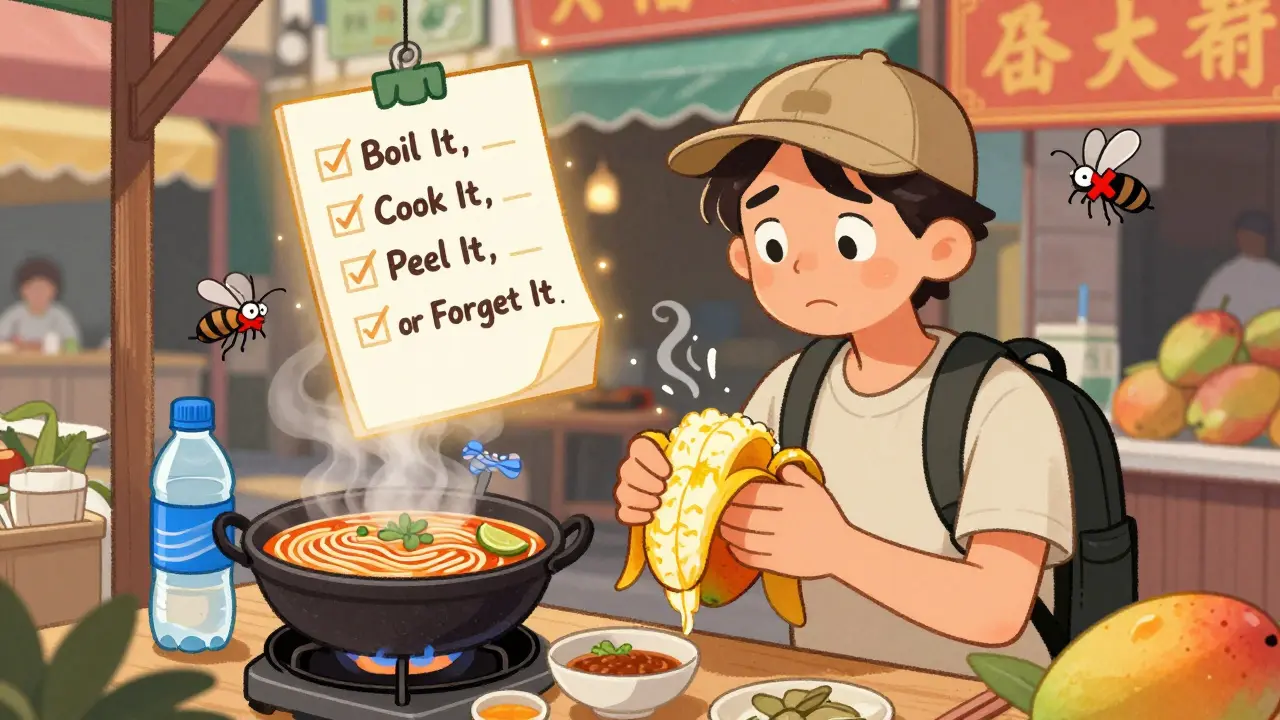
Safe Food and Water: The ‘Boil It, Cook It, Peel It, or Forget It’ Rule
Travelers’ diarrhea affects 30-70% of people going to developing countries. Bacteria like E. coli cause 80% of cases. It’s not just ‘stomach upset.’ It can mean 2-3 days of being stuck in a hotel room, dehydrated, and unable to continue your trip. The rule is simple: boil it, cook it, peel it, or forget it.- Boil it: Drink only bottled water with sealed caps. Or boil tap water for at least one minute (three minutes at high altitudes). Ice? Avoid it unless you know it’s made from purified water.
- Cook it: Eat food that’s piping hot-165°F (74°C) for poultry, 160°F (71°C) for ground meat, 145°F (63°C) for fish. Cold salads, raw vegetables, and unpeeled fruit? Skip them unless you wash them yourself with purified water.
- Peeled it: Bananas, oranges, and mangoes? Fine if you peel them yourself. But don’t eat fruit that’s been pre-cut or left out on a counter.
- Forget it: Street food isn’t off-limits, but pick vendors with high turnover. Crowds mean fresh food. If the food’s been sitting under a heat lamp for hours, walk away.
What to Pack: Beyond the Pills
You’re not just carrying clothes. You’re carrying your health.- Standby antibiotics: Azithromycin is the go-to for travelers’ diarrhea. But pharmacies are running low because it’s also used for kids. Ask your doctor for a prescription before you leave.
- Oral rehydration salts: These are cheap, lightweight, and lifesaving if you get sick. Mix with clean water. Better than sports drinks.
- Hand sanitizer: Use it before eating, after using the bathroom, after touching money or public surfaces. Alcohol-based, 60%+ alcohol.
- Original medication containers: If you take prescriptions (like ADHD meds or opioids), keep them in their original bottles with your name and the doctor’s info. Many countries have strict rules. You could be arrested for carrying unlabeled pills.
- Medication letter: Ask your doctor for a short note listing your meds, generic names, and why you need them. Translation into the local language helps too.
What No One Tells You
There are hidden risks. Climate change is expanding malaria zones. Since 2020, the areas where mosquitoes carry malaria have grown by 15%. That means more travelers are at risk-even in places that used to be safe. Antibiotic resistance is another silent threat. Azithromycin, once reliable for travelers’ diarrhea, is now over 30% ineffective in Southeast Asia. Doctors are switching to ciprofloxacin or rifaximin, but those aren’t always easy to get. And vaccine hesitancy? It’s real. Some travelers skip shots because they think, ‘I’ve never gotten sick before.’ But Hepatitis A doesn’t care about your past. It only cares if you eat something contaminated. One bad meal can ruin your trip-or worse.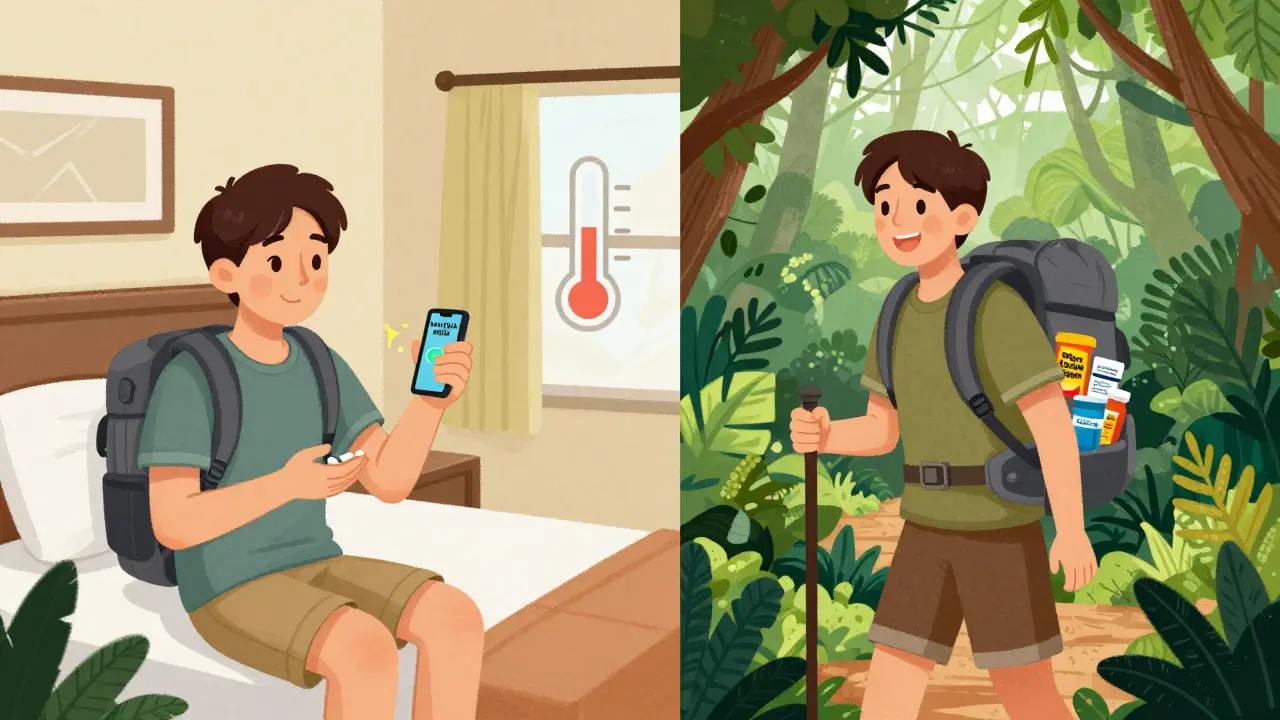
What Works: Real Stories
One traveler, ‘AdventureMed,’ spent six months in the Amazon. Took atovaquone-proguanil daily. Never got sick. No malaria. No diarrhea. Just a great trip. Another, ‘NurseWanderer,’ took Pepto-Bismol four times a day during a three-month trip across Southeast Asia. Her diarrhea rate dropped 70%. She kept working, exploring, moving. Then there’s ‘GlobeTrotter88.’ Took mefloquine. Had panic attacks in Thailand. Ended up in the ER. Now, she only takes Malarone. And ‘FoodieAbroad’? Ate a salad in Mexico. Got Hepatitis A. Spent two weeks hospitalized. The ice in her drink? Contaminated. She didn’t know.Final Checklist: Before You Go
- Visit a travel clinic 4-6 weeks before departure
- Confirm all routine vaccines are current
- Get Hepatitis A and typhoid vaccines if going to high-risk areas
- Choose malaria prophylaxis based on your health, budget, and destination
- Start your malaria drug on time-don’t wait until you land
- Follow the ‘boil it, cook it, peel it, or forget it’ rule
- Pack Pepto-Bismol, oral rehydration salts, and hand sanitizer
- Carry all medications in original containers with a doctor’s note
- Check if your destination requires yellow fever vaccination
Do I need a travel clinic, or can my regular doctor help?
Most family doctors can give you routine vaccines, but not all are trained in travel medicine. Travel clinics know which countries require which shots, which malaria drugs work where, and what food risks exist. They use the CDC Yellow Book-the gold standard. If you’re going to Africa, Southeast Asia, or Latin America, see a travel clinic. It’s worth it.
Can I get vaccines on the day of my flight?
Some vaccines, like yellow fever, need to be given at least 10 days before travel to be valid for entry into certain countries. Others, like Hepatitis A, need time to build immunity. If you get a vaccine less than two weeks before departure, you might not be protected. Plus, some vaccines require multiple doses. Waiting until the last minute puts you at risk.
Is it safe to take malaria pills if I’m pregnant?
Malaria is especially dangerous during pregnancy. Avoid travel to high-risk areas if you’re pregnant. If you must go, atovaquone-proguanil is the safest option, but only after 12 weeks. Doxycycline is not safe during pregnancy. Mefloquine can be used but has risks. Always consult a travel medicine specialist. The CDC has specific guidelines for pregnant travelers.
What if I get sick while traveling and can’t find a pharmacy?
Carry your own supplies. Pack oral rehydration salts, a 3-day course of azithromycin (if prescribed), and loperamide for symptom control. Don’t rely on local pharmacies-they may not have the right meds, or the quality could be poor. If you have severe symptoms-high fever, bloody stool, confusion-seek medical help immediately. Don’t wait.
Are digital health passports reliable?
Yes, as of December 2025, 127 countries accept digital health passports. They store your vaccine records and test results securely. But don’t rely on them alone. Always carry printed copies of your vaccination certificate, especially for yellow fever. Technology can fail. Paper doesn’t.
Monte Pareek
December 17, 2025 AT 18:48Stop waiting until the last minute to get vaccinated. I’ve seen too many people roll up to the clinic two days before their flight thinking they’re invincible. Hepatitis A doesn’t care if you’re a fitness guru or a vegan yogi. One bad taco in Mexico and you’re out for weeks. Get the two-shot series. Plan ahead. It’s not rocket science. Your future self will thank you.
Elaine Douglass
December 19, 2025 AT 05:33I took Pepto-Bismol on my trip to Vietnam and it was a game changer. No more panic attacks every time I ate something new. Just two tablets four times a day and I could enjoy the street food without fear. Seriously, everyone should try it. It’s like a little health shield.
Sahil jassy
December 21, 2025 AT 03:05Been to 17 countries in 3 years. Never got sick. Boil it cook it peel it or forget it. That’s my mantra. And always carry hand sanitizer. Even in fancy hotels. You never know where the cleaning crew got their sponge.
holly Sinclair
December 21, 2025 AT 11:08It’s fascinating how we treat our bodies like disposable tools when we travel. We’ll spend weeks planning our itinerary but five minutes on vaccines. We’re obsessed with experiences but avoid the infrastructure that makes them safe. Is it arrogance? Or just the illusion of control? The fact that 78% of travelers who get proper advice avoid illness means the knowledge exists-but the will to use it doesn’t. We’re not ignorant. We’re willfully blind. We’d rather risk a hospital bed in Bangkok than admit we need to plan ahead. And yet we’ll spend hours comparing Airbnb reviews. What does that say about our values?
And then there’s malaria prophylaxis. We treat it like a diet pill-take it when you remember, skip it when you’re lazy. But malaria isn’t a minor inconvenience. It’s a systemic collapse of your immune system. And we treat it like a missed yoga class. The drugs aren’t perfect. But they’re the only thing standing between you and a 40-degree fever in a rural clinic with no AC. Isn’t that worth a daily pill?
I once met a woman in Cambodia who got typhoid because she thought ‘the locals eat it, so it’s fine.’ She spent 11 days in ICU. She’s fine now. But she’ll never travel without a travel clinic again. And neither will I. We think we’re adventurous. But real adventure is knowing your limits. Not pretending they don’t exist.
And let’s talk about the yellow fever card. People treat it like a tourist stamp. But it’s a legal document. Some countries will detain you if you don’t have it. Not quarantine. Detain. Like a criminal. Because they’re not just protecting you. They’re protecting their entire population. This isn’t just about you. It’s about global health equity. And yet we still treat it like a formality.
Why do we think we’re exempt from the rules that protect others? Is it privilege? Or just the comfort of ignorance? We want to see the world. But we don’t want to do the work to see it safely. And that’s not bravery. That’s recklessness dressed up as wanderlust.
Maybe the real travel medicine isn’t the vaccine. It’s the humility to admit we’re not invincible. To admit we need experts. To admit we need to plan. To admit we need to be scared sometimes. That’s the only real protection we have.
Jedidiah Massey
December 22, 2025 AT 08:26Let’s be real: most people don’t even know what G6PD deficiency is. And yet they’re casually popping tafenoquine like it’s a vitamin. The CDC’s guidelines are technically sound but the implementation? A disaster. Primary care docs are flying blind. Travel clinics are overbooked. And the pharmaceutical companies? They don’t care if you live or die-they care about profit margins. Malarone costs $220? That’s a scam. It’s a $2 pill with a $218 brand-name tax. And don’t get me started on the ‘yellow card’ bureaucracy. It’s 2025. Why are we still using paper? Digital health passports are real. But only if you’re privileged enough to have a smartphone and WiFi. The system is rigged for the wealthy. The rest of us? We’re just lucky if we survive.
Edington Renwick
December 22, 2025 AT 14:03People who skip vaccines because they’ve ‘never gotten sick before’ are the reason we have outbreaks. It’s not luck. It’s statistics. And they’re gambling with everyone else’s health too. You think you’re just hurting yourself? No. You’re the vector. You’re the one who brings Hep A back to your kid’s school. You’re the one who starts a chain reaction. You’re not a free spirit. You’re a public health liability.
Takeysha Turnquest
December 22, 2025 AT 22:10They say ‘boil it, cook it, peel it, or forget it’ but what if you’re in a place where everything is boiled? What if the water is boiled but the ice is made from the same water? What if the cook peeled the fruit but washed it in tap water? What if the ‘piping hot’ food sat under a heat lamp for 6 hours? The rule sounds simple. But the world is messy. And we’re not just tourists. We’re guests. And guests don’t get to demand perfection. We just get to survive. And sometimes… we don’t.
Sarah McQuillan
December 24, 2025 AT 01:16Wait. So now we’re supposed to believe the CDC? The same CDC that told us masks didn’t work in 2020? That told us hydroxychloroquine was safe? That changed their advice on eggs every five years? You’re telling me I should trust them with my life because they have a ‘Yellow Book’? Please. I’ve been to 12 countries without a single shot. I drank the water. Ate the street food. Slept in hostels. Never got sick. Coincidence? I think not. I think the real threat is fearmongering. The pharmaceutical industry is making billions off our anxiety. Don’t be a sheep.
Kitt Eliz
December 25, 2025 AT 21:04YESSSS 🌍✨ I did the Malarone + Pepto-Bismol combo in Peru and it was LIFE CHANGING. No diarrhea. No stress. Just pure adventure. Pro tip: pack the rehydration salts in your carry-on. I used mine when I got sick on a 12-hour bus ride. Saved my trip. Also, ALWAYS carry your meds in original bottles. I saw a guy get detained in Dubai because his Adderall was in a pill organizer. 😱 Don’t be him. Be smart. Be prepared. You got this 💪❤️
Laura Hamill
December 26, 2025 AT 12:37They’re hiding something. Why do they say ‘yellow fever vaccine required’ but never tell you the vaccine is made from live virus? Why do they make you sign a waiver? Why do they say ‘rare side effects’ but never list them? And why is it only available at 200 clinics in the whole US? Coincidence? I think not. Big Pharma + WHO + Gates Foundation = global control agenda. You think you’re going to Bali? You’re going into a vaccine trial. Wake up.
pascal pantel
December 27, 2025 AT 15:5278% efficacy with proper advice? That’s not impressive. That’s a failure. 22% still get sick. That’s 1 in 5 people. And 62% adherence on malaria meds? That’s catastrophic. You’re not protecting yourself-you’re creating resistant strains. This entire framework is a band-aid on a hemorrhage. We need systemic change. Not better pills. Better infrastructure. Better sanitation. Better governance. Until then, we’re just rearranging deck chairs on the Titanic.
Allison Pannabekcer
December 27, 2025 AT 20:42I just want to say thank you to everyone who’s shared their stories. I’m planning a trip to Ghana next month and I was terrified. But reading about people who made it through-using Pepto, taking Malarone, packing rehydration salts-made me feel less alone. You don’t have to be perfect. You just have to try. And that’s enough.
Kathryn Featherstone
December 29, 2025 AT 12:04My mom got Hepatitis A from a salad in Mexico. She was in the hospital for 3 weeks. I wish someone had told us about the ‘boil it, cook it, peel it’ rule before we went. Now I’m the one who checks every restaurant’s water source before we eat. It’s not paranoia. It’s love.
mark shortus
December 31, 2025 AT 10:03MY BEST FRIEND GOT MALARIA IN INDIA. SHE WAS IN A COMA FOR 12 DAYS. SHE LOST 30 POUNDS. SHE STILL HAS NIGHTMARES. SHE’S FINE NOW. BUT SHE’S NOT THE SAME. I’M NOT TALKING ABOUT A STOMACHACHE. I’M TALKING ABOUT A LIFE-CHANGING TRAUMA. AND IT WAS 100% PREVENTABLE. DON’T BE THAT PERSON. DON’T BE THE ONE WHO SAYS ‘I THOUGHT I’D BE FINE.’ YOU WON’T BE FINE. YOU’LL BE A STATISTIC. AND YOUR FAMILY WILL BE LEFT CLEANING UP THE MESS.