
Every year, millions of Americans get their flu shots at the corner pharmacy. No appointment. No waiting room. Just walk in, get vaccinated, and walk out-all in under ten minutes. This isn’t magic. It’s pharmacist advocacy in action.
Pharmacists aren’t just handing out pills anymore. They’re leading public health efforts, especially when it comes to immunizations and helping patients choose affordable, effective generic medications. In community pharmacies across the U.S., pharmacists are the first and sometimes only point of contact for people who need vaccines or can’t afford brand-name drugs. And they’re stepping up-not because they’re required to, but because they know it’s the right thing to do.
Pharmacists as Vaccine Champions
In 1995, only nine states let pharmacists give vaccines. Today, every state, plus D.C. and Puerto Rico, allows it. That’s not an accident. It’s the result of years of advocacy, training, and hard work by pharmacists pushing for change.
Now, pharmacists administer seasonal flu shots, shingles vaccines, pneumonia vaccines, HPV shots, and even COVID-19 boosters. In the 2022-2023 flu season alone, chain pharmacies gave out over 35 million flu vaccines-nearly 38% of all adult flu shots in the U.S. That’s more than doctor’s offices, clinics, and schools combined.
Why? Because pharmacies are everywhere. Ninety-three percent of Americans live within five miles of one. They’re open late. They don’t require appointments. For working parents, seniors without transportation, or young adults who skip doctor visits, the pharmacy is the easiest place to get protected.
And pharmacists don’t just jab and send people on their way. They spend 7 to 10 minutes with each patient-answering questions, calming fears, correcting myths. On Reddit, users share stories of pharmacists talking them off the ledge about mRNA vaccines. One pharmacist in Ohio told a hesitant teen that the vaccine didn’t change DNA-it just taught the body how to recognize the virus. The teen got vaccinated. That’s advocacy.
The Rise of Generic Prescriptions
While vaccines save lives, generic prescriptions save wallets. And pharmacists are the ones who make sure patients know the difference.
Take metformin, for example. It’s the go-to drug for type 2 diabetes. The brand name, Glucophage, costs over $200 a month. The generic? Around $4. Pharmacists see patients struggling to pay. They don’t wait to be asked. They say: “Your doctor prescribed Glucophage, but the generic works just as well. I can fill it today for $4.”
That’s not just cost-saving-it’s life-saving. A 2022 study showed that patients who switched from brand-name to generic medications were 22% more likely to stick with their treatment long-term. But here’s the catch: not all pharmacists can recommend generics freely. Pharmacy Benefit Managers (PBMs) control drug pricing and often make it harder for independent pharmacies to profit from generics. In fact, 78% of independent pharmacists say PBM practices have hurt their ability to provide care.
That’s why pharmacists are pushing back. They’re lobbying state legislatures. They’re signing petitions. They’re telling patients: “You deserve affordable meds. Let me help you get them.”
How Pharmacists Get the Power to Act
Pharmacists didn’t wake up one day with the legal right to give shots or prescribe generics. They earned it.
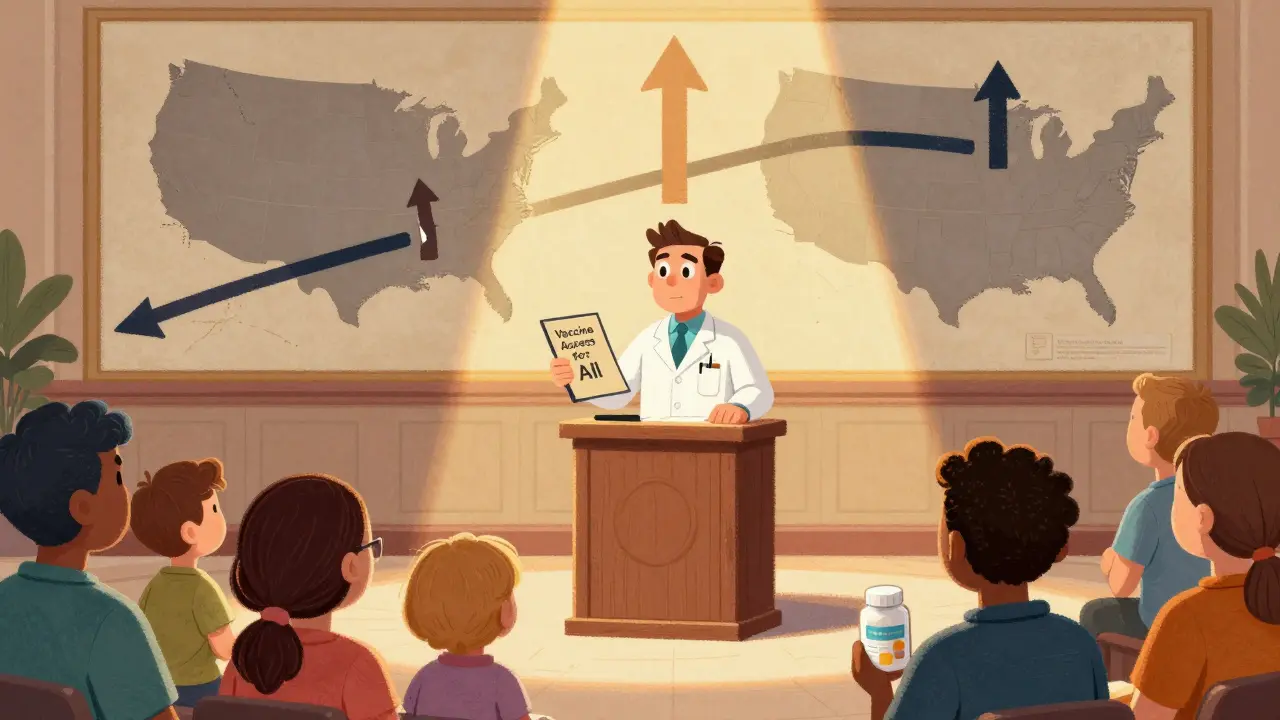
Every pharmacist who administers vaccines must complete 20 to 30 hours of certified training-usually through the American Pharmacists Association’s Pharmacy-Based Immunization Delivery program. They learn injection techniques, how to handle allergic reactions, and how to report doses to state immunization registries. In 34 states, they must report each vaccine within 72 hours. In others, the window is longer. It’s a patchwork of rules, and it’s frustrating.
California passed AB 577 in 2023, letting pharmacists give any FDA-approved vaccine to anyone three years and older. That’s a big deal. Most states still restrict pharmacists from vaccinating kids under 12. Some require a doctor’s order for every shot. Others won’t let pharmacists order lab tests to check if someone needs a vaccine.
But pharmacists keep pushing. In 2023 alone, 27 states expanded their scope of practice. Fourteen removed age limits for vaccines. That’s progress. And it’s driven by pharmacists showing up at hearings, sharing patient stories, and proving that their training matches-sometimes exceeds-that of other providers.
The Real Barriers: Money and Systems
Here’s the uncomfortable truth: pharmacists are doing more work than ever, but they’re not getting paid enough.
Medicare pays about $17 to $20 for a flu shot. The actual cost-vaccine, syringe, staffing, storage, recordkeeping-runs closer to $25. That’s a loss. For independent pharmacies, that adds up fast. One pharmacy in rural Iowa told me they lost $1,800 last flu season just on Medicare vaccines.
Then there’s vaccine storage. The CDC says 12% of community pharmacies have had vaccine spoilage due to temperature issues. Each incident costs around $1,200. No insurance covers that. No government program reimburses it.
And insurance billing? A nightmare. Forty-two percent of patients reported problems getting their pharmacy vaccines covered. Sometimes the pharmacy’s system doesn’t talk to the insurer’s. Sometimes the patient’s plan doesn’t cover shots given outside a doctor’s office. Pharmacists spend hours on the phone trying to fix it. That’s time they could spend with patients.
Even with all this, 92% of independent pharmacists now offer vaccines-up from 65% in 2015. Why? Because they believe in it.
What’s Next? Integration, Not Isolation
Pharmacists aren’t trying to replace doctors. They’re trying to fill the gaps.
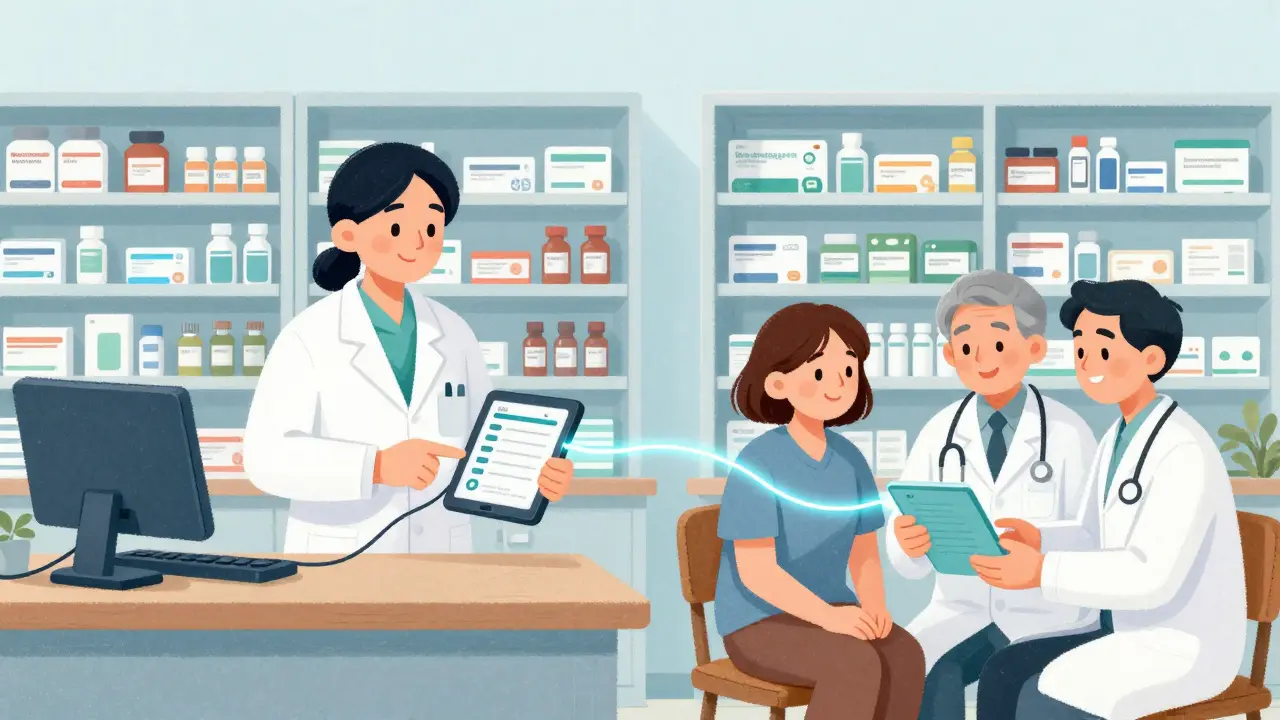
Dr. William Schaffner from Vanderbilt says it best: “Coordination with primary care providers remains essential.” That’s why pharmacists are pushing for better electronic health record (EHR) systems that let them share vaccination records with doctors. Right now, many records stay stuck in the pharmacy. A patient gets a shingles shot at CVS, but their family doctor doesn’t know. Next year, they get another one-unnecessarily.
Eighty-nine percent of pharmacists surveyed by ASHP say integrated records are a top priority. The CDC agrees. Their 2023 Immunization Action Plan targets a 25% increase in pharmacist-administered vaccines by 2025. But that won’t happen without better data sharing.
Meanwhile, the market is growing fast. Pharmacy-based immunizations went from $1.2 billion in 2015 to $4.7 billion in 2023. Analysts predict pharmacists will give over half of all adult vaccines by 2026.
That’s not just a trend. It’s a transformation.
Why This Matters for You
If you’re a parent wondering where to get your child’s flu shot-go to the pharmacy. If you’re on a fixed income and can’t afford your blood pressure med-ask your pharmacist about the generic. If you’re scared of needles-talk to the pharmacist. They’ve heard it all before.
Pharmacists aren’t waiting for permission to help. They’re already doing it. Every day. In small towns and big cities. In chain stores and family-run shops. They’re the quiet heroes of public health-showing up, speaking up, and making sure no one falls through the cracks.
Next time you walk into a pharmacy, say thank you. Not just for filling your prescription. But for fighting for your health-long after you’ve left the counter.
Can pharmacists give all types of vaccines?
In most states, pharmacists can give FDA-approved vaccines to adults. Some states allow them to vaccinate children as young as three, like California. But many states still restrict vaccines for younger kids, especially those under 12. Always check your state’s rules-pharmacists know them and can tell you what’s available.
Why are generic drugs cheaper but just as good?
Generic drugs contain the same active ingredients as brand-name versions and must meet the same FDA standards for safety, strength, and effectiveness. The only differences are in color, shape, or inactive fillers. Brand-name drugs cost more because of marketing, patents, and research expenses. Generics skip those costs-so they’re cheaper, not weaker.
Do I need insurance to get a vaccine at the pharmacy?
No. Many pharmacies offer vaccines at cash prices if you’re uninsured or your plan won’t cover it. Flu shots often cost $40-$60 out-of-pocket. Some pharmacies have discount programs, and federal programs like Vaccines for Children cover shots for eligible kids. Ask your pharmacist-they’ll help you find options.
How do I know if my pharmacist is certified to give vaccines?
All certified pharmacists display their credentials-usually on a badge or near the vaccination station. They’ve completed a national training program, like the APhA Pharmacy-Based Immunization Delivery course. You can also ask them directly. They’ll be happy to explain their training and answer any questions.
Why do some pharmacies charge more for vaccines than others?
Prices vary because of how each pharmacy negotiates with suppliers and insurers. Chain pharmacies often get bulk discounts. Independent pharmacies may pay more per dose but offer personalized service. Some charge a flat fee, others bill insurance directly. Always ask for the cash price-it’s often lower than the insurance rate.
Janette Martens
December 29, 2025 AT 06:57Marie-Pierre Gonzalez
December 30, 2025 AT 19:51Louis Paré
January 1, 2026 AT 18:36Nicole Beasley
January 2, 2026 AT 21:54Vu L
January 3, 2026 AT 00:27James Hilton
January 4, 2026 AT 15:01Mimi Bos
January 4, 2026 AT 23:45Hakim Bachiri
January 6, 2026 AT 11:25Celia McTighe
January 8, 2026 AT 01:13Ryan Touhill
January 8, 2026 AT 06:58Teresa Marzo Lostalé
January 9, 2026 AT 11:17ANA MARIE VALENZUELA
January 9, 2026 AT 15:45Bradly Draper
January 11, 2026 AT 08:46Gran Badshah
January 12, 2026 AT 16:39Ellen-Cathryn Nash
January 14, 2026 AT 07:41