How to Use International Mail-Order Safely and Legally (Where Allowed)
The landscape of international mail-order has shifted dramatically since late 2025. If you are reading this in early 2026, you know that ordering goods across borders isn't just about finding a cheap price anymore; it's about navigating a minefield of new customs duties and strict classification rules. For many of us trying to manage medication costs, the days of casually ordering small packages with no fees are over. The United States, in particular, has implemented some of the toughest trade policies we've seen in nearly a century, making the "safety" of your shipment depend entirely on whether you understand the new legal framework.
Quick Summary
- New Duty Rules: As of August 2025, the $800 de minimis duty-free exemption for US shipments has been eliminated by Executive Order 14324.
- Medication Restrictions: Bringing prescription drugs across borders requires explicit approval or falls under strict personal use exemptions that are being tightened.
- HS Code Requirement: All commercial shipments entering the US must now declare six-digit Harmonized System (HS) codes starting September 2025.
- Duty Methods: A temporary dual-phase system exists until February 2026, offering flat-rate options alongside ad valorem calculation.
- Risks: Non-compliant carriers risk having their bonds forfeited, leading to seized packages and potential fines up to $100,000.
The New Reality of Cross-Border Shipping
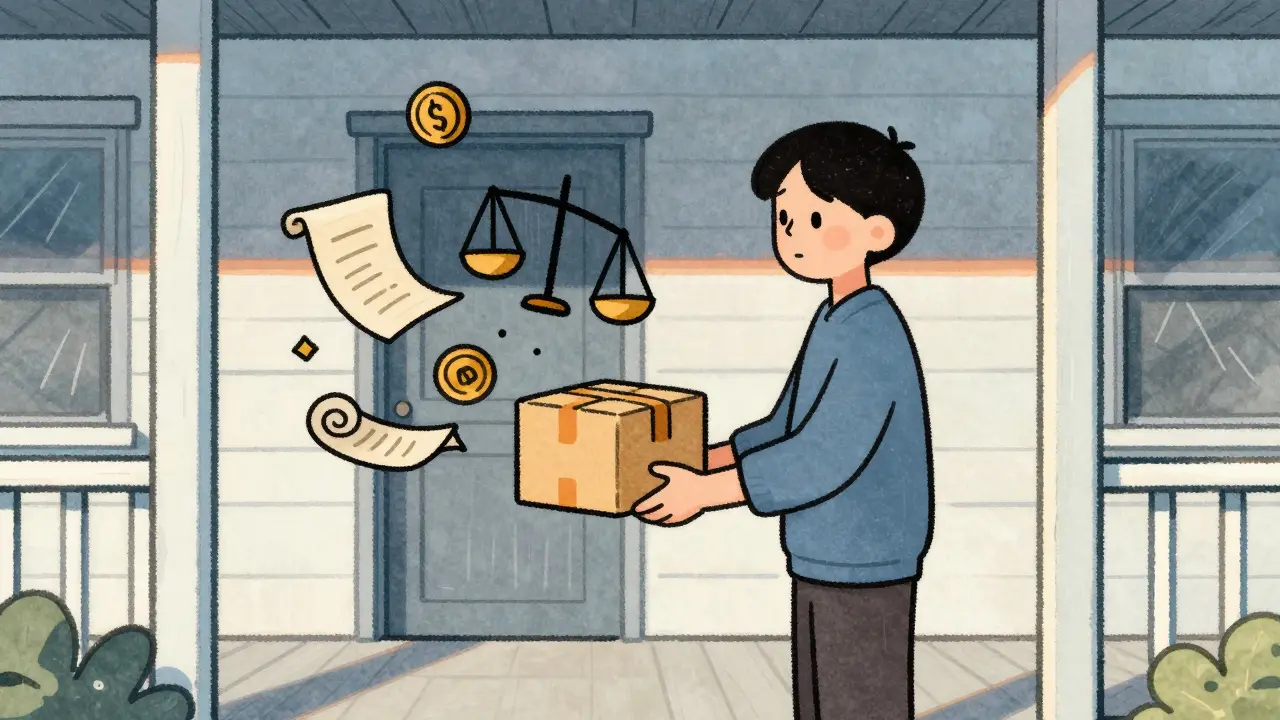
To understand why ordering medication internationally feels different today than it did last year, you have to look at the major policy shift involving the U.S. Customs and Border Protection (CBP). Prior to August 2025, the De Minimis Threshold, a rule allowing goods under $800 to enter duty-free protected most small orders. That protection vanished when President Trump signed Executive Order 14324 on July 30, 2025. This change is critical because it means almost every package sent to the US now triggers a customs inspection process, regardless of value.
This isn't just theoretical red tape. The Universal Postal Union noted in September 2025 that 97% of shipments previously benefited from that exemption. Now, only purely private gifts under $100 retain some tax-free status. For someone trying to ship medication, which often has high unit values, this means you will likely owe duties before the package even hits your door. The administrative burden has reportedly increased by 300% for low-value shipments, making casual purchasing economically unviable for many standard postal services.
Classifying Your Shipment Correctly
One of the biggest hurdles facing consumers right now is the Harmonized System code requirement. Since September 1, 2025, the US Postal Service mandates that all commercial shipments include a specific six-digit HS code. This sounds simple, but if you are shipping something that looks like a medical device or a controlled substance, getting the code wrong can be costly. Experts warn that incorrect HS code application could result in duties being assessed at rates 300% higher than necessary.
You cannot simply label a package as "medicine." You need to distinguish between active ingredients, devices, and consumables. Here is how you classify common items correctly to avoid unnecessary delays:
| Item Type | Typical HS Category | Risk Level |
|---|---|---|
| Insulin Pens | 9019 (Medical Equipment) | Medium (Requires declaration) |
| Generic Antidepressants | 3004 (Pharmaceutical Products) | High (Strictly regulated) |
| Vitamin Supplements | 3005 (Diagnosis/Detection) | Low (If clearly labeled) |
| CBD Oils/Tinctures | 3301 (Extractive Materials) | Very High (Controlled Substance Laws) |
Accuracy here is non-negotiable. Alison Layfield, VP of Product Development at ePost Global, warned in late 2025 that misclassification is the number one reason for seized cargo today. If you are unsure, use the USITC online tariff database before you mail anything. It’s free, and it saves you from potential penalties.
Navigating the Dual-Phase Duty Collection
Until February 28, 2026, there is a temporary window for calculating taxes on your international orders. The government introduced two methods for duty collection during this transition period. Understanding the difference between Method 1 and Method 2 is essential for calculating the true cost of your medication order.
Method 1 (Ad Valorem): This calculates tax based on the percentage value of the goods. If your medication costs $200 and the applicable tariff rate is 10%, you pay $20. This method is generally better for high-value items coming from countries with low IEEPA tariff rates. After February 2026, this will become the permanent standard.
Method 2 (Flat Rate): This offers fixed fees per item rather than percentages. It charges $80 for countries with rates under 16%, $160 for rates between 16-25%, and $200 for rates over 25%. While this simplifies accounting, it makes ordering expensive medicines prohibitively costly. For example, a $50 craft supply order from Germany recently faced an $80 duty under this method, rendering the purchase irrational. For prescriptions, this flat fee could exceed the cost of the drugs themselves.
If you are placing an order today, check if your carrier supports Method 2 during this transition window. However, expect that once the deadline passes, you will rely solely on valuation-based taxes.
Safety and Legality: The Drug Importation Rule
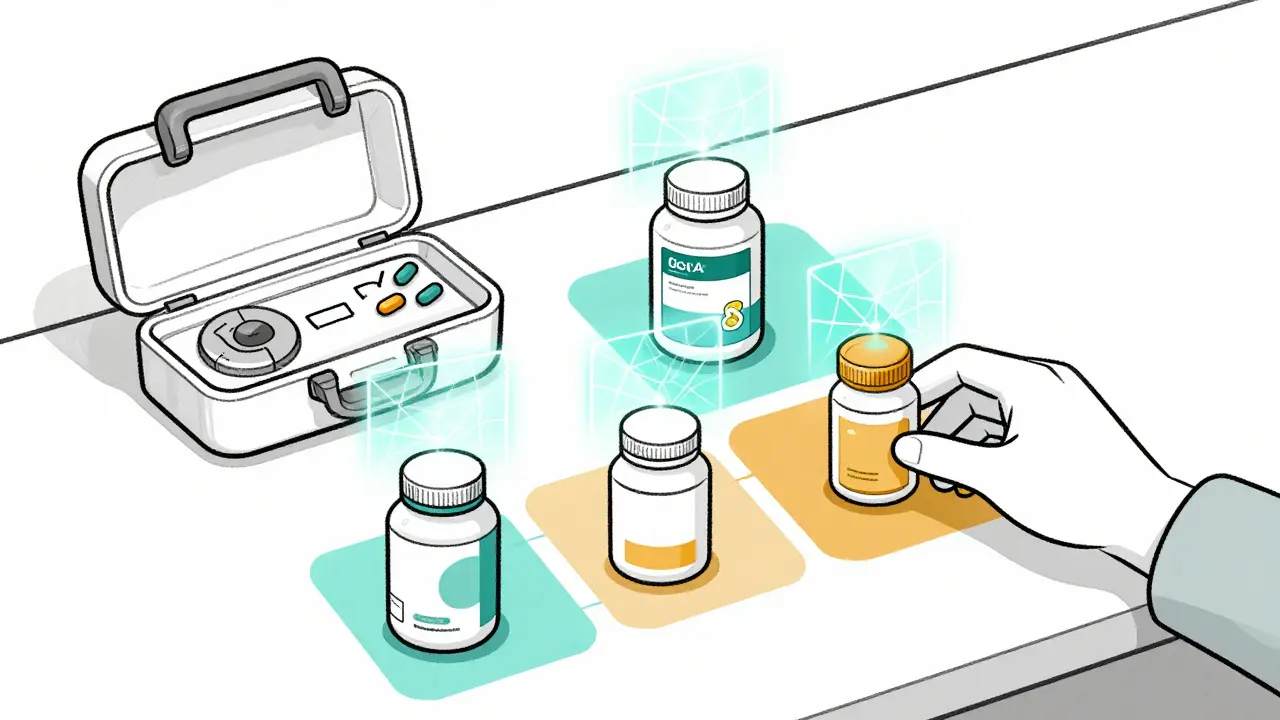
Beyond taxes, the legality of bringing medication into a country is governed by health authorities like the Food and Drug Administration (FDA). In the US, importing prescription drugs is generally illegal unless the product is approved by the FDA or qualifies as a personal use exception. The "where allowed" part of our title is crucial here. Many people try to bypass these rules by listing medicines as "personal samples," but customs officers are trained to spot this now.
Your safest route is using authorized mail-order pharmacies that handle the brokerage process themselves. Large carriers like DHL Express already handle customs clearance agents, reducing the chance your package gets stuck at the border compared to standard post. According to industry reports, integrated logistics providers like FedEx and UPS are capturing the majority of compliant commercial traffic because they can navigate the complex bond requirements (Activity Code 3 bonds) required for importers.
In contrast, sending medication via regular mail often results in seizure. The Department of Justice treats unauthorized importation as a violation that can trigger criminal proceedings in severe cases. Always verify that the supplier holds a valid license and that the shipment documentation explicitly states the contents. Ambiguous descriptions like "gift" or "sample" are now red flags that lead to immediate inspection.
Documentation and Bond Requirements
The paperwork needed for successful delivery has expanded significantly. You must prepare the following documents for any international transaction exceeding standard thresholds:
- Commercial Invoice: Must include full product names, manufacturer details, and specific quantity.
- Packing List: Detailed weight and packaging type information.
- Bill of Lading (BOL): Required for shipments via ocean or air freight.
- Letter of Authorization: Necessary if using AES filings for items over $2,500.
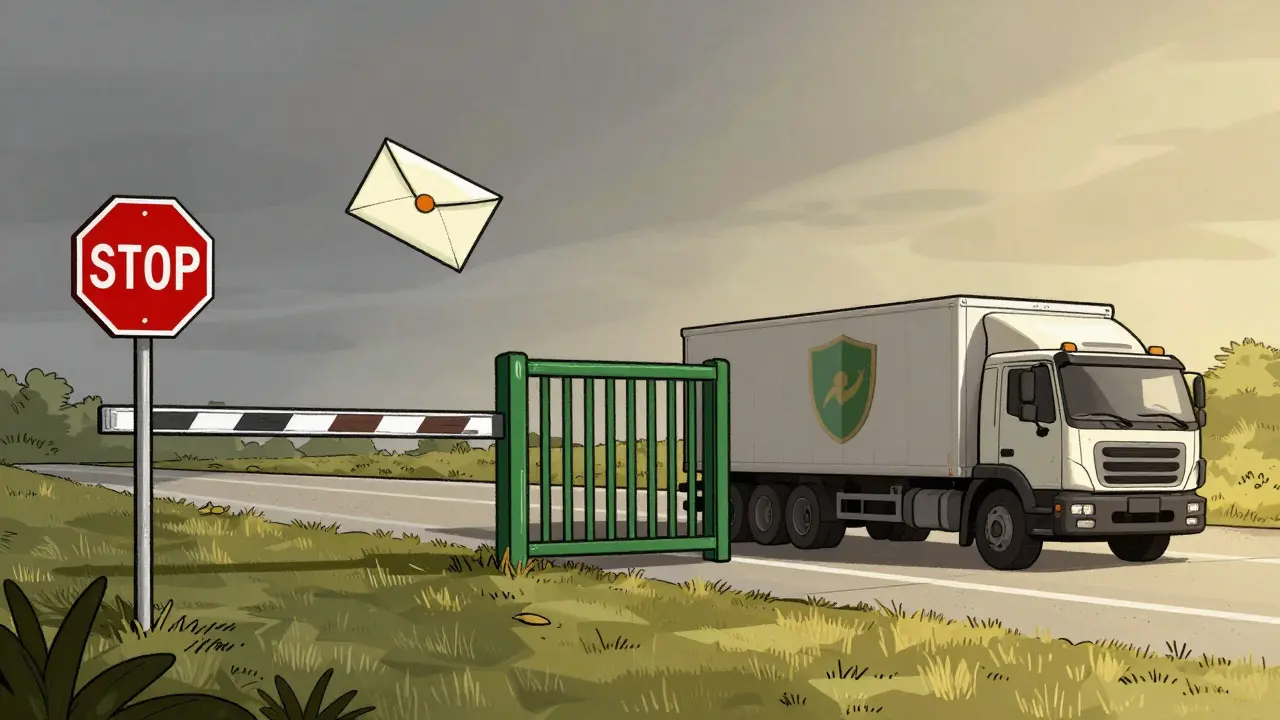
If you are an individual consumer, you don't typically file the AEIS, but your carrier needs proof that you are a qualified party. The new regulations make it clear that carriers face penalties up to $100,000 for violations. Consequently, they are far more cautious about who they ship for. Some operators, like Deutsche Post, announced they would stop accepting business parcels to the US entirely due to these liability risks. This consolidation means you have fewer choices for carriers, and the remaining ones will be more demanding about the quality of your documentation.
Alternatives to Direct Mail-Order
With direct mailing becoming more expensive and legally risky, smart shoppers are looking at alternatives. The concept of regional fulfillment centers is gaining traction. Instead of mailing drugs from overseas directly to a home address, companies warehouse products in Mexico or Canada (if you are in North America) to leverage trade agreements like USMCA.
For patients in Canada, such as myself here in Toronto, cross-border access remains a consideration, though similar regulations apply depending on export laws. However, relying on local licensed pharmacies to handle international stock transfers is safer than arranging personal courier drops. Always compare the final landed cost-the price of the drug plus the estimated duties-against local prices. The administrative fees alone might wipe out any savings you thought you'd find abroad.
Troubleshooting Common Issues
If your package is held up, do not panic, but act fast. Most delays happen because the HS code was missing or the duty payment wasn't received automatically.
Scenario 1: Package Stuck in Customs
Contact the courier immediately. They are the broker of record and can pay the entry duty on your behalf (usually requiring you to reimburse them). Do not ignore notices from the US Postal Service, as unclaimed packages are eventually returned or destroyed after a set holding period.
Scenario 2: Incorrect Item Description
If you accidentally declared a generic name instead of the brand, provide a formal correction letter to customs with supporting invoices. This is tedious but solvable before fines are issued.
Scenario 3: Seizure of Controlled Substances
If the contents are flagged as dangerous by customs, do not attempt to bribe or re-route informally. Consult a trade lawyer specializing in import law. Attempting to move seized goods further down the chain can escalate civil issues into criminal liability.
Can I still send medicine to the US duty-free?
Generally, no. The elimination of the $800 de minimis threshold means nearly all commercial shipments incur duties. Private gifts under $100 may remain exempt, but pharmaceuticals rarely qualify as gifts.
What happens if I forget to include an HS code?
Your shipment will likely be delayed or rejected by customs. Since September 1, 2025, the US Postal Service rejects packages lacking proper six-digit classification codes for commercial goods.
Is it worth using DHL or FedEx over standard post?
Yes. Standard postal services like USPS or national posts have largely stopped accepting business parcels due to compliance risks. Express carriers have established brokerage infrastructure to handle the new filing requirements more reliably.
How much will duties cost me for a single order?
It depends on the method. Under Method 1, it is a percentage of value. Under Method 2, it could be a flat fee of $80, $160, or $200 depending on the origin country's tariff rates. This applies to every qualifying shipment.
Are there exceptions for life-saving medications?
There are limited humanitarian exemptions, but you must prove the drug is unavailable locally and carry FDA approval evidence. Relying on these exemptions for routine purchases is extremely risky and subject to enforcement discretion.
Philip Wynkoop
March 28, 2026 AT 07:29Thanks for the update on the new HS code rules :)
walker texaxsranger
March 28, 2026 AT 19:22people think customs is just bureaucratic noise but its actually deeper control mechanisms embedded in the supply chain protocol layers the de minimis removal was clearly intentional design to track personal movement patterns via package metadata analysis
Eva Maes
March 29, 2026 AT 11:35You really have that paranoid streak again dont you its not tracking metadata its just simple revenue generation for the treasury department stop spinning wild theories
Debra Brigman
March 29, 2026 AT 21:10The existential weight of shipping regulations forces us to confront our relationship with material goods we consume daily without question or consequence
Devon Riley
March 30, 2026 AT 06:43That is such a positive way to look at things hope you find peace in navigating the new rules 🌻
Sabrina Herciu
April 1, 2026 AT 04:32You need to understand the exact implications here regarding the six digit code requirement for every single shipment you initiate!
Many people do not realize that the harmonized system classification determines your tax rate significantly! If you mislabel an insulin pen as generic medical equipment instead of pharmaceutical products then the penalties could be severe! Always check the USITC database before sending anything across borders!
The flat rate method might seem easier but it can cost you more money in the end! Method one calculates based on percentage value which is often lower for expensive items! Make sure you have all documentation ready like the commercial invoice and packing list! Carriers like DHL handle this better because they know the bonding requirements for importers!
Standard mail services often reject these packages due to liability fears now! It is crucial that you verify your supplier holds a valid license to sell internationally! Never declare a prescription medication as a gift because officers spot that immediately!
Seizure rates have spiked because of ambiguous descriptions like sample or personal use! You want to avoid criminal proceedings so always stay compliant with FDA importation rules! Consult a trade lawyer if your package gets flagged as dangerous by authorities!
This guide explains everything well so read it thoroughly before ordering online!
Tommy Nguyen
April 2, 2026 AT 21:41good advice thanks for posting this
Rohan Kumar
April 3, 2026 AT 00:46lol another person preaching compliance while big corps game the system freely 😂 why bother following rules when they change them anyway
Richard Kubíček
April 4, 2026 AT 03:32We must consider how these changes affect individual patients who rely on cheaper overseas options for survival the balance between security and access is delicate indeed
Monique Ball
April 4, 2026 AT 21:56You bring up such an important point regarding patient access issues during this transition period! The regulations aim to protect consumers from counterfeit drugs but they do raise costs for everyone!
We should advocate for clearer exemptions for life-saving medications regardless of tariff policies! It is heartbreaking to see people unable to get insulin because of paperwork delays! Please remember to keep your invoices safe and organized for future reference! I suggest you contact your pharmacy to ask if they handle brokerage themselves!
Don't panic if your package sits in customs for a few extra days! Communication with the carrier is key to resolving hold-ups quickly! Many folks forget to check the status until it is too late to intervene! Remember that standard postal services are less reliable than express couriers now!
Express carriers have dedicated teams to clear bonds and file forms correctly! You deserve to feel supported during this confusing regulatory shift! Keep checking updates on the USCBP website frequently! Staying informed prevents unnecessary stress in the long run!
We all want safe medicines delivered without legal headaches! Stay strong and take care of yourselves during this process! 🙂
gina macabuhay
April 5, 2026 AT 22:23Stop trying to bypass the law.
People who ignore the HS codes are simply irresponsible and endanger public safety.
Monique Louise Hill
April 7, 2026 AT 14:06Exactly those individuals prioritize their own convenience over collective welfare standards 👀🙄 nobody should be exempt from basic import laws
Austin Oguche
April 7, 2026 AT 23:51In many cultures we view goods differently but global trade requires unified standards for efficiency please note the cultural context of these new fees
Sarah Klingenberg
April 9, 2026 AT 01:58nice perspective glad to see someone looking at this globally ^^
Shawn Sauve
April 11, 2026 AT 01:34Just wanted to mention keeping receipts separate helps during audits boundaries matter when dealing with officials :smile: