
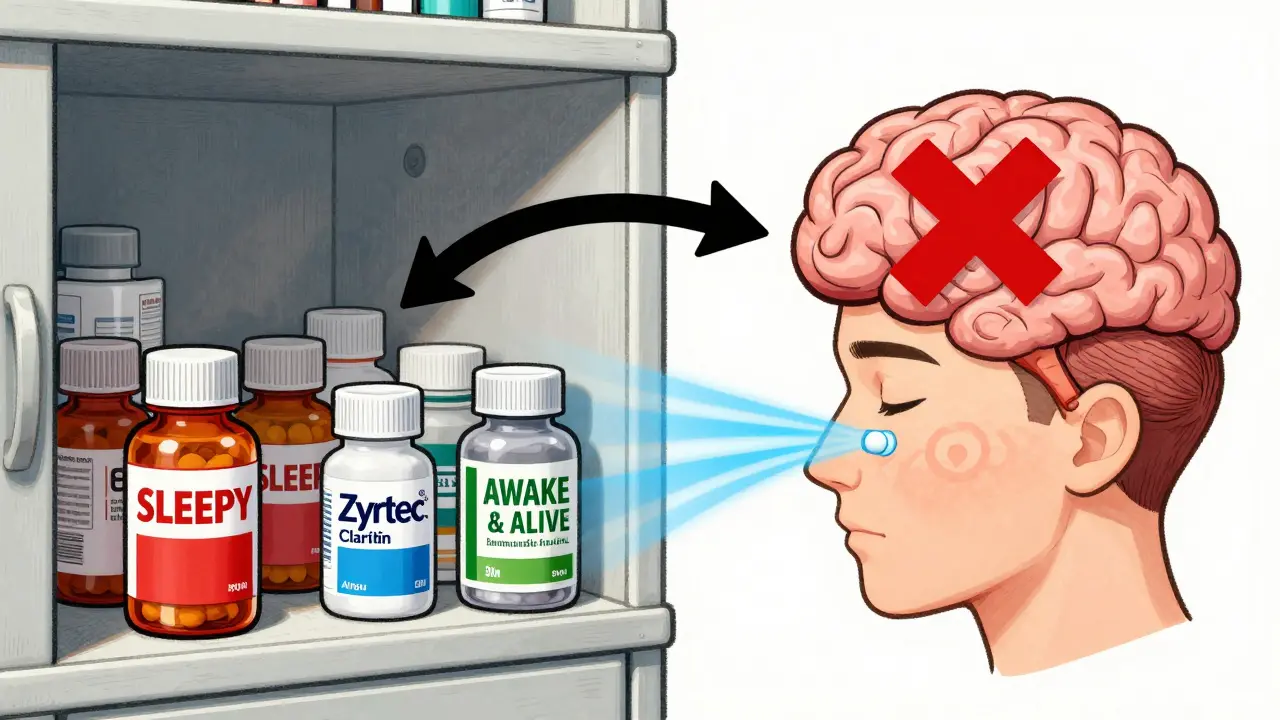
Ever taken a cold medicine and felt like you needed a nap right after? That’s the old-school antihistamine effect. Back in the day, drugs like diphenhydramine (Benadryl) worked well for allergies, but they also made you sluggish, dizzy, or foggy-headed. Today, most people with seasonal allergies or chronic hives don’t have to choose between relief and being functional. Second-generation antihistamines changed everything - they block allergy symptoms without wrecking your focus.
How They Work: Blocking Allergies Without Slowing Your Brain
These medications target histamine, the chemical your body releases during an allergic reaction. Histamine triggers sneezing, itching, runny nose, and watery eyes. First-generation antihistamines crossed the blood-brain barrier easily, messing with brain receptors and causing drowsiness. Second-generation versions were designed differently - they’re bigger, more polar, and lipophobic. That means they can’t slip through the barrier the same way. They stick to histamine receptors in your nose, skin, and throat, where allergies happen, but leave your brain alone.
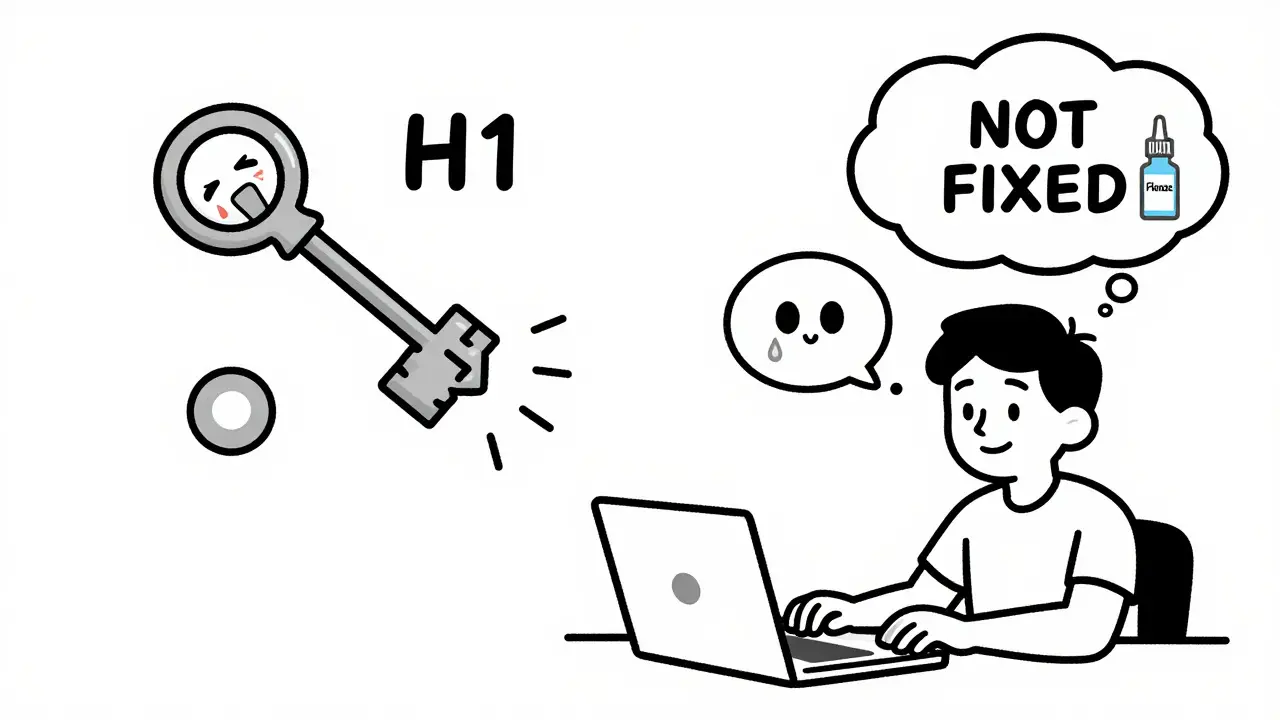
Studies using cryo-electron microscopy show exactly how they bind. These drugs insert a phenyl group into a deep pocket in the H1 receptor, locking it in place. This stops the receptor from activating - no signal, no symptoms. It’s like jamming a lock so the key can’t turn. The result? Effective relief without the grogginess.
The Big Three: Cetirizine, Loratadine, and Fexofenadine
Three names dominate the market: Zyrtec (cetirizine), Claritin (loratadine), and Allegra (fexofenadine). Each works slightly differently, and your body might respond better to one than the others.
- Cetirizine - Starts working in about an hour, lasts 24 hours. It’s the most studied, with 78% of users reporting strong symptom control. But here’s the catch: even though it’s labeled "non-drowsy," around 10-14% of people still feel a little sleepy. It’s metabolized by the liver, so if you have liver issues, your doctor might adjust your dose.
- Loratadine - Also 24-hour coverage. Often cheaper as a generic. Most people tolerate it well, but some report headaches, dry mouth, or even nausea. One user on Drugs.com described three straight days of pounding headaches until they switched meds.
- Fexofenadine - The least likely to cause drowsiness. Only 5% is metabolized by the liver; most passes through unchanged. It’s excreted in urine and feces. That means fewer drug interactions. It’s also the only one that doesn’t need to be taken with food - though grapefruit juice can reduce its absorption.
Market data from 2023 shows cetirizine holds 35% of the global second-gen antihistamine market, loratadine 30%, and fexofenadine 20%. That’s not random - it’s based on real-world effectiveness and tolerability.
What They Don’t Do: The Hidden Limitations
Here’s where people get tripped up. These drugs are great for itching, sneezing, and runny nose. But they don’t fix nasal congestion. Not even close. That’s because they don’t block the other chemicals involved in swelling - like leukotrienes. First-generation antihistamines had anticholinergic effects, which could slightly reduce congestion. Second-gen ones? No such luck.
That’s why so many users end up pairing them with nasal sprays. Reddit’s r/Allergies community has hundreds of posts where people say: "Fexofenadine works great, but I still need Flonase for congestion." A 2023 Consumer Reports survey found that 63% of users said their second-gen antihistamine didn’t help enough with stuffy noses. If congestion is your main issue, you’ll likely need a decongestant or steroid spray on top.
Another surprise? They don’t help with colds. A 2001 study by Dr. Paul Muether at Johns Hopkins showed these drugs failed to reduce sneezing in people with rhinovirus infections. First-gen drugs still worked - because they hit more receptors. Second-gen? They’re too selective. They’re built for allergies, not viral colds.
Safety: Why the Old Ones Got Pulled
Remember terfenadine and astemizole? They were the first second-gen antihistamines, approved in the late 80s. But they caused dangerous heart rhythm problems - especially when taken with antibiotics or grapefruit juice. They blocked a potassium channel in the heart, leading to QT prolongation and even sudden death. Both were pulled from the market by 1999.
Today’s drugs are safer. Fexofenadine, loratadine, and cetirizine have been tracked for over two decades. The FDA’s post-marketing surveillance through 2023 shows no significant cardiac risk at standard doses. Still, caution applies if you have liver disease, take other meds metabolized by CYP3A4 (like ketoconazole or erythromycin), or have a history of heart issues. Always check with your pharmacist before mixing meds.
Real People, Real Experiences
Over 12,800 reviews on WebMD show cetirizine with a 4.2/5 rating. People love the lack of drowsiness - 82% say it doesn’t slow them down. But 23% still report occasional sleepiness. Why the gap? Genetics. Some people metabolize these drugs slower, leading to higher blood levels. A 2023 Mayo Clinic survey found 35% of users tried two or three different second-gen antihistamines before finding one that worked without side effects.
On Reddit, the top comment: "I switched from Benadryl to Zyrtec and finally felt like myself again." But another user wrote: "Loratadine gave me migraines. Cetirizine? Perfect." There’s no one-size-fits-all. Trial and error is normal.
Consumer Reports found 68% of allergy sufferers prefer second-gen over first-gen. But 41% still need extra help - nasal sprays, eye drops, or decongestants. These aren’t magic bullets. They’re part of a toolkit.
How to Use Them Right
Don’t wait until you’re sneezing nonstop. The Cleveland Clinic recommends taking these meds 1-2 hours before exposure - like before going outside on high-pollen days. Studies show this cuts symptoms by 40-50% more than taking them after symptoms start.
Most are once-daily. Stick to the schedule. Skipping doses because "you don’t feel bad yet" means your body isn’t protected. A CDC survey in 2023 found only 32% of users take them consistently. That’s like only wearing a seatbelt when you’re speeding.
Also, don’t assume OTC labels are complete. FDA analysis in 2022 showed over-the-counter packaging scored only 6.4/10 for clarity. Prescription inserts? 8.2/10. If you’re unsure, ask your pharmacist. The American College of Allergy, Asthma & Immunology handles over 12,000 patient inquiries a year - they’re a great resource.
What’s Next? The Future of Allergy Meds
Research is moving fast. A 2024 study in Nature Communications identified a second binding site on the H1 receptor. That’s a game-changer. It means scientists can now design drugs that lock onto the allergy receptor even more precisely - possibly eliminating the last traces of drowsiness.
And there’s bilastine XR, a once-weekly antihistamine granted breakthrough status by the FDA in March 2024. If it works as hoped, it could solve adherence problems for the 37% of users who forget daily pills.
Climate change is pushing pollen counts up. By 2050, NIEHS predicts 25-30% higher pollen levels. That might mean higher doses or combination therapies become more common. But for now, second-generation antihistamines remain the gold standard. They’re safer, longer-lasting, and far less disruptive than what came before.
They’re not perfect. They don’t fix congestion. They don’t cure colds. But for most people with allergies, they’re the best option out there - no nap required.
Are second-generation antihistamines really non-drowsy?
Most people don’t feel drowsy, but it’s not zero. Clinical trials show 6-14% of users report mild sleepiness. Cetirizine has the highest rate - around 10-14% - while fexofenadine is the least likely to cause it. Genetics, liver function, and drug interactions can all play a role. If you’re sensitive, try fexofenadine or take it at night.
Can I take second-generation antihistamines every day?
Yes, for most people. These drugs are approved for daily use in conditions like chronic urticaria or allergic rhinitis. Long-term studies show they’re safe for months or even years. But if you’re taking them year-round, check in with your doctor annually. Also, avoid alcohol - it can worsen drowsiness even with these milder drugs.
Why doesn’t my antihistamine help my stuffy nose?
Because nasal congestion is caused by swelling and inflammation - not just histamine. Second-generation antihistamines block histamine, but they don’t reduce swelling like steroid sprays (Flonase, Nasacort) or decongestants (pseudoephedrine) do. For full relief, you often need a combination: an antihistamine for itching and sneezing, plus a nasal spray for congestion.
Is fexofenadine better than cetirizine?
It depends. Fexofenadine is less likely to cause drowsiness and has fewer drug interactions. Cetirizine may work faster and stronger for some people, especially itching. A 2023 Mayo Clinic survey found no clear winner - 40% preferred cetirizine, 35% fexofenadine, and 25% loratadine. Try one, wait a week, then switch if needed. Your body might respond differently than your friend’s.
Do I need a prescription for these?
No. All three - cetirizine, loratadine, and fexofenadine - are available over-the-counter in the U.S. and Canada. Generic versions are very affordable, often under $5/month. Prescription strength exists (like 24-hour formulations), but for most people, OTC works just fine.
Jinesh Jain
March 14, 2026 AT 11:58Sabrina Sanches
March 16, 2026 AT 08:13Tim Schulz
March 17, 2026 AT 10:59First-gen? More like first-world problems. Second-gen? The pinnacle of pharmaceutical elegance. Fexofenadine? A symphony in molecular form. Cetirizine? A slightly off-key violinist who still gets standing ovations. 🎻😴
And let’s not forget the holy trinity: Zyrtec, Claritin, Allegra - the Avengers of allergy relief. Thanos couldn’t snap these away.
Leah Dobbin
March 17, 2026 AT 13:41Katherine Rodriguez
March 17, 2026 AT 20:41Alex MC
March 18, 2026 AT 01:01Adam M
March 18, 2026 AT 12:28Noluthando Devour Mamabolo
March 19, 2026 AT 17:56Aaron Leib
March 20, 2026 AT 11:11Shruti Chaturvedi
March 22, 2026 AT 03:26Ali Hughey
March 24, 2026 AT 01:02Dylan Patrick
March 25, 2026 AT 10:46tamilan Nadar
March 26, 2026 AT 14:08Emma Deasy
March 26, 2026 AT 15:09