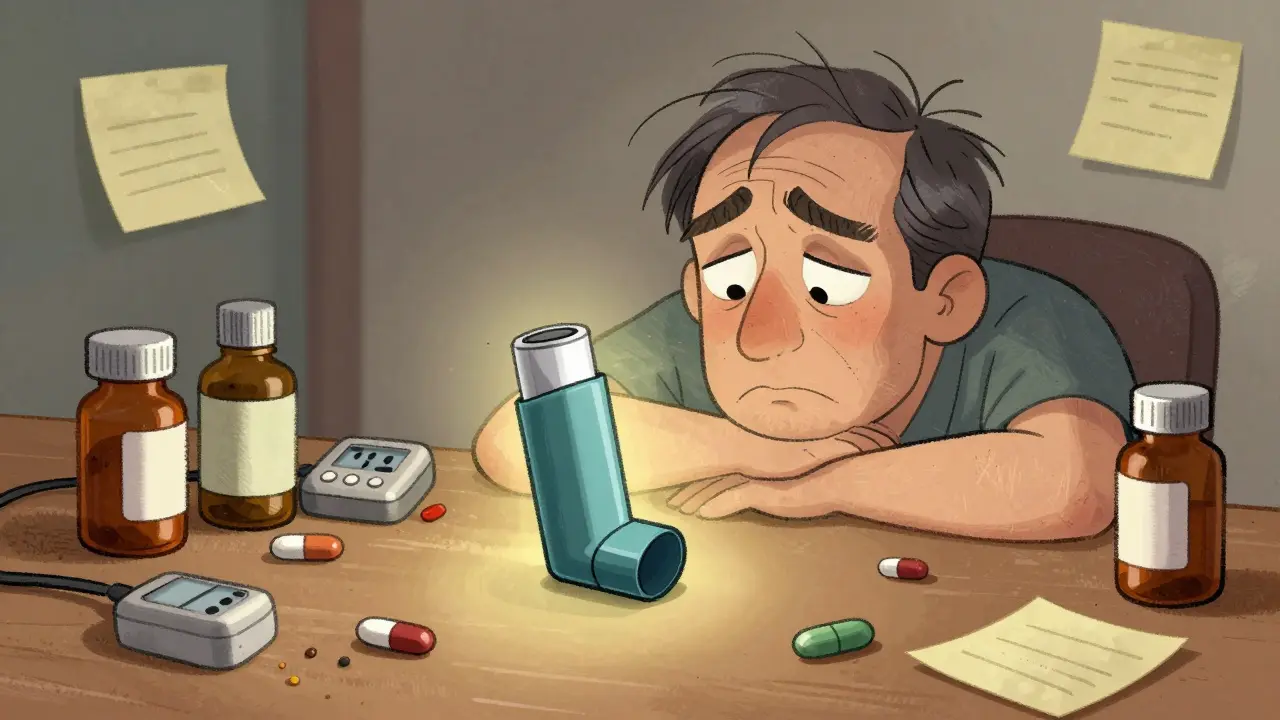
When patients have to take multiple pills at different times of the day, it’s easy to forget one - or skip it altogether. That’s not just a minor inconvenience; it’s a major reason why treatments fail. Studies show that when people move from once-daily to twice-daily dosing, adherence drops by about 26%. Now imagine if you had to manage three different medications, each with its own packaging, timing, and instructions. The burden becomes overwhelming. This is where generic combination products change the game.
What Are Generic Combination Products?
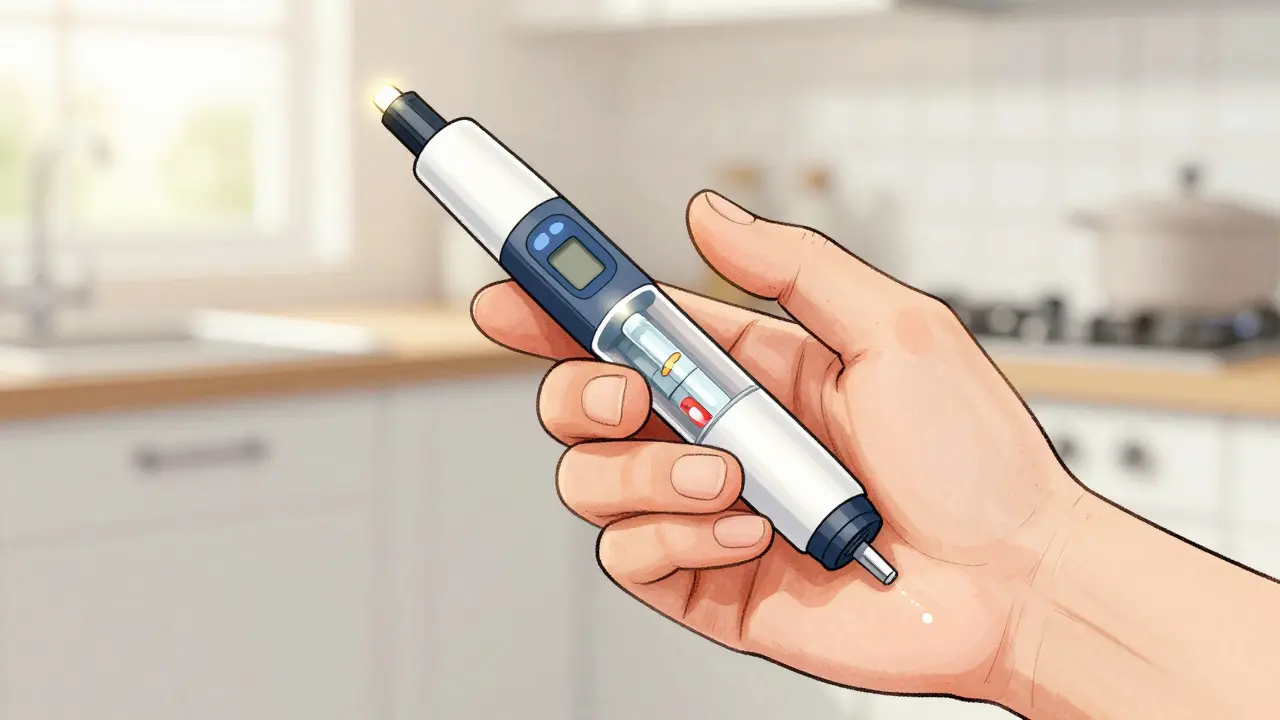
A combination product brings together two or more types of medical components into one unit. Think of an inhaler that delivers both a bronchodilator and a corticosteroid. Or a prefilled insulin pen that combines the drug with a precision delivery device. These aren’t just two pills in one blister pack - they’re engineered as a single system. The drug and the delivery mechanism work together to ensure the right dose gets where it needs to go.
Generic versions of these products copy the exact active ingredients and performance of the brand-name version. They’re not cheaper because they’re lower quality. They’re cheaper because they don’t carry the R&D costs of the original. The FDA requires them to meet the same strict standards: same drug strength, same release profile, same device function. For example, a generic auto-injector must deliver its dose within ±5% of the original. The force needed to activate it? Same range - 5 to 15 Newtons. The failure rate? Below 0.1% in testing. If it doesn’t match, it doesn’t get approved.
How They Boost Adherence
Combination products cut down the number of things patients have to remember. One product instead of three. One routine instead of five. That simplicity has measurable results. Research shows that patients using combination products improve adherence by 15% to 25% compared to taking separate medications. Why? Because complexity is the enemy of consistency.
Take insulin pens. Before they existed, many people with diabetes had to draw insulin from a vial, measure the dose with a syringe, and inject it - all while managing shaky hands, poor eyesight, or anxiety. A 2023 survey found that 78% of users said the ease of use led to better adherence. On Reddit, one diabetic user wrote, “Switching from vials to pens cut my dosing errors from 3-4 per week to almost zero.” That’s not anecdotal. That’s a life-changing shift.
Transdermal patches, drug-eluting stents, and inhalers follow the same pattern. Nicotine patches deliver steady doses over hours, reducing cravings without requiring multiple daily doses. Drug-eluting stents release medication directly at the site of a blockage, cutting restenosis risk by 30-40% compared to bare-metal stents. And now, generic versions of these products are making those benefits accessible to more people.
The Cost Advantage
Even if a combination product improves adherence, it won’t help if patients can’t afford it. That’s where generics shine. Generic versions typically cost 30% to 80% less than brand-name equivalents. The FDA found that 23.4% of patients skip doses because of cost. For someone managing high blood pressure, diabetes, or COPD, that’s not a choice - it’s survival.
Studies show that people who start on generic medications are 8.7 percentage points more likely to stick with their regimen than those who start on brand-name drugs. Why? Because price removes a major barrier. When a monthly co-pay drops from $120 to $30, people refill more consistently. They don’t cut pills in half. They don’t skip days. They get the full benefit of the treatment.
Real-World Challenges
It’s not all smooth sailing. One big issue? Switching between different generic versions. A patient might start on one generic inhaler, then get switched to another at the pharmacy - and suddenly, the technique changes. One version might require a slow, deep breath. Another might need a sharp, forceful inhale. If the patient isn’t retrained, they’ll miss doses.
On PatientsLikeMe, a COPD patient shared: “Each generic version required slightly different breathing techniques. I missed doses until I got proper training.” That’s a problem. The device isn’t the same. The experience isn’t identical. And without clear guidance, adherence suffers.
Another concern? Pharmacy substitution. Pharmacists can legally swap out brand-name products for generics - but they don’t always tell patients. A person might think they’re getting the same thing, only to find the injector feels different or the patch size changed. That triggers doubt. “Is this really the same?”
How to Maximize the Benefits
The key to unlocking the full advantage of generic combination products? Education. Not just for patients - for providers too.
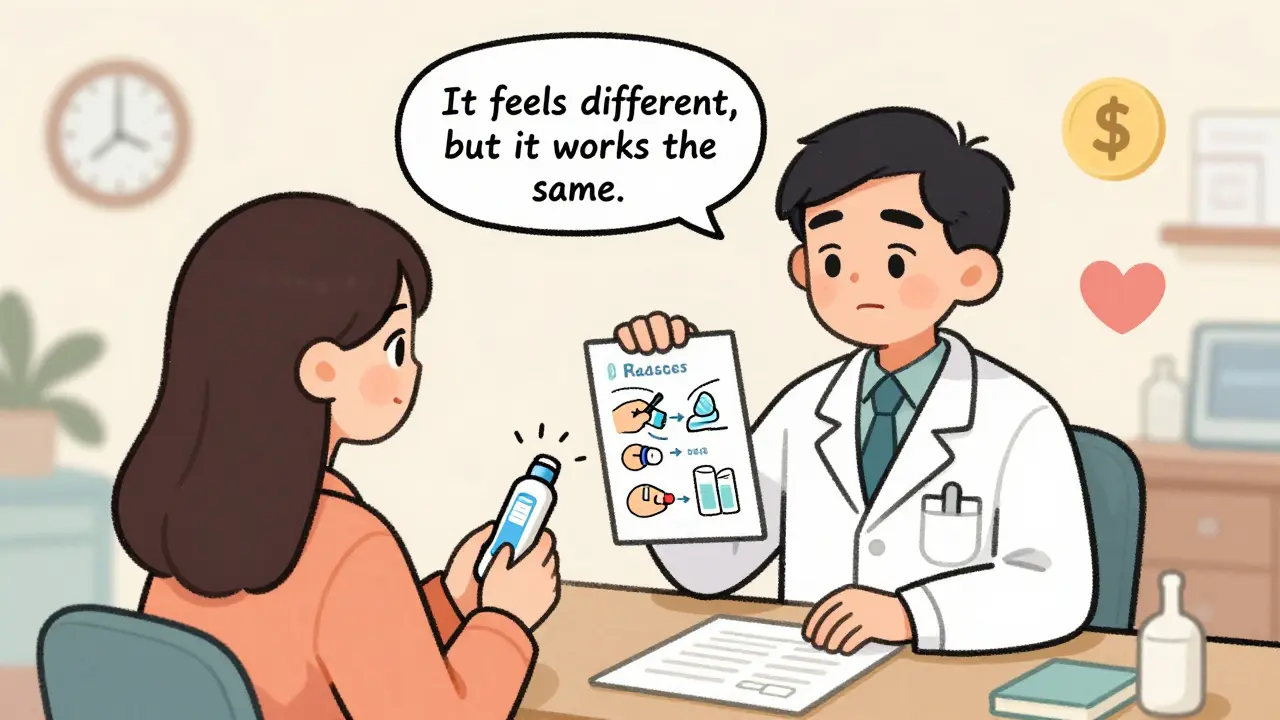
When a patient gets a new generic combination product, a simple 10-minute conversation can make all the difference. The FDA’s Dr. Sarah Ibrahim says, “Talking to patients about their generic drugs improves usability, compliance, and outcomes.” And the data backs it up: proper counseling boosts adherence by 17-22%.
For simple products like patches, a quick visual guide is enough. For complex ones - auto-injectors, inhalers, implantable devices - hands-on training is essential. A 20-30 minute session where the patient practices under supervision can prevent errors down the road. Clear, printed instructions with pictures help too. Biobuzz notes that injection systems and inhalers perform best when paired with strong visual guides.
Doctors and pharmacists need to be proactive. Don’t assume the patient knows. Ask: “Have you used this before?” “Does it feel different?” “Do you know how to use it correctly?”
The Bigger Picture
The global market for combination products hit $127.5 billion in 2022 and is projected to nearly double by 2030. Chronic conditions - diabetes, heart disease, asthma - drive most of this growth. Diabetes combination products alone make up 28% of the market. And now, generics are entering the space.
The Inflation Reduction Act of 2022 is accelerating this trend. By allowing Medicare to negotiate drug prices, it’s creating pressure to bring down costs. Generic combination products are one of the fastest ways to do that without sacrificing quality. The FDA is also updating its guidance to standardize how generics are approved, especially for complex delivery systems.
Meanwhile, new innovations are emerging. Some next-generation generics now include smart tech - reminders built into inhalers, dose trackers in injectors. These aren’t just gadgets. They’re tools that help people stay on track.
For healthcare systems, the math is clear: better adherence means fewer hospitalizations, fewer ER visits, lower long-term costs. For patients, it means fewer symptoms, better quality of life, and more control over their health.
Bottom Line
Generic combination products aren’t just cheaper versions of expensive drugs. They’re smarter, simpler, and more effective ways to manage chronic illness. They reduce pill burden, cut costs, and improve outcomes. But their full potential only unlocks when patients understand how to use them - and when providers take the time to explain the difference.
It’s not about replacing brand-name products. It’s about making life-saving treatments accessible to everyone - not just those who can afford them. And that’s a win for every patient, every clinician, and every healthcare system.
Are generic combination products as safe as brand-name ones?
Yes. The FDA requires generic combination products to meet the same strict standards as brand-name versions. The active ingredients must be identical, and the delivery device must perform the same way - same dose accuracy, same activation force, same failure rate. Bioequivalence testing ensures the drug behaves the same in the body. The only differences are in inactive ingredients or minor packaging changes - none of which affect safety or effectiveness.
Why do some patients say generic versions feel different?
Even though the drug and function are identical, the physical design of the device might vary slightly between generics - like the size of a patch, the color of an injector, or the click sound of a pen. These differences can confuse patients, especially if they’re switched between versions without warning. It’s not that the product is inferior - it’s that unfamiliarity can trigger doubt. Proper counseling helps patients recognize that these changes don’t affect performance.
Can pharmacists switch my combination product without telling me?
Yes - and that’s a problem. In many cases, pharmacists can substitute a generic without notifying the patient or prescriber. This is legal under U.S. pharmacy laws, but it can lead to confusion, especially with complex devices. Patients may think they’re getting the same product, only to find the technique for using it has changed. Always ask your pharmacist if your medication has changed, and request training if the device looks or feels different.
How much money can I save with a generic combination product?
Patients typically save between 30% and 80% on the cost of a combination product when switching to a generic. For example, a brand-name inhaler might cost $150 per month, while the generic could be as low as $30. That’s a $1,440 annual savings. For chronic conditions requiring lifelong treatment, that difference can mean the difference between consistent care and skipping doses due to cost.
Do generic combination products work as well for chronic diseases?
Yes - and studies show they often work better. Because they simplify the treatment regimen, patients are more likely to take them as prescribed. A 2023 study found that adherence rates were 8.7 percentage points higher for patients started on generic medications versus brand-name ones. For conditions like hypertension, diabetes, or asthma, consistent use is what makes the treatment effective. Generic combination products make that consistency easier to achieve.
Natanya Green
February 23, 2026 AT 02:05Oh. My. GOSH. I just switched to a generic inhaler last month, and I was SO nervous-like, what if it doesn’t work? What if I collapse during a panic attack because the puff felt ‘wrong’? But guess what? It’s been smooth sailing. No more coughing fits. No more panic. I even started doing yoga again. Life-changing. Seriously. Thank you, generics.
Steven Pam
February 24, 2026 AT 07:35Love this breakdown. Seriously. I’ve been managing diabetes for 12 years, and the switch from vials to generic combo pens was the single biggest win of my life. No more fumbling with syringes at 2 a.m. No more spilled insulin. Just click, press, done. And the cost? Half of what I was paying. It’s not magic-it’s just smart design. More people need to know this.
Timothy Haroutunian
February 24, 2026 AT 13:36Let’s be real here. The FDA doesn’t ‘require’ anything meaningful. They rubber-stamp generics because Big Pharma lobbies for cheaper alternatives to keep Medicare from collapsing. The ‘same dose, same function’ line is marketing. I’ve seen three different generic auto-injectors in six months. One had a different click. One had a plastic cap that cracked. One made me feel like I was injecting a grenade. And yet, the pharmacist just shrugged and said ‘it’s equivalent.’ Equivalent to what? A placebo with a needle?
Erin Pinheiro
February 24, 2026 AT 15:40ok so i just got switched to a generic patch and it’s like… the adhesive is weak?? like i’m scared to shower?? and the thing is 2x bigger than before?? and no one told me?? i thought i was dying?? like literally thought my meds weren’t working?? then i had to google it and found out it’s ‘equivalent’?? wtf america??
Michael FItzpatrick
February 25, 2026 AT 13:07What’s beautiful here isn’t just the cost savings-it’s the dignity restored. When you’re managing three chronic conditions, you’re not just taking pills-you’re performing a daily act of survival. Combination products don’t just reduce pill count; they reduce shame. They turn a chaotic, humiliating ritual into something quiet, reliable, almost elegant. That’s not pharmaceutical innovation. That’s human-centered design. And it’s long overdue.
Larry Zerpa
February 27, 2026 AT 02:35Adherence ‘improves’ by 15-25%? Where’s the peer-reviewed data? You cite Reddit posts like they’re clinical trials. You mention ‘studies’ but never name them. You quote the FDA like they’re saints. Meanwhile, real patients are getting switched mid-treatment, confused, scared, and told to ‘just adapt.’ This isn’t progress-it’s a cost-cutting gamble on vulnerable people. And the fact that you’re celebrating it without acknowledging the systemic harm is… disturbing.
Gwen Vincent
February 28, 2026 AT 09:39I’ve been a nurse for 18 years. I’ve seen patients skip doses because they couldn’t afford the brand. I’ve seen them cry because they didn’t know how to use the injector. I’ve seen them get confused when the pharmacy swapped their inhaler without warning. This article? It’s not just true-it’s urgent. If we want better outcomes, we need to stop treating medication like a vending machine and start treating it like care.
Christopher Brown
March 1, 2026 AT 06:57Generic drugs are for people who can’t afford real medicine. If you’re on Medicare, you’re already getting subsidized. Stop pretending these are ‘life-saving.’ They’re budget options. Real treatment costs money. That’s how the world works. If you can’t pay, you shouldn’t expect the same results.
Lou Suito
March 2, 2026 AT 14:40Why do people think ‘combination’ means ‘better’? It’s just two pills stuck together. The body doesn’t care if it’s one device or five. This whole thing is corporate marketing. And the FDA? They’re just playing along to make it look like they’re helping. I’ve been on the same meds for 10 years. Never needed a ‘combo.’ Just give me the pills. I’ll figure it out.
Joseph Cantu
March 2, 2026 AT 17:35They’re not making these for you. They’re making them so your insurance won’t have to pay. The real goal? To get you hooked on a cheaper version so you’ll never go back-even if your body reacts differently. I know people who had seizures after switching. No one reports that. The system doesn’t want you to know. They want you to believe it’s ‘equivalent.’ But it’s not. It’s a trap.
William James
March 3, 2026 AT 13:10There’s something deeply poetic about a simple device restoring someone’s autonomy. A patch that sticks. A pen that clicks. A breath that’s in sync with the medicine. We talk about ‘compliance’ like it’s obedience-but really, it’s about trust. When the system makes it easy, people trust it. When it’s complicated, they lose faith. And maybe that’s the real win here-not just fewer pills-but more hope.
David McKie
March 4, 2026 AT 07:32Let me guess-you’re from the U.S. and you think this is revolutionary? In the UK, we’ve had generic combination inhalers for over a decade. We don’t need a ‘study’ to tell us they work. We just give them out. People take them. They live longer. Simple. The fact that this is even a debate in America says more about your healthcare system than it does about the medicine.
Southern Indiana Paleontology Institute
March 5, 2026 AT 14:05Generic meds? Yeah, I got one last year. Felt like a plastic toy. Clicked wrong. Smelled weird. My doctor said ‘it’s the same.’ I said ‘no it’s not.’ He shrugged. So I stopped taking it. Now I’m fine. Maybe the brand was keeping me alive. Maybe the generic was just a scam. Either way-I’m not a lab rat.