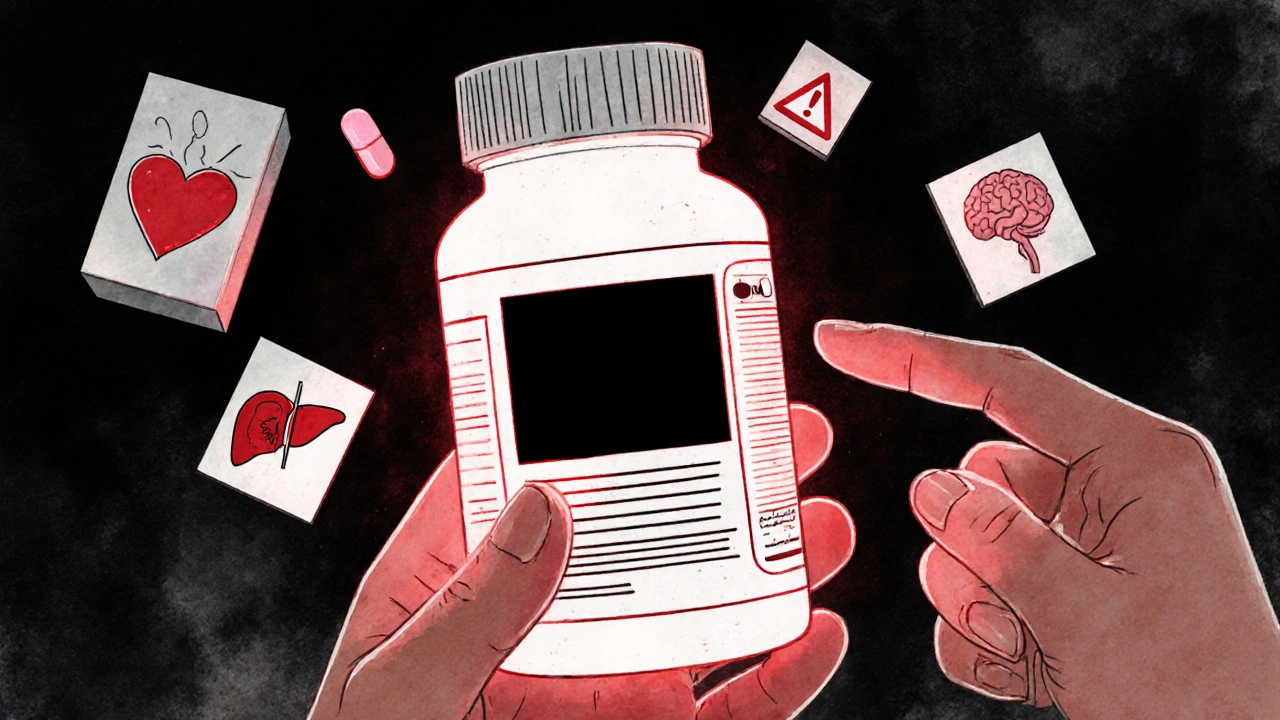
When your doctor hands you a prescription, you might not notice the small, black-bordered box at the top of the pill bottle’s label or the insert inside. But that box? It’s the FDA’s strongest warning about your medicine. Known as a boxed warning or black box warning, it’s not just a footnote-it’s a red flag that says: this drug can seriously hurt or even kill you. And yet, most patients don’t fully understand what it means.
What Exactly Is a Boxed Warning?
A boxed warning is the most serious safety alert the U.S. Food and Drug Administration (FDA) can require on a prescription or over-the-counter drug. It’s called a "black box" because the text is printed inside a thick, black border on the drug’s prescribing information, package insert, and sometimes even the label. This isn’t decorative-it’s legal. The FDA mandates this format under strict guidelines to make sure the warning can’t be missed. These warnings aren’t added lightly. They’re only used when there’s clear evidence that a drug can cause life-threatening side effects like heart failure, liver damage, suicidal behavior, severe infections, or birth defects. As of 2022, over 400 medications carry this warning-about 1 in 7 of all prescription drugs in the U.S. That includes common treatments for depression, diabetes, cancer, and even acne. The system started after the thalidomide disaster in the 1960s, when thousands of babies were born with severe limb defects because their mothers took a drug that wasn’t properly tested for pregnancy safety. The Kefauver-Harris Amendments of 1962 forced drugmakers to prove safety before selling their products. The black box format itself didn’t appear until the 1970s, but it’s now the gold standard for communicating extreme risk.Why Do Some Drugs Have Boxed Warnings and Others Don’t?
Not all dangerous drugs get a boxed warning. The FDA only uses it when the risk is both serious and well-documented. For example, isotretinoin (Accutane), used for severe acne, carries a boxed warning because it can cause severe birth defects-even if taken just once during pregnancy. That’s why patients must enroll in the iPLEDGE program, which requires monthly pregnancy tests and counseling. Other drugs get warnings because of how they affect certain people. Antidepressants like fluoxetine (Prozac) and sertraline (Zoloft) have boxed warnings for increased suicide risk in children and young adults under 25. This doesn’t mean these drugs are unsafe for everyone-it means the risk is real enough in that group to demand special attention. Here’s the key: a boxed warning doesn’t mean you can’t take the drug. It means you need to understand the risk and be monitored closely. For many patients, the benefits far outweigh the dangers. A 2023 study from the Cleveland Clinic found that 78% of patients on blood thinners with bleeding risk warnings continued treatment after their doctor explained the signs to watch for.What’s the Difference Between a Boxed Warning and Other Alerts?
The FDA uses several types of safety alerts, but they’re not all the same. Think of them like a traffic light system:- Boxed warning - Red light. The most serious. Legally required on the drug’s official label. Must be discussed with patients before prescribing.
- Drug Safety Communication - Yellow light. Issued after a drug is on the market when new risks appear. These are public notices, not part of the official label.
- Label changes - Orange light. Updates to the drug’s information that don’t rise to the level of a boxed warning but still need attention.
- Medication Guides - Green light. Patient-friendly handouts you’re supposed to get with your prescription. Often confusing and rarely read.
When Do Boxed Warnings Get Added?
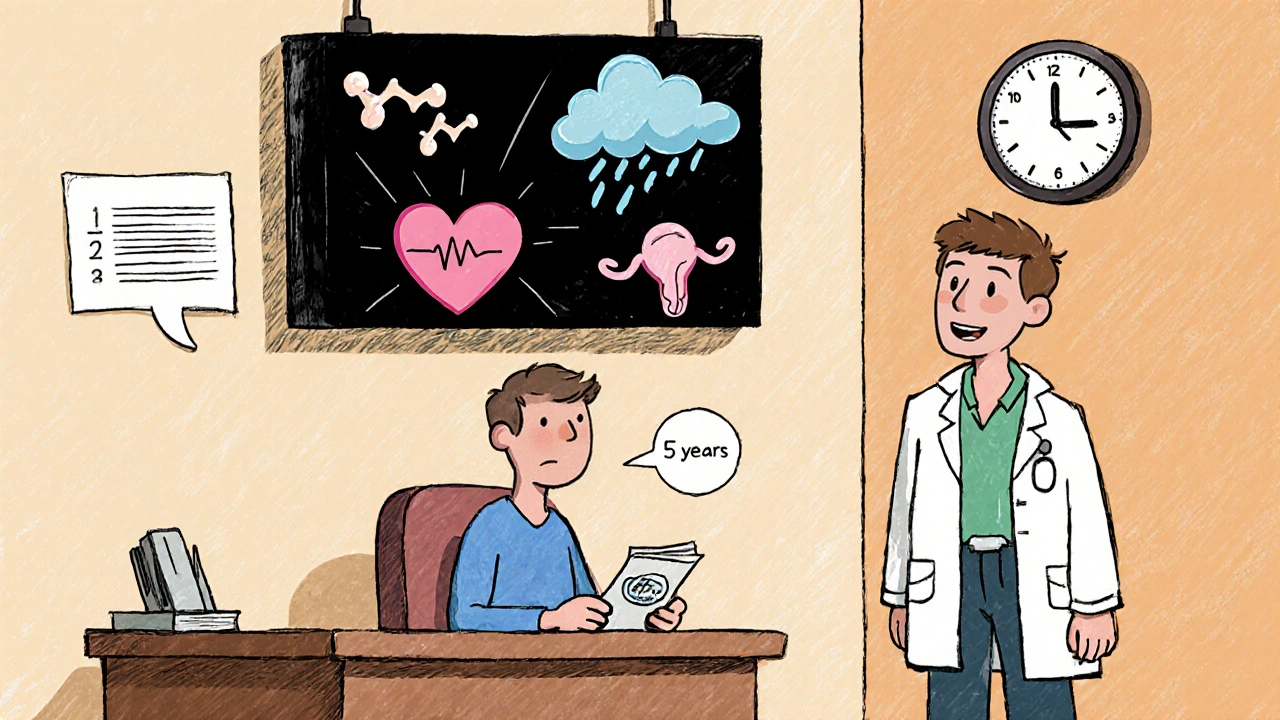
You might assume the FDA knows all the risks before a drug hits the market. But that’s not true. Clinical trials usually involve only 1,000 to 5,000 people. Real-world use involves millions. About 70% of boxed warnings are added after a drug is already on the market. That’s because rare or long-term side effects only show up when thousands of people take the drug for months or years. For example, the diabetes drug rosiglitazone got a boxed warning for heart attack risk five years after approval. The cancer drug bortezomib got one for nerve damage seven years later. A 2019 study in JAMA Internal Medicine found that nearly half of all boxed warnings came more than five years after the drug was first sold. That delay is one reason why some experts argue the system is too slow.What Should You Do If Your Medication Has a Boxed Warning?
Don’t panic. Don’t stop taking it. Do this instead:- Ask your doctor to explain the warning in plain language. Don’t settle for "it’s dangerous." Ask: "What exactly could happen? How likely is it? What are the signs I should watch for?"
- Know your personal risk factors. Are you over 65? Do you have liver disease? Are you pregnant or planning to be? Some risks only apply to certain people.
- Ask about monitoring. Many boxed warnings require regular blood tests, heart checks, or doctor visits. Make sure you understand how often and why.
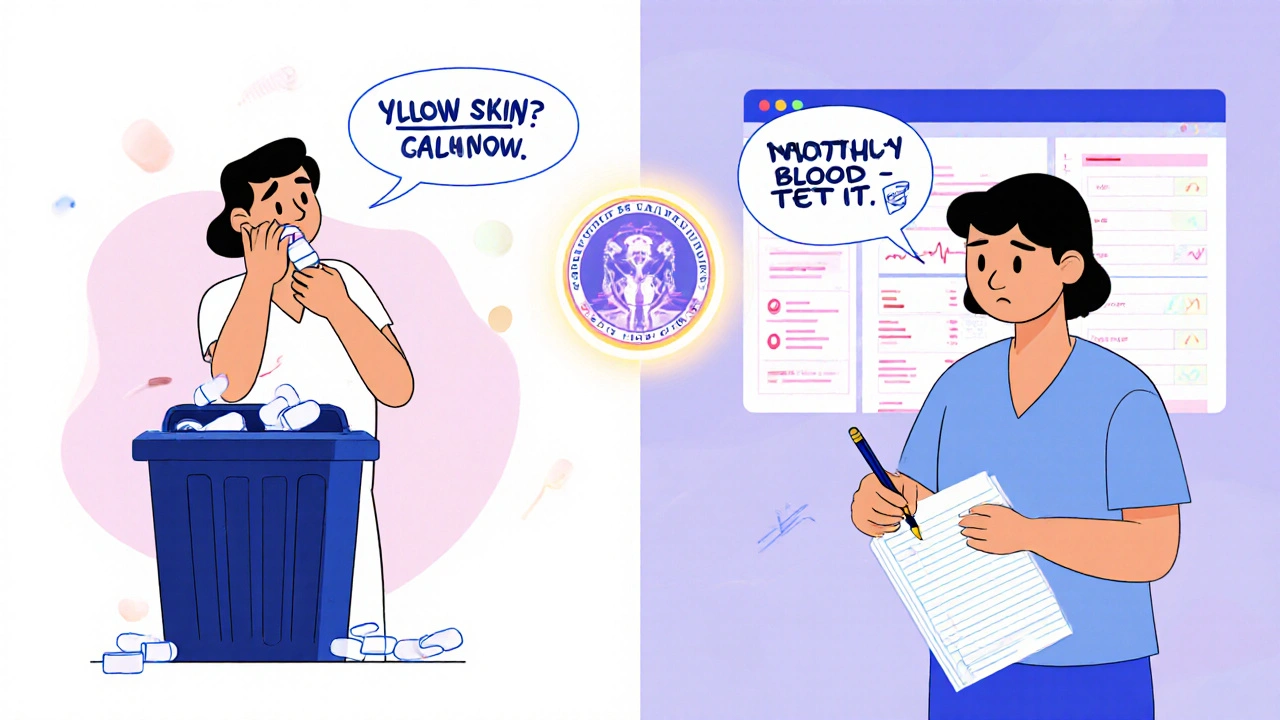
- Use the teach-back method. After your doctor explains, say it back in your own words: "So if I get yellow eyes, nausea, or confusion, I need to call you right away?" If you can’t repeat it clearly, ask again.
- Report side effects. Use the FDA’s MedWatch program to report any problems. Over 2 million reports are filed each year. Your report helps protect others.
Common Medications With Boxed Warnings (And What They Mean)
Here are some real examples you might recognize:- Antidepressants (e.g., fluoxetine, venlafaxine) - Increased risk of suicidal thoughts in people under 25. Risk drops after age 25. Monitoring in the first few weeks is critical.
- Methotrexate (for rheumatoid arthritis or cancer) - Can cause severe liver damage and bone marrow suppression. Requires monthly blood tests.
- Isotretinoin (Accutane) - Can cause severe birth defects. Requires pregnancy testing and enrollment in the iPLEDGE program.
- SGLT2 inhibitors (e.g., empagliflozin, dapagliflozin) - New 2023 warning: risk of serious urinary tract infections that can lead to sepsis.
- Antipsychotics (e.g., olanzapine, risperidone) - Increased risk of death in elderly patients with dementia-related psychosis.
Aishwarya Sivaraj
November 26, 2025 AT 12:07Been on methotrexate for RA for 8 years and yes the black box scares you at first but your doctor walks you through the blood work schedule and honestly its the difference between walking and being stuck on the couch
They dont tell you how much your liver and bone marrow appreciate the monitoring until you stop and feel the crash
sharicka holloway
November 27, 2025 AT 02:11I work in a pharmacy and I cant tell you how many people panic when they see that black box and just quit their meds
Its not a death sentence its a heads up and if you dont ask questions youll never know the real story behind the warning
reshmi mahi
November 27, 2025 AT 14:11USA still thinks its the only country that knows how to warn people lol
India has had plain language warnings on meds since the 90s and nobody dies from reading them 😂
laura lauraa
November 27, 2025 AT 22:49How can anyone trust a system where the very agency meant to protect you takes five years to admit a drug might kill you?
Its not a warning its a funeral notice written in bureaucratic legalese and the patients are the ones who pay the price in blood and grief
Gayle Jenkins
November 28, 2025 AT 08:20Listen if you have a boxed warning and you dont know what to do next you are not alone
But you are responsible for asking the right questions
Your life is not a gamble its a conversation and you hold the mic
Kaleigh Scroger
November 30, 2025 AT 07:34Most people dont realize that the black box isnt about scaring you its about making sure you know the stakes and that you are not alone in managing them
Theres a whole infrastructure behind these drugs the monitoring the counseling the follow ups its not just a label its a safety net and if you ignore it you are choosing to walk blindfolded through a minefield
And yes I know it sounds dramatic but when your liver fails or your bone marrow stops working you dont get to say I didnt know
Its not fearmongering its factoring in the human cost and the fact that some of us have lived through it and are trying to keep you from the same nightmare
Elizabeth Choi
November 30, 2025 AT 13:26The FDA is a broken system and the black box is just a PR bandage on a systemic failure
Most of these warnings come too late and the data is cherry picked to avoid liability not to protect patients
And dont even get me started on how pharma lobbyists delay or water down the warnings for profit
Darrel Smith
December 2, 2025 AT 03:44They let you take a drug that can kill you and then they slap a black box on it like that fixes everything
Its not a warning its a confession that they knew and they still sold it to you
And now youre supposed to be grateful for the heads up
What kind of world are we living in where a death sentence is just a footnote with a border
Iives Perl
December 3, 2025 AT 14:39Black box? More like black op.
They knew about the heart risks for rosiglitazone before approval and buried it.
Trust no one. 🕵️♂️
Jebari Lewis
December 4, 2025 AT 00:31Ive spent years working with patients on high-risk medications and I can tell you this: the ones who survive are not the ones who were scared
Theyre the ones who asked for the chart the blood test logs the side effect journal
The black box is not a stop sign its a detour sign and if you dont read the map youll get lost
And yes I know its overwhelming but your life is worth the extra effort
Alex Hess
December 4, 2025 AT 09:07Wow another overlong article about how drugs are dangerous
Did you even read the FDA guidelines or just copy paste from a med school lecture?
Everyone knows this already
steve stofelano, jr.
December 6, 2025 AT 05:40As a physician who has prescribed multiple medications bearing boxed warnings, I can attest to the gravity and necessity of these alerts. Their presence is not an indictment of the pharmaceutical industry but rather a reflection of our collective responsibility to prioritize patient safety through transparency and informed consent. The system, while imperfect, remains a vital safeguard against preventable harm.
Thank you for illuminating this critical aspect of pharmacotherapy with such clarity and depth.
Edward Batchelder
December 7, 2025 AT 05:37Thank you for writing this. I have a friend who stopped her antidepressant because of the black box and ended up in the hospital from withdrawal and depression
She didnt understand that the warning was for the first few weeks not forever
Its not about fear its about timing and monitoring
And if you dont talk to your doctor you are playing Russian roulette with your brain
And yes I know it sounds intense but your mind is worth more than silence