Medication Swelling Alert Checker
Assess Your Symptoms
Swelling in your hands or feet might seem like a minor annoyance-maybe you wore tight shoes, ate too much salt, or sat too long. But if it’s new, sudden, or getting worse, it could be your medication talking. And ignoring it might cost you more than discomfort.
What’s Really Going On?
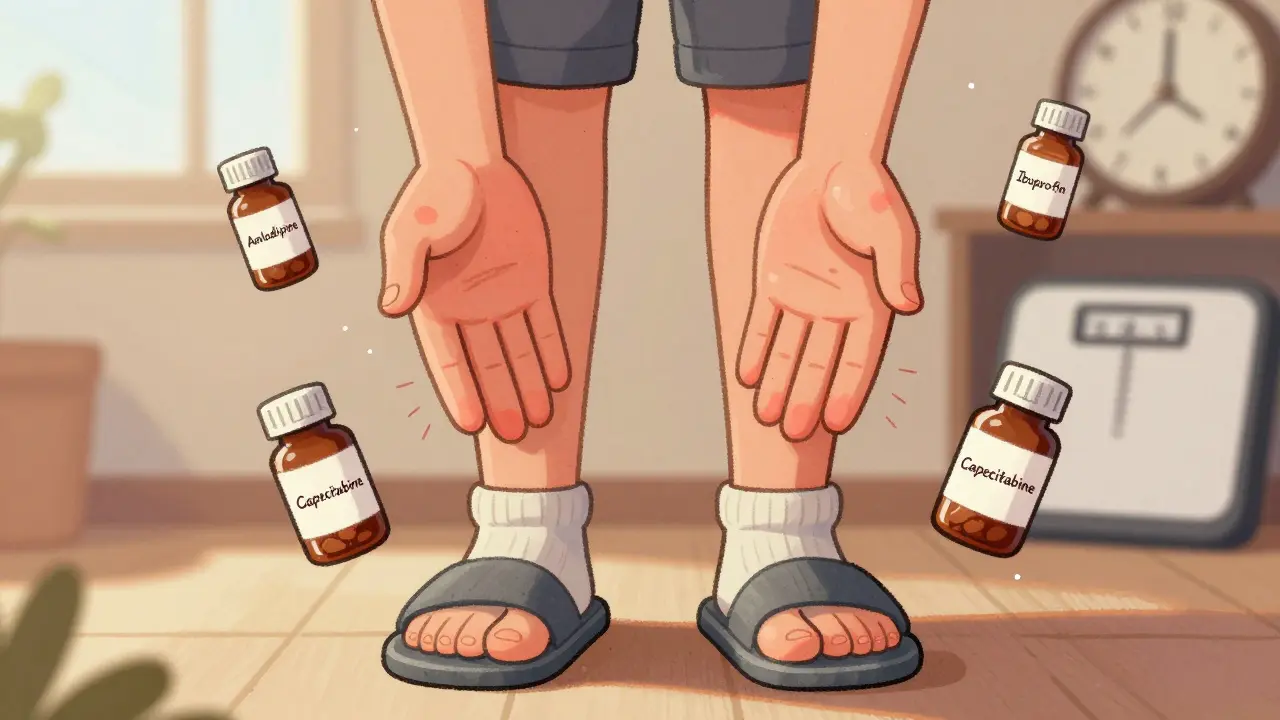
Swelling in the hands and feet from medications isn’t just water retention. It’s your body’s reaction to how certain drugs affect blood vessels, kidneys, or nerves. Two main types show up: pedal edema (swelling in the ankles and feet) and hand-foot syndrome (HFS), which affects the palms and soles with redness, tingling, and sometimes blisters. Pedal edema is most common with calcium channel blockers like amlodipine. About 1 in 7 people taking 10mg daily develop noticeable swelling. It’s not dangerous by itself, but it’s a sign your body is struggling with how the drug changes blood flow. The swelling is usually symmetrical, worse at the end of the day, and improves when you lie down. Hand-foot syndrome is different. It’s mostly tied to chemotherapy drugs like capecitabine. Up to 60% of people on these drugs get it. It starts with tingling or numbness, then redness, peeling skin, and pain. In severe cases, you can’t hold a toothbrush or open a jar. This isn’t just uncomfortable-it can stop your treatment.Which Medications Cause This?
Not all drugs cause swelling the same way. Here’s what’s most likely:- Calcium channel blockers (amlodipine, nifedipine): Cause fluid buildup by relaxing blood vessels too much. Risk jumps from 4% at 5mg to 15% at 10mg.
- NSAIDs (ibuprofen, naproxen): Block kidney signals that flush out sodium. Even short-term use can trigger swelling in sensitive people.
- Corticosteroids (prednisone): Make your body hold onto salt and water. Swelling often shows up in feet and face.
- Thiazolidinediones (pioglitazone): Used for diabetes, these cause fluid retention in 4-7% of users within weeks.
- Gabapentin and pregabalin: Nerve pain meds that can cause swelling in up to 10% of users. Many report "sock marks" that last all day.
- Chemotherapy agents (capecitabine, doxorubicin): Cause hand-foot syndrome by leaking into skin cells on palms and soles.
When It’s an Emergency
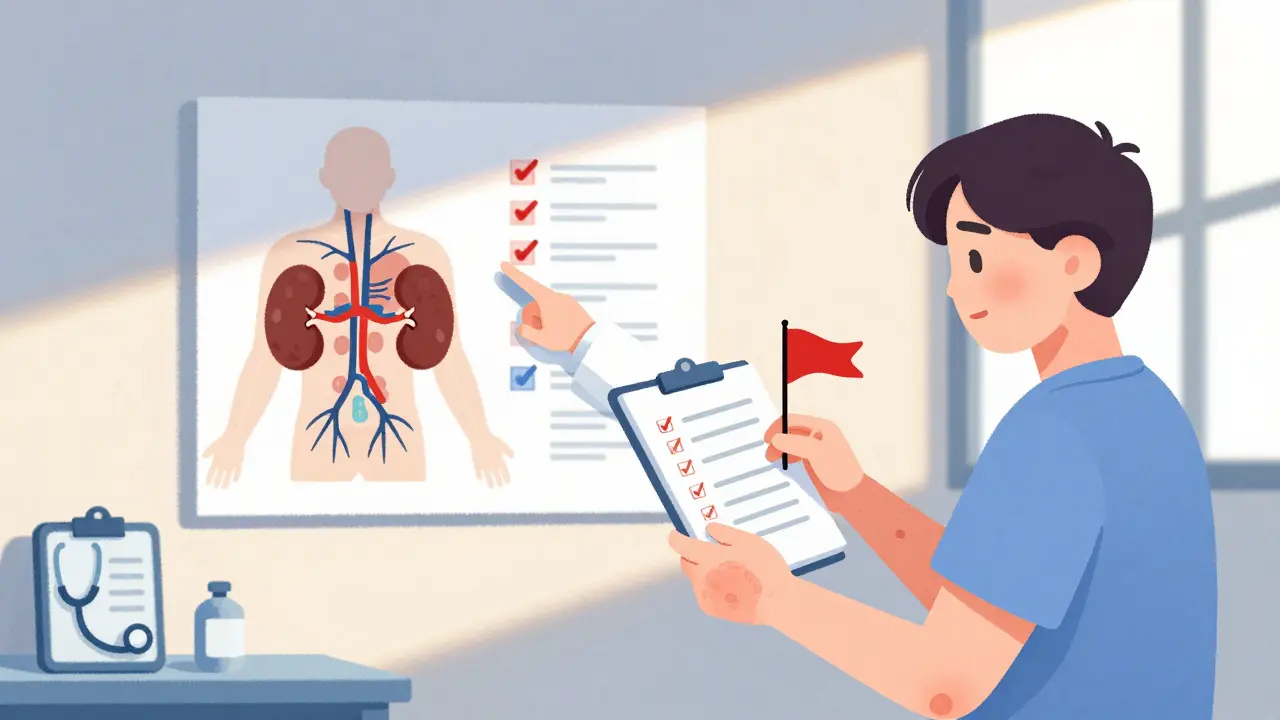
Not all swelling needs a doctor tomorrow. But some signs mean you need help now:- Swelling is only on one side (could be a blood clot)
- You’re short of breath or have chest pain (heart failure warning)
- You gained 2+ pounds in 24 hours or 5+ pounds in a week
- Your skin is blistered, broken, or turning dark
- You’re peeing less than 500ml a day (kidney trouble)
- Fever comes with hand or foot swelling (infection risk)
What Doctors Do When You Go In
Your doctor won’t just say, “Cut back on salt.” They’ll check for other causes first-heart, kidney, liver problems-because swelling can be a symptom of those too. But if you started a new med recently, they’ll suspect it. For calcium channel blocker swelling, they might:- Lower your dose (switching from 10mg to 5mg amlodipine cuts swelling risk in half)
- Add a low-dose ACE inhibitor like lisinopril (helps reduce fluid in 60-70% of cases)
- Switch you to a different blood pressure med like losartan (85% of patients see improvement within two weeks)
- Reduce the chemo dose (most effective step)
- Use cool compresses and avoid heat
- Apply moisturizers with urea (some studies show benefit, others don’t)
- Stop wearing tight shoes or gloves
What Doesn’t Work (And Why)
You’ve probably heard: “Take vitamin B6 for hand-foot syndrome.” It sounds logical. But a 2022 Cochrane review of eight studies found no real benefit. The same goes for arnica gel-some small studies show promise, but it’s not standard. Topical urea cream? One study said it reduces HFS by 32%. Another said it does nothing. That’s why ASCO doesn’t recommend it routinely. Medicine isn’t always about what sounds right-it’s about what’s proven. And here’s a harsh truth: 45% of people with drug-induced swelling still have it even after trying everything. Sometimes, the only fix is stopping the drug.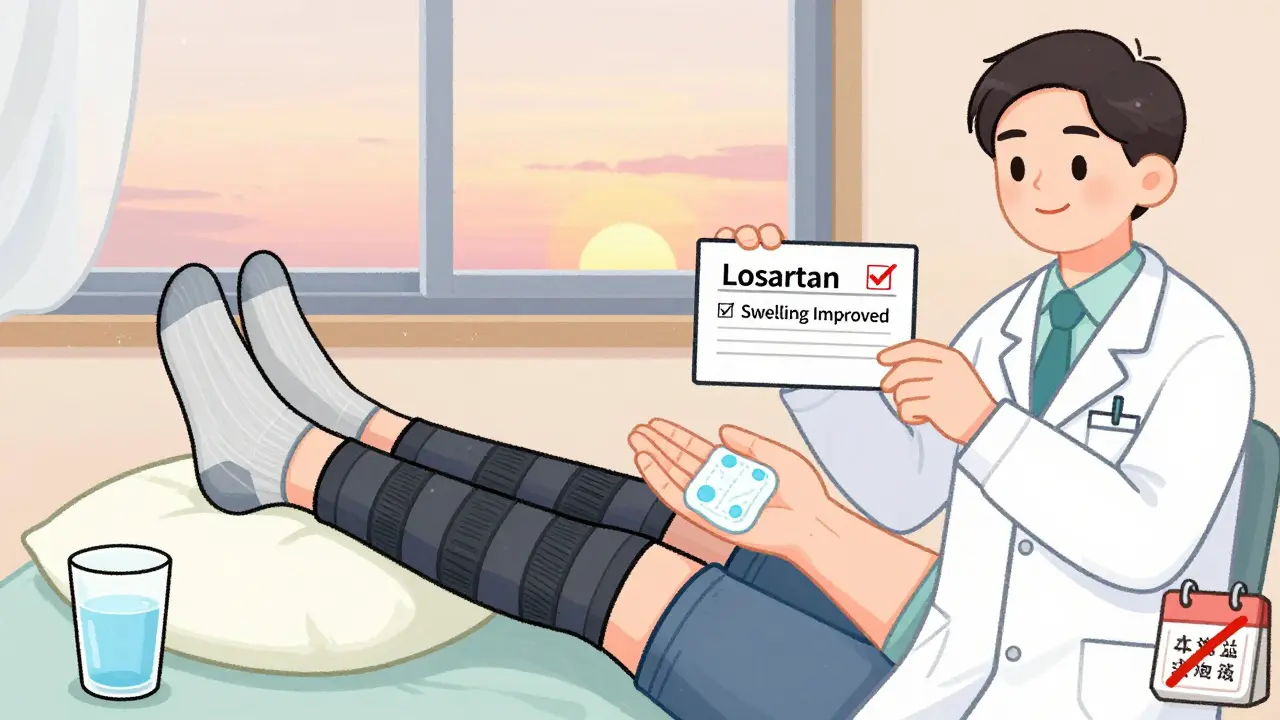
Why People Wait Too Long
A 2023 survey of 872 people with medication swelling found that 55% waited weeks before calling their doctor. Why? They thought it was “normal.” Or “just aging.” Or “not serious.” That’s dangerous. The FDA found that 37% of serious outcomes from medication swelling happened because people waited too long. The average delay? Over eight days. On Reddit, people describe “sock marks that last all day” or “walking feels like stepping on glass.” But they don’t speak up until they can’t tie their shoes. If you’re on a med that causes swelling, don’t wait for it to get worse. Don’t assume it’s harmless. Ask: “Is this side effect normal? What should I do if it gets worse?” Write it down. Bring it to your next visit.What You Can Do Right Now
If you’re noticing swelling:- Check your meds list. Did you start anything new in the last 3 days? (78% of drug-induced swelling shows up within 72 hours.)
- Take your weight daily. A sudden 2-pound jump? That’s a red flag.
- Look at your hands and feet. Is it just puffiness, or are there red patches, peeling, or blisters?
- Try elevating your feet for 30 minutes, three times a day. See if it improves by evening.
- Call your doctor if swelling is new, asymmetrical, or paired with any of the emergency signs above.
Long-Term Outlook
The good news? Most cases resolve. Eighty-nine percent of people see swelling fade within four weeks of adjusting their meds or managing symptoms. But 11% develop chronic swelling that needs ongoing care. The key isn’t avoiding meds-it’s knowing when to speak up. Many people stay on drugs that cause swelling because they don’t realize there’s an alternative. But switching from amlodipine to losartan can eliminate swelling while keeping blood pressure under control. Your body is telling you something. Listen. Don’t dismiss it as “just a side effect.” Some side effects aren’t just annoying-they’re warning signs.Can hand and foot swelling from meds go away on its own?
Sometimes, yes-but only if the medication is stopped or adjusted. Mild swelling from a new drug may improve within days after lowering the dose. But if you keep taking the same dose, swelling usually gets worse or stays. Don’t wait for it to disappear. Talk to your doctor.
Is swelling in hands and feet always from medication?
No. Swelling can also come from heart failure, kidney disease, liver problems, or blood clots. That’s why doctors check for other causes first. If you’re not on any new meds but still have swelling, you need testing-not just a guess.
Can I use diuretics (water pills) to treat medication swelling?
Not usually. Diuretics help with heart or kidney-related swelling, but they rarely fix swelling caused by calcium channel blockers or NSAIDs. In fact, they can make things worse by causing electrolyte imbalances. Always get medical advice before taking them.
Does drinking more water help reduce swelling?
No. Drinking extra water doesn’t flush out the fluid causing medication swelling. In fact, too much fluid can make it worse. The issue isn’t dehydration-it’s how your body holds onto sodium because of the drug. Focus on reducing salt and adjusting meds, not drinking more.
Can I continue my medication if I have mild swelling?
Maybe-but only under supervision. Mild swelling (Grade 1 hand-foot syndrome or slight ankle puffiness) can often be managed with dose changes, compression, or elevation. But never ignore it. Even mild swelling can get worse fast. Always tell your doctor and follow their plan.
What’s the fastest way to reduce swelling from amlodipine?
The fastest fix is switching to a different blood pressure medication like losartan or lisinopril. Many patients see improvement within 5 days. Lowering the amlodipine dose from 10mg to 5mg helps too, but switching is more reliable. Don’t stop cold turkey-work with your doctor.
Should I avoid all NSAIDs if I get swelling from them?
If you’ve had noticeable swelling from NSAIDs like ibuprofen or naproxen, it’s safest to avoid them long-term. Even occasional use can trigger swelling again. Talk to your doctor about alternatives like acetaminophen for pain, or non-drug options like physical therapy.
Can hand-foot syndrome be prevented during chemotherapy?
It can’t be fully prevented, but steps help. MD Anderson recommends applying urea 10% cream twice daily to hands and feet, avoiding hot water, wearing loose shoes, and cooling the skin after treatment. Starting chemotherapy at a lower dose also lowers risk. Patient education cuts delays in reporting symptoms by 3.2 times.
LIZETH DE PACHECO
January 2, 2026 AT 06:24My mom had swelling from amlodipine and didn't say anything for weeks until she could barely walk. She switched to losartan and it was like night and day. Don't wait like we did.
Just talk to your doctor. It's not worth suffering in silence.
Bryan Anderson
January 2, 2026 AT 07:08While the article provides a thorough overview of medication-induced edema, it's important to note that individual variability in pharmacokinetics and comorbidities significantly influences presentation. A standardized approach may overlook nuanced patient-specific factors that require tailored clinical judgment.
Matthew Hekmatniaz
January 3, 2026 AT 21:49I’ve seen this happen to my uncle in Nigeria-he was on ibuprofen for back pain and started swelling up. He thought it was just heat or bad water. No one told him to stop. It took three weeks before someone connected it to the meds.
Education matters. Not everyone has access to this kind of info.
Dusty Weeks
January 5, 2026 AT 18:18so like... if u get sock marks and its been 3 days? just stop the med??
like fr tho. i had this with gabapentin and no one told me it could do this. i thought i was just getting fat 😭
why dont they put warnings on the bottle??
Bill Medley
January 6, 2026 AT 00:09Swelling from medication is a recognized clinical phenomenon requiring prompt evaluation. Early intervention prevents progression and preserves quality of life.
Richard Thomas
January 7, 2026 AT 01:18It’s interesting how we’ve normalized discomfort in modern medicine. We take pills that alter our biology, then we ignore the body’s feedback because we’ve been conditioned to believe that side effects are just the price of healing. But what if the body isn’t just reacting-it’s communicating? What if swelling isn’t a bug, but a feature of a system trying to tell us something deeper? Maybe the real issue isn’t the drug, but our relationship with medicine itself-we treat symptoms like enemies to be suppressed, not signals to be understood.
And yet, here we are, scrolling through Reddit at 2 a.m., looking for validation that our swollen feet aren’t normal. We want to be told it’s fixable. We want hope. But maybe what we really need is to stop waiting for the doctor and start listening to ourselves-before the swelling becomes a symptom of something worse.
Paul Ong
January 8, 2026 AT 13:26swelling = stop the med
no wait no wait
call your doc first
but dont ignore it
trust me i learned the hard way
sock marks all day not normal
they can fix this
Ann Romine
January 9, 2026 AT 21:37I’m curious-has anyone tried magnesium supplements with pedal edema? I read a small study suggesting it might help with fluid balance, especially with calcium channel blockers. Not a replacement, but maybe supportive?
Olukayode Oguntulu
January 11, 2026 AT 07:03Oh wow, another Western medical dogma masquerading as wisdom. Let me guess-you also believe in the efficacy of statins and the myth of cholesterol as a villain? The real issue here is pharmaceutical capitalism. These drugs are designed to be taken indefinitely, and side effects are buried in fine print. Your body is not broken-it’s detoxing. Why not try naturopathy? Acupuncture? Ayurveda? The system doesn't want you to know these alternatives exist because they can't patent them.
jaspreet sandhu
January 13, 2026 AT 02:05People in India have been using turmeric and ginger for swelling for centuries. You think some pill from America is better? You take all these drugs and then wonder why your body is falling apart. We used to have healers who knew the land, the herbs, the seasons. Now we just swallow chemicals and blame the medicine when it makes us swell. It's not the drug-it's your entire approach to health that's broken.
Alex Warden
January 14, 2026 AT 01:51So let me get this straight-some guy in a lab coat says take this pill and your feet swell? And you don't just quit? We're not talking about a bad haircut here. This is America. If something hurts, you don't tolerate it. You sue. You complain. You find another doctor. Stop being so passive. Your body isn't a lab rat for Big Pharma.
Lee M
January 15, 2026 AT 04:25You think the FDA cares about your swollen feet? They approve drugs based on profit margins, not patient outcomes. The real reason they don’t warn you is because they know you’ll keep taking it anyway. They count on your ignorance. This isn’t medicine-it’s a controlled addiction.
Kristen Russell
January 16, 2026 AT 20:29You got this. Swelling sucks but it’s fixable. Don’t panic, just call your doctor. You’re not alone.
Liam George
January 17, 2026 AT 14:38Did you know that 87% of medication side effects are suppressed in clinical trials? The swelling? The fatigue? The brain fog? They call it 'mild' and move on. They're not just hiding side effects-they're hiding the fact that these drugs were never meant to be taken long-term. They're testing on us. And if you're reading this, you're probably already part of the experiment. The system doesn't want you to know you can stop. But you can. You just have to be brave enough to try.