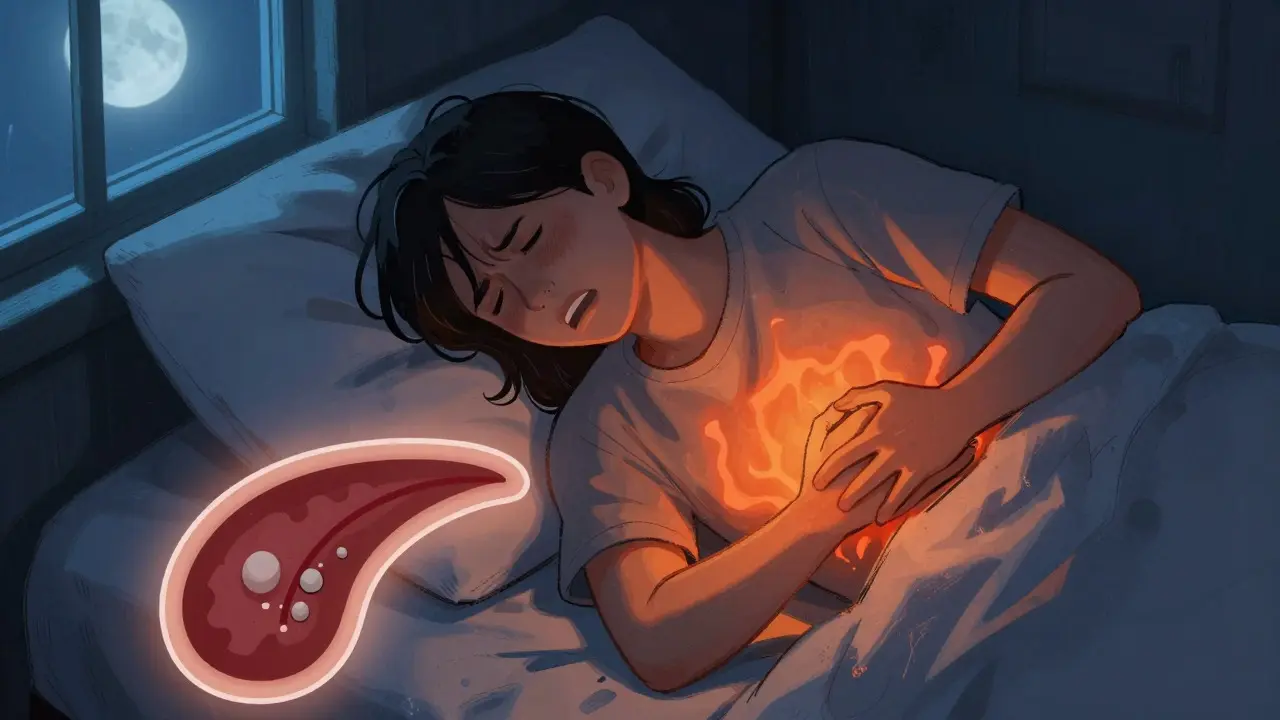
That sudden, crushing pain in your upper right abdomen that hits out of nowhere isn't just "indigestion." It is likely biliary colic, a warning sign from your gallbladder. If you have ever woken up at 3 AM clutching your side after a heavy meal, you know exactly what I mean. The pain is steady, intense, and refuses to go away with antacids or burping. For millions of people, this is the first encounter with gallstone disease.
Gallstones are not rare. Approximately 10-15% of adults in developed countries have them, according to the Merck Manual. However, about 80% of these people never feel a thing. These are called "silent stones." But for the remaining 20%, life changes dramatically. The stone moves, it blocks a duct, and the trouble begins. This article breaks down what happens when those stones cause pain, how it turns into a serious infection, and why surgery is usually the best path forward.
What Is Biliary Colic and Why Does It Hurt So Much?
To understand the pain, you need to understand the plumbing. Your liver produces bile to help digest fats. The gallbladder stores this bile and squeezes it out when you eat. Sometimes, chemicals in the bile crystallize into hard pebbles-gallstones. In Western populations, 80% of these are made of cholesterol, while the other 20% are pigment stones made of bilirubin.
Biliary colic occurs when one of these stones gets stuck in the cystic duct, the tube connecting the gallbladder to the main bile duct. The gallbladder tries to squeeze harder to push the bile out, but the stone is blocking the exit. This pressure builds up rapidly, causing severe pain.
The pain has a specific signature that doctors look for:
- Location: Right upper quadrant of the abdomen or the center (epigastrium).
- Intensity: Moderate to severe, often described as a constant ache rather than cramping.
- Duration: Lasts between 1 to 5 hours. If it lasts longer, something more serious is happening.
- Triggers: Often starts after eating fatty or heavy meals.
A key detail here is that the pain does not fluctuate like intestinal gas pain. It does not get better if you pass gas or vomit. According to the American Academy of Family Physicians (AAFP), if you experience this once, there is a high chance it will return. More than 90% of patients who have their first episode of biliary colic will have another attack within 10 years. Two-thirds will face a recurrence within just two years.
When Colic Becomes Cholecystitis: A Medical Emergency
If the stone stays stuck in the cystic duct for more than a few hours, the situation escalates from painful to dangerous. The trapped bile causes the gallbladder wall to become inflamed and infected. This condition is called acute cholecystitis.
This is no longer just a pain management issue; it is an infection risk. About 20% of biliary colic cases progress to acute cholecystitis if left untreated. The symptoms change slightly:
- The pain becomes constant and does not resolve after five hours.
- You may develop a fever or chills.
- The area over the gallbladder becomes tender to the touch.
- Nausea and vomiting become more persistent.
Other complications can arise too. If a stone migrates out of the gallbladder and blocks the common bile duct, it causes choledocholithiasis. This can lead to jaundice (yellowing of the skin and eyes) and affects 10-15% of symptomatic patients. Even worse, if the stone blocks the pancreatic duct, it triggers pancreatitis, a life-threatening inflammation of the pancreas.
The National Health Service (NHS) reports that untreated symptomatic gallstones lead to emergency hospitalization in 20-30% of cases within five years. Waiting it out is rarely a safe strategy.
Surgical Choices: Why Laparoscopic Cholecystectomy Is the Gold Standard
Once you have symptomatic gallstones, the definitive treatment is removing the gallbladder. This procedure is called a cholecystectomy. You might wonder, "Can I live without a gallbladder?" The answer is yes. The liver still produces bile; it just drips continuously into the intestine instead of being stored. Most people adjust within a few weeks.
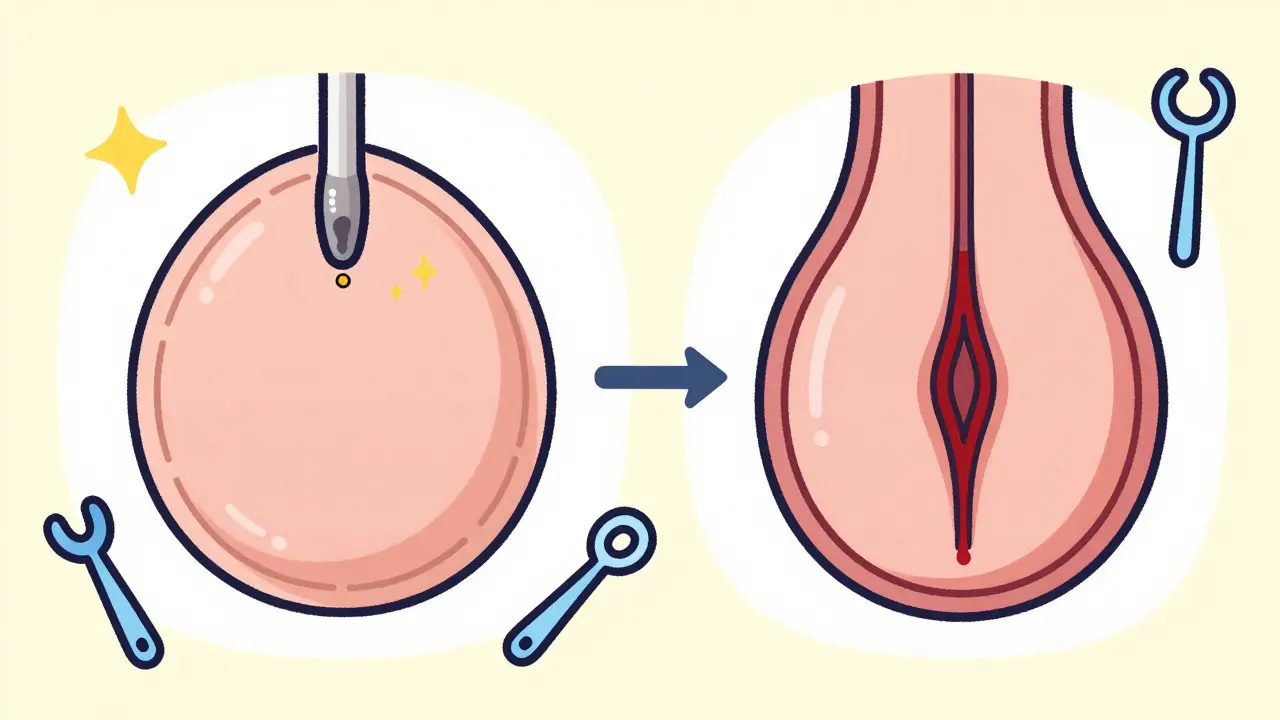
Today, laparoscopic cholecystectomy is the standard approach. Surgeons make three or four small incisions in the abdomen and use a camera and specialized tools to remove the organ. This method accounts for 90% of procedures in the United States.
| Feature | Laparoscopic Surgery | Open Surgery |
|---|---|---|
| Hospital Stay | Average 1.2 days | Average 4.7 days |
| Recovery Time | Median 7 days | Median 30 days |
| Pain Level | Lower postoperative pain | Higher postoperative pain |
| Incision Size | Small (0.5-1 cm) | Larger (up to 10 cm) |
The benefits are clear. You go home faster, hurt less, and get back to work sooner. Dr. David Flum, a surgery professor at the University of Washington, notes that patient satisfaction rates for this procedure are around 95%. The complication rate is below 2% when performed by experienced surgeons.
However, timing matters. The Society of American Gastrointestinal and Endoscopic Surgeons (SAGES) recommends performing the surgery within 72 hours of diagnosing acute cholecystitis. Doing it early reduces the chance that the surgeon will have to switch from laparoscopic to open surgery due to severe inflammation. That conversion rate drops from 25% to just 7% with early intervention.
Non-Surgical Options: Are They Worth Considering?
Some patients ask if they can avoid surgery entirely. There are medical treatments, but they come with significant caveats.
Ursodeoxycholic acid is a medication that can dissolve small cholesterol stones. It works by reducing the amount of cholesterol your liver secretes into bile. However, it is slow and unreliable. It takes 6 to 24 months to work, and it only succeeds in 30-50% of cases. Worse, even if the stones dissolve, 50% of patients see them return within five years because the underlying chemical imbalance remains.
Shock-wave lithotripsy uses sound waves to break stones into smaller pieces. Combined with dissolution therapy, it has success rates of 70-90% for solitary stones under 20mm. But this technique has largely fallen out of favor. It requires very strict patient selection, and the recurrence rate is high. Harvard Health reviews suggest it is rarely used today compared to the reliability of surgery.
For most people, especially those with recurrent pain, surgery is the smarter long-term choice. As Dr. Steven Strasberg, a leading researcher at Washington University, stated in 2023, cholecystectomy will remain the standard of care for the next decade due to its unmatched efficacy and safety.
Risks and Considerations for Older Adults
While surgery is generally safe, age and health status play a huge role. For healthy patients, the 30-day mortality rate is extremely low at 0.1%. But for patients over 75 with multiple chronic conditions (like heart disease or diabetes), the risk increases significantly.
Dr. Emily Finlayson from UCSF points out that for elderly patients with three or more comorbidities, the 30-day mortality rate jumps to 2.8%. A 2022 study in the BMJ showed that mortality for patients over 85 increased from 1.2% in 2010 to 2.1% in 2020. This highlights the need for careful preoperative evaluation. Doctors may spend 6-8 weeks optimizing your health-controlling blood sugar, managing weight, and stabilizing heart conditions-before scheduling the operation.

What to Expect After Surgery
Recovery is surprisingly quick for most people. Here is a typical timeline based on current enhanced recovery protocols:
- Day 1: You are encouraged to walk within 4 hours of surgery and start drinking liquids within 6 hours. Most patients are discharged the same day or the next morning.
- Week 1: You may feel soreness at the incision sites. Pain is usually manageable with over-the-counter medications. Many people return to desk jobs within 7-10 days.
- Week 2-4: You can gradually resume normal activities. Heavy lifting should be avoided for the first few weeks.
Diet-wise, you do not need a permanent "gallbladder diet." However, some people experience diarrhea or loose stools initially because bile flows directly into the intestine. This usually resolves as your body adjusts. Eating smaller, lower-fat meals during the first month can help minimize discomfort.
About 6% of patients report ongoing issues known as post-cholecystectomy syndrome, which can include abdominal pain or digestive problems. If this happens, follow-up with your gastroenterologist is essential to rule out retained stones or other issues.
Prevention and Lifestyle Factors
You cannot always prevent gallstones, but you can reduce your risk. Rapid weight loss is a major trigger. Crash diets cause the liver to secrete extra cholesterol into bile, promoting stone formation. Aim for gradual weight loss (1-2 pounds per week) if you are overweight.
Diet plays a role too. High-fiber foods, fruits, vegetables, and whole grains are associated with a lower risk. Conversely, diets high in refined carbohydrates and saturated fats increase the likelihood of developing stones. Staying hydrated and maintaining a healthy weight are the best defenses you have.
How long does biliary colic last?
Biliary colic typically lasts between 1 to 5 hours. The pain is steady and does not fluctuate. If the pain persists for more than 5 hours, it may indicate acute cholecystitis, which requires immediate medical attention.
Can gallstones go away on their own?
Small stones may occasionally pass through the common bile duct without causing major issues, but they often cause pain or blockage along the way. Large stones rarely pass on their own. Without treatment, symptomatic gallstones tend to recur, with 90% of patients experiencing another episode within 10 years.
Is laparoscopic gallbladder removal safe?
Yes, it is considered very safe. It is one of the most common surgeries performed worldwide. The complication rate is below 2% in experienced hands, and patient satisfaction is around 95%. Recovery is fast, with most people returning to normal activities within one to two weeks.
What are the signs of acute cholecystitis?
Signs include constant severe pain in the right upper abdomen lasting more than 5 hours, fever, chills, nausea, vomiting, and tenderness when pressing on the abdomen. These symptoms indicate an infection or inflammation that requires urgent surgical evaluation.
Do I need to change my diet after gallbladder surgery?
Most people do not need a permanent dietary change. However, immediately after surgery, it is helpful to eat smaller, lower-fat meals to allow your body to adjust to the continuous flow of bile. Gradually reintroduce normal foods over several weeks. Some people may experience temporary diarrhea, which usually resolves on its own.