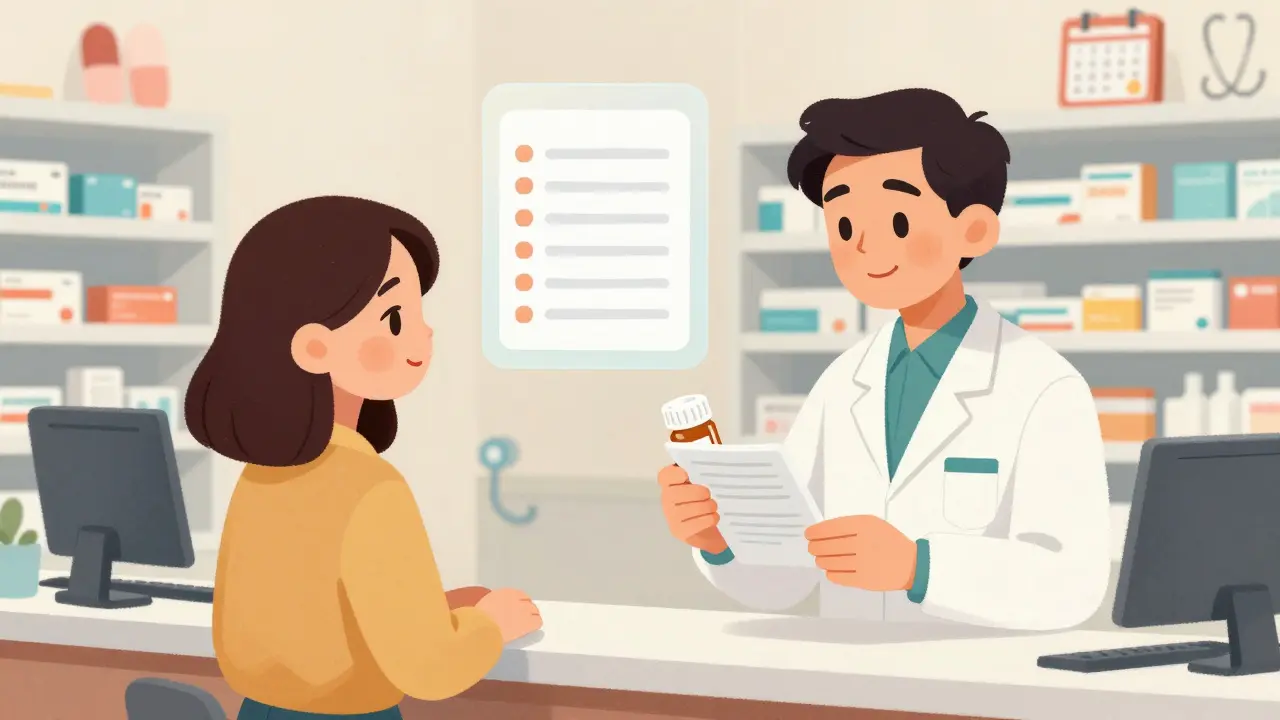
Every year, thousands of people in Canada and the U.S. get the wrong medication, the wrong dose, or a drug that interacts dangerously with something they’re already taking. Most of these errors happen at the pharmacy - not because pharmacists are careless, but because the system is overloaded. Prescriptions come in fast, names sound alike, and pills can look identical. You might think, "That’s not my job to catch." But here’s the truth: you are the last line of defense between a dangerous mistake and your health.
Why Your Pharmacy Visit Needs a Personal Checklist
Pharmacists are trained professionals. They use checklists, double-check systems, and automated alerts. But they’re also juggling 50+ prescriptions a day, answering phone calls, managing insurance issues, and helping other patients. A simple mix-up - like confusing metformin with metoprolol - can slip through. That’s not negligence. It’s human error in a high-pressure environment. You don’t need to be a pharmacist to spot red flags. You just need to know what to look for and how to ask. A personal safety checklist isn’t about taking over the pharmacist’s job. It’s about being an active partner in your care. Studies show that patients who ask questions and verify their medications reduce their risk of errors by up to 60%. That’s not a guess - it’s from data collected by the Institute for Safe Medication Practices.Your Simple 5-Point Pharmacy Safety Checklist
Here’s what you should do every time you pick up a prescription - whether it’s new, refilled, or changed. Do this before you leave the counter.- Confirm your name and date of birth - Ask the pharmacist: "Can you please confirm this prescription is for [Your Full Name], born on [Date]?" Even small typos in your name (like "John Smith" vs. "Jon Smith") can lead to the wrong person’s meds being filled.
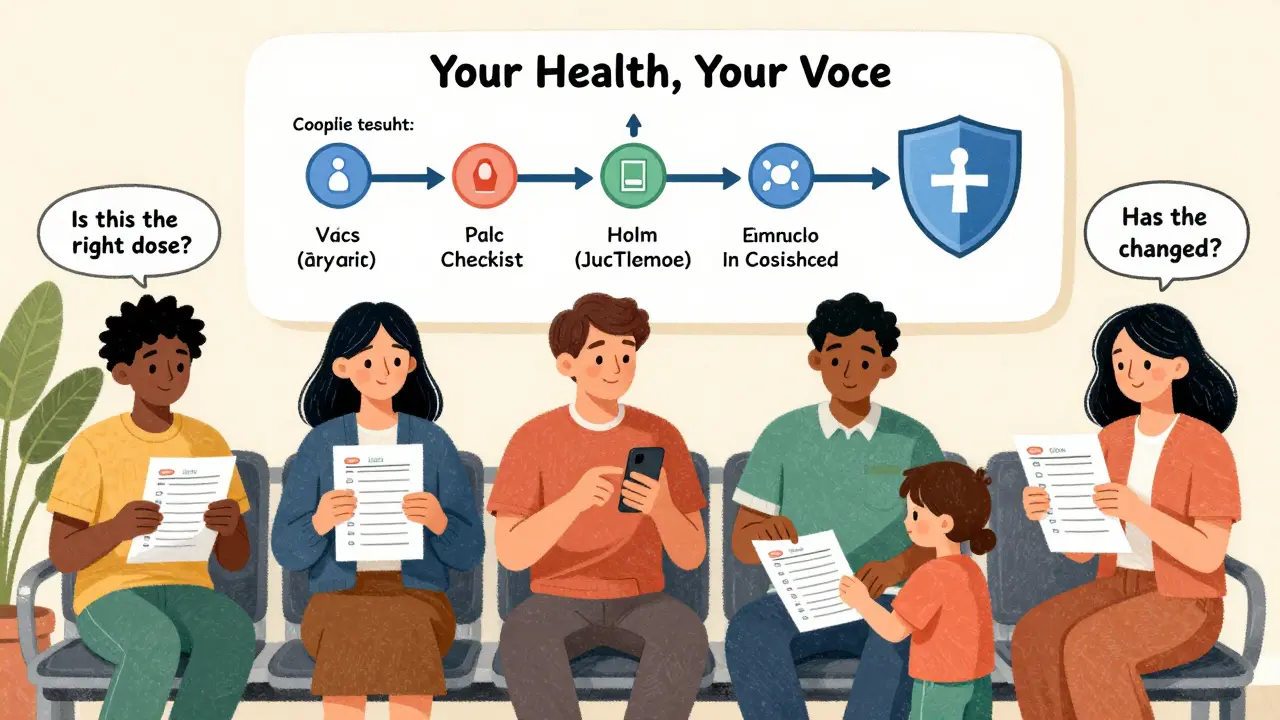
- Check the drug name and strength - Look at the label. Does it match what your doctor told you? If your doctor prescribed "amoxicillin 500mg," but the bottle says "amoxicillin 875mg," speak up. Don’t assume it’s a typo. Ask: "Is this the right dose? My doctor said 500mg."
- Verify the pill appearance - Compare the pills to what you got last time. Are they the same color, shape, and imprint? If they look different, don’t take them without asking. Pill appearance can change if the manufacturer switched, but you need to know why. Ask: "Has the manufacturer changed? This looks different than last month."
- Ask about purpose and side effects - Even if you’ve taken this drug before, ask: "What is this for?" and "What side effects should I watch for?" Sometimes, a drug gets prescribed for a new reason - like using gabapentin for nerve pain instead of seizures. If you’re unsure why you’re taking it, you might miss warning signs.
- Review all your meds together - Bring a list of everything you take: prescriptions, over-the-counter drugs, vitamins, herbs. Say: "I’m taking these. Are there any interactions here?" This is especially important if you see multiple doctors or refill at different pharmacies. A common error? Taking two painkillers that both contain acetaminophen - leading to liver damage.
What to Do If Something Feels Off
If the pharmacist gives you a vague answer - "It’s fine," or "We’ve filled this before" - don’t walk away. Push a little harder. Say: "I’m sorry, but I need to be sure. Can you double-check this with another pharmacist?" Most pharmacies have a second-check policy for high-risk meds like blood thinners, insulin, or opioids. You have the right to ask for that. If you’re still unsure, don’t take the medication. Call your doctor’s office. Most clinics have a nurse or pharmacist on call for exactly this reason. Take a photo of the label and send it to them. Say: "I picked this up, but it doesn’t match what I expected. Can you confirm?" Don’t feel embarrassed. Pharmacists appreciate patients who ask questions. In fact, the Pharmaceutical Society of Ireland says clear communication between patient and pharmacist is one of the top ways to prevent dispensing errors.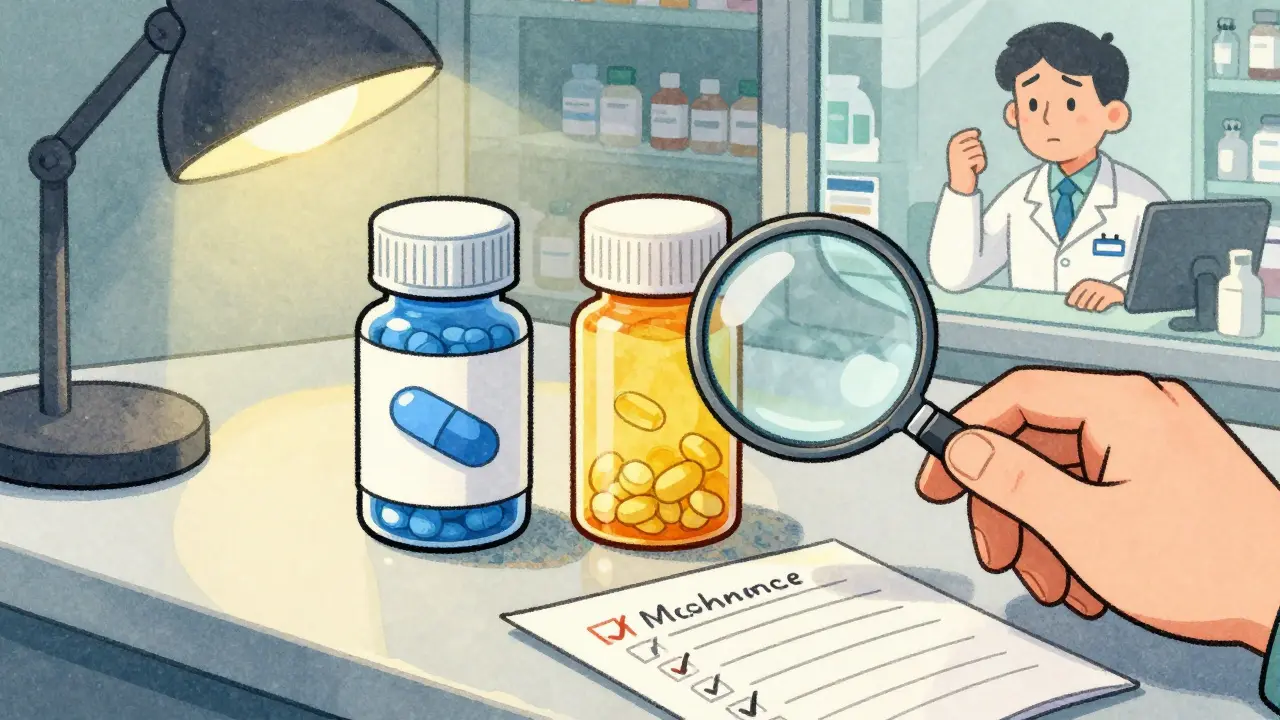
When to Use a Medication List (and How to Keep It Updated)
A written or digital list of your meds isn’t optional - it’s essential. Keep it in your wallet, phone, and with a family member. Include:- Full drug name (brand and generic, if different)
- Dose (e.g., 10mg, 500mg)
- How often (e.g., once daily, twice a day)
- Why you take it (e.g., "for high blood pressure")
- When you last refilled it
Red Flags That Mean Stop - Right Now
Some things should never be ignored:- The prescription says "as needed" but you got 90 pills - that’s unusual for most pain or anxiety meds.
- You’re given a new drug you’ve never heard of - and no one explains why.
- The bottle has no label, or the label is smudged or missing key info.
- You’re told, "We don’t have your usual brand, but this is the same." - Not always true. Generic versions can differ in fillers, which can affect absorption.
- You’re given a controlled substance (like oxycodone or Adderall) without a paper or electronic copy of the prescription being verified.
How to Build a Habit That Saves Lives
This isn’t a one-time task. Make it part of your routine. Here’s how:- Set a phone reminder: "Check meds at pharmacy" - every time you go.
- Ask a family member to go with you once a month - two sets of eyes catch more errors.
- Keep a small notebook in your bag with a checklist printed out. Check off each step.
- If you refill by mail, open the box and verify before taking the first pill. Take a photo of the label and compare it to your list.
What to Do If You’ve Already Taken the Wrong Med
If you realize you took the wrong pill - even if you feel fine - call your pharmacist or doctor immediately. Don’t wait for symptoms. Some errors, like double-dosing on blood pressure meds or mixing alcohol with sedatives, can be deadly within hours. If you’re unsure who to call, dial 811 in Ontario (or your local health line). They’ll connect you to a nurse who can assess your risk.Why This Matters More Than You Think
Medication errors are the third leading cause of death in North America - after heart disease and cancer. Most aren’t from malice. They’re from missed steps. And the system doesn’t catch them all. You’re not responsible for the pharmacy’s workflow. But you are responsible for your body. A five-minute checklist before you leave the counter could prevent a hospital stay, a fall, a stroke, or worse. It’s not about being paranoid. It’s about being informed. And in a world where your health is handed to you in a plastic bottle, you deserve to know what’s inside - and why.Do I need to check my meds every time I pick them up, even if it’s the same prescription?
Yes. Even if it’s the same drug, the manufacturer, dose, or formulation can change. Pills can look different. The label might have a typo. Pharmacists refill hundreds of prescriptions a day - mistakes happen. Checking every time is the only way to be sure.
Can I ask the pharmacist to explain my medication in simple terms?
Absolutely. Pharmacists are trained to explain medications clearly. Say: "I’m not a medical person - can you tell me what this does and what to watch for?" They’re required to provide counseling on new prescriptions. If they rush you, ask to speak with them privately or schedule a time later.
What if I’m not sure if a drug is new or just changed?
Always ask: "Is this a new medication, or did I take this before?" If you’ve taken it before, compare the pill shape, color, and imprint to your old bottle or a photo. If it’s different, ask why. Some drugs have multiple generic versions - they’re safe, but you should know the change happened.
Should I bring my meds to every doctor visit?
Yes. Bring all your pills in a bag - or a list if that’s easier. Many doctors don’t know what you’re taking unless you tell them. This helps avoid dangerous interactions and helps them spot duplicate prescriptions or outdated meds.
Are there apps that help track my medications?
Yes. Apps like Medisafe, MyTherapy, and Healthvana let you log your meds, set reminders, and share lists with family or pharmacists. Some even alert you if a new prescription might interact with something you’re already taking. These aren’t foolproof, but they add a layer of safety.
Oladeji Omobolaji
January 22, 2026 AT 16:00Man, I never thought about checking my pills like this. I just grab 'em and go. But after reading this, I'm gonna start asking questions next time I pick up my blood pressure med. Better safe than sorry, right?
Susannah Green
January 22, 2026 AT 23:03YES. This is so important. I'm a nurse, and I see patients come in with wrong meds ALL THE TIME. The label says 10mg, but the pill is a 25mg tablet. Pharmacists are overworked, not negligent. Bring your list. Ask the questions. Don't be shy. It's your life. And if they get annoyed? Tell them you're following CDC guidelines. They'll quiet down.
Vanessa Barber
January 24, 2026 AT 01:21I get why this is useful, but honestly? This feels like putting the burden on patients instead of fixing the system. If pharmacies are this broken, why are we the ones doing QA? It's not my job to be a pharmacist.
Sue Stone
January 25, 2026 AT 19:07I used to think this was overkill until my grandma got the wrong thyroid med. She was fine, but she could've had a stroke. Now I go with her every time. We check the label, the pill, the dose. It takes 3 minutes. Worth it.
dana torgersen
January 27, 2026 AT 11:54Wow... this... is... so... profound... I mean... like... wow... I never realized... that... pills... could... look... different... and... that... might... mean... something... dangerous... I'm... gonna... start... taking... pictures... of... my... meds... and... write... them... down... in... my... notebook... with... lots... of... exclamation... points!!!
Andrew Smirnykh
January 27, 2026 AT 21:22This reminds me of how in Japan, pharmacists sit down with patients for 15 minutes to explain each med. Here, we rush. Maybe we need to change the culture, not just the checklist. But this is a good start.
Dawson Taylor
January 29, 2026 AT 20:37Consistency is the only safeguard against systemic failure. Verification is not optional. It is procedural integrity.
Kerry Moore
January 31, 2026 AT 19:50As someone who works in healthcare administration, I can attest that the pressure on pharmacists is immense. This checklist is not an indictment of their competence-it’s a recognition of human limits. The fact that patients who verify reduce errors by 60% is not anecdotal; it’s empirically validated. I encourage every patient to adopt this as a non-negotiable ritual. It is not intrusion. It is partnership.
Sallie Jane Barnes
February 1, 2026 AT 23:08I used to feel weird asking questions at the pharmacy... until I realized: if I wouldn’t let a stranger hand me a random pill in a parking lot, why am I okay taking one from a counter without asking? I started printing the checklist and keeping it in my purse. Now my pharmacist knows me. She smiles when I walk in. We’re a team.
Anna Pryde-Smith
February 3, 2026 AT 09:53THIS IS WHY PEOPLE DIE. I had a cousin who took the wrong blood thinner because she didn’t check. She bled out in her sleep. No one told her to ask. No one told her to look. This post could save your life. Do it. Now. Don’t wait for tragedy to wake you up.