Every year, thousands of opioid-related overdoses happen not because someone bought drugs on the street, but because they found leftover pills in a family member’s medicine cabinet. In 2021, over 107,000 people in the U.S. died from drug overdoses - and nearly 70% of those misused opioids that came from home medicine cabinets. If you or someone you know has unused opioid painkillers sitting in a drawer, you’re not alone. But leaving them there isn’t safe. Here’s how to get rid of them properly - and why it matters.
Why Proper Opioid Disposal Matters
Opioids like oxycodone, hydrocodone, fentanyl patches, and morphine are powerful pain relievers. But they’re also highly addictive. Even a single pill can be dangerous if taken by someone who doesn’t need it - especially children, teens, or people with no tolerance. The CDC says that most misused prescription opioids come from friends or family, not dealers. That means the biggest risk isn’t out there - it’s in your bathroom cabinet. When unused opioids stay around, they become easy targets. Teens might grab them for a party. An elderly relative might accidentally take the wrong pill. A visitor might take one “just to see what it feels like.” And once someone gets hooked, it’s hard to stop. Proper disposal cuts that chain before it starts.Four Safe Ways to Dispose of Unused Opioids
There are four proven methods to safely get rid of unused opioids. Not all are available everywhere, but one of them will work for you.1. Use a Drug Take-Back Program
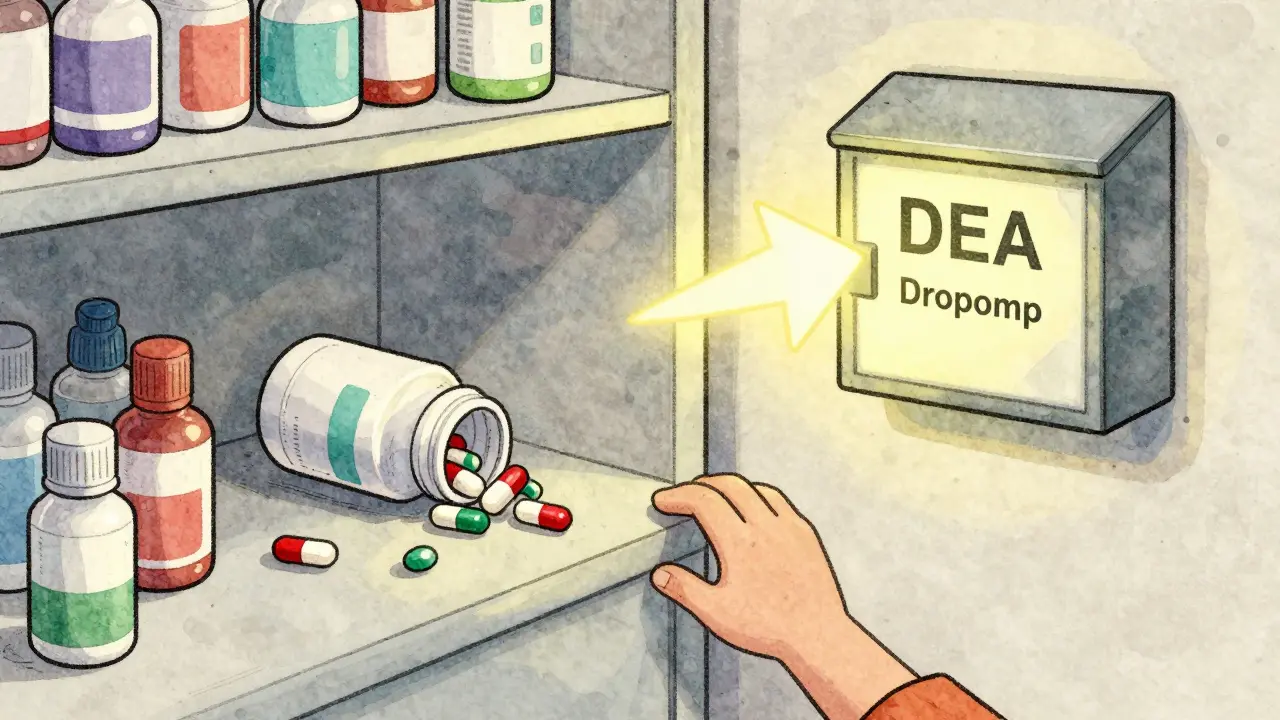
This is the gold standard. The DEA runs over 16,900 collection sites across the U.S. - including pharmacies, hospitals, and police stations. These sites accept unused pills, patches, and liquids. The medications are collected, sealed, and incinerated at temperatures above 1,800°F, which destroys every molecule of the drug. You can find your nearest location using the DEA’s online Disposal Locator. Just enter your ZIP code, and it shows you sites open today. Many pharmacies like Walgreens and Walmart have secure drop boxes inside their stores - no appointment needed. They’re often open during regular business hours. Take-back programs are 98% effective at preventing diversion. That means almost every pill dropped off never reaches the wrong hands.2. Use a Deactivation Pouch
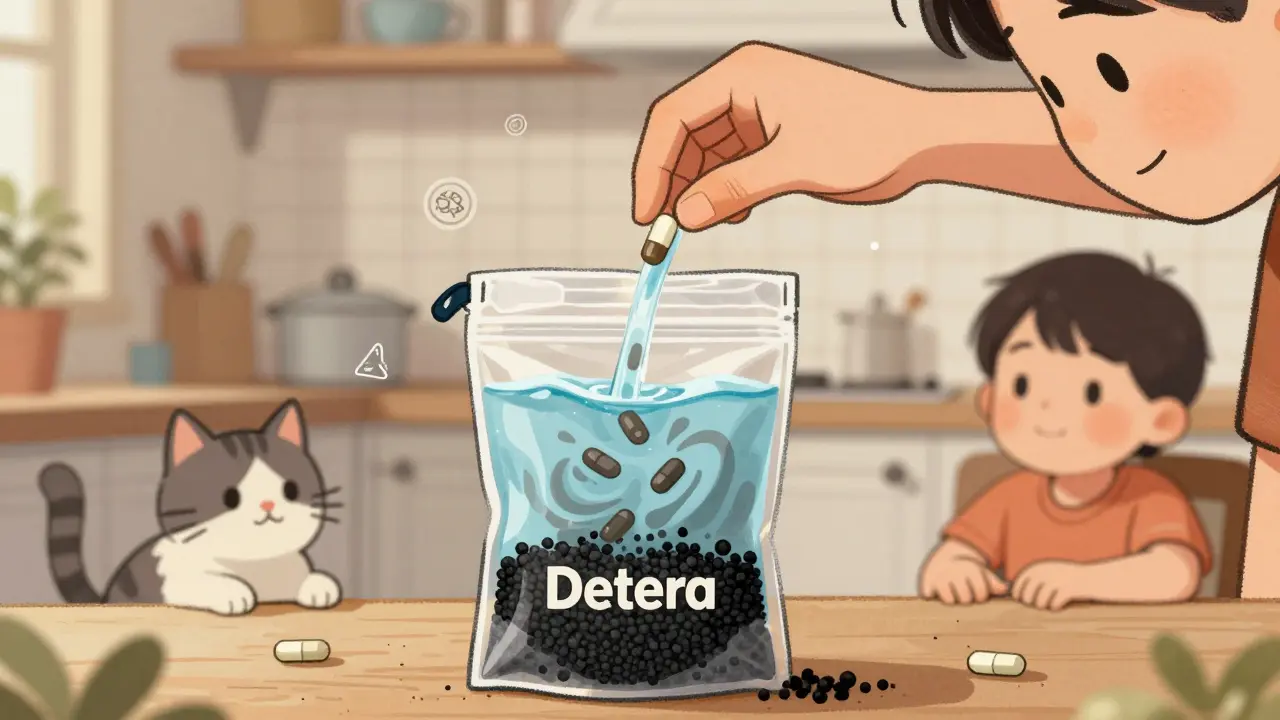
If there’s no take-back site nearby, deactivation pouches are your next best option. Brands like Deterra and SUDS come in small, biodegradable pouches with activated carbon inside. You drop your pills or patches in, add warm water, seal it, and wait 30 seconds. The carbon binds to the opioid molecules and neutralizes them completely. These pouches are sold at major pharmacies - about 85% of them carry them now. They cost between $2.50 and $5.00 each. They’re easy to use, mess-free, and safe for kids and pets because the drug is destroyed inside the pouch. Lab tests show they deactivate 99.9% of opioids. Just make sure you follow the instructions: add enough water, seal tightly, and don’t reuse the pouch. Some users skip the water step - that’s why it doesn’t work. Don’t be one of them.3. Household Disposal (FDA-Approved Method)
If you can’t get to a take-back site or don’t have a pouch, you can dispose of opioids at home - but only if you do it right. The FDA says to:- Remove pills from their original bottles.
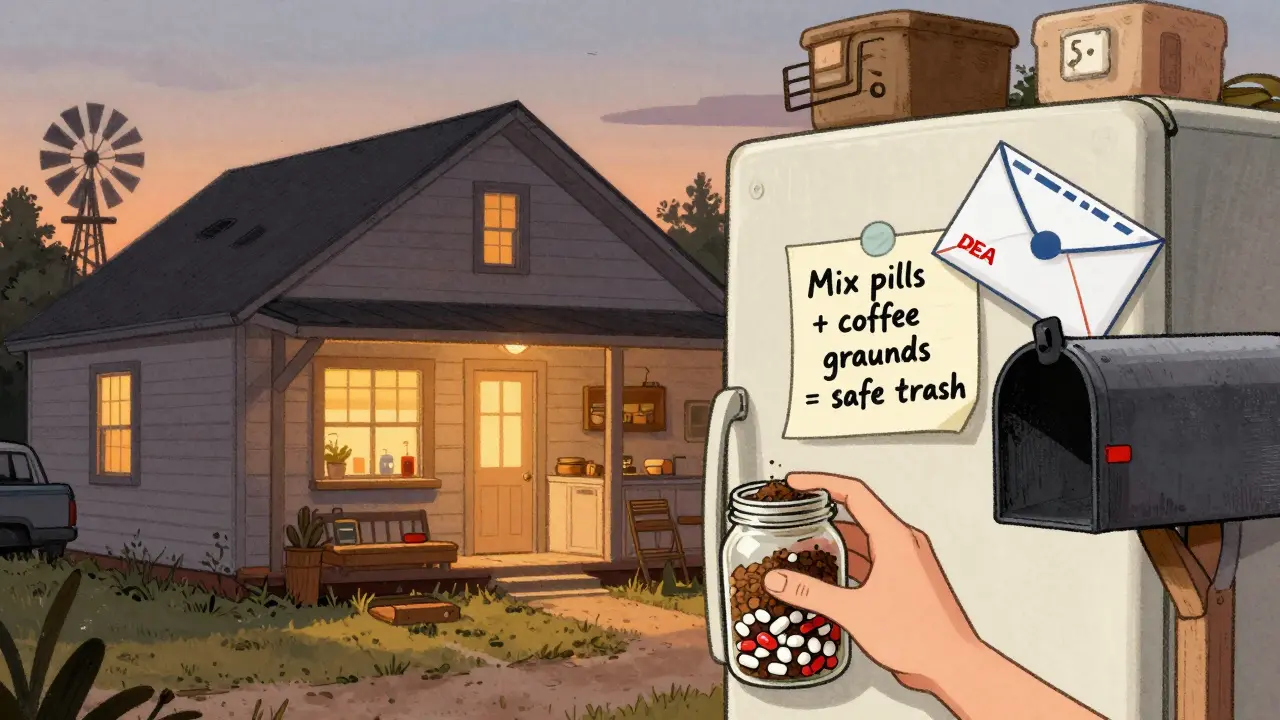
- Mix them with something unappetizing - used coffee grounds, cat litter, or dirt.
- Put the mixture in a sealed plastic bag or container (like a jar or Tupperware).
- Cover your name and prescription info on the bottle with a permanent marker or tape.
- Throw the sealed container in the trash.
4. Flushing (Only for Specific Opioids)
Flushing is not for most opioids. Only 15 specific medications are on the FDA’s flush list - and they’re all high-risk. These include fentanyl patches, oxycodone tablets, and morphine sulfate. Why? Because these drugs are so potent that even one pill can kill a child. If you have one of these, and you can’t get to a take-back site or pouch, flushing is the safest option. It prevents accidental exposure faster than any other method. The FDA says this reduces pediatric poisonings by 95%. But don’t flush anything else. Flushing non-listed drugs contributes to water pollution. The U.S. Geological Survey found traces of pharmaceuticals in 80% of U.S. waterways. But for these 15 drugs, the risk of a child dying from accidental ingestion outweighs the environmental impact.What NOT to Do
Some habits seem harmless - but they’re dangerous.- Don’t just throw pills in the trash. Someone can dig them out.
- Don’t flush everything. Only flush what’s on the FDA list.
- Don’t wash pills down the sink. Same problem as flushing - pollution.
- Don’t give them to someone else. Even if they’re in pain, it’s illegal and unsafe.
- Don’t leave them in the original bottle. The label makes it easy for someone to know what they are.
What If You Live in a Rural Area?
One in seven Americans lives in a place where the nearest take-back site is more than 50 miles away. That’s a problem - especially in rural communities where opioid misuse is rising. If you’re in this situation:- Ask your pharmacy if they carry deactivation pouches. Many now stock them for free or at low cost through state funding.
- Check with your county health department. Some run mail-back programs or mobile collection events.
- Use the household method - it’s not perfect, but it’s better than leaving them out.
- Advocate for more local sites. Many states are using opioid settlement money to build new drop boxes.
How to Talk to Your Doctor
Most doctors still don’t talk about disposal. A 2022 report found that only 38% of prescribers give patients disposal instructions when writing an opioid prescription. But you can change that. When you get a prescription, ask:- “How do I safely get rid of these if I don’t need them?”
- “Do you have deactivation pouches here?”
- “Can you write disposal instructions on my prescription label?”
Jane Wei
December 16, 2025 AT 20:37I had no idea so many opioids were just sitting in people’s cabinets. I cleaned out my mom’s medicine drawer last month and found three old oxycodone pills from her knee surgery. Threw ’em in a deactivation pouch - $3 well spent. Feels good to do something simple that could actually save a life.
Also, why do we still let pharmacies charge for these pouches? Should be free. Like condoms or naloxone.
Nishant Desae
December 18, 2025 AT 07:03Hey everyone, i just wanted to say thank you for this post, really. As someone from india, we dont have the same infrastructure here, but i’ve seen how addiction spreads through family medicine cabinets even here. My cousin’s brother died from a leftover painkiller his dad had after back surgery. No one thought it was a big deal. Just left it in the drawer like it was aspirin.
So i started sharing this info with my family, friends, even my local clinic. We got a few deactivation pouches shipped from the us (yes, it’s expensive but worth it), and now we’re pushing for local pharmacies to stock them. Small steps, but if one kid doesn’t find a pill because of us, it’s already a win. Keep spreading the word, people. It matters more than you think.
Chris Van Horn
December 20, 2025 AT 01:50Let me be the first to say this: the CDC’s data is cherry-picked. You cite "70% of misused opioids come from home cabinets" - but that statistic conflates "access" with "primary source." Most addicts get their drugs from dealers, black-market pharmacies, or foreign fentanyl. The real issue is systemic failure in addiction treatment, not a few leftover pills in a drawer.
Also, flushing? Please. You’re contributing to microplastic contamination and aquatic endocrine disruption. The EPA has documented 200+ pharmaceutical compounds in U.S. waterways. You’re advocating for ecological negligence under the guise of "safety."
And why are we not talking about prescribing limits? Why are we blaming the patient for having a prescription? This is performative harm reduction - a distraction from the real problem: pharmaceutical lobbying and overprescribing.
Virginia Seitz
December 21, 2025 AT 17:06Just threw my dad’s fentanyl patches in the toilet. 😅🚽
He’s in hospice. Didn’t need them anymore. Felt weird but also… right?
Also, coffee grounds + pill = weird science experiment. But hey, it works. 🙌
Peter Ronai
December 22, 2025 AT 10:23Oh please. You’re all acting like this is some revolutionary public service announcement. I’ve been telling people this for years. The fact that you’re only now learning about take-back programs means you’ve been living under a rock. And don’t even get me started on "deactivation pouches" - that’s just corporate greenwashing with a $5 price tag. The DEA’s drop boxes have been around since 2010. You just didn’t care until someone made a viral post about it.
Also, flushing? Only for fentanyl? What about hydromorphone? Or methadone? You left those out. Classic half-baked advice. This isn’t helpful - it’s dangerously incomplete.
Steven Lavoie
December 23, 2025 AT 07:22Great breakdown. I’m a nurse in rural Ohio, and I’ve seen firsthand how often patients keep opioids "just in case." Many don’t realize they’re legally required to dispose of them - or that they’re putting their own kids at risk.
I hand out printed disposal guides at discharge now. Simple, visual, with icons. One elderly woman told me she’d been keeping her husband’s morphine for three years because she thought "it might help if he came back."
It’s not just about addiction. It’s about grief, denial, and the quiet ways we hold onto pain. Disposal isn’t just safety - it’s emotional closure too.
Michael Whitaker
December 23, 2025 AT 08:32While I appreciate the sentiment, I must respectfully challenge the premise that individual disposal actions are meaningful in the context of a systemic crisis. You’re asking people to perform symbolic acts - mixing pills with coffee grounds - while the real architects of the opioid epidemic, namely the pharmaceutical industry and its regulatory capture, continue to operate unimpeded.
Moreover, the suggestion that "one pill can end a life" is emotionally manipulative. It shifts moral responsibility onto the individual while absolving the institutions that flooded communities with these drugs in the first place. This isn’t empowerment - it’s distraction.
Sachin Bhorde
December 24, 2025 AT 05:47Yo, this is dope. As a med tech in Mumbai, I’ve seen the same thing here - families hoard opioids after surgeries, thinking "it’s medicine, so it’s safe." But we don’t have take-back bins. So I’ve been using the FDA household method and filming quick TikToks in Hindi showing how to mix pills with used tea leaves or chili powder (they hate the taste).
Also, deactivation pouches? We got a batch imported through a NGO. Cost $4 each. But we’re pooling money from local clinics to buy 50 more. If you’re in the US and have extra pouches lying around, DM me. We’ll ship you a box of chai in return. 🫖
Also, side note: the QR pouches? That’s the future. Tracking disposal without privacy invasion? Genius. Pharma needs to stop being greedy and start being responsible.