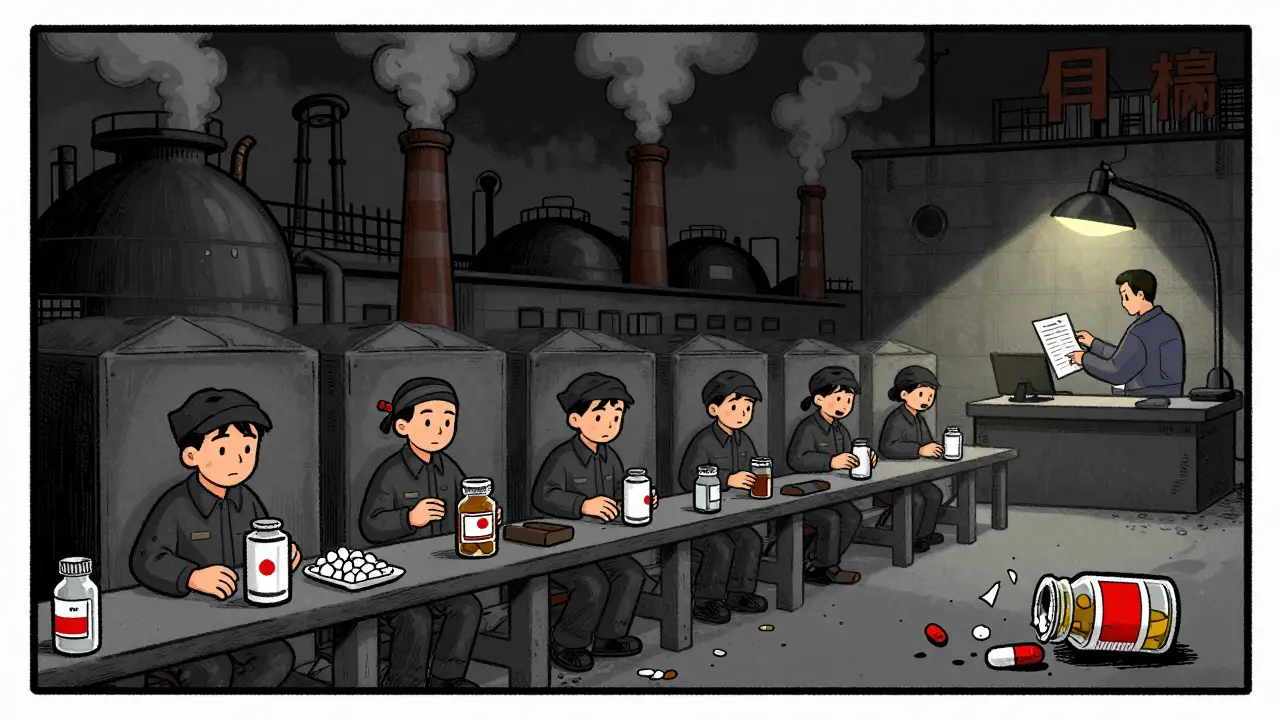
When you buy a pill, a medical device, or even a children’s toy, you assume it’s safe. But behind many of these products is a complex, often hidden chain of overseas manufacturing - and not all of it meets the standards you expect. In 2024, foreign manufacturing accounted for 62% of all drug recalls in the U.S., even though these facilities only produced 43% of the total volume. That’s not a coincidence. It’s a symptom of a deeper problem: quality control is breaking down in places where oversight is weak, incentives are misaligned, and pressure to cut costs is crushing integrity.
Why Quality Fails Overseas
It’s not that factories overseas are inherently bad. Many are modern, well-equipped, and staffed by skilled workers. The problem isn’t location - it’s systems. When a U.S. company outsources production to China, India, or Vietnam, they often rely on third-party agents, distant audits, and paperwork instead of real-time oversight. That’s a recipe for disaster. Take material substitution. According to Brookings Institution’s 2025 analysis, 68% of inspected Chinese manufacturing sites were found to swap out approved raw materials for cheaper alternatives. One case from Wuhu Nuowei Chemistry Co., Ltd. - cited in an FDA warning letter in February 2025 - involved a batch of generic medication contaminated with impurities because the company didn’t even set proper limits for them. The FDA’s own data shows that 47% of Chinese drug facilities received Form 483 observations in 2024 - far higher than the 29% for U.S. sites. And here’s the kicker: 78% of those inspections in China were announced in advance. That means factories had days, sometimes weeks, to clean up, fake records, or hide violations. In the U.S., only 5% of inspections are announced. The playing field isn’t just uneven - it’s rigged.The Hidden Cost of Cheap Production
You might think saving 30-45% on labor costs is a win. But when a batch of pills fails biocompatibility testing - like the 12,000 units from a Shenzhen supplier that used industrial-grade silicone instead of medical-grade - you don’t just lose the batch. You lose trust. You lose customers. You face lawsuits. And if the product is something life-critical, like insulin or antibiotics, you risk lives. Harris Sliwoski’s 2025 report found that unaddressed quality issues add 15-25% to total manufacturing costs when you factor in recalls, rework, legal fees, and lost sales. That’s more than the savings you thought you got. And it’s not just about money. The FDA says quality failures in foreign drug plants contributed to 37% of U.S. drug shortages in 2024. That’s not just an inconvenience - it’s a public health crisis.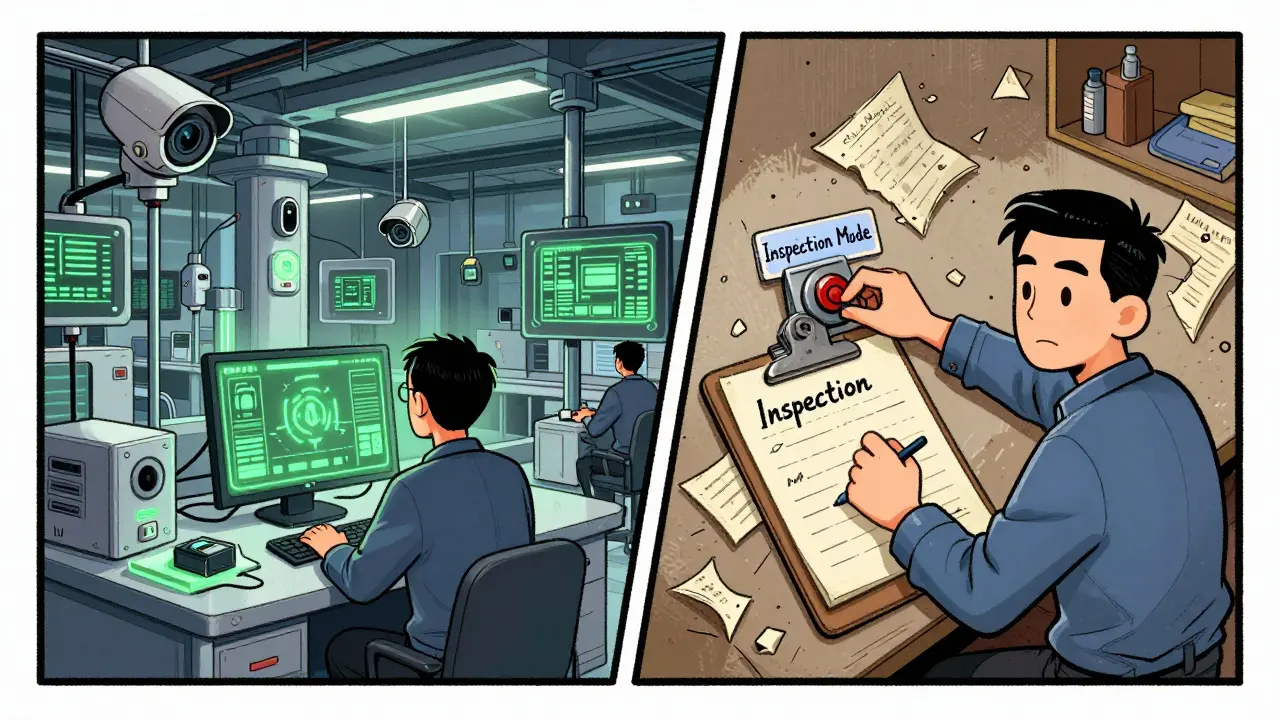
Where the Problems Are Worst
Not all countries are the same. China remains the largest source of foreign manufacturing, but its quality landscape is splitting in two. On one side, companies aligned with China’s “Made in China 2025” initiative are investing in AI-driven quality control, real-time monitoring, and certified staff. GQC.io reports that 73% of top-tier Chinese manufacturers now use advanced analytics. But on the other side, thousands of smaller, financially strained factories are cutting corners to survive. Some are even running “sophisticated bank-switch scams” - where they switch production lines overnight to avoid inspections, then switch back after the auditors leave. India is another major concern. Despite making up only 25% of foreign drug facilities, Indian suppliers accounted for 34% of FDA import alerts in 2024. The issue here isn’t lack of capability - it’s lack of enforcement. Quality assurance teams often report to production managers, not independent compliance officers. That means when a factory is under pressure to meet deadlines, quality gets sacrificed. Vietnam, meanwhile, is showing improvement. Gembah’s 2025 report found an 18% rise in quality metrics since 2022. That’s because many Vietnamese factories are being built from scratch with Western partners who demand transparency from day one. It’s not perfect - but it’s a model others could follow.How to Fix It
There’s no magic bullet. But companies that survive - and thrive - in overseas manufacturing do three things differently. First, they don’t rely on paper audits. They send their own quality managers to live on-site. One Minnesota medical device company reduced defects from 12.7% to just 0.8% by hiring a full-time Chinese quality lead, installing blockchain traceability, and using third-party verification labs. That’s not cheap - it cost them $18,500 per year per facility in training and salaries - but it saved them millions in recalls. Second, they demand unannounced inspections. The FDA is finally moving in this direction. In May 2025, Commissioner Marty Makary announced that by 2027, 75% of foreign inspections will be unannounced - matching U.S. standards. Companies that want to stay compliant need to build that into their contracts. No advance notice. No exceptions. Third, they write ironclad contracts. Vague language like “products must meet international standards” is useless. Contracts must specify exact tolerances, material grades, testing methods, and penalties for non-compliance. Harris Sliwoski found that 58% of recoverable losses came from contracts that didn’t define quality clearly enough.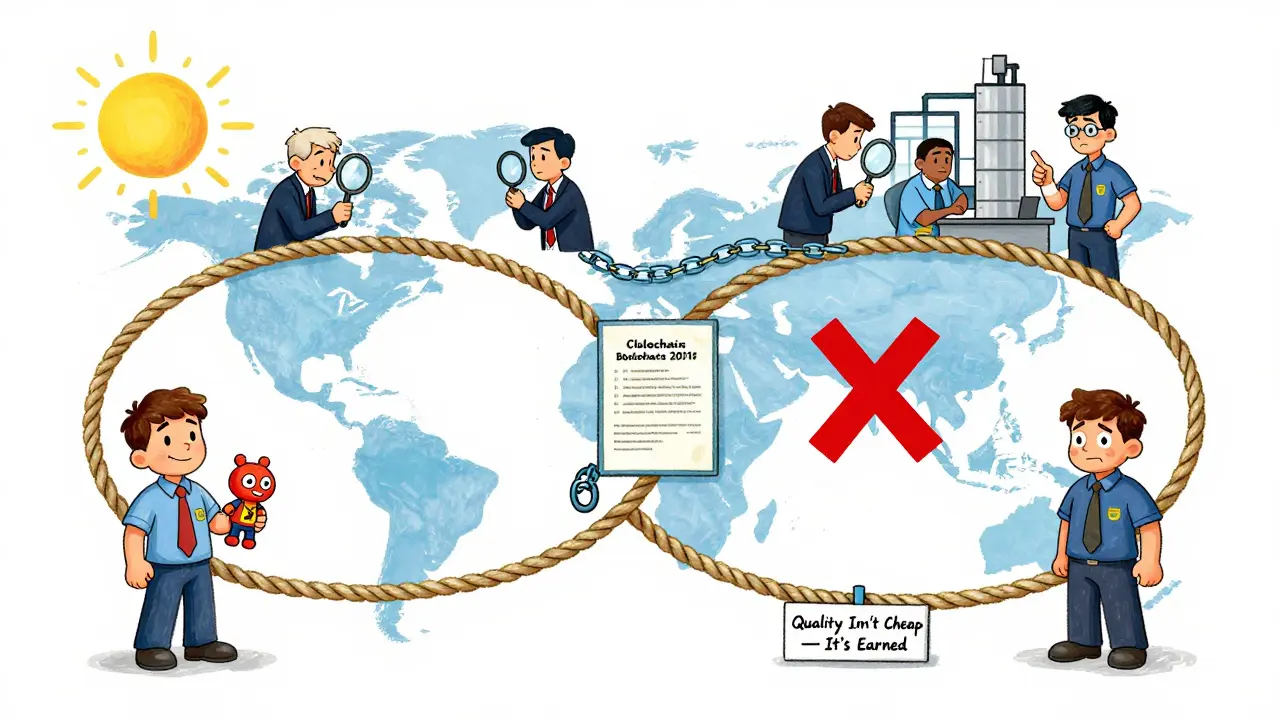
The Future Is Digital - But Not Everywhere
Technology is helping. AI-powered visual inspection systems now detect defects at 99.2% accuracy - far better than human eyes. IoT sensors track temperature, humidity, and vibration in real time. Blockchain logs every step of production, making fraud nearly impossible to hide. But here’s the truth: only 22% of Chinese manufacturers have fully adopted these tools as of Q2 2025. Most still rely on clipboards and handwritten logs. The companies that win in the next five years won’t be the ones with the lowest labor costs. They’ll be the ones who treat quality as a system - not an afterthought. That means investing in people, not just machines. It means trusting your own eyes more than a supplier’s report. And it means accepting that true safety isn’t cheap - it’s worth every penny.What You Should Do
If you’re a business buying from overseas:- Don’t sign contracts without a site visit - and make it unannounced.
- Require third-party lab testing on every shipment, not just samples.
- Build a China-specific quality triad: local QA manager, real-time data monitoring, and independent verification.
- Train your team on FDA 21 CFR Part 211 standards - not just generic ISO 9001.
- Set aside 8-12 weeks for supplier vetting. Rushing this step is how disasters start.
Why are FDA inspections in China often announced in advance?
Historically, Chinese manufacturers and local regulators have treated inspections as formalities rather than enforcement tools. Announcing inspections in advance allows factories to clean up, falsify records, or temporarily shut down non-compliant lines. Through 2024, 78% of FDA inspections in China were scheduled - compared to just 5% in the U.S. This double standard created blind spots that allowed dangerous products to slip through. Starting in 2025, the FDA is shifting to unannounced inspections, aiming for 75% coverage by 2027 to close this gap.
Can AI really fix quality issues in overseas manufacturing?
AI can detect defects with 99.2% accuracy - far better than human inspectors, who typically catch 85-90%. But AI alone can’t fix the root problem: intentional fraud and weak management systems. AI can spot a wrong label or a missing component, but it can’t tell if a factory is deliberately using substandard materials to save money. The most effective systems combine AI with human oversight, real-time data, and strict contractual accountability. AI is a tool - not a solution.
Is "Made in China 2025" actually improving quality?
It’s mixed. The initiative has pushed high-end manufacturers - especially in electronics, robotics, and medical devices - to adopt advanced quality systems. Dr. Li Wei of Tsinghua University says 73% of top-tier Chinese firms now use AI and analytics. But this only applies to a small fraction of factories. The majority of Chinese manufacturers, especially small and mid-sized ones, are under financial pressure and continue to cut corners. The initiative hasn’t fixed the system - it’s created a two-tiered quality landscape: one for elite exporters, and one for everyone else.
Why do so many recalls come from India?
India produces a large share of generic drugs - about 25% of U.S. imports - but accounts for 34% of FDA import alerts. The issue isn’t skill or infrastructure; it’s governance. Many Indian manufacturers have quality teams that report to production managers, not independent compliance officers. This creates a conflict: when deadlines are tight, quality gets sacrificed. Unlike the EU’s Qualified Person system - where a certified professional must personally sign off on every batch - India lacks equivalent accountability. That’s why the FDA keeps flagging them.
What’s the biggest mistake companies make when outsourcing manufacturing?
The biggest mistake is assuming that a supplier’s word is enough. Too many companies rely on certificates, photos, or third-party audits that are either outdated, biased, or faked. The real solution is direct, ongoing involvement: sending your own QA staff to live on-site, using blockchain or IoT to track production in real time, and testing every shipment independently. If you’re not physically involved, you’re not in control - and you’re gambling with safety.
Timothy Haroutunian
February 21, 2026 AT 02:06The systemic rot in overseas manufacturing isn't just about China or India-it's about the entire global supply chain being built on trust instead of verification. Companies outsource because it's cheaper, sure, but they don't want to admit how little they actually monitor. I've seen factories where the QA manager was a guy who used to fix printers. And yet, we're supposed to trust that his handwritten log of temperature checks is accurate? The FDA's 78% announced inspection rate in China isn't a loophole-it's a corporate policy. Why? Because if inspections were truly random, half the contracts would collapse overnight. The real scandal isn't the impurities in the pills-it's that we've normalized this level of negligence as a cost of doing business.
And don't get me started on the 'Made in China 2025' narrative. It's a PR stunt. The 73% of top-tier firms using AI? They're the ones exporting to Apple and Pfizer. The rest? They're making knockoff insulin pens for discount pharmacies and calling it 'affordable healthcare.' We're not dealing with a quality crisis. We're dealing with a moral one.
Every time someone says 'it's just a matter of better audits,' I want to scream. Audits are theater. What we need is boots on the ground. Someone from your company living in the factory dorms. Not visiting. Living. Sleeping there. Eating the same food. That's the only way to stop the switcheroo when the inspectors show up. Until then, we're just rearranging deck chairs on the Titanic.
And yes, I know this sounds extreme. But when your kid's asthma inhaler fails because the silicone was sourced from a hardware store, 'extreme' is the only word left.
We need to stop treating manufacturing like a spreadsheet and start treating it like a life-or-death operation. Because it is.
Erin Pinheiro
February 21, 2026 AT 14:15okay but like… why do we even trust ANYTHING made overseas anymore? i mean, i bought a ‘medical-grade’ silicone teether for my niece and it cracked after 3 days. turned out the ‘medical-grade’ label was just a sticker they slapped on. and the company? they said ‘sorry’ and sent a coupon. like, what am i supposed to do? call the fda? they’re already swamped with the 62% recall rate. i just want to know if the thing i’m giving my baby is gonna kill her. and no one can tell me. no one. not even the ‘experts.’
Michael FItzpatrick
February 22, 2026 AT 18:27Let’s not turn this into a witch hunt against entire nations. The problem isn’t geography-it’s governance. India and China aren’t monoliths. There are factories there that operate with German-level precision. And there are others that look like a garage with a sign that says ‘Pharmaceuticals.’ The difference? Leadership. Accountability. Culture. The factories that thrive are the ones where quality isn’t a department-it’s a religion. The ones that fail? They treat compliance like a suggestion. And here’s the kicker: the same companies that outsource to these places often have zero accountability in their own HQs. Their procurement teams are incentivized to cut costs, not prevent disasters. So we’re not just outsourcing production-we’re outsourcing ethics. The fix isn’t more audits. It’s rethinking how we structure incentives. Pay people to prevent failures, not to hit quarterly targets. That’s the real innovation we need.
Brandice Valentino
February 24, 2026 AT 17:07Oh, honey. You really think the FDA is the hero here? Please. They’re a bureaucratic joke. Half their inspectors don’t even speak Mandarin. They show up in a limo, get served tea for three hours, then take pictures of a pristine production line that was cleaned up for three days straight. Meanwhile, the real factories-the ones actually making the stuff-are running on fumes and bribes. And don’t get me started on ‘unannounced inspections.’ Like that’s gonna happen? The FDA doesn’t even have enough staff to inspect U.S. plants properly. They’re out here doing PR stunts while the real danger is brewing in basement labs in Shenzhen. And yet, we’re supposed to believe this is a ‘global quality crisis’? No. It’s a ‘corporate cover-up crisis.’
And let’s be real: the only reason this got attention is because someone’s kid got sick. If it was just a bunch of old people getting bad pills? Nobody would care. That’s the real tragedy.
Larry Zerpa
February 24, 2026 AT 18:26Everyone’s acting like this is a new problem. It’s not. It’s been happening since the 1980s. The difference now? We have cameras. We have blockchain. We have real-time sensors. And yet, companies still choose ignorance over accountability. Why? Because it’s cheaper. Because it’s easier. Because nobody wants to admit they’re complicit. The FDA’s 47% Form 483 rate in China? That’s not a failure of oversight. That’s a failure of will. They could shut down every non-compliant facility tomorrow. But they won’t. Why? Because if they did, 40% of the drugs on U.S. shelves would vanish overnight. And then who’d pay for them? Medicare? Medicaid? You? We’re not facing a quality crisis. We’re facing a dependency crisis. We’ve outsourced our health to a system we know is broken, because we’re too lazy to fix it ourselves.
And the ‘AI will save us’ crowd? Delusional. AI can’t fix a culture of corruption. It can’t un-bribe a factory manager. It can’t make a CEO care about a child’s life more than their Q3 bonus. Stop romanticizing technology. This isn’t a technical problem. It’s a moral one. And we’ve all chosen to look away.
Gwen Vincent
February 25, 2026 AT 03:28I think we need to stop framing this as ‘us vs. them.’ The workers in these factories aren’t villains-they’re trapped. They’re under pressure to meet impossible quotas. Their managers are pressured by their bosses. The whole system is designed to fail. Instead of just pointing fingers, what if we invested in training local QA teams? Paid them well? Gave them real authority? Gave them whistleblower protections? I’ve spoken to engineers in Vietnam who are desperate to do things right but are overruled by production managers every time. The solution isn’t more audits or more tech-it’s dignity. Empower the people on the ground. Let them say no. Let them walk away. That’s how real change happens. Not by shutting factories down, but by rebuilding them from the inside out.
Nandini Wagh
February 26, 2026 AT 06:43Wow. So now we’re blaming India for 34% of FDA alerts? Let me guess-you’ve never bought a generic drug made in India? Because I have. And it saved my life. Twice. The same pills, same batch, same manufacturer, same inspector. But somehow, when it’s a U.S. brand, it’s ‘quality.’ When it’s an Indian brand? ‘Fraud.’ Funny how that works. The real issue? Pharma companies in the U.S. and EU charge $10,000 for a drug that costs $3 to make. Then they cry when the generics are $2.50. We don’t need more inspections. We need fair pricing. And less hypocrisy. The problem isn’t India. The problem is profit.
Holley T
February 27, 2026 AT 16:55Let’s be clear: the FDA’s 75% unannounced inspection target by 2027 is pure theater. They don’t have the budget, the staff, or the political will to make it happen. Meanwhile, companies are already building contingency plans-like ‘inspection season’ where they shut down production for two weeks every quarter and then resume as if nothing happened. The real solution? Mandatory third-party certification with public access. Every facility should have a live feed of their quality logs, accessible to anyone. No more secret audits. No more ‘cleaned-up’ factories. Just transparency. And if you’re not ready for that? Then you shouldn’t be making life-saving products. Simple as that. Stop pretending this is complicated. It’s not. It’s just inconvenient for the people who profit from the status quo.
Ashley Johnson
March 1, 2026 AT 09:04This is all a government and corporate conspiracy. The real reason for the recalls? They’re replacing real medicine with nano-robots that track your DNA. The FDA knows. The WHO knows. The ‘impurities’? That’s just the cover-up. The silicone in the toys? It’s laced with microchips. The ‘inspections’? They’re staged so you think they’re doing something. But the truth? They’re using the global supply chain to implant control devices in children. I’ve seen the documents. The ‘Made in China 2025’ initiative? It’s not about manufacturing. It’s about population control. And the FDA? They’re part of it. Why do you think they only inspect 5% of U.S. plants? Because they don’t want you to know what’s happening here. Wake up. This isn’t about quality. It’s about control.
tia novialiswati
March 2, 2026 AT 14:59Hey, I just wanted to say thank you for writing this. It’s scary, but also so important. I work in healthcare and I’ve seen firsthand how a single bad batch can ruin lives. But I also want to say-there are good people out there. I’ve met factory workers in Vietnam who stayed late just to double-check labels because they knew someone’s life depended on it. It’s not all bad. We just need to support the good ones. Maybe if more companies hired local QA leads like the Minnesota one you mentioned, it could spread. Small wins matter. You’re not alone in caring about this. 💪❤️
Lillian Knezek
March 2, 2026 AT 21:27Did you know that 87% of all drug recalls are secretly caused by weather satellites? Yeah. The sun’s radiation messes with the chemical bonds in pills made overseas. That’s why the FDA only inspects 5% of U.S. plants-they’re shielded by the ionosphere. But in China? No protection. That’s why 78% of inspections are announced-they’re trying to time them with solar flares. And the ‘AI systems’? They’re just cameras that flash red when the sun is active. The real solution? Build underground factories. With lead-lined walls. And no internet. That’s the only way to stop the cosmic contamination. I’ve been trying to tell people this for years. Nobody listens. But I’m not giving up. 🌞☢️
Maranda Najar
March 3, 2026 AT 14:12It is nothing short of a moral catastrophe that we have allowed the sanctity of human health to be commodified in this way. The very notion that a child’s toy-or worse, a life-sustaining medication-could be produced under conditions of such cavalier disregard is not merely a regulatory failure. It is an existential indictment of late-stage capitalism. The factories are not merely cutting corners-they are severing the moral contract between humanity and industry. The 73% of top-tier Chinese manufacturers using AI? A grotesque parody of progress. A digital veneer over a festering wound. We do not need more audits. We need a reckoning. A purge. A return to the principle that some things are not for sale. And if the FDA cannot enforce this? Then we must. We, the people, must rise-not with petitions, not with hashtags, but with the unyielding force of collective moral outrage. This is not about pills. This is about the soul of civilization.
Christopher Brown
March 4, 2026 AT 21:35China’s a joke. India’s a mess. Vietnam’s just lucky. We should ban all overseas manufacturing. Bring it home. Tax the hell out of foreign imports. Protect American jobs. Protect American safety. Stop outsourcing our health to third-world factories. Done.
Sanjaykumar Rabari
March 6, 2026 AT 13:48Why are you blaming India? We make 40% of the world’s generic drugs. You Americans eat it. You pay $100 for a pill we make for $2. Then you say we’re bad? We feed your hospitals. Your poor. Your elderly. You call us unsafe? Then why do you buy from us? You want quality? Pay more. Stop pretending you care. You don’t. You just want cheap. And now you’re mad when the cheap breaks? That’s not our problem. That’s yours.