PPI & Blood Thinner Interaction Checker
Select Your Medications
Choose the specific drugs you are currently taking to analyze potential interactions.
Select your medications and click "Check Interaction" to see if they play nice together.
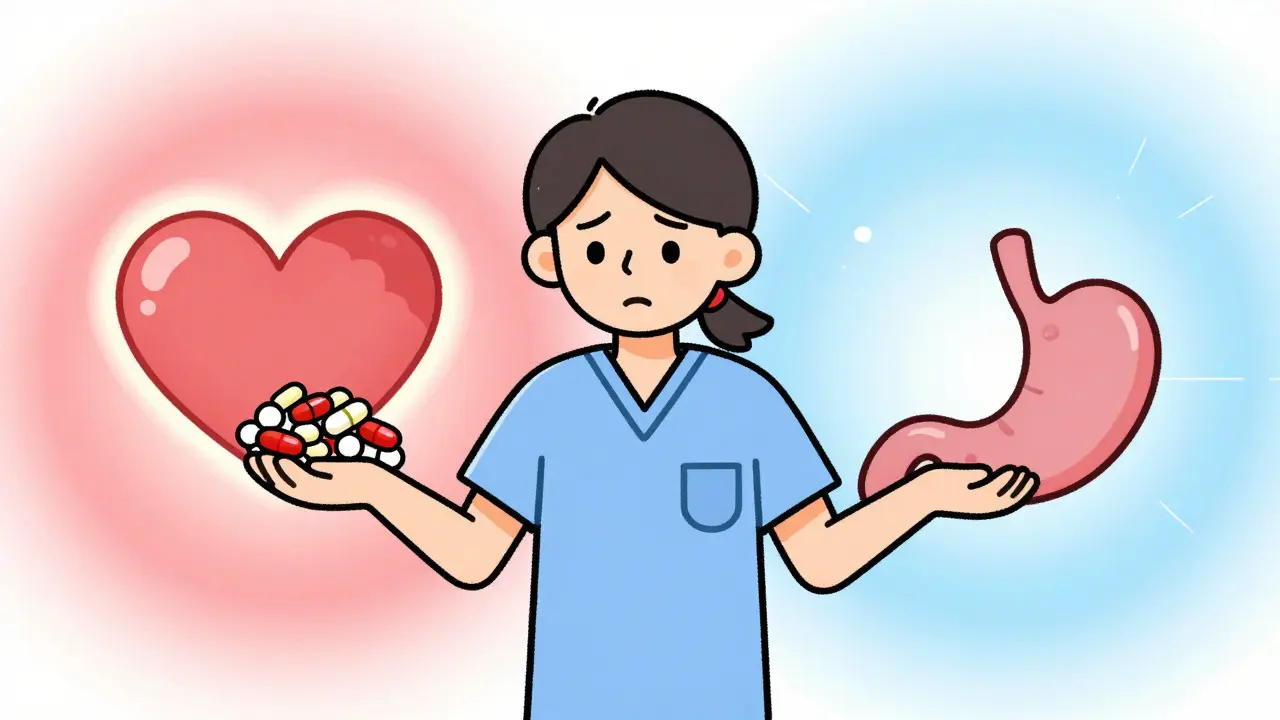
Imagine you just had a stent placed in your heart. Your doctor prescribes two powerful blood thinners-usually aspirin and another drug like clopidogrel-to keep that artery open. These drugs save lives by preventing clots, but they come with a scary side effect: they make it much easier for your stomach lining to bleed. For many patients, this creates a terrifying dilemma. Do you take the medicine that protects your heart, or do you worry about an internal hemorrhage? The answer isn't to choose one over the other. It’s to add a third player to the mix: a proton pump inhibitor (PPI). But here is the catch-not all acid reducers are created equal when mixed with blood thinners. Pick the wrong one, and you might accidentally weaken the very medication keeping you alive.
This article breaks down exactly how proton pump inhibitors work alongside antiplatelet therapy to stop gastrointestinal (GI) bleeding without messing up your heart treatment. We will look at which drugs play nice together, which ones clash, and who actually needs this protection.
Why Blood Thinners Hurt Your Stomach
To understand why we need PPIs, we first have to look at what dual antiplatelet therapy (DAPT) does to your body. DAPT typically combines aspirin with a P2Y12 inhibitor like clopidogrel (Plavix), prasugrel (Effient), or ticagrelor (Brilinta). These drugs block platelets from sticking together, which prevents dangerous clots after a heart attack or stroke.
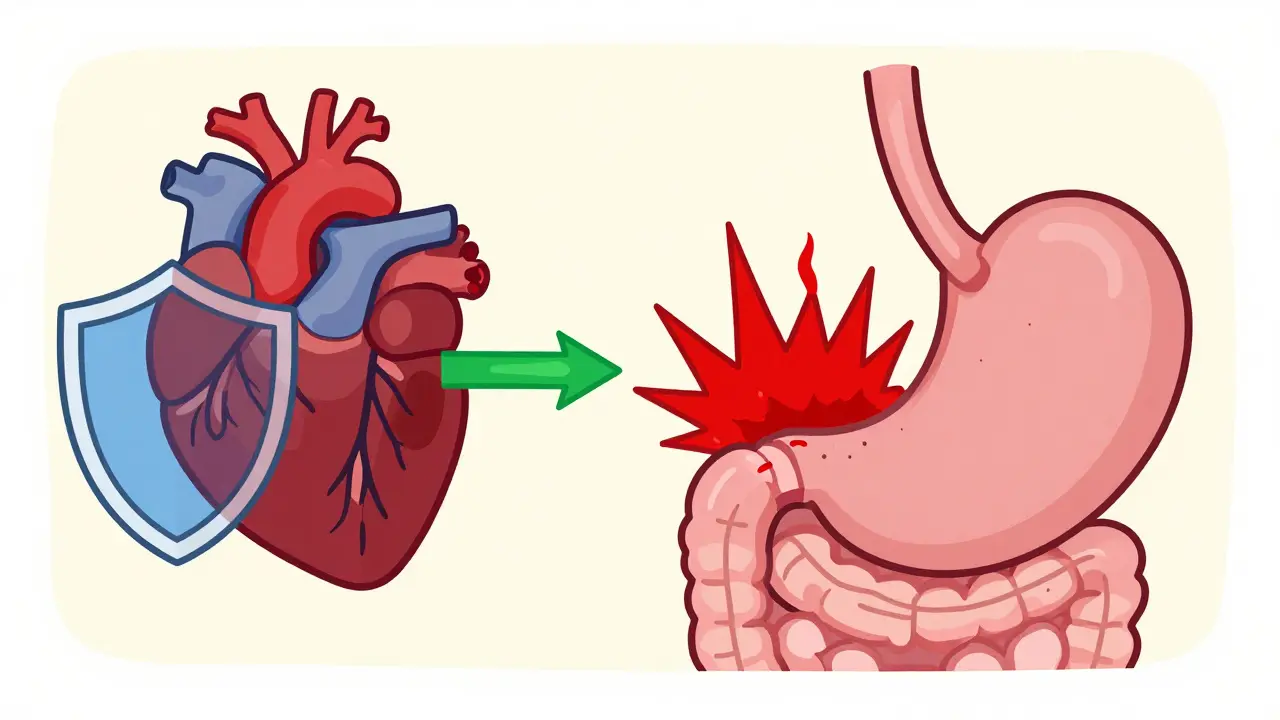
However, aspirin also strips away the protective mucus layer in your stomach. Without that shield, stomach acid eats away at the tissue, leading to ulcers and bleeding. Studies show that starting DAPT increases the risk of upper GI bleeding by 30% to 50% within the first month alone. Even aspirin by itself raises the risk of GI complications by two to four times compared to taking nothing. This isn't a rare glitch; it's a known, serious risk that doctors have to manage proactively.
The Role of Proton Pump Inhibitors (PPIs)
Proton Pump Inhibitors are medications that drastically reduce the amount of acid your stomach produces. They work by blocking the "proton pumps" in your stomach cells-the little engines that secrete acid. By turning down these engines, PPIs raise the pH level in your stomach, making it less corrosive. This gives your stomach lining time to heal and prevents new ulcers from forming.
When added to DAPT, PPIs act as a safety net. Clinical trials, including the landmark COGENT study published in JAMA, proved that adding a PPI reduces the risk of significant GI bleeding by about 34%. More recent data from 2025 involving nearly 100,000 stroke patients showed a 37% reduction in bleeding risk. The key finding? This protection happens without reducing the effectiveness of the blood thinners-provided you pick the right PPI.
The Dangerous Drug Interaction: Clopidogrel vs. Omeprazole
Here is where things get tricky. Not all PPIs interact with blood thinners in the same way. The biggest issue arises when patients take clopidogrel (Plavix) along with certain PPIs, specifically omeprazole (Prilosec) or esomeprazole (Nexium).
Clopidogrel is a "prodrug," meaning it’s inactive until your liver converts it into its working form. This conversion relies on an enzyme called CYP2C19. Unfortunately, omeprazole blocks this exact enzyme. If you take omeprazole with clopidogrel, you can reduce the active levels of the blood thinner by up to 30%. In simple terms, the acid reducer makes the heart medication weaker, potentially increasing your risk of a heart attack or stent clotting by 27%.
Esomeprazole has a similar, though slightly less severe, interaction. Because of this, major health organizations advise against combining omeprazole or high-dose esomeprazole with clopidogrel if possible.
| PPI Medication | CYP2C19 Interaction | Safety with Clopidogrel | Recommended? |
|---|---|---|---|
| Omeprazole | High (Blocks enzyme) | Unsafe (Reduces efficacy) | No |
| Esomeprazole | Moderate | Caution advised | Avoid if possible |
| Pantoprazole | Minimal (<15% impact) | Safe | Yes (Preferred) |
| Rabeprazole | Low | Safe | Yes |
Which PPI Should You Choose?
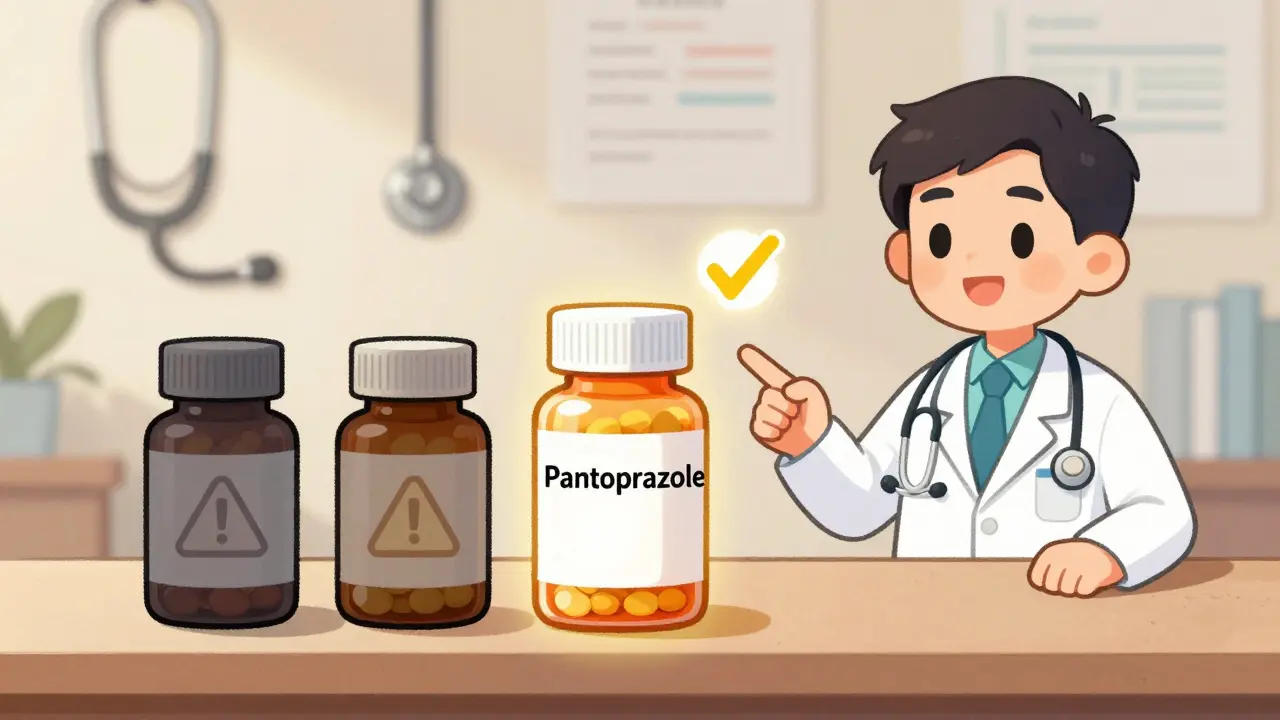
If you are on clopidogrel, the gold standard choice is Pantoprazole (Protonix). It provides excellent acid suppression but barely touches the CYP2C19 enzyme. This means your clopidogrel works as intended, and your stomach stays protected. Rabeprazole is another safe alternative.
If you are on newer blood thinners like ticagrelor or prasugrel, the rules change. These drugs do not rely on the CYP2C19 enzyme for activation. Therefore, you can safely use any PPI, including omeprazole or esomeprazole, without worrying about reduced heart protection. However, many doctors still prefer pantoprazole simply because it has the cleanest interaction profile overall.
Who Actually Needs a PPI?
Should everyone on blood thinners take a PPI? No. While PPIs are effective, they aren't harmless. Long-term use carries risks of its own, including a higher chance of kidney issues, bone fractures, and infections like Clostridium difficile. About 35% to 45% of PPI prescriptions for low-risk patients are considered unnecessary.
You likely need a PPI if you have multiple risk factors for GI bleeding. According to 2023 European Society of Cardiology guidelines, you are considered "high risk" if you have:
- A history of previous GI bleeding or ulcers
- Age 65 years or older
- Use of other medications that irritate the stomach, such as NSAIDs (ibuprofen, naproxen), corticosteroids, or anticoagulants (like warfarin or apixaban)
- Active H. pylori infection (a bacteria that causes ulcers)
If you have none of these risk factors, your doctor might skip the PPI to avoid exposing you to unnecessary long-term side effects. Always discuss your specific risk profile with your cardiologist or gastroenterologist.
Timing and Duration: When to Start and Stop
Timing matters. The highest risk of bleeding occurs in the first 30 days after starting DAPT. In fact, roughly 75% of significant GI bleeds happen during this initial window. Doctors usually start the PPI at the same time as the blood thinners, or even a day before, to ensure your stomach is protected from day one.
How long should you stay on it? Most guidelines suggest continuing the PPI for as long as you are on DAPT. For many heart patients, this means 6 to 12 months. Some high-risk patients may need it longer, up to 36 months, depending on their cardiovascular status. Once the DAPT course ends, your doctor will likely taper you off the PPI, often switching to a lower-intensity acid reducer or stopping it entirely if you no longer have symptoms.
Alternatives to PPIs
What if you can’t tolerate PPIs? There are alternatives, but they are generally less effective. Histamine-2 receptor antagonists (H2RAs), like famotidine (Pepcid), block acid production through a different mechanism. A meta-analysis showed that while H2RAs do reduce bleeding risk (by about 30%), they are significantly less effective than PPIs (which reduce risk by 60%). If you have a high risk of bleeding, an H2RA might not be enough protection. Misoprostol is another option, but its side effects (diarrhea, cramping) make it unpopular for long-term use.
Can I take omeprazole with Plavix (clopidogrel)?
It is generally recommended to avoid this combination. Omeprazole blocks the enzyme needed to activate clopidogrel, which can make the blood thinner less effective and increase your risk of heart events. Pantoprazole is a safer alternative.
Does pantoprazole interact with Brilinta (ticagrelor)?
No, pantoprazole does not significantly interact with ticagrelor. Ticagrelor is not metabolized by the CYP2C19 enzyme, so you can safely use any PPI, including pantoprazole, esomeprazole, or omeprazole, with it.
How long do I need to take a PPI with blood thinners?
Typically, you should take a PPI for the entire duration of your dual antiplatelet therapy (DAPT), which is often 6 to 12 months. High-risk patients may need it longer. Never stop taking either medication without consulting your doctor.
Are there natural ways to prevent GI bleeding on blood thinners?
While avoiding NSAIDs (like ibuprofen) and alcohol helps protect your stomach, there are no proven natural supplements that replace the protective effect of PPIs in high-risk patients. Medical intervention is necessary for those with ulcer history or advanced age.
What are the side effects of long-term PPI use?
Long-term PPI use can increase the risk of kidney disease, bone fractures, magnesium deficiency, and certain infections like pneumonia or C. diff. This is why doctors only prescribe them to patients who truly need the GI protection.