
Every year, over 107,000 people in the U.S. die from drug overdoses. Many of these deaths aren’t caused by one drug alone-they happen when substances mix in ways that shut down breathing. The most dangerous combinations involve opioids with other central nervous system (CNS) depressants like benzodiazepines, alcohol, or even some sleep aids. These combinations don’t just add up-they multiply risk. A single pill of oxycodone might be manageable. But add a Xanax or a few drinks, and your chances of stopping breathing go up by more than ten times.
Why Mixing Drugs Is So Dangerous
Drugs like opioids, benzodiazepines (e.g., Xanax, Valium), alcohol, and certain sleep medications all slow down your brain’s control over breathing. When taken together, they don’t just work side by side-they team up. This is called synergistic depression. Your body doesn’t handle the load. Your lungs get lazy. Your heart rate drops. And before you know it, you’re not breathing at all.
According to the CDC, about 75% of opioid-related overdoses involve more than one substance. The worst offenders? Opioid + benzodiazepine combos increase overdose death risk by 10.3 times. Opioid + alcohol? That’s a 67% spike in respiratory depression. Even something as simple as taking a muscle relaxer like cyclobenzaprine with your painkiller can be deadly.
It’s not just prescription drugs. Street drugs are even riskier. Fentanyl, a synthetic opioid 50 to 100 times stronger than morphine, is often mixed into cocaine, meth, or counterfeit pills labeled as oxycodone or Xanax. You think you’re taking one thing. You’re actually taking something far more potent-and it’s not listed on any drug interaction checker.
What You Need to Ask Yourself
If you or someone you care about uses any kind of medication-prescribed, over-the-counter, or illicit-here’s what you need to ask:
- Are you taking any pills not prescribed to you?
- Have you used alcohol, marijuana, sleeping pills, or muscle relaxers in the last week?
- Do you ever take something to help you sleep, calm down, or get through the day?
- Have you used any street drugs-even once-in the past month?
These questions sound simple, but they’re not. Most people don’t think of street drugs or shared pills as “medications.” They don’t realize that “downers,” “benzos,” or “Molly” are real substances with real risks. The key is asking in a way that doesn’t sound like judgment. Instead of “Are you taking other drugs?” say, “Do you ever take anything else to help with pain, anxiety, or sleep?”
A 2022 study in Addiction found that changing the wording increased honest answers by 52%. People are more likely to tell the truth when they feel safe, not scolded.
How Healthcare Providers Check for Risk
Doctors and pharmacists use tools to spot danger before it happens. One of the most common is the CDC’s Opioid Risk Tool (ORT). It’s a five-question screening that takes less than two minutes. It asks about past substance use, family history, mental health, and age. But it only works if you answer honestly.
Pharmacists rely on the Beers Criteria, updated every two years by the American Geriatrics Society. It lists 56 dangerous drug pairs for older adults-like mixing opioids with anticholinergics (common in allergy or bladder meds), which can cause confusion, falls, and breathing problems.
Real-time prescription monitoring systems (PMPs) track who’s getting opioids and benzodiazepines across state lines. But here’s the problem: they only show prescriptions. They don’t show what someone bought on the street, borrowed from a friend, or took from an old bottle in the medicine cabinet.
That’s why the CDC now recommends urine drug testing when self-reporting seems unreliable. Studies show 58% of patients hide benzodiazepine use from their doctors. They’re afraid of being cut off from pain meds-or worse, judged.
What Digital Tools Can-and Can’t-Do
There are free online tools you can use: the FDA’s Drug Interaction Checker, MedlinePlus from the National Library of Medicine, or Medscape’s checker. These databases include data on over 10,000 medications. They’ll tell you if mixing your antidepressant with your painkiller is risky.
But here’s the catch: they only work if you know the exact name of the drug. If you take “that blue pill my buddy gave me,” the app won’t recognize it. If you use “Molly” or “blues,” the system won’t know you mean fentanyl-laced MDMA. And if you drink whiskey every night, most apps won’t ask you about alcohol at all.
A 2022 BMJ study found digital tools catch 89% of prescription interactions-but miss 63% of dangerous mixes involving street drugs or non-prescribed substances. That’s a huge gap. These tools are helpful, but they’re not enough on their own.
What Harm Reduction Programs Do Differently
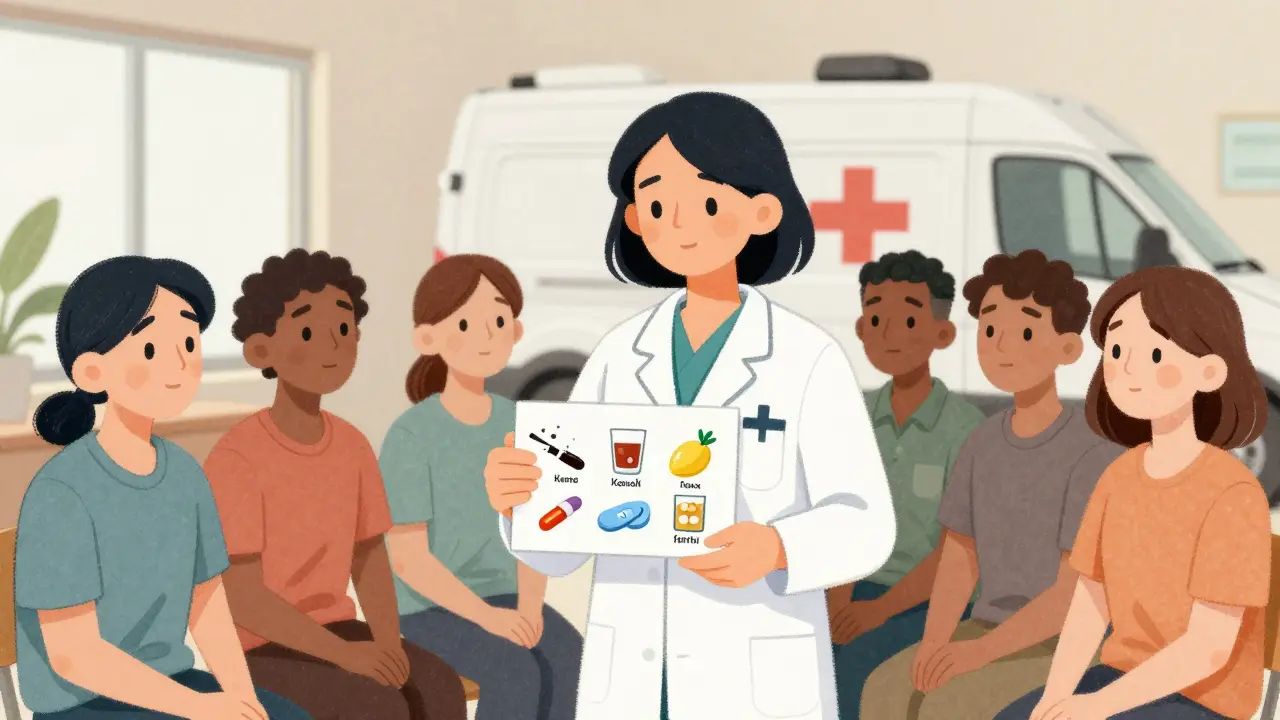
In community settings-like needle exchanges, shelters, or outreach vans-harm reduction workers don’t rely on apps. They use simple cards with pictures and common street names. One card lists 23 substances: heroin, fentanyl, cocaine, meth, Xanax, alcohol, sleeping pills, muscle relaxers, even cough syrup with codeine.
They don’t ask, “Are you taking any other medications?” They ask, “Have you used any of these in the last week?” Pointing to each one. It’s visual. It’s non-judgmental. And it works. The National Harm Reduction Coalition says this method catches 94% of dangerous combinations.
Why? Because it meets people where they are. No stigma. No forms. No fear of losing access to care. One user in a SAMHSA case study said, “My doctor asked about ‘downers.’ I didn’t even know that’s what Valium was called. I told her, and she gave me naloxone. She saved my life.”
What You Can Do Right Now
You don’t need to be a doctor to prevent an overdose. Here’s what you can do today:
- Know your meds. Write down every pill, liquid, or patch you take-even if it’s from a friend or an old prescription.
- Use a free checker. Go to MedlinePlus Drug Information and type in each drug you use. Look for warnings about CNS depression, respiratory depression, or sedation.
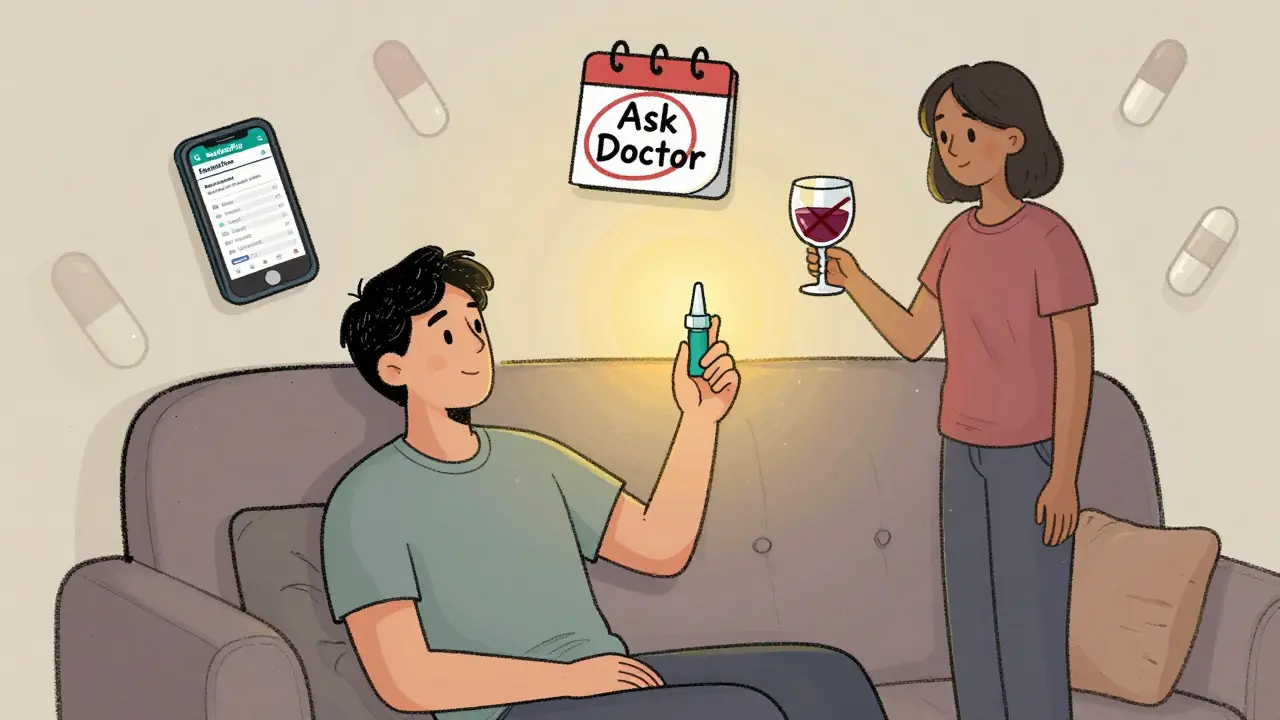
- Ask about alcohol. If you drink, tell your provider. Even one drink with an opioid can be risky.
- Carry naloxone. It reverses opioid overdoses. It doesn’t work on benzodiazepines or alcohol-but if opioids are involved, it can save your life. Get it for free at many pharmacies, syringe exchanges, or community health centers.
- Don’t use alone. If you use drugs, have someone with you who knows what you took and how to use naloxone.
There’s no shame in asking for help. In fact, the most dangerous thing you can do is stay silent.
When to Get Immediate Help
Signs someone is overdosing:
- Slow or stopped breathing
- Blue or gray lips and fingernails
- Unresponsive to loud noises or shaking
- Pinpoint pupils
- Gurgling or snoring sounds
If you see these signs:
- Call 911 immediately.
- Give naloxone if you have it (even if you’re not sure it’s an opioid overdose).
- Start rescue breathing if they’re not breathing.
- Stay with them until help arrives.
Good Samaritan laws in 48 U.S. states protect people who call for help during an overdose. You won’t get in trouble for helping.
The Bottom Line
Overdose deaths from drug interactions are preventable. Most happen because no one asked the right questions-or no one felt safe enough to answer. Whether you’re a patient, a caregiver, or someone who uses drugs, your voice matters. Speak up. Ask about what you’re taking. Know the risks. Carry naloxone. And remember: you’re not alone.
There’s no magic app that will catch every dangerous mix. But a simple conversation-honest, kind, and direct-can change everything.
Can I check for drug interactions myself using an app?
Yes, apps like the FDA’s Drug Interaction Checker or MedlinePlus can help you spot risks between prescription and over-the-counter drugs. But they can’t detect street drugs like fentanyl, meth, or counterfeit pills. They also don’t ask about alcohol or other substances you might not think of as “medications.” So while apps are useful, they’re not enough on their own. Always combine them with honest conversations.
What if I’m taking opioids and need to use anxiety meds?
Mixing opioids with benzodiazepines (like Xanax or Klonopin) is extremely dangerous-it increases overdose risk by over ten times. If you’re on opioids and have anxiety, talk to your doctor about safer alternatives. Non-addictive options include certain antidepressants (like SSRIs), therapy, or non-pharmaceutical tools like breathing exercises and mindfulness. Never stop or change your meds without medical guidance.
Why do I need to ask about alcohol if I only drink on weekends?
Even one drink can make opioids much more dangerous. Alcohol slows your breathing, just like opioids. Together, they can shut down your respiratory system faster than you can react. You don’t need to be drunk-just having a beer or glass of wine with your painkiller can push you into overdose territory. This is why providers now ask about alcohol specifically, not just “other drugs.”
What if I’m not on opioids but use other depressants?
You still need to be careful. Benzodiazepines, sleep aids like Ambien, muscle relaxers like Soma, and even some antihistamines (like diphenhydramine in Benadryl) can slow breathing on their own. Mixing them with alcohol, marijuana, or other sedatives raises your risk. You don’t have to be using opioids to be in danger. Any CNS depressant combo can be lethal.
How do I get naloxone without a prescription?
In most U.S. states, you can get naloxone for free or at low cost without a prescription at pharmacies, syringe exchange programs, community health centers, or local harm reduction organizations. Many pharmacies now offer it behind the counter-just ask. You can also order it online through organizations like Harm Reduction Therapy or Naloxone Exchange. Keep it in your bag, car, or home. It’s safe, easy to use, and can save a life.
Is it safe to mix painkillers with herbal supplements?
Some herbal supplements can be risky. Kava, valerian root, and kratom can all have sedative effects. Mixing them with opioids or benzodiazepines can increase drowsiness and breathing problems. Even St. John’s Wort can interfere with how your body processes certain pain medications. Always tell your pharmacist or doctor about every supplement you take-even if you think it’s “natural” or “safe.”
What to Do Next
If you’re on any medication, take five minutes today to review what you’re taking. Write it down. Check it against a trusted database. Then, talk to someone-a pharmacist, a friend, a counselor. Don’t wait for a crisis to happen. Overdose deaths are preventable. But only if we stop pretending the problem is someone else’s.
The tools exist. The knowledge is out there. What’s missing is the conversation. Start yours today.
Trevor Whipple
January 13, 2026 AT 18:03yo so i just checked my meds and holy shit i been takin oxycodone with melatonin like a champ for years. turns out melatonin is a CNS depressant?? who knew?? my pharmacist probably thinks i’m a zombie. also i mixed a beer with my tramadol last week and i didn’t die so it’s fine?? right??
Lethabo Phalafala
January 15, 2026 AT 05:45I read this and cried. Not because I’m dramatic-though I am-but because I lost my brother to a mix of fentanyl and Xanax he thought was just ‘sleep pills.’ No one asked him what he was really taking. He didn’t even know the blue pill was fentanyl. This isn’t just about apps or checkers. It’s about someone sitting with you, not judging, just saying, ‘Hey, I care.’ If you’re reading this and you’re using… you’re not a bad person. You’re just scared. And you deserve help, not shame.
Lance Nickie
January 15, 2026 AT 11:39lol naloxone? more like naloxo-bullshit. if you’re dumb enough to mix drugs, you deserve to die. stop coddling addicts.
Milla Masliy
January 16, 2026 AT 01:03As someone who grew up in a household where pain meds were always on the counter, I can say this: the real problem isn’t the drugs-it’s the silence. My mom never told her doctor about the Valium she took from her sister’s cabinet. She thought it was ‘just for nerves.’ We need to normalize talking about this like we talk about brushing teeth. No stigma. Just facts. And if you’re a provider, stop acting like you’re a judge. Be a guide.
Damario Brown
January 17, 2026 AT 23:29the data here is kinda sus. 75% of opioid overdoses involve polypharmacy? where’s the peer-reviewed source? also, ‘harm reduction cards’? that’s just enabling. and why are we using ‘street names’ like ‘blues’ or ‘molly’? that’s just giving criminals a marketing playbook. also, did anyone check if the 94% stat is from a funded NGO? i’m skeptical. also, why no mention of dopamine depletion? it’s not just respiratory-it’s neurochemical collapse. you’re not just dying from breathing, you’re dying from synaptic erosion. and nobody talks about that.
sam abas
January 18, 2026 AT 07:12okay but let’s be real-how many people actually use these drug interaction checkers? i mean, i’ve seen people type ‘adderall’ into medlineplus and get a 300-word warning about serotonin syndrome, then go right back to taking 4 pills with Red Bull and a cigarette. the tools exist, sure. but human behavior? it’s a dumpster fire. people don’t want to know. they want to feel better. and if the app says ‘caution,’ they just ignore it. the real solution isn’t apps-it’s accountability. like, make pharmacists call you if you’re getting 3 different depressants. make doctors ask twice. make it annoying to be dumb. because right now, being reckless is easier than being responsible.
John Pope
January 19, 2026 AT 18:12we’re treating drug use like a math problem when it’s a spiritual crisis. you can’t check for interaction with your soul’s ache. the blue pill isn’t fentanyl-it’s the echo of a childhood no one saw. the alcohol isn’t a depressant-it’s the only thing that lets you forget the silence in your apartment. naloxone doesn’t fix the loneliness. it just buys you another day to feel it again. so sure, use the app. carry the shot. but don’t pretend this is about pharmacology. it’s about the quiet ones who never said ‘help’ because they thought no one would listen.
Clay .Haeber
January 20, 2026 AT 14:15oh wow, a 52% increase in honesty when you reword the question? groundbreaking. next you’ll tell me people lie less if you smile while asking. wow. what a revelation. also, ‘harm reduction cards with pictures’? are we in a kindergarten? next thing you know, we’ll be handing out crayons and stickers to people who snort fentanyl. ‘Great job, Timmy! You didn’t OD today! Here’s a gold star!’
Priyanka Kumari
January 21, 2026 AT 04:03This is so important. In India, we don’t talk about this at all. People take painkillers with alcohol, think it’s normal. My uncle took tramadol with whiskey for years-he didn’t even know it was dangerous. I showed him the MedlinePlus page, and he cried. He said, ‘No one ever told me.’ We need to translate this into more languages. Not just English. Hindi, Tamil, Bengali. People need to hear this in their mother tongue. Knowledge shouldn’t be a privilege of language.
Avneet Singh
January 21, 2026 AT 09:41the 94% success rate of harm reduction cards is statistically invalid-sample bias, selection bias, no control group. and the CDC’s ORT? outdated. it doesn’t account for genetic polymorphisms in CYP450 enzymes. you can’t assess risk without pharmacogenomics. also, naloxone distribution? inefficient. we should be funding suboxone clinics, not handing out syringes and stickers. this is performative public health.
Adam Vella
January 21, 2026 AT 10:55It is imperative to underscore that the conflation of recreational use with medical necessity has led to a dangerous normalization of polypharmacy. The data presented, while superficially compelling, lacks longitudinal analysis and fails to account for confounding variables such as socioeconomic status, access to mental health services, and comorbid psychiatric disorders. One cannot mitigate systemic risk through individual behavioral checklists alone. A structural intervention-policy reform, prescriber accountability, and pharmaceutical regulation-is the only ethically defensible path forward.
Nelly Oruko
January 22, 2026 AT 04:05you don’t need a fancy app. just ask. say ‘hey, you good?’ and mean it. that’s it. that’s the whole thing.
vishnu priyanka
January 22, 2026 AT 19:47bro i just found out my ‘sleep aid’ was actually a muscle relaxer my cousin stole from his mom. i’ve been mixing it with whiskey since college. i’m not dead yet but… maybe i should stop. also, i just ordered naloxone off amazon. it’s like buying hand sanitizer. weird that it’s that easy now.