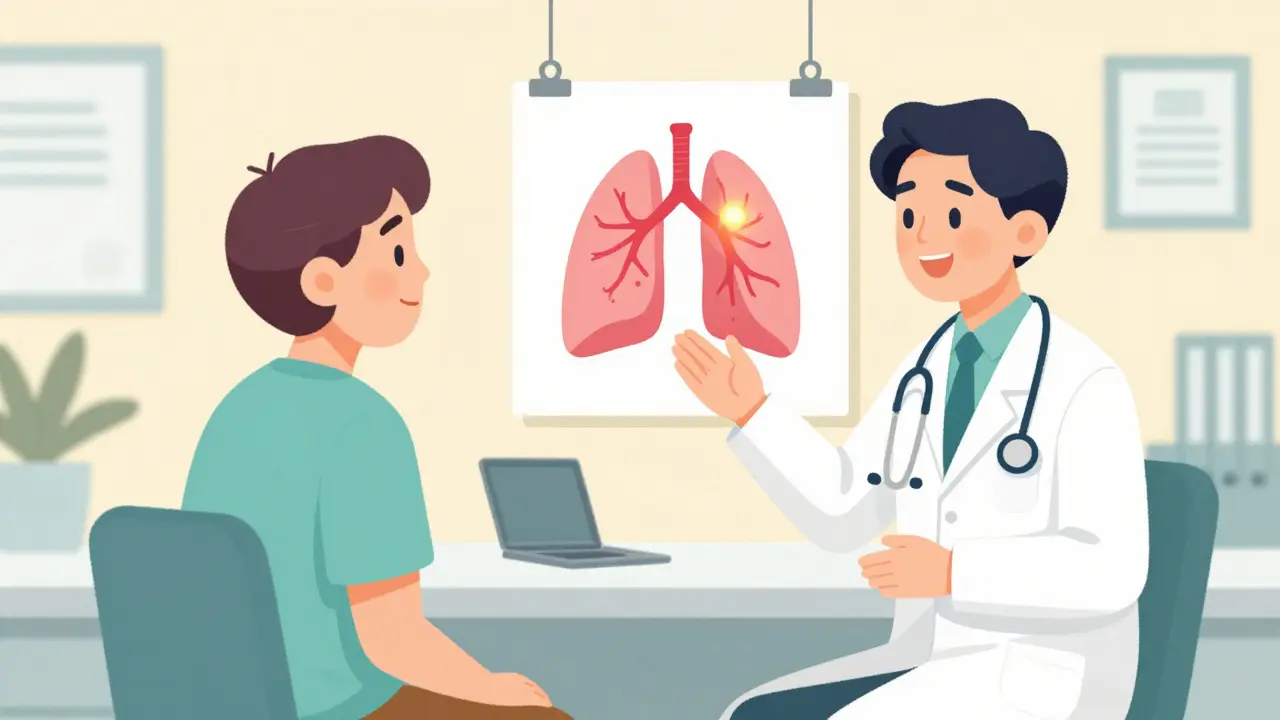
Imagine finding a tiny spot on your lung before it ever causes a cough or a pain in your chest. For most people, that sounds like a lucky break, but for millions of smokers, it's the difference between a scary diagnosis and a treatable condition. While lung cancer has long been seen as a late-stage discovery, the game is changing. By catching the disease early, five-year survival rates jump to 59%, compared to a heartbreaking 6% when it's found too late. The problem? We are still missing the mark-only 23% of cases are currently caught early.
Who actually needs a lung cancer screening?
Not everyone needs to be scanned every year, but if you've spent a lot of time smoking, you likely fall into a high-risk group. The guidelines have shifted recently to be more inclusive. For instance, American Cancer Society (ACS) now suggests that adults aged 50 to 80 who have a 20 pack-year history should get screened annually. If you've quit, the ACS no longer cares how long ago you stopped-you're still eligible.
Now, you might be wondering what a "pack-year" actually is. It's a simple bit of math: multiply the number of packs you smoke per day by the number of years you've smoked. If you smoked one pack a day for 20 years, that's 20 pack-years. But if you smoked two packs a day for 10 years, you're also at 20 pack-years. This metric helps doctors understand the cumulative damage to your lungs rather than just how much you smoke today.
Other organizations have slightly different rules. The United States Preventive Services Task Force (USPSTF) follows a similar age and pack-year range (50-80 years, 20 pack-years) but generally suggests screening for those who currently smoke or quit within the last 15 years. This creates a gap where some former smokers might be left out by one set of rules but covered by another.
The gold standard: Low-Dose CT Scans
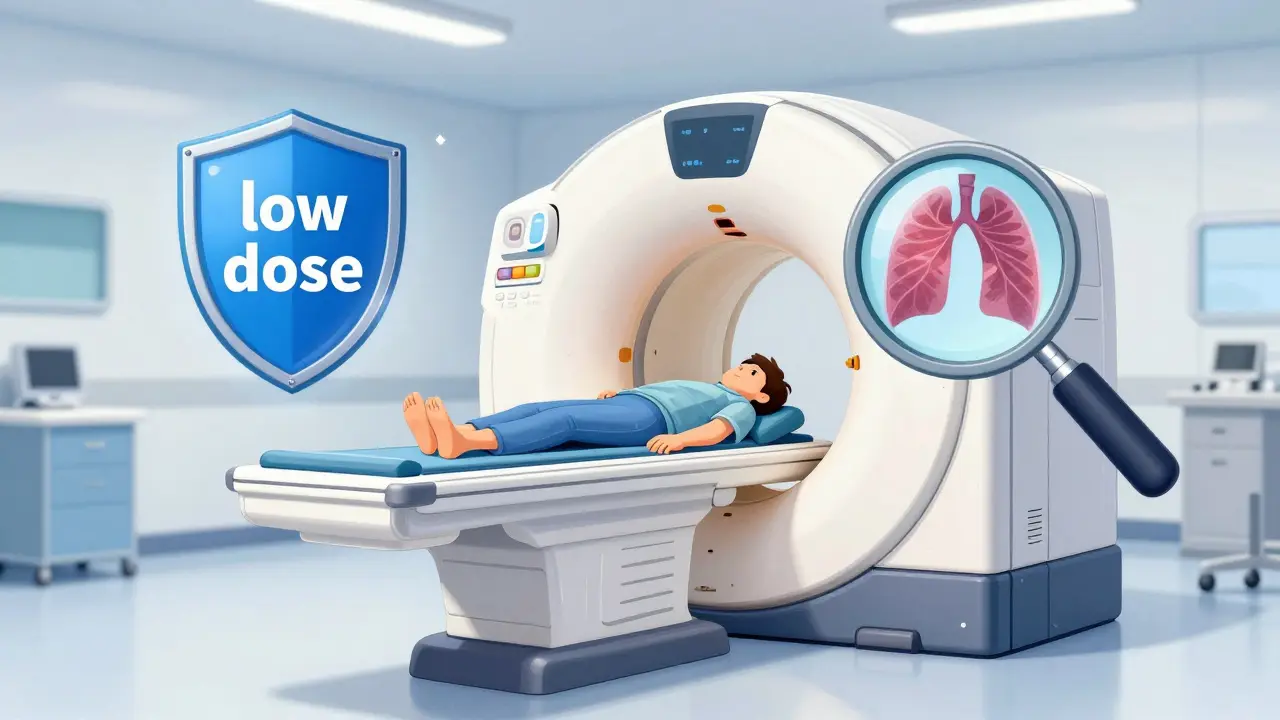
Forget the old-school chest X-rays; they just don't cut it for early detection. The current heavy lifter is the low-dose computed tomography (LDCT) scan. Think of it as a specialized CT scan that uses significantly less radiation-about 70-80% less than a standard diagnostic scan-making it safe for yearly use.
Here is a quick breakdown of how these guidelines compare so you can see where you fit in:
| Organization | Age Range | Smoking History | Quit Limit |
|---|---|---|---|
| ACS (2023) | 50-80 | 20+ pack-years | None |
| USPSTF (2021) | 50-80 | 20+ pack-years | Within 15 years |
| AATS | 55-79 | 30+ pack-years | Not specified |
| ACCP | 55-77 | 30+ pack-years | Within 15 years |
It's worth noting that these scans aren't perfect. The National Lung Screening Trial found that about 96.4% of positive screens were actually false positives. That means you might see a "nodule" that turns out to be a harmless scar or a small infection. It can be stressful, but it's a trade-off for the peace of mind that comes with catching a real tumor while it's still small enough to be surgically removed.
The shift toward targeted therapy advances
Finding the cancer early is only half the battle. The real victory is what happens next. We've moved past the era where "chemo for everyone" was the only option. We are now in the age of precision medicine, where doctors look for a specific "glitch" or mutation in the cancer's DNA to pick the right drug.
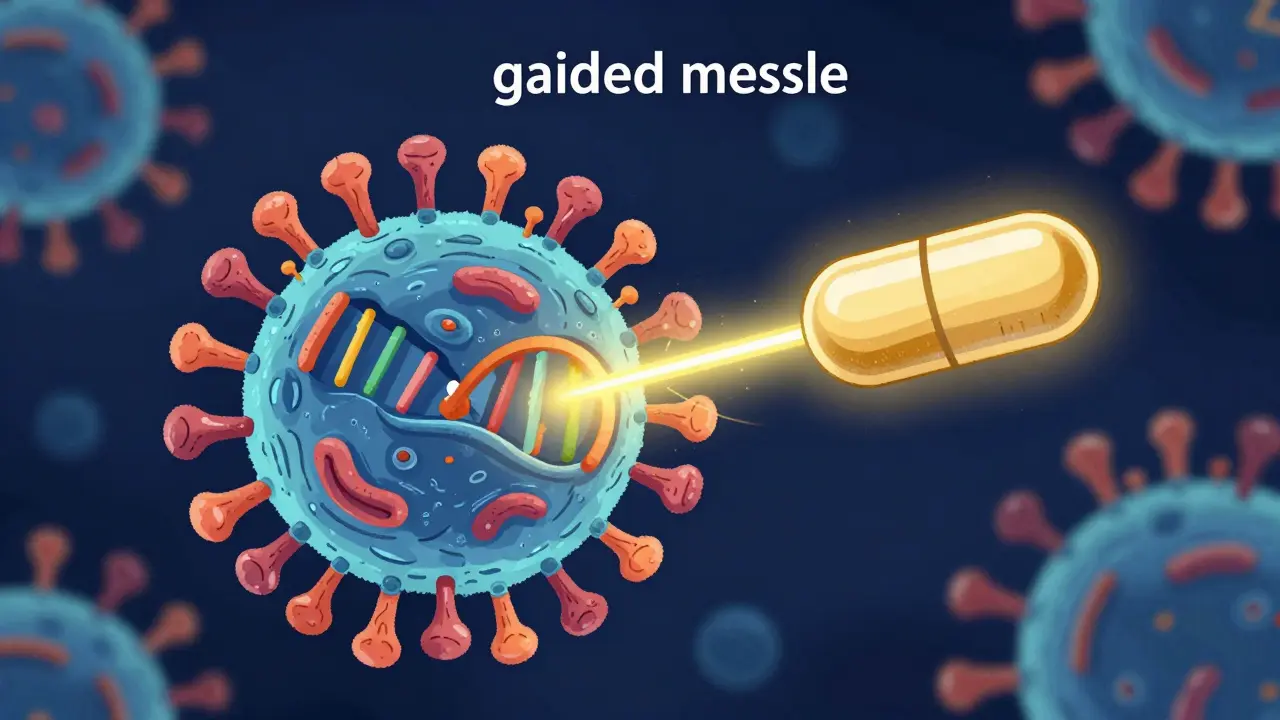
One of the biggest breakthroughs involves EGFR mutations. If a patient has a specific mutation in the Epidermal Growth Factor Receptor, they can use a targeted therapy like osimertinib. This isn't like traditional chemotherapy that attacks all fast-growing cells; it's more like a guided missile that targets only the cancer cells. In the ADAURA trial, this approach improved disease-free survival by a staggering 83% for early-stage patients.
The connection between screening and therapy is tight. By using LDCT to find a tumor in Stage IB or II, doctors can use these targeted drugs as "adjuvant treatment"-meaning they use them after surgery to wipe out any remaining microscopic cells. It's projected that by 2025, 70% of early-stage lung cancers found via screening will have these actionable genomic alterations, making the treatment much more effective and less toxic.
Overcoming the barriers to care
If screening is so effective, why aren't more people doing it? The reality is that the system is lagging. In 2021, only about 5.7% of eligible Americans actually got their annual scan. Some of the biggest hurdles are surprisingly simple: doctors aren't always aware of the new rules, and there aren't enough accredited centers, especially in rural areas.
If you're trying to navigate this, here is the ideal path to take:
- Risk Assessment: Talk to your doctor about your pack-year history. Some use tools like the PLCOm2012 calculator to get a more precise risk score.
- Shared Decision-Making: This isn't just a quick check-up. You and your doctor should spend at least 15 minutes discussing the pros (early detection) and cons (false positives, anxiety).
- The Scan: Get your LDCT at an accredited facility to ensure the radiation dose and slice thickness are correct.
- The Follow-up: If a nodule is found, don't panic. Most are benign, but a structured follow-up plan is key.
One thing that often gets ignored is the link between screening and quitting. It's a bit ironic, but the best time to quit smoking is often when you're entering a screening program. About 70% of people who get screened say they want to quit, but only 30% actually get the help to do it. Integrating smoking cessation services into the screening process is one of the most effective ways to actually improve long-term survival.
What's on the horizon?
We are moving toward a world where a CT scan might be just one part of the puzzle. Researchers are currently testing "liquid biopsies"-simple blood tests that can detect molecular abnormalities in the blood before a tumor is even big enough to show up on a scan. This could potentially allow doctors to find cancer even earlier than LDCT allows.
Artificial intelligence is also stepping in. The FDA recently approved AI-assisted software like LungQ, which helps radiologists tell the difference between a dangerous nodule and a harmless spot. This is expected to reduce unnecessary follow-up scans by about 22%, cutting down on both patient anxiety and healthcare costs.
By 2030, we expect screening to be fully personalized. Instead of just looking at your age and how much you smoked, doctors will likely use your genetic risk markers and environmental exposures to decide exactly when you should start screening and how often you need to come back.
Is a low-dose CT scan safe to do every year?
Yes, LDCT scans use 70-80% less radiation than a standard CT scan. The risk of radiation-induced cancer is very low compared to the massive benefit of catching lung cancer at an early, treatable stage.
What happens if the scan finds a nodule?
Most nodules are not cancer-in fact, over 96% of positive screens are false positives. Depending on the size and shape of the nodule, your doctor may suggest a follow-up scan in a few months, a PET scan, or a biopsy to be sure.
Does Medicare cover lung cancer screening?
Yes, Medicare typically covers annual LDCT screenings for beneficiaries aged 50-77 who have a 20 pack-year smoking history and currently smoke or quit within the last 15 years.
What is targeted therapy and how does it differ from chemo?
Targeted therapy uses drugs designed to attack specific proteins or mutations (like EGFR) that allow cancer cells to grow. Unlike chemotherapy, which kills all rapidly dividing cells, targeted therapy focuses on the unique "signature" of the cancer, often resulting in fewer side effects and better outcomes for specific patient groups.
If I quit smoking 20 years ago, do I still need screening?
According to the 2023 ACS guidelines, yes. Research shows that former smokers continue to have a significantly higher risk of lung cancer than never-smokers, even decades after quitting. You should discuss your specific history with your doctor.
Billy Wood
April 11, 2026 AT 18:17Get those scans!! Save your life!!!
Mary Johnson
April 12, 2026 AT 20:00Sure, the government wants us to get 'low dose' radiation every single year. Ever wonder why they're suddenly pushing these 'targeted therapies' that just happen to be incredibly expensive? They don't want to cure us, they want us on a subscription plan for life while they track our biomarkers with AI software. It's a total power grab by Big Pharma and the FDA to keep us in a loop of anxiety and medical bills. Just look at the 'false positive' rate-they're basically guessing and then scaring you into more procedures. Wake up people, this is just another way to monetize our fear of death while they pump us full of mystery chemicals.
Haley Moore
April 12, 2026 AT 20:13Um, the layout of this is so basic 🙄
I mean, obviously precision medicine is the only thing worth discussing, but the way the 'pack-year' math is explained is just... precious. Like, do we really need a tutorial on multiplication for this? Totally beneath me but I guess some people need the hand-holding 💅
mimi clouet
April 14, 2026 AT 12:42Actually, it's super important to note that the PLCOm2012 model is way more sophisticated than just the pack-year count because it factors in your BMI and your history of COPD 🌟 Just a little tip for everyone reading this! It really helps tailor the screening interval so you aren't just guessing 💖😊
Tabatha Pugh
April 14, 2026 AT 21:06I bet most people reading this haven't even checked their insurance deductible for the year. If you're using Medicare, you should be checking if your specific provider is actually accredited or if they're just using a generic CT machine and calling it 'low dose' to get the reimbursement. It's honestly pathetic how many people just trust the clinic without asking for the slice thickness specifications. I've seen so many people get misdiagnosed because the radiologist was rushing through a batch of 50 screens.
Princess Busaco
April 14, 2026 AT 23:14It is simply laughable that we are celebrating a 59% survival rate as a 'victory' when the systemic failures of our healthcare infrastructure are so glaringly obvious that they practically scream from the rooftops, and frankly, I find the obsession with 'targeted therapy' to be a convenient distraction from the fact that we are treating the symptoms of a lifelong addiction rather than addressing the socioeconomic rot that leads people to smoke two packs a day in the first place, which makes this whole 'gold standard' scan feel more like a band-aid on a gunshot wound than actual medical progress.
Catherine Mailum
April 16, 2026 AT 18:44wow another day another way for doctors to make us panic over a tiny spot that probably isnt even there lol. love how we just accept the 'trade-off' of constant anxiety for a little bit of peace of mind... totally sounds like a dream
Olivia Lo
April 17, 2026 AT 12:43The dialectic between early detection and the iatrogenic anxiety caused by false positives presents a complex ethical paradox. We must weigh the utilitarian benefit of population-wide screening against the individual psychological distress. While the oncological trajectory is improved by precision medicine, the holistic experience of the patient remains precarious. We should seek a synthesis where screening is not merely a technical event, but a balanced accompaniment of palliative support and cessation guidance, avoiding the reduction of the patient to a mere set of genomic markers.
Rim Linda
April 18, 2026 AT 07:57OMG I literally can't even imagine the stress of waiting for those results!! 😱 Like, imagine seeing a nodule and just having to wait? I would actually die of a panic attack before the cancer even got to me!! 😭💔