
Imagine your immune system is a security team that has lost its mind. Instead of protecting you from viruses and bacteria, it starts attacking your own blood cells, nerves, or muscles. This is the reality for millions of people living with autoimmune disorders, conditions where the body's defense mechanism mistakenly targets healthy tissues. When standard treatments like steroids or traditional immunosuppressants fail to stop this internal war, doctors often turn to a powerful, yet mysterious tool: Intravenous Immunoglobulin (IVIG) therapy.
IVIG isn't just another pill you swallow. It is a concentrated solution of antibodies harvested from thousands of healthy donors. Think of it as borrowing a well-trained army to help restore order in your body. While it was originally developed in the 1950s to replace missing antibodies in people with primary immunodeficiencies, its role has shifted dramatically. Today, IVIG is a critical lifeline for patients with severe autoimmune conditions, offering relief when other options run out.
How IVIG Actually Works in the Body
You might wonder how pouring antibodies into your veins can calm down an overactive immune system. The answer lies in the complex biology of Intravenous Immunoglobulin, a blood product containing pooled IgG antibodies used to modulate immune responses. Unlike targeted biologics that block one specific pathway, IVIG works through multiple mechanisms simultaneously.
First, it neutralizes pathogenic autoantibodies. If your body is producing bad antibodies that attack your platelets or nerve sheaths, the flood of good antibodies in IVIG binds to them, rendering them harmless. Second, it blocks Fc receptors on macrophages. These are the cleanup crews of your immune system; by saturating their receptors, IVIG stops them from destroying your healthy cells. Finally, it inhibits inflammatory cytokines and modulates T-cell and B-cell function, effectively hitting the brakes on the inflammation process.
This multi-pronged approach is why IVIG is so effective across such different diseases. Whether it’s stopping the fever spikes in Kawasaki disease or halting the nerve damage in Guillain-Barré syndrome, the mechanism remains consistent: overwhelming the chaotic immune response with regulatory signals.
Which Autoimmune Conditions Respond Best to IVIG?
Not every autoimmune patient needs IVIG. It is typically reserved for specific conditions where rapid intervention is crucial or where first-line therapies have failed. According to guidelines from the American College of Rheumatology and Canadian Blood Services, IVIG is a cornerstone treatment for several key disorders.
- Kawasaki Disease: In children, IVIG is the gold standard. Administered within 10 days of fever onset, it prevents coronary artery lesions in 95% of cases.
- Immune Thrombocytopenia (ITP): For patients with dangerously low platelet counts, IVIG raises levels within 24-48 hours in 80% of cases, providing immediate safety against bleeding.
- Guillain-Barré Syndrome (GBS): This neurological emergency causes rapid muscle weakness. IVIG serves as a first-line therapy, slowing progression and improving recovery outcomes.
- Chronic Inflammatory Demyelinating Polyneuropathy (CIDP): A chronic form of nerve inflammation where IVIG shows response rates of 60-80%, helping patients regain strength and mobility.
- Dermatomyositis and Polymyositis: Muscle-inflaming conditions where IVIG helps improve muscle strength when steroids alone are insufficient.
It is important to note that while IVIG is approved for these conditions, its use in systemic lupus erythematosus (SLE) or rheumatoid arthritis is often off-label or considered only in refractory cases where standard drugs cause unacceptable side effects.
| Feature | IVIG Therapy | Methotrexate/Biologics |
|---|---|---|
| Onset of Action | Rapid (3-14 days) | Slow (6-12 weeks) |
| Safety Profile | Favorable (low long-term toxicity) | Variable (risk of infection, organ stress) |
| Administration | Intravenous infusion (clinical setting) | Oral or injection (home possible) |
| Cost per Cycle | High ($5,000-$10,000 USD) | Lower to Moderate |
| Pregnancy Safety | Generally Safe | Often Contraindicated |

The Reality of Treatment: Side Effects and Logistics
Getting IVIG is not a quick trip to the pharmacy. It requires a clinical setting because the infusion takes time and carries risks. A typical session lasts between 3 to 6 hours, depending on the dose and how well you tolerate it. The standard dose for autoimmune conditions is high-ranging from 1 to 2 grams per kilogram of body weight.
Most people handle IVIG well. Studies show that fewer than 5% of patients experience moderate or severe side effects. However, mild reactions are common. You might feel a headache (reported by about 10-15% of patients), chills, nausea, or fatigue. These symptoms usually resolve within 24 to 48 hours without major intervention. To minimize headaches, doctors often prescribe pre-medication like acetaminophen or antihistamines before the infusion starts.
There are also logistical challenges. Because IVIG is made from human plasma, supply can be tight during flu season or pandemics. Furthermore, the cost is significant. In the United States, a single treatment cycle can cost between $5,000 and $10,000. Insurance coverage varies, and prior authorization processes can be lengthy. For patients with kidney or heart issues, the large volume of fluid infused can pose a risk, requiring careful monitoring and slower infusion rates.
Who Is the Ideal Candidate for IVIG?
IVIG is not a first-line treatment for most autoimmune diseases. Doctors usually reserve it for specific scenarios. You might be a candidate if you have a condition like GBS or CIDP where IVIG is proven to be superior to other options. Alternatively, you might be prescribed IVIG if you have failed to respond to conventional immunosuppressants like methotrexate or mycophenolate mofetil.
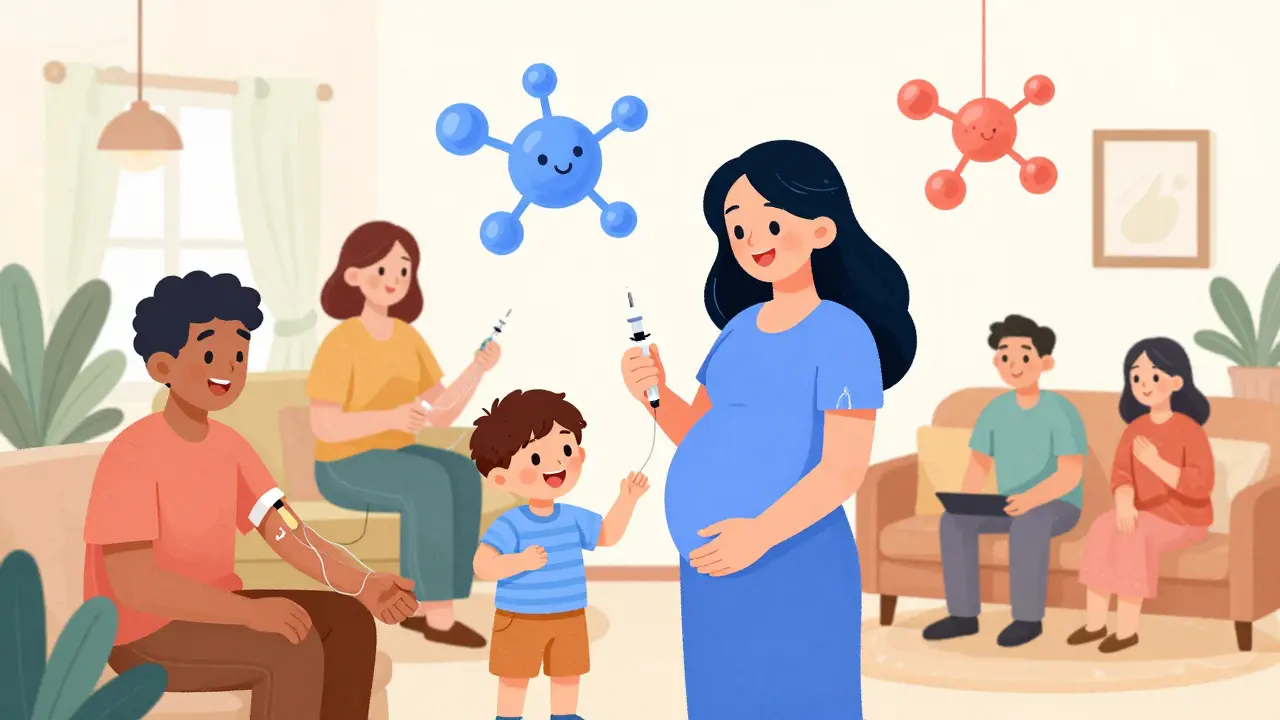
Pregnancy is another key factor. Many standard autoimmune medications are dangerous for developing fetuses. IVIG, however, is generally considered safe during pregnancy, making it a vital option for pregnant women with active autoimmune flares. Dr. John Smith of the American College of Rheumatology notes its particular value in "treating refractory cases... especially in pregnant patients where many standard autoimmune treatments are contrainducted."
Age and comorbidities also play a role. Research suggests that older age can negatively impact outcomes in some conditions like GBS, while younger children with Kawasaki disease respond exceptionally well. Your doctor will evaluate your renal function and cardiac status to ensure your body can handle the fluid load.
Future Directions: Beyond Traditional Infusions
The field of IVIG therapy is evolving. Researchers are looking for ways to make this potent treatment more accessible and effective. One promising development is subcutaneous immunoglobulin (SCIG), which allows patients to self-administer smaller doses under the skin at home. This reduces the burden of frequent clinic visits and provides more stable antibody levels in the blood.
Scientists are also exploring combination therapies. A 2024 review highlighted that combining IVIG with rituximab (a biologic drug) appears effective for severe autoimmune conditions refractory to monotherapy. Additionally, researchers at Rockefeller University have identified specific sialylated glycans that enhance the anti-inflammatory activity of IgG, potentially allowing for lower effective doses in the future. As understanding of the immune system deepens, IVIG may become even more tailored to individual patient needs.
How quickly does IVIG start working for autoimmune disorders?
IVIG acts relatively quickly compared to oral immunosuppressants. Most patients experience symptom improvement within 3 to 14 days of starting treatment. For conditions like immune thrombocytopenia (ITP), platelet counts can rise significantly within 24 to 48 hours.
Is IVIG therapy safe for pregnant women?
Yes, IVIG is generally considered safe during pregnancy. It is often used when other autoimmune medications are contraindicated due to risks to the fetus. However, any treatment during pregnancy should be carefully managed by a specialist.
What are the most common side effects of IVIG infusions?
The most common side effects are mild and include headache (occurring in 10-15% of patients), chills, nausea, and fatigue. Serious adverse events are rare, occurring in less than 0.5% of infusions. Pre-medication can help reduce these symptoms.
How much does IVIG therapy cost?
The cost is high, typically ranging from $5,000 to $10,000 per treatment cycle in the United States. Coverage depends on insurance plans and the specific medical indication, often requiring prior authorization.
Can IVIG cure autoimmune diseases?
No, IVIG does not cure autoimmune diseases. It is a treatment that modulates the immune system to control symptoms and prevent damage. Most patients require repeated treatments, often every 2 to 8 weeks, to maintain efficacy.