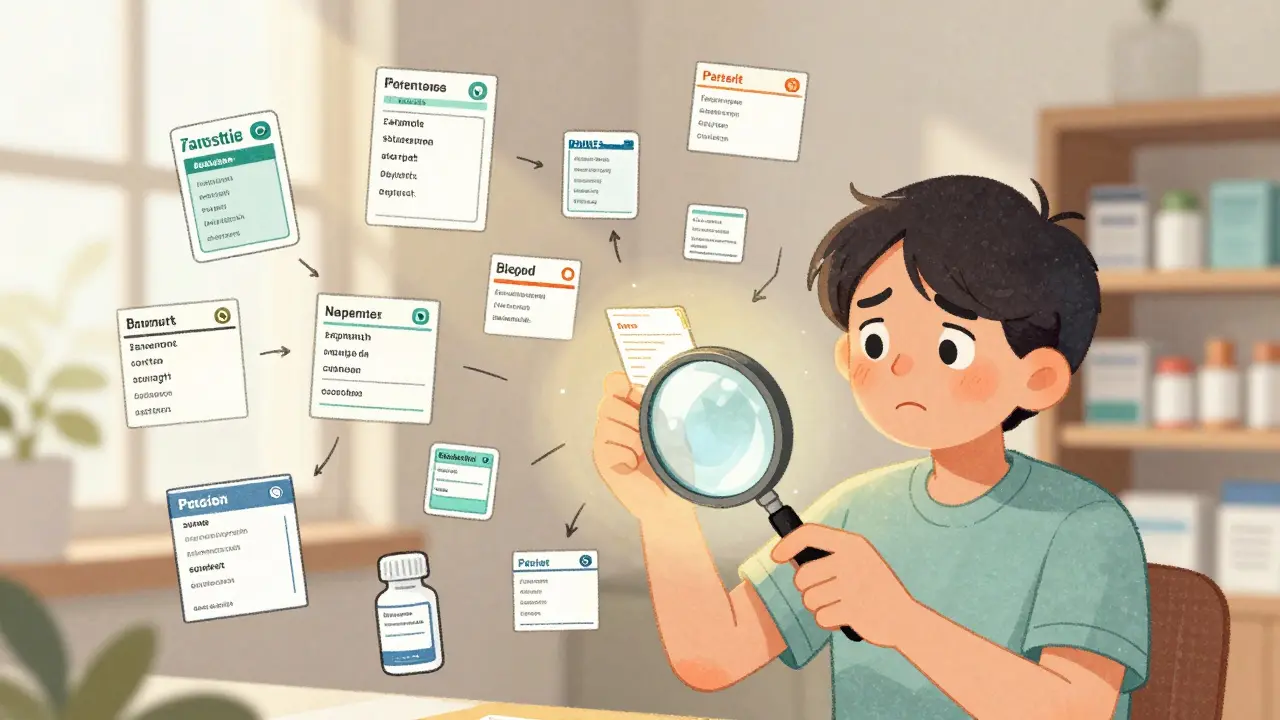
Every time you pick up a new prescription, you’re handed a small piece of paper that could mean the difference between getting better and ending up in the hospital. Yet most people glance at it, toss it in their bag, and hope for the best. That’s dangerous. Prescription labels aren’t just paperwork-they’re your personal safety guide. And if you don’t understand them, you’re at risk of taking the wrong dose, mixing dangerous drugs, or wasting money on expired pills.
What’s on Your Prescription Label? The 12 Key Parts
Your prescription label has twelve essential pieces of information. Missing even one can lead to mistakes. Here’s what you need to check every single time:
- Patient name - This must match your full legal name. If it says "John Smith" and you’re "Jane Smith," don’t take it. Medication mix-ups happen more often than you think, especially in households with multiple people on prescriptions.
- Medication name - You’ll see both the brand name (like "Lipitor") and the generic name (like "atorvastatin"). In Canada, the generic name always comes first. Know both so you can recognize the drug if your pharmacy switches brands.
- Prescription number (Rx#) - This unique code helps the pharmacy track your prescription. Use it when calling for refills. If you don’t know your Rx#, ask the pharmacist next time you visit.
- Prescriber name - This is the doctor, nurse practitioner, or dentist who ordered your medication. If you don’t recognize the name, call the pharmacy to confirm it’s yours.
- Medication strength - This tells you how much of the drug is in each pill or dose. "20 mg" means 20 milligrams per tablet. If your last prescription was 10 mg and now it’s 20 mg, double-check with your pharmacist before taking it.
- Quantity - How many pills, milliliters, or grams you received. If you were expecting 30 pills but got only 15, ask why.
- Discard/expiration date - Most prescriptions expire one year after being filled. After that, the medicine may not work as well-or could become unsafe. Never take pills past this date.
- Instructions - This is the most misunderstood part. "Take one tablet twice daily" doesn’t mean "take it every two hours." It means morning and night. "Take with food" means eat something first, not just a sip of water. The NIH found 79% of patients misinterpret these instructions, especially if they have low health literacy.
- Refill information - It’ll say something like "Refills: 2." That means you can get two more fills without a new prescription. Once it’s gone, you need to call your doctor.
- Auxiliary labels - These are small stickers with warnings: "Avoid alcohol," "May cause drowsiness," "Refrigerate," or "Take on empty stomach." Don’t ignore them. They’re there for your safety.
- Drug Identification Number (DIN) - In Canada, this is an 8-digit code assigned by Health Canada. It’s proof the drug is approved for sale here. You can look it up online if you want to verify the drug’s details.
- Pharmacy contact info - Name, phone number, and address. Keep this handy. If you have questions, call them. Pharmacists are trained to explain labels clearly.
Why People Get It Wrong - And How to Avoid It
It’s not your fault if you’re confused. Prescription labels were designed for doctors, not patients. Many use vague terms like "as needed," "twice daily," or "take before meals." A 2008 NIH study found that 79% of patients misread at least one instruction. Even people who read well struggled.
Here’s what trips people up most:
- "Twice daily" = two times a day, not every 12 hours unless specified. Most people think "twice daily" means "every 12 hours," but your body doesn’t need the same dose at 2 a.m. and 2 p.m. Stick to morning and evening.
- "With food" doesn’t mean "with a snack." It means with a full meal. Taking certain antibiotics on an empty stomach can cause nausea or reduce effectiveness.
- "As needed" is often misunderstood. If it says "Take 1 tablet as needed for pain," that doesn’t mean you can take five at once. Check the maximum daily dose (usually listed on the label or in the patient info sheet).
- "Take on an empty stomach" means no food for at least one hour before and after. Coffee, juice, or even a piece of toast can interfere with absorption.
Dr. Michael Wolf, who led the NIH study, says: "Using clear time-based instructions like 'take at 8 a.m. and 8 p.m.' works better than 'twice daily.'" That’s why some pharmacies now use those exact phrases on their labels.
Seven Steps to Check Your Label Before Taking Anything
Before you swallow any pill, follow this checklist. It takes less than two minutes-and could save your life.
- Confirm your name - Is it spelled right? Does it match your ID? Even a missing middle initial can be a red flag.
- Match the drug name - Does it match what your doctor told you? If your doctor said "metformin" but the label says "glipizide," stop. Call the pharmacy immediately.
- Check the strength - Did your dose change? If you’ve been on 500 mg for years and now it’s 1000 mg, ask why. Don’t assume it’s an upgrade.
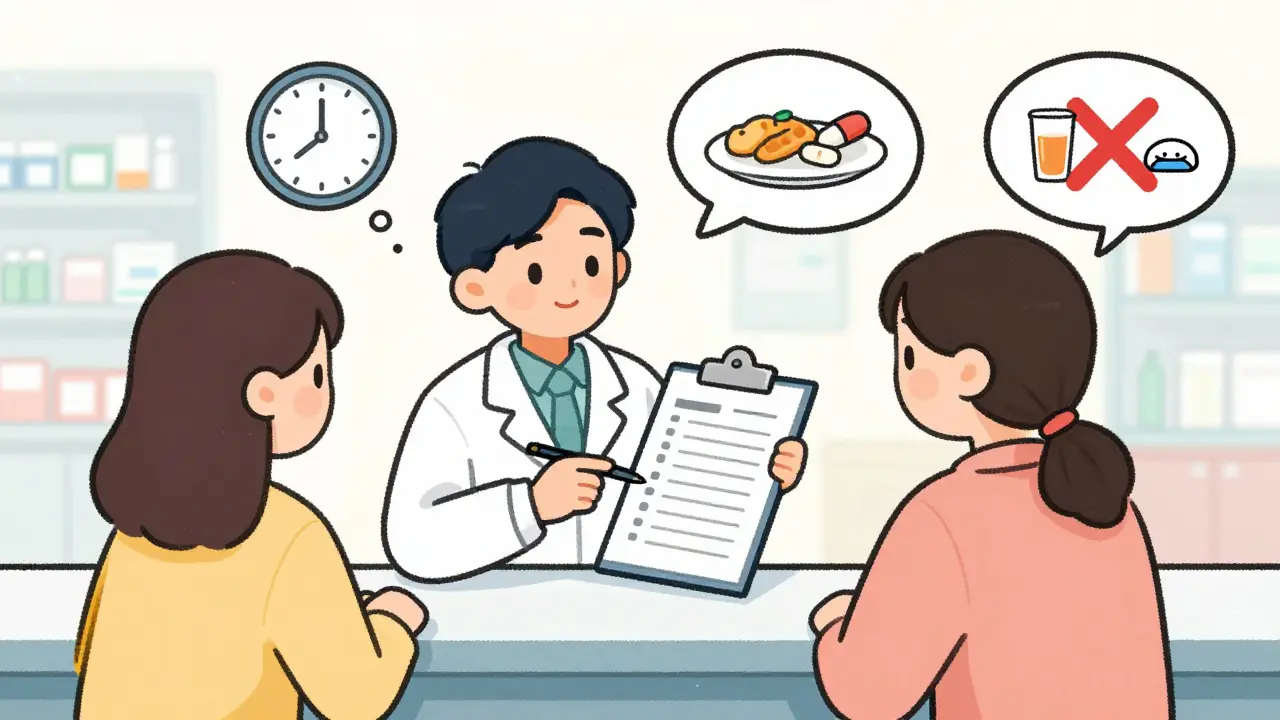
- Understand the instructions - Read them out loud. If you’re unsure, say: "Can you explain this to me again?" Don’t nod and smile just to be polite.
- Look for auxiliary warnings - Is there a sticker saying "Avoid sunlight"? If you’re going on vacation, you need to know. "May cause dizziness"? Don’t drive until you know how it affects you.
- Check the expiration date - If it’s from last year and you just picked it up, ask if it’s fresh. Pharmacies sometimes dispense older stock. You have the right to ask for a newer batch.
- Find the pharmacy number - Save it in your phone. If you have a question at 10 p.m., you don’t want to Google "how to take this pill" and risk misinformation.
What to Do If Something Doesn’t Add Up
Pharmacies make mistakes. Not often-but they happen. The FDA estimates that about 1 in every 5,000 prescriptions is filled incorrectly. That might sound rare, but with millions of prescriptions filled daily, that’s hundreds of errors every week.
If anything feels off:
- Don’t take the medication.
- Call the pharmacy right away. Ask: "Can you confirm this is my prescription?"
- Ask to speak to the pharmacist, not just the technician. Pharmacists are the ones who double-check the fill.
- Bring your old bottle or prescription slip if you have it. It helps them spot the error faster.
Some pharmacies now offer a "medication review" service-free of charge. Ask if they’ll sit with you for 10 minutes to go over all your prescriptions. This is especially helpful if you’re on five or more medications.
Digital Labels Are Coming - But Don’t Rely on Them Yet
Some pharmacies in the U.S. are testing QR codes on labels that link to video instructions in multiple languages. In trials, this cut misinterpretation by 40% for non-English speakers. Canada is watching closely.
But here’s the catch: not everyone has a smartphone. Not everyone can use apps. And not every pharmacy has upgraded yet. So don’t wait for tech to fix this. Learn to read the paper label now.
Even if your pharmacy sends you a digital copy through an app, always check the physical label when you pick up your meds. They don’t always match.
Why This Matters More Than You Think
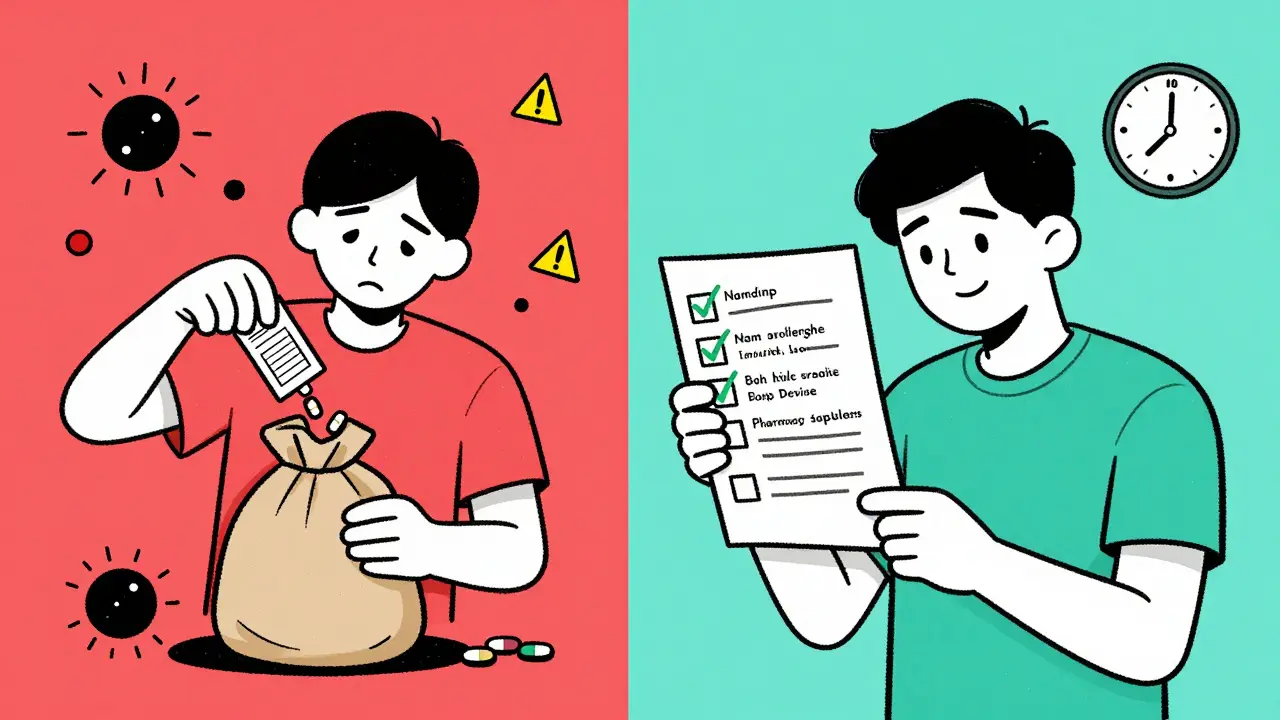
Medication errors cause 1.5 million preventable injuries in the U.S. every year, according to the National Academies. In Canada, the numbers are similar. Half of those errors happen because patients didn’t understand their labels.
It’s not just about getting sick. It’s about cost. The Institute of Medicine found medication errors cost the U.S. healthcare system $3.5 billion annually. In Canada, it’s millions more in avoidable ER visits and hospital stays.
And here’s the best part: understanding your label costs nothing. No app. No subscription. Just five minutes of your time. People who understand their labels are 28% more likely to take their meds correctly-and 40% less likely to be hospitalized because of them.
Final Tip: Ask for Help
There’s no shame in saying, "I don’t understand this." Pharmacists expect it. They’ve seen it a thousand times. In fact, Consumer Med Safety says the safest thing you can do is ask your pharmacist to walk you through your label before you leave the counter.
Bring a family member if you’re nervous. Write down your questions ahead of time. Record the conversation on your phone (ask permission first). Use plain language: "What happens if I miss a dose?" "Can I drink coffee with this?" "Will this make me sleepy?"
That’s not being difficult. That’s being smart.
What should I do if my prescription label looks different from last time?
Don’t assume it’s a mistake-but don’t take it without checking. Compare the medication name, strength, and instructions to your previous bottle. If anything changed, call the pharmacy. Even small changes like switching from "Lipitor" to "atorvastatin" are normal, but you should still confirm it’s the same dose. If the quantity or refill count dropped, ask why. Pharmacies sometimes refill less if your doctor changed the prescription.
Can I take my medication if the expiration date is past?
It’s not recommended. While some pills may still be safe after expiration, their strength can drop over time, making them less effective. For antibiotics, heart meds, or insulin, this can be dangerous. The FDA says expired medications should be disposed of properly. Most pharmacies have drop-off bins for old pills. Don’t flush them or throw them in the trash.
What if I can’t read the label because the print is too small?
Ask your pharmacist for a large-print copy. Most pharmacies can print a bigger version on request. Some also offer audio instructions via phone or app. If you’re blind or have low vision, ask about the pharmacy’s accessibility services. In Canada, pharmacists are required to provide reasonable accommodations under human rights laws.
Why does my label say "Take with food" when my doctor said "Take on an empty stomach"?
This can happen if the pharmacy filled your prescription with a different brand or generic version. Some versions of the same drug have different instructions. Always check the label on the bottle you’re holding-not what your doctor said last time. Call the pharmacy to clarify. Never guess.
Is it okay to split pills if the dose seems too high?
Only if the pill is scored (has a line down the middle) and your doctor or pharmacist says it’s safe. Some pills are designed to release medicine slowly-splitting them can cause too much to be released at once. Never split capsules or pills labeled "extended-release" or "SR." If you need a lower dose, ask your doctor for a different strength instead.
Sachin Bhorde
December 16, 2025 AT 17:53Yo, this is gold. I work in pharma back in Mumbai and I can’t tell you how many folks just swallow pills like candy. I once saw a guy take his dad’s beta-blockers for a headache. Dude thought ‘cardio’ meant ‘heart pain’ not ‘heart meds’. Always check the DIN in Canada-Health Canada doesn’t mess around. And if the label says ‘take with food’? Eat a damn sandwich, not a chip.
Joe Bartlett
December 17, 2025 AT 01:22Brits get it right. We’ve got pharmacists who actually talk to you. No fluff. Just clear instructions. Americans overcomplicate everything. If you can’t read the label, get glasses. Simple.
Marie Mee
December 18, 2025 AT 18:50They’re lying about the expiration dates. I read online that the FDA lets companies extend expiration dates secretly. Big Pharma doesn’t want you to know you can still take that insulin from 2021. They’re making billions off you buying new ones. And why do they print tiny text? So you don’t notice they changed the formula. I’m not taking anything unless I can read it with a magnifying glass.
Naomi Lopez
December 18, 2025 AT 22:54It’s astonishing how casually people treat pharmacokinetics. The distinction between ‘take with food’ and ‘take on an empty stomach’ isn’t pedantic-it’s pharmacologically deterministic. A 30% reduction in bioavailability isn’t trivial. And auxiliary labels? They’re not suggestions. They’re evidence-based risk mitigation protocols. If you’re not consulting the prescribing information sheet, you’re not being responsible-you’re being reckless.
Salome Perez
December 20, 2025 AT 12:35I’m a Filipina nurse in Chicago and I’ve seen this play out in so many languages. In Tagalog, ‘dalawang beses araw-araw’ means morning and night-not every 12 hours. I always tell my patients: ‘If you’re not sure, call the pharmacy. Don’t Google it. Don’t ask your cousin who watched a YouTube video.’ We’re not just talking about pills-we’re talking about dignity. You deserve to understand what’s going into your body. And yes, pharmacists? They’re saints. Treat them like family.
Evelyn Vélez Mejía
December 21, 2025 AT 09:59Medication labels are a microcosm of our broken healthcare system. They’re designed for compliance, not comprehension. We’ve outsourced understanding to institutions that profit from confusion. The real tragedy isn’t the misread instructions-it’s that we’ve normalized this. We’ve accepted that health literacy is a privilege, not a right. If a pill bottle requires a PhD to decipher, the system has failed. We need plain-language mandates-not just recommendations.
Victoria Rogers
December 22, 2025 AT 21:54Ugh this is so American. In Germany they just give you a barcode and a QR code. No paper labels. No tiny print. You scan it and your phone tells you in 12 languages. Why are we still using 1980s paper? Also, who cares about DIN? I just trust my doctor. Why are we making this so complicated?
Meghan O'Shaughnessy
December 24, 2025 AT 00:11My grandma in Ohio doesn’t have a smartphone. She uses a magnifying glass and a highlighter. She writes down every question before she goes to the pharmacy. She doesn’t ask for help because she’s embarrassed. She just waits until she feels weird and then blames herself. This post? It’s for her. And for all the quiet ones who don’t speak up.
Kaylee Esdale
December 25, 2025 AT 04:45My mom took her blood pressure med for 3 years thinking ‘once daily’ meant ‘whenever I remember’. She had a stroke. Don’t be like my mom. Read the label. Say it out loud. If it sounds weird, it probably is. And if you’re scared to ask? Just say ‘I’m not sure’-that’s all it takes. Pharmacies love that. They’ll walk you through it like you’re their kid.
CAROL MUTISO
December 25, 2025 AT 17:15Wow. So we’re supposed to memorize 12 parts of a label like it’s a college exam? Meanwhile, my insurance just raised my copay by 300% and the pill looks totally different. But sure, let’s blame the patient for not being a pharmacy technician. I get it. The real problem is the system. But hey, at least I’m not a bad person for not knowing DIN codes. 😌
Erik J
December 25, 2025 AT 20:25Just curious-how many people actually read the patient info sheet that comes with the bottle? Or do they just throw it away with the box?
BETH VON KAUFFMANN
December 27, 2025 AT 04:25‘Auxiliary labels’? That’s such a buzzword. It’s just a sticker. And ‘DIN’? I don’t care if it’s 8 digits or 80. I just want the pill to work. This post reads like a pharmacy textbook. Most people just need to know: ‘Is this the right pill? Am I taking it right? Will I die?’ Keep it simple.
Brooks Beveridge
December 27, 2025 AT 05:35You got this. Seriously. If you read this whole thing, you’re already ahead of 90% of people. Don’t overthink it. Just check your name, the pill, the dose, and the date. If it looks weird-call. No shame. You’re not a burden. You’re protecting your life. 🙌
Anu radha
December 27, 2025 AT 14:08I live in Kerala and my aunt takes 7 pills a day. I sit with her every Sunday and read the labels out loud. We write down the answers in a notebook. No apps. Just love and patience. This post made me cry. Thank you.
Radhika M
December 28, 2025 AT 08:56My pharmacist in Delhi prints a big label in Hindi and English. She even draws arrows: ↑ morning, ↓ night. She doesn’t charge extra. She just cares. That’s the kind of care we need more of.