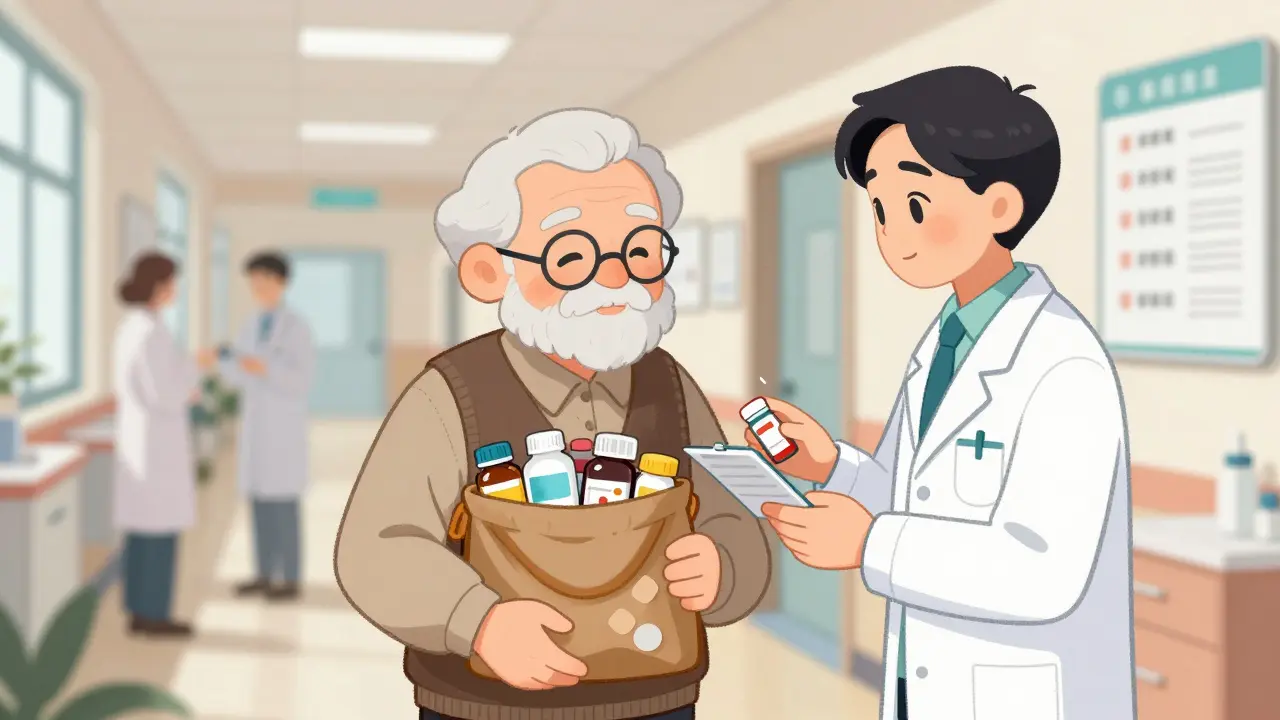
Going from hospital to home should feel like a relief-not a minefield. But for seniors, especially those juggling five or more medications, the switch can be dangerous. About 1 in 5 patients experience a medication error within three weeks of leaving the hospital, according to research from the Journal of General Internal Medicine. These aren’t small mistakes. They’re wrong doses, missed pills, or drugs that clash dangerously-and they send thousands of older adults right back to the ER.
Why Medication Errors Happen at Discharge
It’s not because nurses or doctors are careless. It’s because the system is broken. Hospitals track medications differently than pharmacies and home care providers. A patient might be on warfarin at home, but the hospital records show they stopped it. Or maybe they’re taking an over-the-counter painkiller that interacts with their blood thinner, and no one asked about it. The biggest problem? Medication reconciliation. That’s the formal process of comparing what a patient was taking before admission, what they got in the hospital, and what they’re supposed to take when they go home. Yet, studies show that even in hospitals that claim to do it well, 76% of discharge summaries still have clinically significant errors when checked independently. For seniors, the risks are higher. Aging changes how the body processes drugs. Kidneys slow down. Liver function drops. Memory fades. A pill that was safe at 65 can be dangerous at 80. And if the patient doesn’t understand why they’re taking each one, they’ll skip doses-or double up-without realizing it.The Five Steps to Safe Medication Reconciliation
Medication reconciliation isn’t just a checkbox. It’s a process with five non-negotiable steps:- Verification: Get the full list of every medication the patient was taking before hospitalization-including vitamins, herbal supplements, patches, and inhalers. Don’t rely on memory. Ask for the actual bottles.
- Clarification: Confirm why each drug is prescribed. Is that blood pressure pill really needed? Is the opioid dose too high for someone with kidney issues?
- Reconciliation: Compare the admission list, hospital orders, and proposed discharge list. Flag any changes. If a drug was stopped, why? If a new one was added, is it necessary?
- Communication: Send the final, accurate list to the patient’s primary care doctor, pharmacist, and home health nurse. No email attachments. No handwritten notes. Use secure electronic exchange.
- Education: Use the Teach-Back method. Don’t just hand them a paper. Ask them to explain, in their own words, what each pill is for and when to take it. If they can’t, you haven’t finished.
Who Should Lead This Process?
Many hospitals still hand off discharge instructions to nurses or residents who are swamped. But the data is clear: pharmacists are the most effective safety net. A study in JAMA Internal Medicine found pharmacist-led reconciliation reduces medication discrepancies by 67%. They catch interactions, spot duplicate prescriptions, and know which drugs are risky for seniors. For high-risk patients-those with heart failure, COPD, diabetes, or five or more meds-pharmacist involvement isn’t optional. It’s the standard of care. Even in rural hospitals where pharmacists aren’t on staff, telehealth consultations can bridge the gap. And it’s not just about the discharge day. The real danger comes after. A patient gets home, opens the pillbox, sees seven different colors and sizes, and doesn’t remember which one is for their heart. That’s when errors happen.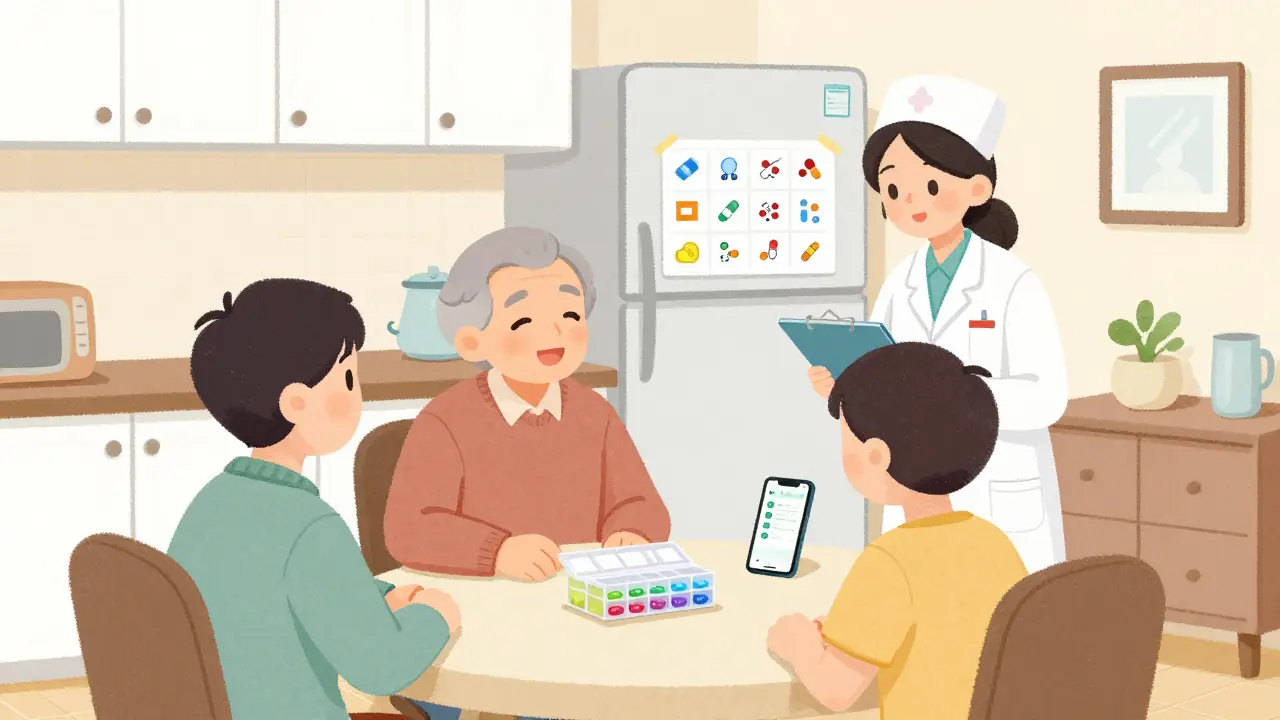
What Works: Proven Models for Safe Transitions
Three models have been tested and proven to reduce errors:- The Coleman Care Transitions Intervention: A trained coach visits the patient at home, calls them weekly for 30 days, and helps them navigate their meds. It cut readmissions by 38% in a major trial.
- SafeMed: A team of pharmacists, nurses, and community health workers follow up with high-risk patients within 72 hours of discharge. They did a 22.5% drop in readmissions.
- Project BOOST: Hospitals use standardized checklists, electronic alerts, and mandatory follow-up calls. It cuts readmissions by 10-15%.
What Patients and Families Can Do
You don’t have to wait for the hospital to get it right. Be your own advocate.- Bring your brown bag: Before discharge, gather every pill, patch, and liquid you take at home-even the ones you haven’t used in months. Show them to the pharmacist or nurse.
- Ask for a written plan: Make sure it includes the name, dose, time, and reason for each medication. If it says “as needed,” ask exactly when that means.
- Use the Teach-Back method: When someone explains your meds, say, “Let me tell you how I’ll take these.” If you stumble, ask them to explain again.
- Set up a pill organizer: Use one with alarms or a digital app that reminds you. A 2023 study showed a simple mobile app reduced errors by 41% in seniors.
- Call your pharmacist: Don’t assume the hospital sent the right list. Call your pharmacy and ask: “What meds should I be taking right now?”

Technology Can Help-But Only If Used Right
Electronic health records are supposed to make this easier. But only 35% of U.S. hospitals can share medication data with outpatient providers. That means your primary care doctor might not even see your discharge list. New tools are changing that. Epic’s Care Transition Service reduced errors by 28% at Mayo Clinic. AI systems like MedAware flag dangerous combinations before they happen. Telehealth follow-ups increased medication adherence by 22%. But tech alone won’t fix this. A fancy app won’t help if the patient can’t read it. A digital reminder won’t matter if no one taught them what the pill is for. Technology is a tool-not a solution.What’s at Stake
Medication errors after discharge cost the U.S. system $17.4 billion a year in avoidable hospital readmissions. For families, it’s more than money. It’s sleepless nights, emergency rides, and the fear that your loved one might not come home again. The good news? We know how to fix this. It’s not about spending more money-it’s about doing the right things consistently. Pharmacists at discharge. Teach-Back with every patient. Follow-up within 7 days. A clear, visual medication list. Hospitals are being penalized for readmissions. Insurance companies are paying for transition care. And patients? They’re tired of being confused. The system is changing. But change won’t happen unless families demand it. If your parent is going home from the hospital, ask: “Who is handling their medications? Will a pharmacist review their list? Will someone call them in two days?” If the answer is vague, push harder. Because no one should come home from the hospital only to get sicker from the pills they were supposed to take.What’s the most common medication error after hospital discharge?
The most common error is a mismatch between what the patient was taking at home and what’s listed on the discharge papers. This includes missing over-the-counter drugs, herbal supplements, or incorrect doses. Studies show that nearly half of all discharge medication lists have at least one significant error, even in hospitals that claim to do medication reconciliation well.
Who is most at risk for medication errors during transition?
Seniors with five or more medications (polypharmacy), those with kidney or liver problems, people with dementia or memory issues, and patients on high-risk drugs like warfarin, insulin, or opioids are at the highest risk. Medicaid patients also face 37% more discrepancies due to fragmented care between providers.
Why is the Teach-Back method so important?
Teach-Back means asking the patient to explain, in their own words, how and why they’re taking each medication. It’s not a test-it’s a safety check. If they can’t explain it, they won’t take it right. Studies show this method improves medication adherence by 32% and cuts adverse events by half.
Should a pharmacist be involved in discharge planning?
Yes-especially for seniors. Pharmacists are trained to spot dangerous interactions, outdated prescriptions, and incorrect doses. Research shows pharmacist-led reconciliation reduces medication errors by 67%. The American Society of Health-System Pharmacists calls this the single most effective intervention for preventing errors during transitions.
How soon after discharge should a patient be followed up?
High-risk patients-those with heart failure, COPD, or five or more medications-should be contacted within 7 days. For moderate-risk patients, 14 days is acceptable. The first follow-up should include a review of all medications, a check of side effects, and confirmation that the patient understands their regimen. Studies show follow-up within 7 days cuts readmissions by up to 30%.
Can technology like apps help prevent medication errors?
Yes, but only as a supplement to human interaction. A 2023 study found that a simple mobile app showing visual medication schedules reduced errors by 41% in elderly patients. Apps with reminders, pill photos, and dosage instructions help-but they don’t replace teaching, checking, or personal follow-up.
Jenny Salmingo
December 31, 2025 AT 19:35My grandma went through this last year. They gave her a sheet with 12 pills on it, no pictures, no times. She took them all at breakfast. Ended up in the ER. Now we use a pill box with alarms and I call the pharmacy every week to double-check. Simple stuff, but it works.
Don't overcomplicate it. Just get the list, show it to someone who knows meds, and make sure she can say why each one matters.
linda permata sari
January 1, 2026 AT 14:34OH MY GOSH. I just cried reading this. My mom was discharged with THREE blood thinners because the nurse said ‘they’re all the same.’ THREE. She had a stroke two weeks later. This isn’t just a checklist-it’s a LIFE OR DEATH THING. Why are we still treating seniors like they’re just numbers?!
Brady K.
January 2, 2026 AT 20:48Let’s be real-this isn’t a ‘system failure.’ It’s a failure of accountability. Hospitals outsource meds to overworked pharmacists who get paid pennies. Then they slap a ‘discharge summary’ on a fax machine from 1998 and call it ‘care coordination.’
Pharmacists aren’t a ‘nice-to-have’-they’re the only people in the hospital who actually understand drug kinetics, interactions, and renal clearance. If you’re not having a clinical pharmacist do reconciliation, you’re not doing medicine-you’re doing liability roulette.
Emma Hooper
January 4, 2026 AT 14:37Ugh. I’ve seen this so many times. One lady I know was on warfarin for 12 years. Got hospitalized, got discharged with a new pill that was basically aspirin but with a fancy name. She didn’t know it was the same thing. Took both. Blew out her gums.
Teach-back? Yeah, but make it visual. Draw it. Use emojis if you have to. ‘Red pill = heart. Blue pill = sugar. Green pill = don’t mix with wine.’ Simple. Dumb? Maybe. But it saves lives.
Martin Viau
January 5, 2026 AT 21:34Canada’s system isn’t perfect, but at least we have pharmacists embedded in discharge teams. No excuses. If your hospital doesn’t have a pharmacist on staff, you’re not a hospital-you’re a warehouse for pills and paperwork.
And don’t even get me started on ‘electronic exchange.’ Half the clinics in the Midwest still use paper faxes. It’s 2025. We have smartphones. Use them.
Marilyn Ferrera
January 7, 2026 AT 19:32Verification. Clarification. Reconciliation. Communication. Education. Five steps. Non-negotiable.
If you skip one, you’re not just cutting corners-you’re gambling with someone’s life. And yes, the pharmacist must lead it. Not the nurse. Not the resident. The pharmacist. Period.
Robb Rice
January 9, 2026 AT 10:47I’ve worked in three different hospitals. The discharge meds process is a mess. But I’ve also seen what happens when you do it right. One time, a pharmacist caught a duplicate prescription for metoprolol-same dose, two different names. Patient was on it for years. No one noticed until the med rep showed up.
It’s not hard. It’s just not prioritized. And that’s on leadership.
Darren Pearson
January 10, 2026 AT 21:21It’s fascinating how the medical establishment continues to treat medication reconciliation as a ‘best practice’ rather than a baseline standard. The data is overwhelming. The cost is quantifiable. The moral imperative is undeniable. Yet, institutions persist in treating this as an administrative afterthought.
One must ask: if this were a financial audit or a cybersecurity protocol, would we tolerate such negligence? Of course not. Then why do we accept it in healthcare?
Retha Dungga
January 12, 2026 AT 02:47my aunt took 17 pills a day and no one ever asked if she knew what they were for 😔
now she’s in a nursing home because she mixed up the blue and green ones 🥲
teach back is not a suggestion it’s a must 💬💊
Aaron Bales
January 13, 2026 AT 12:22Real talk: if your parent is going home with more than five meds, you need to be there. Not just at discharge-every single day for the first week.
Write it down. Use the pillbox. Call the pharmacy. Don’t assume anything. This isn’t ‘helping your mom’-it’s preventing a medical disaster. You’re her last line of defense.
Urvi Patel
January 14, 2026 AT 04:45Everyone talks about pharmacists like they’re magic. But let’s be honest-most of them are just glorified cashiers. They don’t even know what your mom’s kidney function is. They just scan the script.
And why are we blaming hospitals? The real problem is the insurance companies who won’t pay for follow-up visits. No money = no care.
anggit marga
January 15, 2026 AT 20:37Why are we even talking about this like it’s new? This has been happening since the 70s. Hospitals don’t care. They get paid for admission. They get penalized for readmission. So they push you out the door with a stack of papers and hope you don’t die before Tuesday.
Stop pretending this is about safety. It’s about profit.
Joy Nickles
January 16, 2026 AT 20:29OMG I just read this and I’m shaking. My sister got discharged with 11 meds and no one told her one of them was for depression-she thought it was for her knee. Took it for 3 weeks. Then started crying all day. Thought she was going crazy.
NOBODY CHECKED. NOBODY ASKED. I HATE THIS SYSTEM.
Harriet Hollingsworth
January 18, 2026 AT 05:14If your loved one can’t explain why they’re taking a pill, they shouldn’t be taking it. That’s not ‘compassionate care’-that’s negligence dressed up as bureaucracy.
And if your hospital doesn’t use Teach-Back? Don’t sign the discharge papers. Walk out. Find another facility. Your parent’s life is worth more than their paperwork.
Deepika D
January 19, 2026 AT 02:13I’m a nurse in a rural clinic, and let me tell you-this isn’t just a hospital problem. It’s a whole-system failure. We get patients coming in with 15 different pill bottles from 5 different pharmacies, no one knows what’s what, and the primary doc hasn’t seen the discharge summary because it got lost in the fax machine (yes, still fax machines).
But here’s what works: we started doing weekly phone check-ins with our high-risk patients. Just 10 minutes. We ask: ‘What did you take today?’ ‘How do you feel?’ ‘Did you get your refill?’
It’s not fancy. It’s not high-tech. But since we started doing it, our readmission rate dropped by 40%. And the patients? They say, ‘Someone actually cared enough to call.’
That’s the real medicine right there. Not the apps. Not the checklists. Just someone showing up.