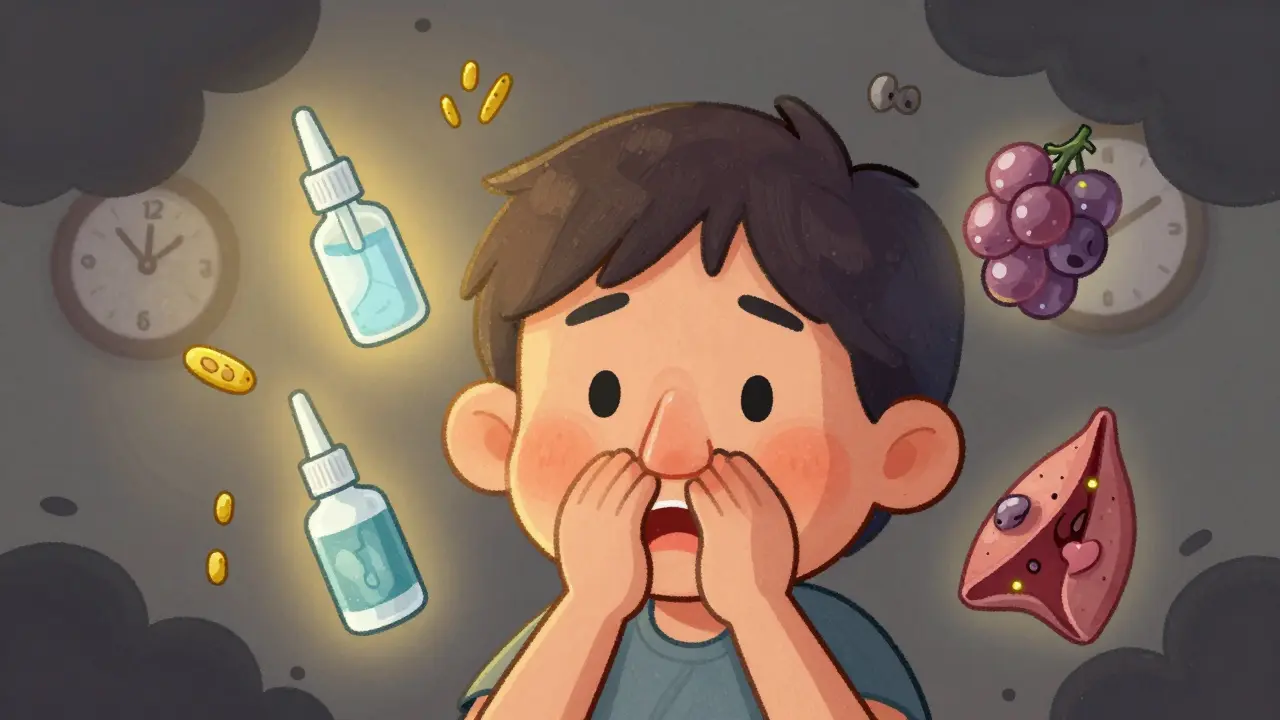
When your nose stays stuffed up for months - even after trying decongestants, antibiotics, or steam - you might be dealing with chronic sinusitis. It’s not just a bad cold that won’t quit. This isn’t about a few days of congestion. Chronic sinusitis means your sinuses are inflamed for 12 weeks or longer, no matter what you do. You’re not alone. About 9% of people worldwide live with this condition. In the U.S. alone, 31 million people get diagnosed every year. It’s one of the most common reasons people visit their doctor. The problem isn’t just a runny nose. You might feel pressure around your eyes, forehead, or cheeks. Your sense of smell fades. Breathing through your nose feels impossible. You’re tired all the time. And no, it’s not just "all in your head." This is real inflammation, often rooted in allergies, structural issues, or immune overreactions - not bacteria. Most people assume antibiotics will fix it. They won’t. Not in chronic cases. The real answer lies in understanding what’s causing the inflammation and how to calm it down - without surgery, if possible.
What Exactly Is Chronic Sinusitis?
Chronic sinusitis, or chronic rhinosinusitis, isn’t just a long-lasting version of acute sinusitis. It’s a different disease altogether. Acute sinusitis lasts less than four weeks and is usually triggered by a virus. Chronic sinusitis lasts 12 weeks or more, even with treatment. It’s not about infection - it’s about inflammation. Doctors now recognize three main types:
- Chronic sinusitis without nasal polyps - The most common form. Inflammation narrows the sinus openings, trapping mucus.
- Chronic sinusitis with nasal polyps - Soft, noncancerous growths inside the nose or sinuses. They block airflow and drainage. About 1 in 4 people with chronic sinusitis have these.
- Allergic fungal rhinosinusitis - A rare subtype where the immune system overreacts to fungi in the sinuses. Often linked to asthma.
What Causes It? Allergies, Irritants, and Anatomy
You can’t blame one thing for chronic sinusitis. It’s usually a mix. Here’s what really drives it:
- Allergies - If you have hay fever, eczema, or asthma, your risk jumps 2.5 times. Shared inflammation pathways mean your nasal passages react the same way your lungs do. Dust, pollen, mold, and pet dander don’t just make you sneeze - they keep your sinuses swollen.
- Nasal polyps - These aren’t just annoying. They physically block drainage. Once they form, they tend to come back unless you treat the underlying inflammation.
- Structural problems - A deviated septum, narrow sinus openings, or a bony spur can trap mucus. It doesn’t matter how well you clean your sinuses - if the path is blocked, fluid builds up and inflammation grows.
- Environmental irritants - Smoking, secondhand smoke, pollution, and even dry air from heating systems can worsen swelling. Studies show smokers have a 35% higher risk.
- Immune overreaction - In some people, the immune system goes haywire. It doesn’t fight germs - it attacks the lining of the sinuses. This is why biologics (targeted drugs) now work for certain patients.
Medical Treatment: The First Line of Defense
Before you even think about surgery, you need to try medical management - and stick with it. Most people give up too soon. Step 1: Saline nasal irrigation - This isn’t optional. Rinsing your nasal passages with salt water (using a neti pot or squeeze bottle) removes allergens, mucus, and irritants. Studies show it improves symptoms in over 80% of patients when done daily. It’s cheap, safe, and works better than most sprays alone. Step 2: Intranasal corticosteroid sprays - These are the cornerstone of treatment. Fluticasone (Flonase), mometasone (Nasonex), and budesonide (Rhinocort) reduce swelling directly in the nasal lining. They don’t work overnight. It takes 4 to 8 weeks of daily use to see results. Only 55-65% of patients use them consistently - that’s why so many think they don’t work. Stick with it. Step 3: Antihistamines - If allergies are the trigger, loratadine (Claritin) or cetirizine (Zyrtec) can help. They reduce mucus and itching. But they don’t fix inflammation. Use them with nasal sprays, not instead of them. Step 4: Biologics for severe cases - If you have nasal polyps and nothing else works, you might qualify for a biologic. Dupilumab (Dupixent) was approved in 2019 specifically for this. It blocks the inflammation signals causing polyps. In trials, it cut polyp size by 50-60% and improved breathing in 30-40% of patients. Omalizumab (Xolair) and mepolizumab (Nucala) also help - especially if you have asthma too. Antibiotics? Not usually. - The Merck Manual says it plainly: chronic sinusitis isn’t caused by bacteria. Antibiotics like amoxicillin-clavulanate might be tried once if there’s a clear infection flare, but they won’t fix the root problem. Most patients don’t need them.
Surgical Options: When Medical Treatment Isn’t Enough
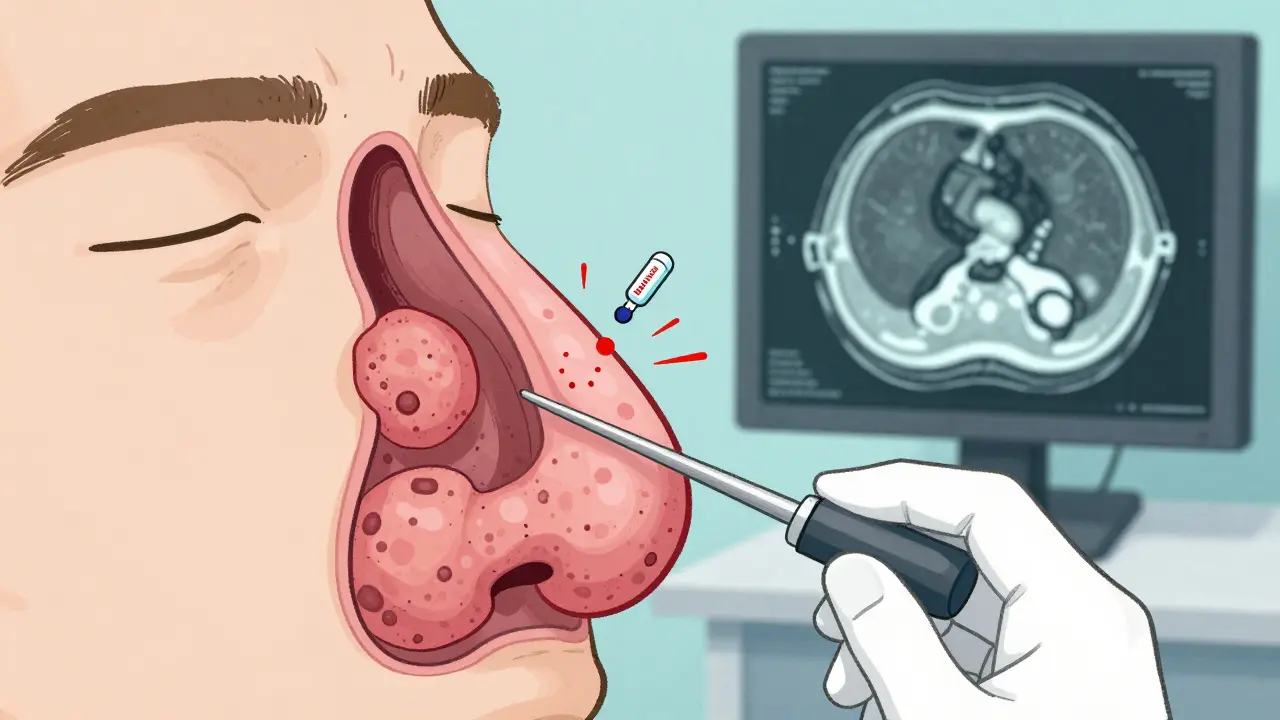
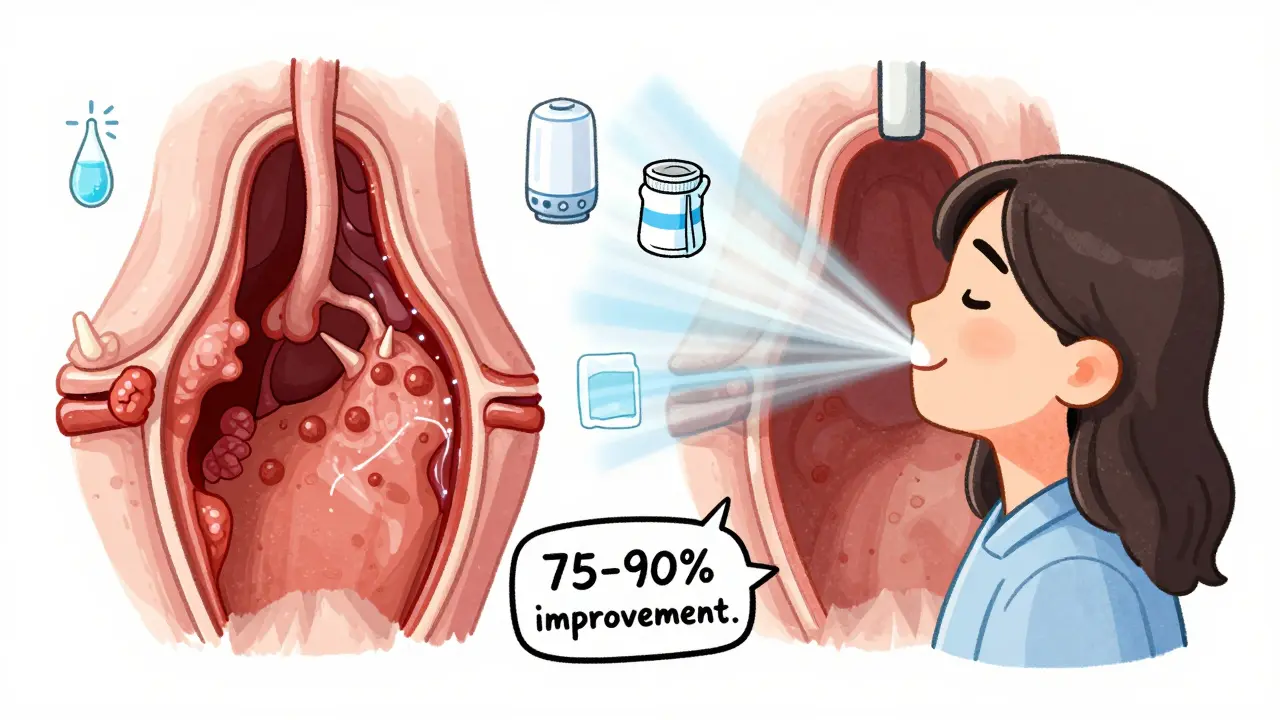
If you’ve tried 12 weeks of daily saline rinses, nasal steroids, and allergy control - and you’re still struggling - surgery becomes an option. It’s not a last resort. It’s a next step. Functional Endoscopic Sinus Surgery (FESS) - This is the gold standard. An ENT uses a thin camera to see inside your sinuses. Then, they remove bone or tissue blocking drainage. No external cuts. No scars. Recovery takes 7 to 10 days. Success rates? 75-90% of patients report major improvement. It works best when polyps are present or anatomy is distorted. Balloon sinuplasty - A less invasive option. A tiny balloon is inflated inside the blocked sinus to widen it. Recovery is faster - 3 to 5 days. But it’s not for everyone. It doesn’t remove polyps or fix a deviated septum. Success is around 70-80%, but long-term results aren’t as strong as FESS. Polypectomy - If polyps are the main issue, they can be removed during FESS. This gives quick relief - 85% of patients feel better right away. But here’s the catch: without ongoing steroid sprays, polyps return in 40-50% of cases within 18 months. Septoplasty - If your septum is crooked, fixing it can improve airflow and help other treatments work better. When done with FESS, 65-75% of patients see major improvement. Surgery doesn’t cure chronic sinusitis. It restores drainage. You still need to manage inflammation afterward - otherwise, it comes back.
What Doesn’t Work (And Why)
There’s a lot of misinformation out there.
- Antibiotics for long-term use - They don’t work. They don’t reduce inflammation. They just raise your risk of resistant bacteria.
- Over-the-counter decongestant sprays (like Afrin) - They give quick relief but cause rebound congestion if used over 3 days. This makes your sinusitis worse.
- Essential oils or steam alone - Steam might feel good, but it doesn’t reduce inflammation. Oils can irritate sensitive nasal tissue.
- Ignoring allergies - If you’re allergic to dust mites or mold and don’t reduce exposure, no spray or surgery will help long-term.
Lifestyle Changes That Actually Help
Surgery and sprays help - but lifestyle shifts make the difference between okay and feeling normal.
- Use a humidifier - Dry air (especially in winter) dries out mucus and makes congestion worse. A cool-mist humidifier in your bedroom helps. Clean it weekly to avoid mold.
- Avoid smoke and pollution - Even secondhand smoke triggers inflammation. If you smoke, quitting is the single best thing you can do.
- Wash bedding weekly - Dust mites thrive in pillows and sheets. Use allergen-proof covers and wash in hot water.
- Stay hydrated - Thin mucus drains better. Drink water all day, not just when you’re thirsty.
- Check your environment - Mold in bathrooms? Dusty HVAC vents? Fix it. You can’t treat your sinuses if your home keeps irritating them.
What Happens If You Do Nothing?
Chronic sinusitis won’t kill you. But it will wear you down. You’ll sleep poorly. You’ll lose your sense of smell - which affects appetite, safety (you won’t smell smoke or gas), and even joy (think: coffee, rain, fresh bread). You’ll feel foggy, tired, and frustrated. Studies show 65% of patients say it interferes with work, social life, or daily tasks. Rarely, complications happen. Infection can spread to the eyes, bones, or brain - but this is extremely rare (under 0.5% of cases). Still, untreated inflammation can lead to permanent changes in sinus structure. The real cost? Quality of life. And that’s why managing it matters.
How to Know If You’re on the Right Path
Here’s a simple checklist:
- Are you using saline rinses daily? If not, start.
- Have you used a nasal steroid spray every day for at least 6 weeks? If not, give it time.
- Have you been tested for allergies? If you have asthma or eczema, you likely have undiagnosed triggers.
- Have you had a nasal endoscopy or CT scan? If not, ask your doctor.
- Have you tried biologics if you have polyps and no relief? If you’re still struggling after 12 weeks of meds, it’s time to see an ENT specialist.
Is chronic sinusitis caused by bacteria?
No. While acute sinusitis is often caused by viruses or bacteria, chronic sinusitis is primarily an inflammatory condition. About 70% of cases are due to allergies, structural issues, or immune overreactions - not active infection. Antibiotics rarely help and are not recommended for long-term use.
Do nasal polyps mean I have cancer?
No. Nasal polyps are noncancerous growths caused by chronic inflammation. They’re common in people with allergies, asthma, or cystic fibrosis. While they block airflow and cause symptoms, they’re not tumors and don’t turn into cancer. Treatment focuses on reducing inflammation, not removing cancer.
How long does it take for nasal steroid sprays to work?
It takes 4 to 8 weeks of daily use to see full results. Many people stop too early because they don’t feel better right away. Consistency is key. Even if you feel fine after a few weeks, keep using the spray - stopping too soon leads to symptom return.
Can I cure chronic sinusitis with surgery?
Surgery doesn’t cure it - it improves drainage. FESS or balloon sinuplasty opens blocked passages, but if the underlying inflammation isn’t managed, polyps or swelling can return. Surgery works best when paired with ongoing nasal steroids and allergy control.
Are biologic drugs like Dupixent worth it?
For people with severe chronic sinusitis and nasal polyps who haven’t responded to steroids or surgery, yes. Clinical trials show Dupixent reduces polyp size by 50-60% and improves breathing in 30-40% of patients. It’s not a first-line treatment, but for those who’ve tried everything else, it can be life-changing.
Can I use a neti pot every day?
Yes - and it’s recommended. Daily saline irrigation helps clear allergens and mucus, reducing inflammation. Use distilled, sterile, or boiled water. Clean the neti pot after each use to prevent mold or bacteria buildup. It’s one of the most effective, low-cost tools for managing chronic sinusitis.
Next Steps: What to Do Now
If you’ve had symptoms for more than 12 weeks:
- Start daily saline rinses - no exceptions.
- Get a prescription for a nasal corticosteroid spray - use it every day for at least 8 weeks.
- See an allergist if you have asthma, eczema, or seasonal allergies.
- Ask your doctor about an endoscopy or CT scan if you haven’t had one.
- If you have polyps and no relief after 12 weeks of meds, talk to an ENT about surgery or biologics.
Milad Jawabra
March 5, 2026 AT 04:13Yo I’ve been dealing with this for 3 years and let me tell you - saline rinses changed everything. I thought it was just me being a slob until I started doing it daily. No more waking up feeling like I’m underwater. I use a neti pot with distilled water and a pinch of sea salt. It’s cheap, it’s gross, but it works. Don’t skip it. I also stopped using that Afrin spray like a junkie - big mistake. Now I’m on Flonase and actually breathing again. Trust the process.
John Cyrus
March 6, 2026 AT 21:16Most people dont even know what chronic sinusitis really is they just think its a cold that wont go away but its actually a systemic inflammatory issue triggered by allergens and structural problems not bacteria dont waste time on antibiotics its a waste and honestly if you have polyps you need to get an endoscopy not just take some spray and hope for the best
John Smith
March 8, 2026 AT 10:45Bro this post is straight fire like imagine your sinuses are a clogged drain and you keep pouring bleach on it instead of pulling out the gunk. Antibiotics? That’s bleach. Saline rinse? That’s the plunger. Nasal steroids? That’s the plumber’s snake. Biologics? That’s the whole damn pipe replacement. And yeah if you’re still using Afrin you’re basically lighting your nasal lining on fire for a quick high. I’ve been there. Don’t be that guy. Get the scan. Get the rinse. Get the life back.
Sharon Lammas
March 9, 2026 AT 09:43I think what’s hardest about chronic sinusitis is how invisible it is to others. You look fine. You’re not coughing. You’re not sneezing. But you’re exhausted. Your sense of smell is gone. You forget what coffee smells like. You stop enjoying food. It’s not just physical - it’s emotional. I cried the first time I smelled rain after two years. That’s the real cost. And it’s not laziness. It’s biology.
Aisling Maguire
March 11, 2026 AT 00:52Okay but like - I had polyps and tried everything. Steroids didn’t touch them. Then I got Dupixent. 3 months later I could breathe through my nose for the first time since college. I’m not even kidding. I cried in the shower. It’s expensive as hell but if you’re on the edge of giving up - go talk to your allergist. It’s not magic. But it’s real. Also stop using essential oils. They’re not helping. Just stop.
Shivam Pawa
March 11, 2026 AT 23:39Chronic sinusitis is not a single disease. It’s a syndrome. In India we see it often with pollution and humidity. The key is not just treatment but environment. Clean air filter. No spicy food. No cold drinks. Daily wash. Steroid spray. No antibiotics. Surgery only if anatomy is broken. Consistency > intensity. Simple.
Diane Croft
March 12, 2026 AT 20:27If you’re reading this and you’ve been stuck with this for years - I see you. You’re not broken. You’re not lazy. You just haven’t found the right combo yet. Start with the saline rinse. Do it every morning. Then the spray. Give it 6 weeks. You’ve got this. One step at a time. You’re not alone.
Donna Zurick
March 14, 2026 AT 08:50I had FESS last year. Recovery was rough but worth it. I could breathe again. But I still do the rinse daily. Still use the spray. Surgery didn’t fix me - it just gave me a clean slate. The inflammation still comes if I slack off. So now I treat it like brushing my teeth. No excuses.
Tobias Mösl
March 14, 2026 AT 18:42They don’t want you to know this but the pharmaceutical industry is pushing biologics because they make billions. Steroids and saline work fine. Why do you need a $30,000 drug? They’re lying about the cause. It’s not allergies - it’s mold in your house. Or EMF radiation. Or glyphosate in your food. You think your doctor knows? Nah. Get your own CT scan. Test your home. Stop trusting the system. This isn’t medicine - it’s a money trap.
tatiana verdesoto
March 15, 2026 AT 11:21Just wanted to say thank you for this post. I’ve been on Dupixent for 8 months. My sense of smell came back last week. I smelled my dog’s fur for the first time in 10 years. I cried. I didn’t even know I was missing that. You’re not crazy. You’re not broken. You just need the right tools. Keep going.