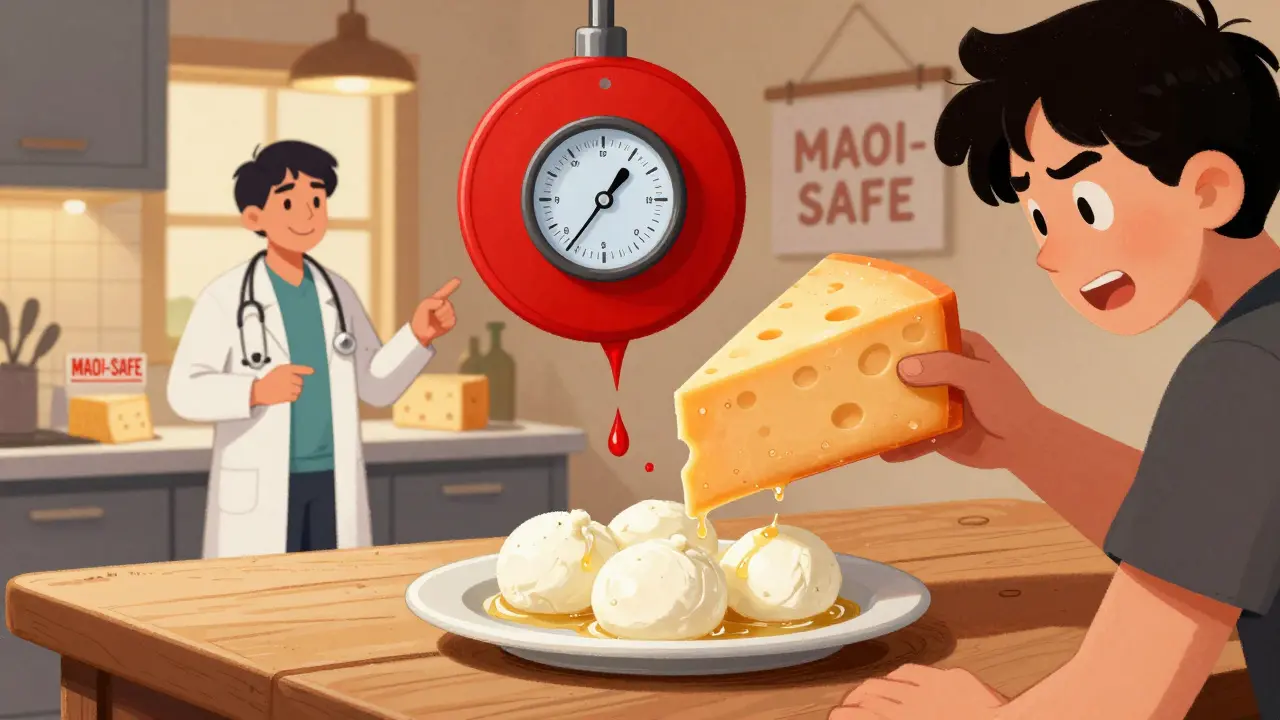
MAOI Tyramine Calculator
Calculate Your Meal's Tyramine Content
Enter your food choices to see the total tyramine content. Staying under 6 mg helps prevent hypertensive crisis.
Select items to calculate tyramine content
When you’re on an MAOI antidepressant like Nardil or Parnate, your diet isn’t just about nutrition-it’s a matter of life or death. The biggest hidden danger? Aged cheeses and processed meats. These everyday foods contain tyramine, a compound that, when combined with MAOIs, can spike your blood pressure to dangerously high levels-sometimes within minutes. This isn’t a theoretical risk. It’s a real, documented emergency that sends people to the ER every year.
Why Tyramine Is a Silent Threat
Tyramine is a naturally occurring amine found in foods that have been aged, fermented, or preserved. It’s not toxic on its own. But when your body can’t break it down, it becomes a ticking time bomb. MAOI drugs block the enzyme monoamine oxidase, which normally clears tyramine from your bloodstream. Without that enzyme, tyramine builds up and forces your nerves to dump massive amounts of norepinephrine. That’s what causes your blood pressure to skyrocket-sometimes to 180/120 mmHg or higher.That spike doesn’t just give you a headache. It can trigger a hypertensive crisis: severe pounding headache, blurred vision, chest pain, nausea, and even stroke or heart attack. According to Mayo Clinic’s 2023 guidelines, systolic pressure can jump 50-100 mmHg in under 30 minutes after eating high-tyramine food. One study found that as little as 6 mg of tyramine can trigger symptoms in sensitive individuals. For some, 25 mg is the threshold for a full-blown emergency.
Which Cheeses Are Safe? Which Are Not?
Not all cheese is created equal. The difference between safe and dangerous comes down to aging and processing.High-risk cheeses (avoid these):
- Aged cheddar: 72-953 mcg/g-just 30g (about 1 oz) can contain 2-28 mg of tyramine
- Parmesan: 610-1,400 mcg/g-often used in pasta and salads, it’s one of the most common culprits
- Blue cheeses (Stilton, Gorgonzola): 1,000-3,500 mcg/g-intensely flavorful, dangerously high in tyramine
- Swiss cheese: 400-1,200 mcg/g-common in sandwiches and grilled dishes
- Feta (brined): 350-800 mcg/g-often overlooked because it’s soft, but still risky
Safe cheeses (low tyramine):
- Fresh mozzarella: less than 25 mcg/g
- Cottage cheese: less than 30 mcg/g
- Ricotta: less than 40 mcg/g
- Cream cheese: less than 20 mcg/g
- American cheese: under 50 mcg/g
Many people assume all hard cheeses are the same. But fresh mozzarella, made from pasteurized milk and eaten within days, is nearly tyramine-free. Aged cheddar, on the other hand, develops tyramine over months of aging. That’s why you can’t just swap one cheese for another-you need to know how it was made.
Processed Meats: The Hidden Danger in Your Lunch
Processed meats are another major source of tyramine. The curing, smoking, and fermenting processes that give these meats their flavor also create tyramine.High-risk meats:
- Dry-cured sausages (salami, pepperoni, summer sausage): 150-900 mcg/g
- Pastrami and corned beef: 60-180 mcg/g
- Bacon: 75-250 mcg/g
Lower-risk meats:
- Freshly cooked chicken, turkey, beef, or pork: under 10 mcg/g
- Ground meat cooked immediately after purchase: negligible tyramine
- Bologna (freshly sliced, not pre-packaged): 50-200 mcg/g-still risky, but lower than salami
Here’s the catch: even if a product says “no preservatives,” it might still be aged or fermented. Always check the label for terms like “dry-cured,” “fermented,” or “air-dried.” If it’s vacuum-sealed and sits on the shelf for months, it’s likely high in tyramine.

Other Surprising Tyramine Sources
Cheese and meat aren’t the only culprits. Many everyday foods contain hidden tyramine:- Soy sauce: 1,000-2,500 mcg/g
- Miso paste: 800-2,000 mcg/g
- Fish sauce: 1,200-3,000 mcg/g
- Tap beer and red wine: 100-500 mcg/g
- Overripe bananas: over 10 mcg/g (but fresh bananas are safe)
- Peanuts: 75-200 mcg/g
Interestingly, chocolate and chocolate-covered nuts are generally safe-tyramine levels are low (50-150 mcg/g). So you don’t have to give up all treats. But fermented sauces? Those are off-limits. Many people don’t realize that a tablespoon of soy sauce in stir-fry can deliver more tyramine than a slice of cheddar.
How Much Is Too Much?
There’s no universal safe dose. Some people react to 6 mg of tyramine. Others can tolerate up to 25 mg before symptoms appear. That’s why blanket rules like “never eat cheese” aren’t helpful.The NSW Agency for Clinical Innovation recommends staying under 6 mg per serving. But your personal threshold could be lower. That’s why tracking matters. One patient on Reddit kept a food diary for months and found that 15g of aged cheddar (about 1-2 mg tyramine) was his limit. Any more, and he got a pounding headache. Another person ate Parmesan on a salad and ended up in the ER with a blood pressure of 198/112.
Doctors now advise patients to monitor their blood pressure at home twice a day. If you notice a sudden spike after eating, stop the food immediately and contact your provider. Don’t wait for symptoms to get worse.
What About After Stopping the Drug?
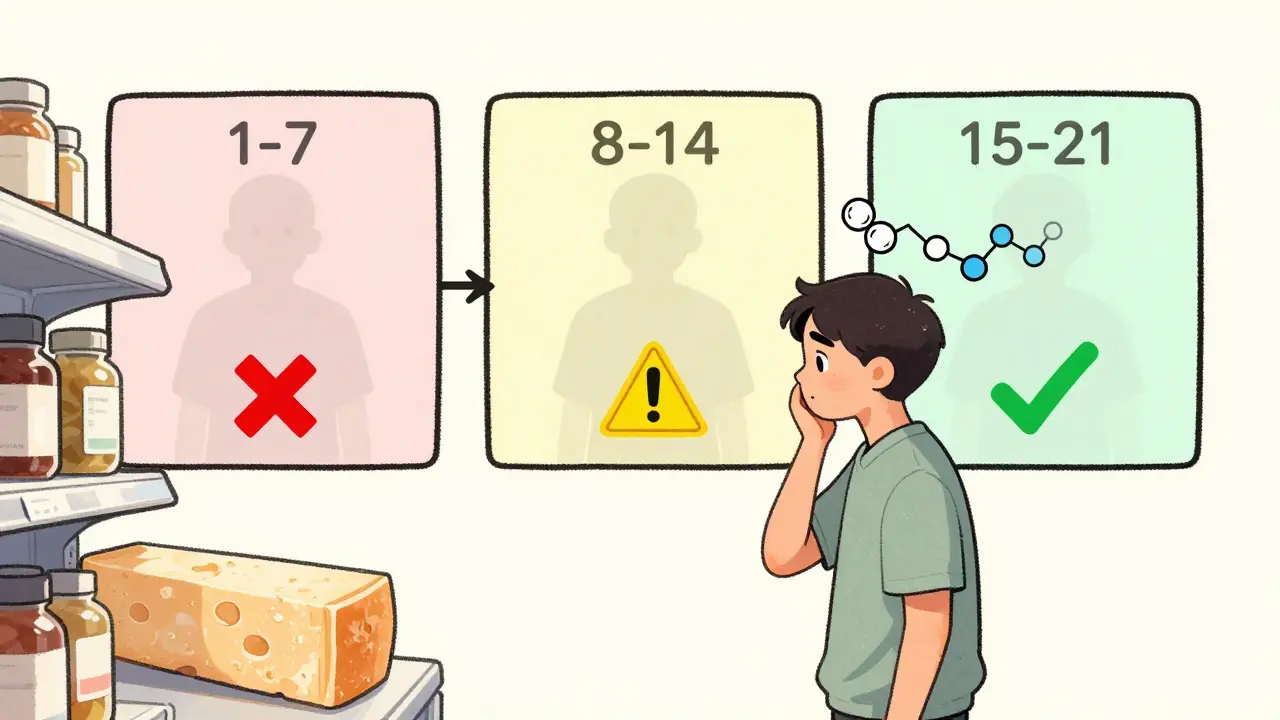
Many people think once they stop taking MAOIs, they can go back to eating whatever they want. Not true. The enzyme monoamine oxidase takes 14 to 21 days to fully recover. That means you still need to avoid high-tyramine foods for at least two to three weeks after your last dose. Skipping this step has led to emergency visits even after patients thought they were “off the drug.”Real-Life Consequences and Solutions
A 2023 report from the American Heart Association found that 3-5 cases of tyramine-induced hypertensive crisis appear annually in their emergency department alone. Most involve cheese. One patient, a 58-year-old man on phenelzine, ate a wedge of blue cheese with crackers and collapsed at home. He survived-but only because his wife recognized the symptoms and called 911.On the flip side, many people manage this diet successfully. Sargento now sells refrigerated mozzarella cups labeled “MAOI-safe.” Pharmacies in Toronto and other major cities carry printed food lists for MAOI users. Some hospitals use the NSW Agency’s guidelines to train staff and patients. Apps like Mayo Clinic’s “MAOI Diet Tracker” scan barcodes and flag high-tyramine items with 89% accuracy.
Here’s what works:
- Always check labels for aging, curing, or fermentation
- Stick to fresh, unaged cheeses and meats
- Use fresh mozzarella instead of Parmesan in pasta
- Replace salami with grilled chicken in sandwiches
- Carry a small card explaining your dietary restrictions when dining out
- Ask restaurants if cheese is aged or fresh-many don’t know the difference
What’s Next? Science Is Catching Up
The FDA now requires MAOI packaging to include tyramine warnings. The EU mandates tyramine labeling on aged cheeses. In 2024, a clinical trial is testing an enzyme supplement that could break down tyramine before it enters your bloodstream. Researchers are even exploring genetically modified cheeses with lower tyramine levels-potentially eliminating the risk entirely.But until then, the rules are simple: if it’s aged, fermented, or cured, skip it. Your blood pressure-and your life-depend on it.
Can I eat a little bit of aged cheese if I’m on an MAOI?
No. Even small amounts of aged cheese can contain enough tyramine to trigger a dangerous blood pressure spike. The threshold varies by person, but there’s no guaranteed safe amount. One slice of cheddar can deliver 10-20 mg of tyramine-well above the 6 mg minimum that can cause a reaction. It’s not worth the risk.
Are all blue cheeses dangerous?
Yes. Blue cheeses like Stilton, Gorgonzola, Roquefort, and Danish blue are among the highest in tyramine-up to 3,500 mcg per gram. Even a small portion can exceed 100 mg of tyramine. Avoid all blue cheeses while on MAOIs.
Is fresh mozzarella safe?
Yes. Fresh mozzarella made from pasteurized milk and eaten within days of production contains less than 25 mcg of tyramine per gram. It’s considered safe for MAOI users. Look for it in the refrigerated section near dairy, not the aged cheese aisle.
Can I drink wine or beer while on MAOIs?
Avoid red wine, tap beer, and draft beer-they contain 100-500 mcg/g of tyramine. Some white wines and bottled beers are lower, but it’s hard to know for sure. The safest choice is to avoid alcohol entirely while on MAOIs. Even small amounts can interact unpredictably.
How long after stopping MAOIs can I eat aged cheese again?
Wait at least two to three weeks after your last dose. The enzyme that breaks down tyramine takes 14-21 days to fully recover. Jumping back into aged cheese too soon can still cause a hypertensive crisis-even if you feel fine.
Do I need to avoid all processed meats?
Most of them. Salami, pepperoni, summer sausage, and pastrami are high in tyramine. Stick to freshly cooked meats like grilled chicken, turkey, or beef. If you buy deli meat, ask if it’s fresh-sliced and not cured or aged. Pre-packaged meats are usually risky.
Can I use soy sauce in cooking?
No. Soy sauce contains 1,000-2,500 mcg/g of tyramine. A single tablespoon can deliver over 20 mg-enough to trigger a crisis. Use tamari (low-sodium, sometimes lower tyramine) or coconut aminos instead, but check labels carefully. When in doubt, skip it.
What should I do if I accidentally eat high-tyramine food?
Check your blood pressure immediately. If it’s above 160/100 or you have a severe headache, chest pain, or blurred vision, call 911 or go to the ER. Do not wait. Keep an emergency card with your medication and dietary restrictions on you at all times. Tell medical staff you’re on an MAOI and may have consumed tyramine.
Sonal Guha
January 11, 2026 AT 13:32TiM Vince
January 12, 2026 AT 05:27gary ysturiz
January 13, 2026 AT 10:46Jessica Bnouzalim
January 13, 2026 AT 13:37laura manning
January 14, 2026 AT 17:49Bryan Wolfe
January 15, 2026 AT 07:50Sumit Sharma
January 15, 2026 AT 15:26Jay Powers
January 17, 2026 AT 00:23Lawrence Jung
January 18, 2026 AT 18:32Alice Elanora Shepherd
January 20, 2026 AT 13:53