Dose Titration Calculator
Medication Information
How This Works
Dose titration starts with a low dose and gradually increases to find the optimal dose while minimizing side effects.
Why titration matters: Studies show titration reduces initial side effects by 40-60% compared to starting at full dose.
Titration Schedule
Your personalized titration schedule will appear here after calculation.
Step-by-Step Schedule
Important Notes
Side Effects to Monitor
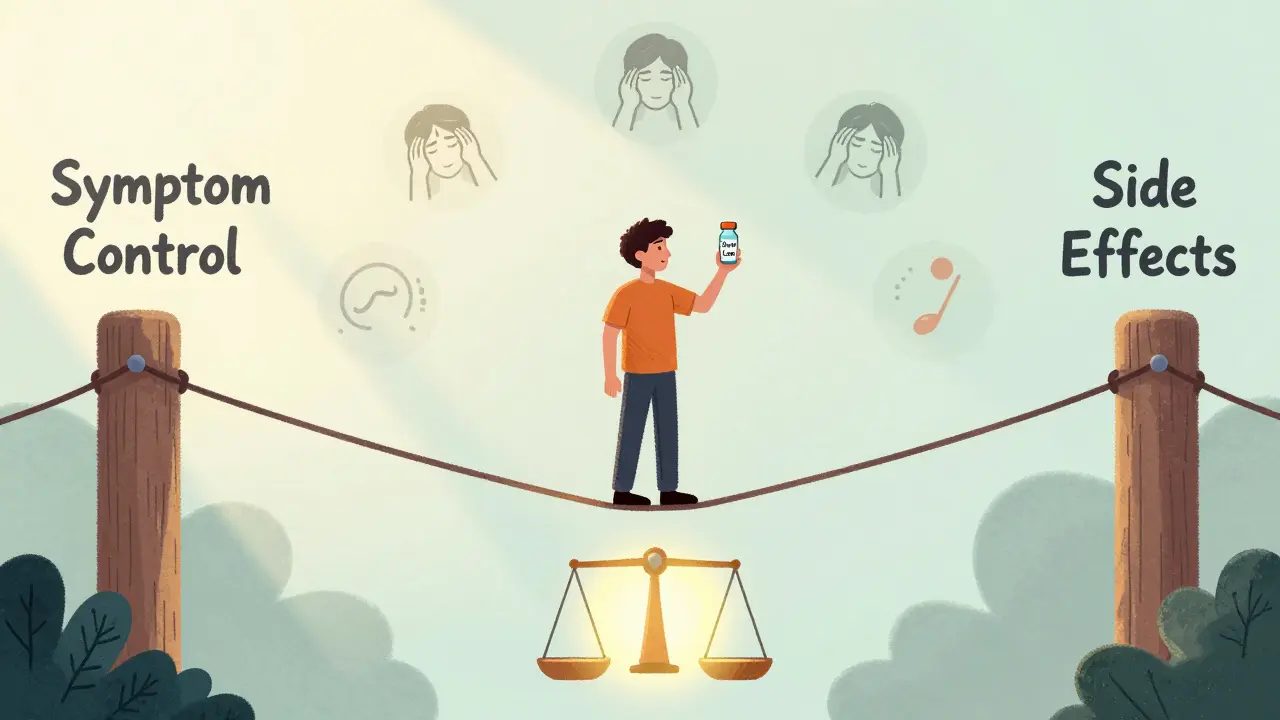
Starting a new medication can feel like walking a tightrope. You want it to work - really work - but you’re terrified of the side effects. Headaches. Nausea. Insomnia. Brain fog. Sometimes, the side effects are so bad you quit before the medicine even had a chance to help. What if there was a better way? There is. It’s called dose titration.
What Is Dose Titration, Really?
Dose titration isn’t magic. It’s simple math with a human touch. It means starting low and going slow. Instead of jumping to the full dose right away, you begin with a small amount and slowly increase it over days or weeks. The goal? Find the lowest dose that controls your symptoms without wrecking your day. This isn’t new. Doctors have been using titration since the 1970s, especially with drugs where the line between helpful and harmful is thin. Think blood thinners like warfarin, antidepressants, ADHD meds, or epilepsy drugs. These aren’t like ibuprofen - you can’t just pop two and call it a day. Too little? No effect. Too much? Dangerous side effects. Titration finds the sweet spot. The American Medical Association says 87% of prescription drugs that need precise dosing now come with official titration guidelines. That’s not an accident. It’s science.How It Works: Up-Titration and Down-Titration
There are two main paths: up-titration and down-titration. Up-titration is what most people think of - slowly increasing the dose. For example:- Stimulants like Adderall or Vyvanse for ADHD often start at 5-10 mg per day, then go up by 5 mg every week until symptoms improve or side effects kick in.
- Lamotrigine for seizures begins at 25 mg once every other day, then increases by 25 mg every 1-2 weeks. Skip this step? Risk of life-threatening skin reactions like Stevens-Johnson syndrome goes way up.
- Venetoclax for leukemia follows a strict 5-week ramp-up: 20 mg, then 50 mg, then 100 mg, then 200 mg, then 400 mg. This prevents tumor lysis syndrome - a dangerous rush of toxins from dying cancer cells.
Why Titration Cuts Side Effects by 40-60%
A 2021 meta-analysis in the Journal of Clinical Psychopharmacology found that proper titration reduces initial side effects by 40-60%. That’s huge. Why? Because your body needs time to adjust. When you hit it with a full dose, your brain, liver, and gut go into shock. But if you start small, your system adapts. Your receptors recalibrate. Your enzymes learn to process the drug. Side effects fade. Take ADHD meds. A 2022 survey of 1,200 patients showed that 74% who followed titration had manageable side effects. Only 41% of those who started at full dose did. One Reddit user wrote: “Started at 5 mg Adderall instead of 10. Saved me from panic attacks. I’m still on it two years later.” Another common trick? Take meds with food. It helps with stomach upset. Track symptoms daily. Use a simple 1-10 scale: “How bad was the headache today?” “Did you feel jittery after lunch?” Write it down. Bring it to your doctor. That data beats vague answers like “I feel weird.”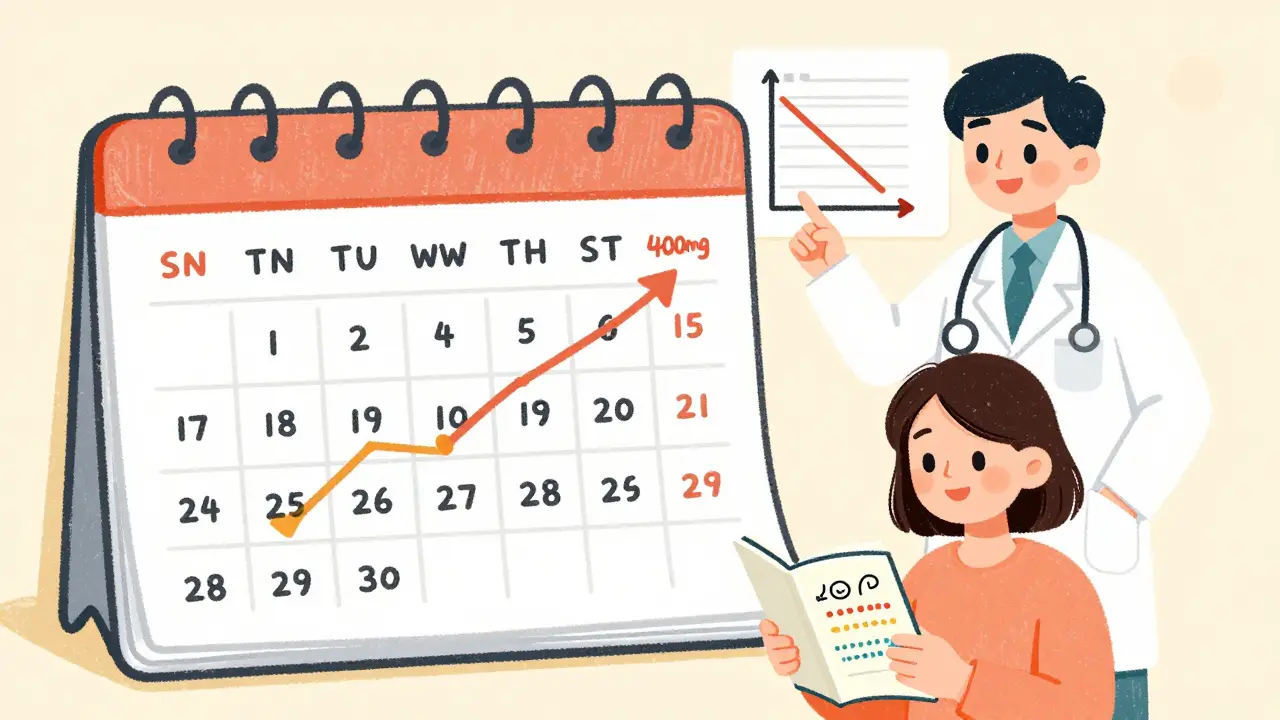
When Titration Takes Longer - And Why
Not all drugs move at the same pace. Stimulants? You might see results in 2-4 weeks. Non-stimulants like atomoxetine or guanfacine? That’s 8-12 weeks. Why? Because they work differently. They don’t spike neurotransmitters right away. They slowly change how your brain responds over time. Same with thyroid meds. Levothyroxine usually starts at 25-50 mcg, then increases by 25 mcg every 4-6 weeks. Why wait so long? Because your body needs weeks to fully adjust thyroid hormone levels. Blood tests confirm it. Rushing this leads to heart palpitations or bone loss. And then there’s warfarin. Unlike newer blood thinners like apixaban, warfarin has a razor-thin safety window. Your INR needs to stay between 2.0 and 3.0. Too low? Clots. Too high? Bleeding. That’s why 67% of patients on warfarin need dose changes in the first month - compared to just 28% on apixaban. Titration isn’t optional here. It’s life-saving.What Goes Wrong - And How to Fix It
Titration sounds simple. But it’s easy to mess up. The biggest mistake? Skipping steps. A 2021 study in the Journal of Clinical Pharmacy and Therapeutics found 32% of patients don’t follow titration schedules. Why? They’re impatient. They think “more is better.” Or their doctor doesn’t explain it well. Another problem? Mistaking side effects for something else. Is that fatigue from the drug? Or from stress? From lack of sleep? From coffee? A 2021 BMC Psychiatry study showed 58% of patients struggle to tell the difference. That’s why you wait 1-2 weeks between dose changes. Give your body time to settle. Don’t blame the medicine for every new symptom. Poor tracking is another killer. If you don’t write down what you feel, your doctor can’t help. Use a notebook. Or a free app like TitrationTracker - cleared by the FDA in early 2023. It uses AI to spot patterns in your symptoms and suggests optimal dose changes.Who Benefits Most - And Who Should Be Careful
Titration shines in chronic conditions:- ADHD: 78% of patients need dose tweaks during their first titration phase.
- Depression and anxiety: Starting low prevents agitation, insomnia, or suicidal thoughts in vulnerable patients.
- Heart failure: Beta-blockers like carvedilol are titrated over weeks. The American Heart Association says this cuts side effect-related dropouts from 45% to 18%.
- Epilepsy: Lamotrigine, topiramate, perampanel - all need slow ramps to avoid rashes or confusion.

What’s Next? Personalized Titration Is Coming
The future of titration isn’t guesswork. It’s genetics. Right now, 28 medications have FDA-approved genetic tests to help pick your starting dose. These include antidepressants like citalopram, pain meds like codeine, and blood thinners like clopidogrel. Your genes tell your body how fast or slow it breaks down the drug. By 2025, that list will grow to 40. By 2030, the American College of Clinical Pharmacology predicts 75% of high-risk meds will use genetic-guided titration as standard. Digital tools are already here. Apps that sync with wearables to track heart rate, sleep, and activity. Algorithms that predict when you’re ready for the next dose. In one 2023 trial, AI-assisted titration cut side effects by 32% compared to standard care. But here’s the catch: these tools aren’t everywhere. In low-income countries, only 22% have formal titration protocols for essential meds. Access is still a huge problem.Getting Started: Your Simple Plan
If your doctor suggests titration, here’s how to do it right:- Ask for the official titration schedule. Most drug manufacturers publish them online. Look up the brand name + “titration guide.”
- Start at the lowest recommended dose. Don’t negotiate. Don’t rush.
- Track symptoms daily. Use a notebook or app. Note time of day, food, sleep, mood, and side effects.
- Wait at least 1-2 weeks between dose changes. Don’t jump ahead.
- Keep weekly check-ins with your doctor. Bring your log.
- Don’t stop unless your doctor says so. Even if side effects are annoying - talk first.
Frequently Asked Questions
How long does dose titration usually take?
It depends on the drug. Stimulants like Adderall often take 4-6 weeks. Non-stimulants like atomoxetine or thyroid meds can take 8-12 weeks. Some, like venetoclax for cancer, follow a fixed 5-week schedule. The key is patience - rushing increases side effects.
Can I adjust my dose myself if I feel side effects?
No. Never change your dose without talking to your doctor. Stopping or skipping doses can cause withdrawal, rebound symptoms, or dangerous spikes in side effects. If you’re struggling, document what you’re feeling and bring it to your next appointment.
Why do some doctors skip titration?
Time pressure. Some doctors feel rushed during appointments and assume full doses are fine. Others aren’t trained in titration protocols. But research shows skipping titration leads to higher dropout rates. If your doctor skips it, ask why - and request the official schedule.
Are there medications that don’t need titration?
Yes. Medications with wide therapeutic windows - like most antibiotics, antihistamines, or pain relievers - don’t need titration. But drugs for mental health, epilepsy, heart failure, cancer, and blood clotting almost always do. Check the FDA label or ask your pharmacist.
Does titration work for older adults?
It’s even more important. Older adults process drugs slower. Liver and kidney function decline with age. Starting at half the usual dose and going slower reduces the risk of falls, confusion, and hospitalizations. Always tell your doctor your age and other meds you take.
Olivia Goolsby
December 28, 2025 AT 08:30Okay, but have you considered that dose titration is just a corporate ploy to keep people on meds longer? The FDA doesn't care about your brain-they care about profit margins. I’ve seen the patents: they design drugs to need titration so you’re stuck buying refills for years instead of weeks. And don’t get me started on those ‘TitrationTracker’ apps-probably owned by Big Pharma. They’re not helping you-they’re harvesting your biometric data to sell to insurers. You think your sleep patterns are private? Ha. They’re already in a database somewhere, linked to your Social Security number. And don’t tell me ‘it’s science’-science got us glyphosate in our water and aspartame in our soda. Trust no one. Especially not doctors with white coats.
Alex Lopez
December 29, 2025 AT 18:19While I appreciate the thoroughness of this breakdown, I must respectfully note that the statistical claims-while compelling-often lack context regarding patient adherence and comorbidities. The 40–60% reduction in side effects is indeed impressive, but when stratified by socioeconomic status, access to follow-up care, and baseline psychiatric burden, the effect size diminishes considerably. That said, the principle remains sound: physiological adaptation requires time. I’ve seen patients crash and burn on full-dose SSRIs, then thrive on 10mg titrated over 10 weeks. It’s not magic. It’s pharmacokinetics. And yes, I do use emoticons when appropriate: 🧠⏳💊
Gerald Tardif
December 31, 2025 AT 03:20Man, I wish I’d known this back when I started on Wellbutrin. I went full throttle-150mg day one. Felt like I’d been hit by a truck made of caffeine and regret. Three days later, I was crying in the shower because my tongue felt like sandpaper. If I’d just started at 75mg and waited… I’d still be on it today. No panic attacks. No insomnia. Just… me. Slow and steady doesn’t just win the race-it keeps you alive long enough to see the finish line. You’re not racing a clock. You’re rebuilding your nervous system. Take the scenic route.
Monika Naumann
December 31, 2025 AT 11:14It is deeply concerning that Western medical practices continue to prioritize individualized titration over collective health discipline. In India, we have long understood that the body must be trained, not coddled. Why should one’s personal discomfort dictate the pace of pharmacological intervention? Our traditional systems emphasize endurance and adaptation. If a medication causes nausea, one drinks ginger tea and endures. To delay treatment due to minor side effects is a luxury of privilege. This culture of caution is weakening the population’s resilience. We must return to discipline, not delay.
Elizabeth Ganak
December 31, 2025 AT 18:54As someone who’s been on lamotrigine for 5 years, I just want to say: thank you for explaining this so clearly. I started at 25mg every other day like they said-and honestly? I forgot I was even taking it for the first month. No rashes. No brain fog. Just… calm. I didn’t realize how much stress I was carrying until it lifted. I still track my mood in a little notebook. It’s not fancy, but it helps. If you’re scared to start, just take it one tiny step at a time. You’ve got this.
Nicola George
January 2, 2026 AT 09:19So… you’re telling me the secret to not feeling like a zombie is… waiting? Wow. Mind blown. 🤡 I’ve been on 40mg of sertraline for six months and just assumed the brain fog was ‘part of being adulting.’ Turns out I could’ve been at 25mg and felt like a human again. Thanks for the wake-up call. Also, ‘TitrationTracker’? I’m downloading it right now. If it can tell me why I keep crying at dog videos, I’ll name my firstborn after the app.
Raushan Richardson
January 3, 2026 AT 15:04Y’all need to stop treating your meds like a sprint and start treating them like a slow dance. I went from ‘I’m never taking anything again’ to ‘I can finally sleep through the night’ just by following the damn schedule. No magic. No miracle. Just patience. And yes, it sucked to feel like I wasn’t getting better fast enough-but the second I stopped comparing myself to other people’s timelines, everything clicked. You’re not broken. You’re just adjusting. Breathe. Write it down. Show up. You’re doing better than you think.
Robyn Hays
January 5, 2026 AT 14:48This is the kind of post that makes me love the internet. I’ve been reading up on CYP450 enzyme polymorphisms since last year after my cousin had a bad reaction to codeine. Turns out, I’m a slow metabolizer-so even 5mg of Adderall felt like a full dose. I didn’t know why until I got my 23andMe results. Now I’m on a custom titration plan based on my genetics. It’s wild how much our DNA holds the keys to our own healing. The future isn’t just personalized medicine-it’s personalized *timing*. And honestly? I’m kinda glad I didn’t just ‘tough it out’ back then.
Liz Tanner
January 7, 2026 AT 11:41One sentence: Start low, go slow, track everything, and don’t let anyone rush you-your body isn’t a lab rat, and your mental health isn’t a deadline.
Babe Addict
January 7, 2026 AT 18:21Let’s be real-titration is just a fancy word for ‘we don’t know what we’re doing, so we’ll give you crumbs and hope you don’t die.’ The whole system is built on trial and error because pharmacology is still a black box. You think genetic testing changes that? Nah. It just adds another layer of jargon so pharma can charge $800 for a saliva test. And don’t get me started on ‘AI-assisted titration’-that’s just a bot trained on 10k Reddit posts and a bunch of FDA labels. You’re not being guided-you’re being algorithmically babysat. The real solution? Stop medicating everything. Go outside. Eat real food. Sleep. But hey, if you wanna keep paying $200/month for a pill that makes you feel like a ghost… more power to you.