Chemotherapy isn’t just one thing. It’s a group of powerful drugs designed to kill cancer cells by targeting the one thing they do best: divide quickly. While healthy cells divide too, cancer cells do it nonstop, making them the main target. But because these drugs can’t tell the difference between a cancer cell and a fast-growing healthy cell-like those in your hair, gut, or bone marrow-side effects are common. Still, for millions of people, chemotherapy is the difference between life and death.
How Chemotherapy Drugs Actually Work
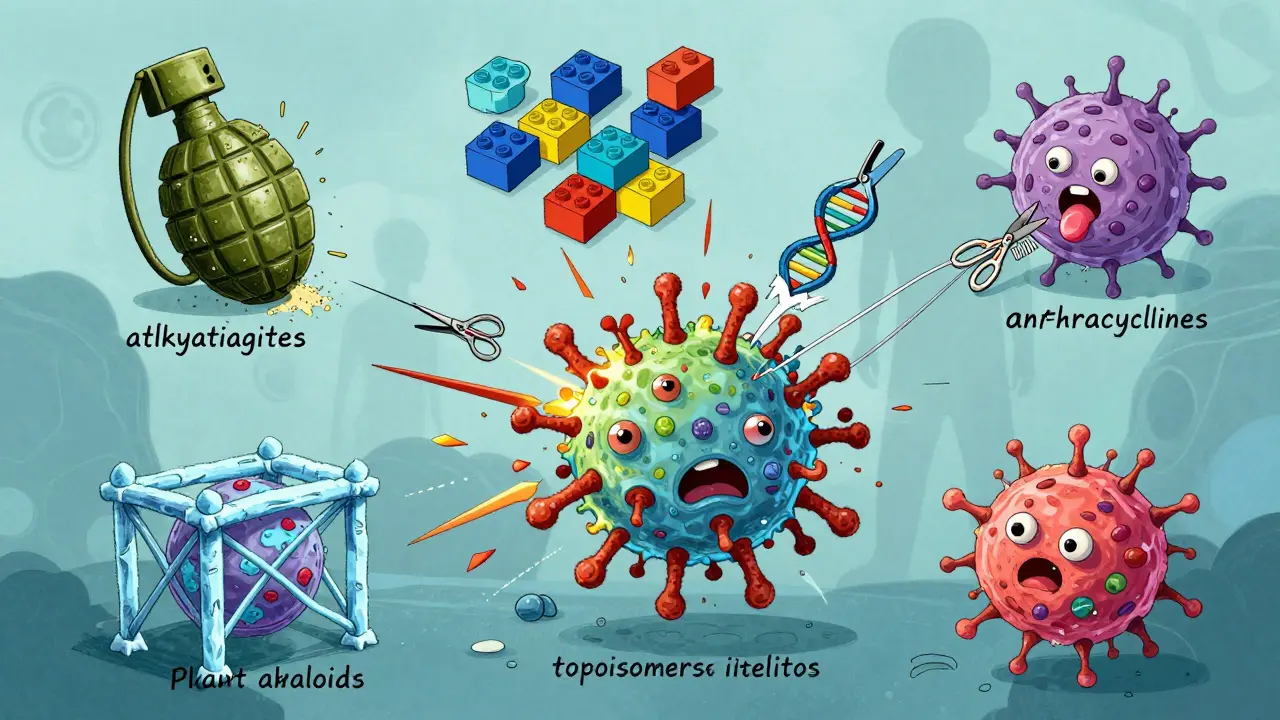
Chemotherapy drugs don’t work the same way. Each class attacks cancer cells at a different point in their life cycle. There are six main types, and each has a unique way of messing up cell division.
Alkylating agents, like cyclophosphamide, stick chemical groups onto DNA. This damages the genetic code so badly that the cell can’t copy itself. It’s like throwing sand into a printer-no matter how hard it tries, it can’t print the right thing.
Antimetabolites, such as 5-fluorouracil and capecitabine, pretend to be building blocks the cell needs to make DNA or RNA. The cell grabs the fake version, starts building, and then crashes. It’s like using the wrong Lego piece-everything falls apart.
Anthracyclines, including doxorubicin, slide between DNA strands and lock onto enzymes that help untangle DNA during division. This causes breaks in the DNA chain. Think of it as cutting the threads of a sweater while it’s being knitted.
Plant alkaloids, like vincristine and paclitaxel, stop the cell’s internal scaffolding-microtubules-from forming. Without them, the cell can’t split in two. Paclitaxel, for example, freezes the scaffolding in place instead of letting it break down, trapping the cell in the middle of division.
Topoisomerase inhibitors, such as etoposide, block enzymes that untwist DNA before it’s copied. Without those enzymes, the DNA gets tangled and breaks. It’s like trying to comb a knot in your hair with scissors.
These drugs are chosen based on cancer type, stage, and even genetic markers. A patient with breast cancer might get a combo of doxorubicin and cyclophosphamide. Someone with colon cancer might get 5-fluorouracil with oxaliplatin. Treatment isn’t one-size-fits-all.
How Chemotherapy Is Given
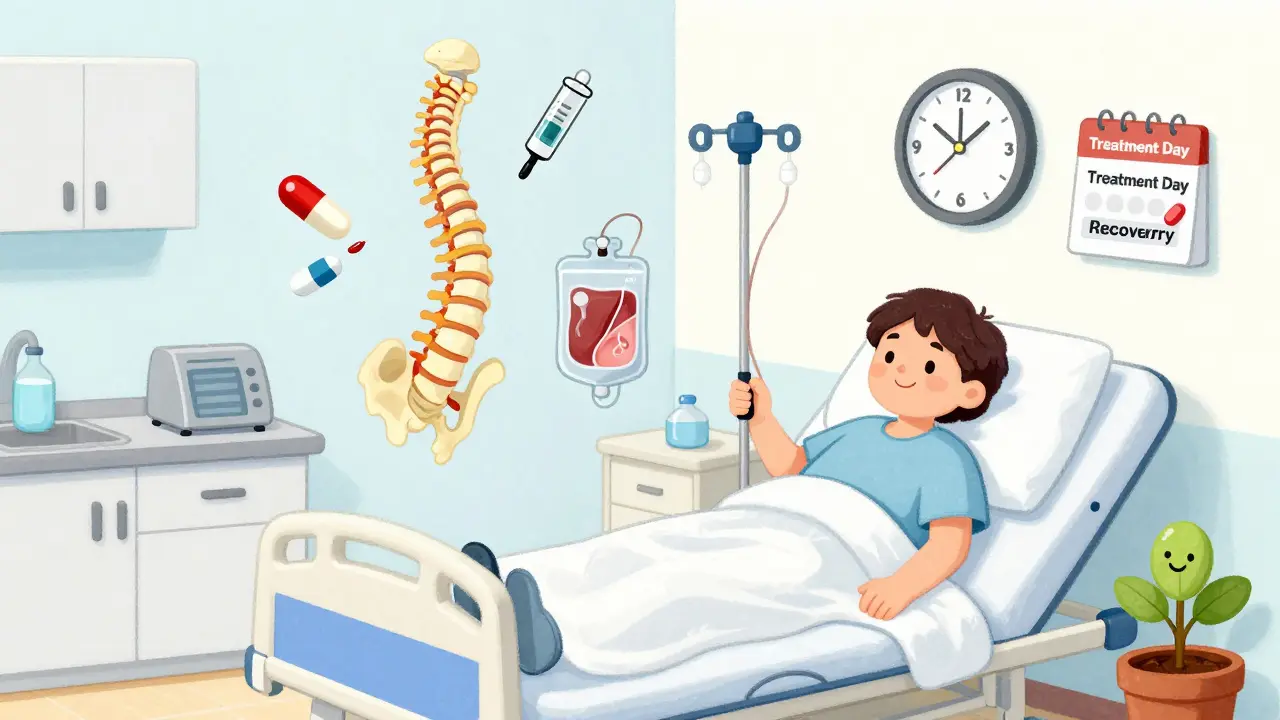
Most people think of chemotherapy as an IV drip, and for good reason. About 65% of treatments are given through a vein. But there are other ways:
- Oral (15%): Pills like capecitabine or temozolomide that you take at home.
- Intrathecal (8%): Injected into the fluid around your spinal cord to treat cancers that spread there.
- Intraperitoneal (5%): Delivered directly into the abdominal cavity, often for ovarian cancer.
- Intra-arterial (7%): Injected into an artery that feeds the tumor, like in liver cancer.
Cycles matter. You don’t get chemo every day. Treatments usually happen in blocks-say, one day of infusion every three weeks. Why? Because your body needs time to recover. Healthy cells bounce back faster than cancer cells, and giving them space to heal helps you tolerate the next round.
Some regimens last days. A patient on continuous infusion might get drugs running for 48 to 96 hours. Others are quick-just an hour or two. The schedule is carefully planned to maximize cancer cell death while minimizing damage to your body.
Common Side Effects and Why They Happen
Side effects aren’t random. They’re predictable because chemotherapy hits fast-dividing cells everywhere. Here’s what most people experience:
- Fatigue: Mentioned in 82% of patient reports. It’s not just being tired. It’s bone-deep exhaustion that doesn’t go away with sleep. Why? Your body is using all its energy to repair itself.
- Hair loss: Affects 78% of patients. Hair follicles divide fast, so they’re an easy target. Some people lose all their hair; others just thin out. Scalp cooling caps now reduce this by about 60% in breast cancer patients using taxanes.
- Nausea and vomiting: Reported by 65%. Thanks to drugs like ondansetron, severe nausea has dropped from 80% in the 1990s to under 20% today. But delayed nausea-hitting 24+ hours later-is still tough to control. Only 32% of patients find standard meds helpful for this.
- Neuropathy: Tingling, numbness, or pain in hands and feet. Affects 30-40% of those on taxanes or platinum drugs. For 5-10%, it can be permanent. Avoiding cold objects, wearing gloves, and reporting symptoms early can help prevent lasting damage.
- Chemo brain: A real thing. About 75% of patients report trouble focusing, remembering names, or multitasking during treatment. Three in ten still have symptoms six months later. Meditation apps like Calm or Headspace, used 20 minutes a day, can cut cognitive complaints by 40%.
- Mouth sores and taste changes: Metal taste? Bitter food? That’s common. Some people can’t eat their favorite meals anymore. Rinsing with saltwater and avoiding spicy or acidic foods helps.
Not every side effect hits everyone. One person might feel fine with hair loss but struggle with fatigue. Another might have no nausea but get terrible diarrhea. It’s personal.
What’s Changed Since the 1990s
Chemotherapy today is nothing like it was 30 years ago. Back then, nausea was brutal. Patients often had to stop treatment because they couldn’t keep food down. Now, anti-nausea drugs work better than ever. The same goes for infection risk.
Before growth factors like filgrastim, many patients had to delay chemo because their white blood cell count crashed. Now, doctors give injections to boost bone marrow production, keeping treatment on schedule.
Scalp cooling is another big win. In 2022, a major study showed that cooling caps reduced hair loss from 65% to 25% in breast cancer patients on taxanes. It’s not perfect-some still lose hair-but it’s a huge improvement.
Even the way we think about side effects has changed. We used to accept fatigue as part of the deal. Now we know exercise helps. Studies show 30 minutes of moderate activity-like walking or cycling-lowers fatigue by 25-30%. Hydration matters too. Drinking 1-2 liters of water a day helps with nausea, diarrhea, and fatigue.
Chemotherapy vs. Newer Treatments
Targeted therapies and immunotherapies get a lot of attention now. But chemotherapy still has its place.
Targeted drugs like trastuzumab (Herceptin) only work if the cancer has a specific marker-like HER2. That’s great for the 15-20% of breast cancer patients who have it. But what about the rest? Chemotherapy works on all of them.
Immunotherapy wakes up your immune system to fight cancer. It’s powerful, but only works if your immune system can recognize the tumor. In cancers like leukemia or ovarian cancer, where tumors hide well, chemotherapy still leads.
Here’s the reality: Chemotherapy is used in 95% of ovarian cancer cases, 85% of colorectal cancers, and 70% of breast cancers. It’s still the first-line treatment for 78% of blood cancers like AML and lymphoma. Even in lung cancer, where targeted drugs now lead for patients with EGFR or ALK mutations, chemo is still used for the 40% without those mutations.
And here’s something surprising: Chemotherapy is now often used alongside newer drugs. A 2023 FDA approval for trilaciclib lets doctors protect bone marrow during chemo, meaning patients can handle higher doses without crashing their blood counts. That’s a game-changer.
Managing Side Effects: What Actually Helps
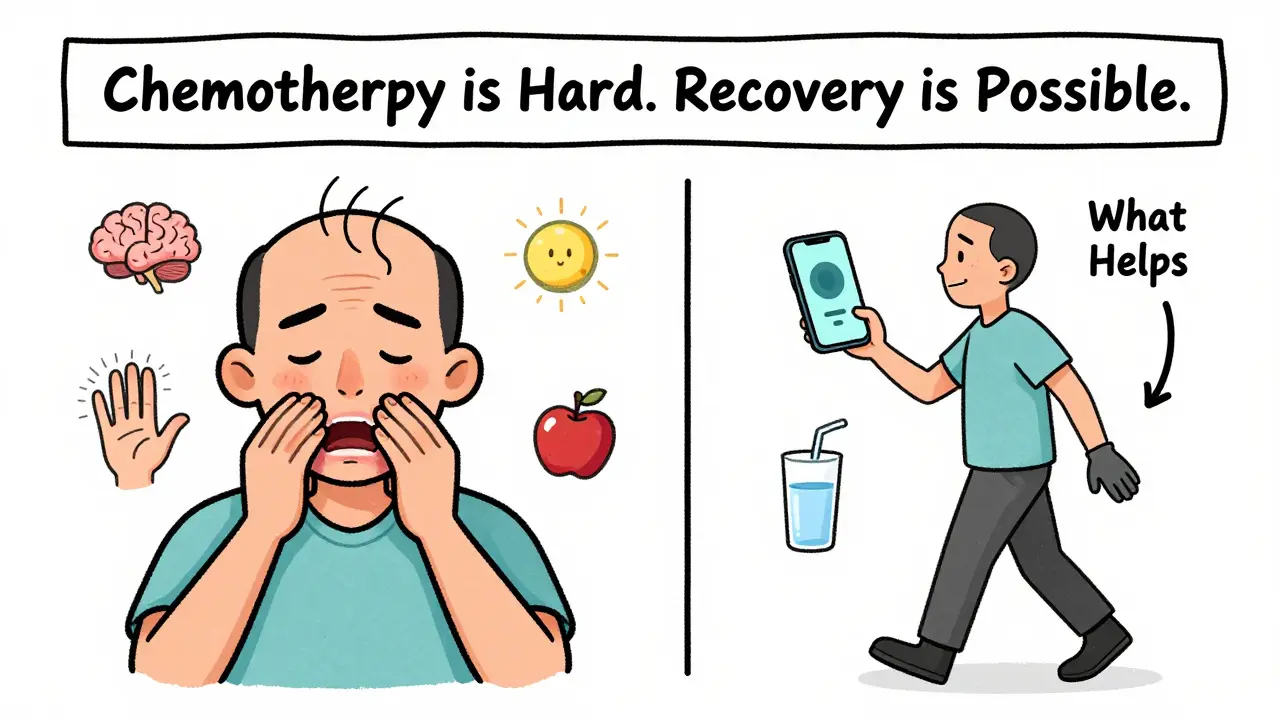
You can’t avoid all side effects. But you can manage them. Here’s what works based on real patient data and clinical guidelines:
- For fatigue: Walk daily. Even 15 minutes helps. Don’t wait until you feel better to move-you need to move to feel better.
- For nausea: Eat small, bland meals. Toast, bananas, rice, crackers. Avoid greasy or sweet foods. Take anti-nausea meds before you feel sick, not after.
- For neuropathy: Wear gloves when washing dishes or handling cold items. Test water temperature with your elbow. Tell your doctor about tingling right away.
- For chemo brain: Try meditation. Use apps like Calm or Headspace for 20 minutes a day. Write things down. Keep a notebook. Sleep matters-stick to a routine.
- For mouth sores: Rinse with saltwater or baking soda solution. Avoid alcohol-based mouthwashes. Stay hydrated.
- For diarrhea: Drink electrolyte solutions. Avoid caffeine and dairy. Imodium helps, but only if it’s not caused by infection.
And don’t ignore the emotional side. Hair loss isn’t just physical-it’s identity-shaking. Support groups, wigs, scalp cooling, and talking to a counselor all help. You’re not alone.
When Chemotherapy Doesn’t Work
It’s not magic. Some cancers barely respond. Prostate cancer, for example, grows slowly. Chemo doesn’t help much because the cells aren’t dividing fast enough. Hormone therapy works better there.
Some tumors develop resistance. They pump the drugs out using proteins like P-glycoprotein. Or they change their DNA repair systems. That’s why doctors switch drugs or combine them.
And sometimes, the side effects are too much. If a patient can’t tolerate the treatment, doctors adjust the dose or switch to a gentler regimen. Survival isn’t just about killing cancer-it’s about keeping quality of life.
Chemotherapy isn’t going away. The global market for these drugs is projected to hit $24.3 billion by 2028. Why? Because for many cancers-especially aggressive ones without clear targets-it’s still the most effective tool we have. It’s messy, it’s hard, but it saves lives.
Can chemotherapy cure cancer?
Yes, in some cases. For certain blood cancers like acute lymphoblastic leukemia in children, chemotherapy can lead to full remission and long-term cure. In early-stage cancers-like testicular cancer or Hodgkin lymphoma-it’s often curative. For others, like metastatic breast or colon cancer, it’s used to shrink tumors, slow growth, and extend life, even if it doesn’t cure.
Is chemotherapy painful?
The IV infusion itself isn’t painful, but some drugs cause burning or tingling if they leak outside the vein. The bigger issue is side effects: nerve pain, mouth sores, or muscle aches. These aren’t always painful, but they can be uncomfortable. Pain management is part of treatment-don’t hesitate to speak up.
Why do I need blood tests during chemo?
Chemotherapy lowers your blood cell counts. White cells fight infection, red cells carry oxygen, and platelets help with clotting. If your counts drop too low, your doctor delays treatment or gives you growth factors. Skipping blood tests could lead to dangerous infections or bleeding.
Can I take vitamins or supplements during chemotherapy?
Some can interfere. High-dose antioxidants like vitamin C or E might reduce chemo’s effectiveness. Vitamin D is tricky-some studies link deficiency to worse neuropathy, but major guidelines don’t yet recommend routine supplementation. Always talk to your oncology team before taking anything-not your pharmacist, not your friend, not your yoga instructor.
Do I need to avoid people during chemo?
You don’t need to isolate yourself, but you do need to be smart. Your immune system is weaker, especially 7-14 days after a chemo dose. Avoid sick people, crowded places, and raw foods. Wash hands often. If you have a fever of 100.4°F (38°C) or higher, call your doctor immediately-it could be a life-threatening infection.
How long do side effects last?
Most side effects fade within weeks after the last treatment. Fatigue can linger for months. Hair usually grows back in 3-6 months, though it might be curlier or grayer. Neuropathy? For most, it improves. But 5-10% of patients have permanent nerve damage. Chemo brain often clears up by six months, but some report lasting focus issues. Recovery isn’t linear, and it’s different for everyone.
What Comes Next
Chemotherapy isn’t the end of cancer treatment-it’s part of a bigger picture. More patients now get chemo combined with immunotherapy or targeted drugs. New drugs like trilaciclib protect bone marrow. Scalp cooling is becoming standard. Supportive care is more advanced than ever.
But the core truth hasn’t changed: chemotherapy works because it’s brutal. It doesn’t pick and choose. It hits hard. And for many, that’s exactly what they need to survive.
Roland Silber
March 6, 2026 AT 18:47Really well-explained breakdown of how chemo works. I’ve been on the other side as a nurse for 12 years, and I still find the Lego analogy for antimetabolites brilliant. The way it just grabs the wrong piece and collapses the whole structure? That’s exactly what happens in the nucleus. Also, the stats on scalp cooling are huge-60% reduction isn’t just a win, it’s a dignity win.
Patrick Jackson
March 8, 2026 AT 13:28OMG this is so raw and real 😭 I cried reading the part about chemo brain. I lost my job because I couldn’t remember my own client names, and no one believed me until I showed them the study. Now I use Headspace every morning like it’s my lifeline. Also-PACLITAXEL IS A SNEAKY BASTARD. Freezing microtubules? That’s not science, that’s a horror movie.
Adebayo Muhammad
March 10, 2026 AT 01:31Pranay Roy
March 10, 2026 AT 11:02Joe Prism
March 12, 2026 AT 02:04Scalp cooling changed everything. Not just the hair. The identity. The self-image. That’s the invisible cure right there.
Bridget Verwey
March 13, 2026 AT 14:53Oh honey, you really think we’re still using 1990s chemo protocols? Sweetie, we’re in 2025. We’ve got trilaciclib protecting bone marrow like a bodyguard at a rock concert. And you’re still talking about ‘fatigue’ like it’s a spa day? Please. I’ve seen patients walk 10K steps the day after a cycle. You don’t wait to feel better-you move to become better. And yes, that means your socks are mismatched and your hair is a bird’s nest. But you’re alive. That’s the glam.
Vikas Verma
March 14, 2026 AT 17:36It is imperative to recognize that chemotherapy remains the cornerstone of oncologic intervention for a majority of malignancies. The mechanistic diversity of cytotoxic agents-alkylating, antimetabolite, tubulin-targeting-confers a broad therapeutic index. Furthermore, the integration of pharmacokinetic optimization and supportive care has significantly improved therapeutic outcomes. Clinical guidelines from ASCO and NCCN continue to endorse chemo as first-line in 78% of hematologic malignancies. Evidence-based practice prevails.
Sean Callahan
March 16, 2026 AT 16:08hey so i just finished my 3rd round and i have to say... the mouth sores are the worst. like i cant even drink coffee anymore. and the weird metal taste? ugh. but i started rinsing with saltwater like the article said and it helped a bit. also i started wearing gloves when i touch anything cold and my hands dont tingle as much. i dont know if this is normal but i feel like i’m forgetting how to spell simple words. is that chemo brain? i think i’m losing my mind lol