Antidepressant Side Effect Augmentation Advisor
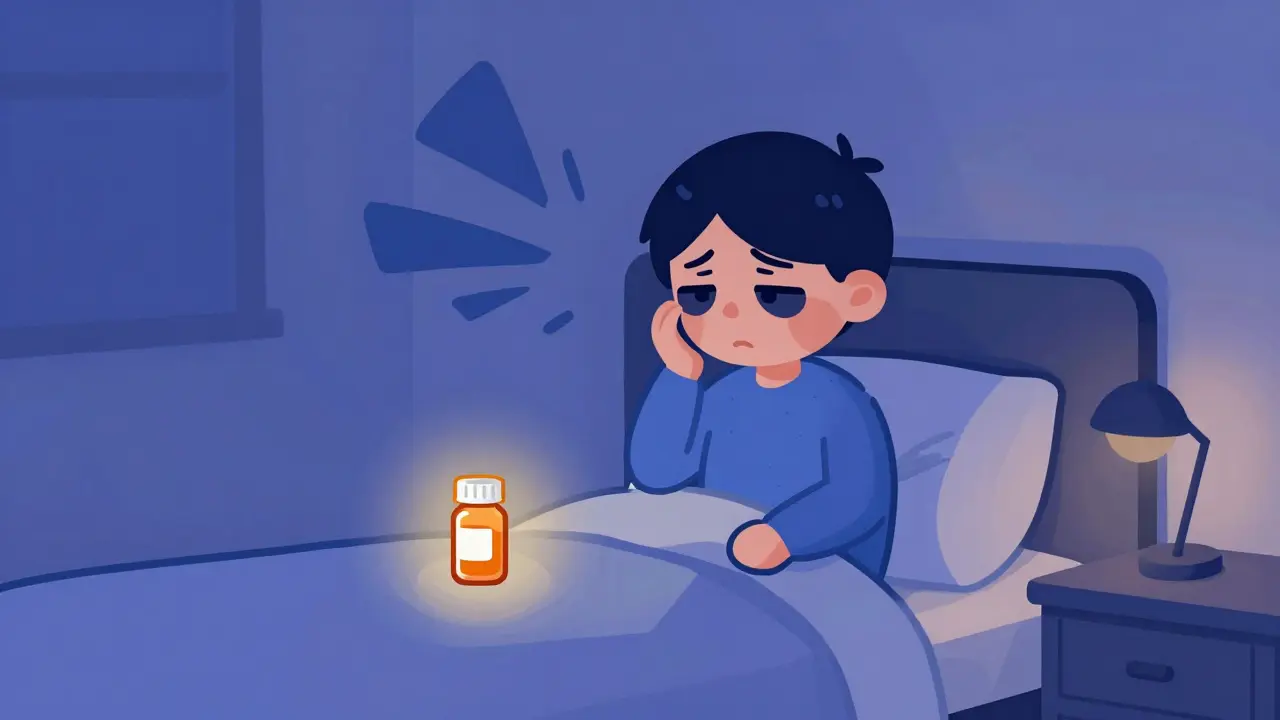
Insomnia / Sleep Issues
~30% of patientsSexual Dysfunction
~50% of patientsWeight Gain
~25-50% of patientsRecommended Augmentation Strategies
Why Adding a Second Med Might Save Your Treatment Plan
You start taking an antidepressant. The depression lifts, but then the side effects hit. Maybe it’s insomnia that keeps you staring at the ceiling until 3 AM. Maybe it’s weight gain that makes your jeans feel like a punishment. Or perhaps it’s sexual dysfunction that strains your relationship more than the mood disorder did. You want to quit, but you know stopping cold turkey could bring the darkness back.
This is where augmentation strategies come in. Unlike switching medications-which risks losing the progress you’ve made-augmentation involves adding a second, lower-dose medication specifically to block or counteract the worst side effects of your primary drug. It’s not about treating resistance; it’s about tolerability. Research shows that when side effects are managed this way, continuation rates jump by 15-22%. In short, it helps you stay on the treatment that actually works for your brain chemistry.
The Core Concept: Targeted Relief Without Losing Efficacy
The idea isn’t new. Clinicians have been tinkering with combinations since the 1980s, but systematic data only started flowing after the landmark STAR*D trial in 2006. The American Psychiatric Association now recognizes this as a valid clinical path, though they warn that evidence quality varies wildly depending on which side effect you’re fighting and what you add to fight it.
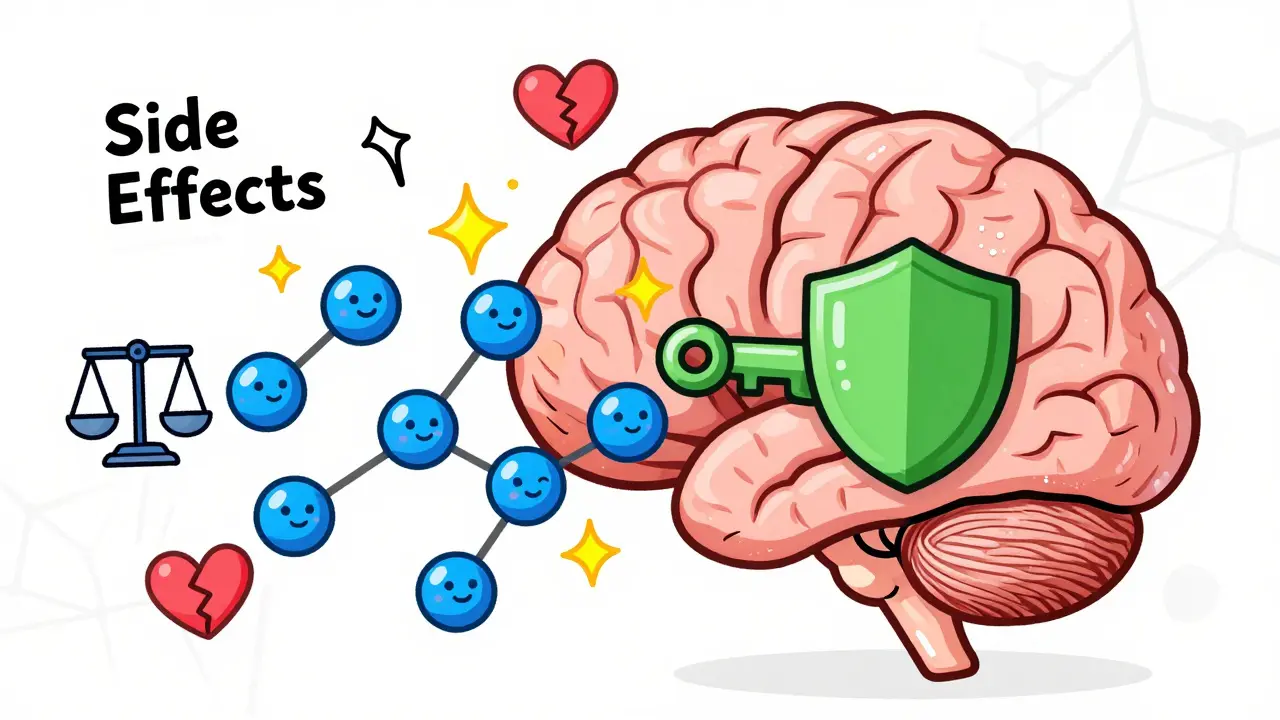
The logic is simple pharmacology. Most modern antidepressants, particularly SSRIs and SNRIs, work by increasing serotonin. But serotonin receptors are everywhere-not just in the mood centers of your brain, but in your gut, your sleep cycles, and your sexual response system. When you flood these systems, you get collateral damage. Augmentation uses a secondary agent to block specific receptors (like 5-HT2A) or boost other neurotransmitters (like dopamine) to neutralize that damage without touching the serotonin levels that keep you stable.
- Goal: Reduce dose-limiting adverse effects.
- Secondary Benefit: Potential enhancement of overall efficacy through complementary mechanisms.
- Timeline: Initial assessment usually takes 2-4 weeks.
Fighting Insomnia: Trazodone vs. Mirtazapine
Sleep disruption affects roughly 25-30% of patients on SSRIs. It’s ironic that a med meant to calm your mind can leave you wired. Two agents dominate this space: Trazodone and Mirtazapine.
Trazodone is the go-to for many prescribers. At low doses (25-100 mg nightly), it acts as a 5-HT2A receptor blocker. This specific action reduces agitation and insomnia by 40-60% while letting you keep your therapeutic SSRI dose. Studies show a 65% improvement in sleep quality scores compared to placebo. Users on forums often report that "Prozac was ruining my sleep" until a tiny dose of trazodone fixed it, allowing them to sleep through the night without feeling hungover the next day.
Mirtazapine is another option, effective at 7.5-15 mg. It improves sleep quality in 55-60% of cases. However, there’s a catch. Mirtazapine is notorious for causing weight gain-an average increase of 2-4 kg over eight weeks. If weight is already a concern for you, mirtazapine might solve one problem while creating another. Trazodone generally carries a lower metabolic risk, making it the preferred choice for most unless anxiety is also a major factor.
| Agent | Typical Dose | Sleep Improvement Rate | Key Risk |
|---|---|---|---|
| Trazodone | 25-100 mg | 65% | Next-day drowsiness (rare at low doses) |
| Mirtazapine | 7.5-15 mg | 55-60% | Significant weight gain (2-4 kg avg) |
Addressing Sexual Dysfunction: Bupropion Takes the Lead
Sexual side effects are arguably the most common reason people stop antidepressants, affecting 30-70% of users. The mechanism is straightforward: increased serotonin suppresses dopamine, which kills libido and delays orgasm. To fix this, you need to boost dopamine.
Bupropion (Wellbutrin) is the heavyweight champion here. Prescribed in 65% of relevant augmentation cases, it increases both dopamine and norepinephrine. Clinical trials show 50-60% improvement in sexual function scales, with response rates hitting 60% versus just 20% for placebo. Patients frequently report "getting their sex drive back" without losing the mood benefits of their primary SSRI.
Bupropion is typically dosed at 75-150 mg daily. It’s particularly useful if fatigue is also an issue, as the norepinephrine boost can provide energy. However, it’s not for everyone. Bupropion lowers the seizure threshold. If you have a history of seizures or eating disorders like bulimia, this is off the table. Additionally, 15-20% of patients report exacerbated anxiety. If your depression comes with high anxiety, bupropion might make you feel jittery rather than relieved.
An alternative is Buspirone, used at 10-30 mg daily. It shows a more modest 40% response rate for sexual dysfunction but has a better safety profile for anxious patients. It’s less potent than bupropion but worth considering if stimulant-like effects are undesirable.
Managing Weight Gain: Topiramate and Metabolic Risks
Weight gain affects 25-50% of patients on certain antidepressants, particularly older tricyclics and some SSRIs like paroxetine. This isn’t just cosmetic; it impacts self-esteem and physical health. Topiramate has emerged as a viable augmentation strategy here.
Dosed between 25-100 mg daily, topiramate has demonstrated 2.5-4.5 kg greater weight loss compared to placebo in controlled trials. It works by altering taste perception and reducing appetite. For patients struggling with metabolic syndrome or significant weight-related distress, this can be a game-changer.
But topiramate comes with cognitive trade-offs. Many users report "brain fog," describing it as "thinking through cotton." It can impair word-finding and concentration. If your job requires sharp cognitive performance, this side effect might outweigh the benefit of weight loss. Regular monitoring of lipid and glucose levels is essential, especially if other metabolic agents are involved.

The Antipsychotic Option: Aripiprazole and Its Trade-offs
When residual symptoms persist despite adequate SSRI dosing, clinicians sometimes turn to atypical antipsychotics like Aripiprazole (Abilify). While primarily known for treatment-resistant depression, low-dose aripiprazole (2-5 mg daily) is also used to stabilize mood swings and agitation caused by other meds.
It demonstrates a 57% response rate in inadequate responders, significantly higher than placebo (35%). The FDA approved a lower-dose formulation (Abilify MyCite) in 2022, which showed a 30% lower incidence of akathisia-a feeling of inner restlessness that makes patients feel like they’re "crawling out of their skin."
However, the risks are substantial. Aripiprazole carries significant metabolic risks, including an average weight gain of 3.5-4.5 kg over six weeks. There’s also an increased incidence of extrapyramidal symptoms (movement disorders) ranging from 7-12%, compared to 2-4% with placebo. Patient reviews highlight this sharply: while some see better mood, others discontinue within days due to intolerable restlessness. This is rarely a first-line choice for side-effect management alone unless the depressive symptoms themselves are severe and fluctuating.
Real-World Implementation: What to Expect
Adding a second medication isn’t a magic switch. It introduces pharmacological complexity. Dr. Charles Nemeroff notes that augmentation increases the risk of discontinuation due to *new* side effects by 23%. You are trading one set of potential issues for another.
Here is how successful implementation looks:
- Identify the Specific Culprit: Don’t augment for vague discomfort. Is it insomnia? Sexual dysfunction? Weight? Precision matters.
- Set Realistic Timelines: Augmentation effects aren’t instant. It typically takes 1-2 weeks for symptom improvement. 30-40% of patients quit too early because they don’t see immediate results.
- Monitor Interactions: Understand receptor pharmacology. For example, knowing that 5-HT2A antagonism helps sleep but 5-HT2C antagonism might worsen weight gain guides your choice.
- Watch for Red Flags: Seizure risk with bupropion, akathisia with aripiprazole, cognitive dulling with topiramate.
Integrated health systems like Kaiser Permanente have standardized these protocols, resulting in a 22% reduction in antidepressant discontinuations. This suggests that structured, monitored augmentation is safer and more effective than ad-hoc guessing.
Future Directions: Personalization and Genetics
The future of augmentation lies in precision. Pharmacogenetic testing, such as the Genomind Professional PGx Express test, is now used in 15% of augmentation decisions. These tests reveal how your liver enzymes process drugs, predicting who will suffer severe side effects from standard doses.
Research is also exploring glutamatergic modulators like d-cycloserine for cognitive side effects, showing 25% improvement in cognitive test scores without worsening mood. As we move toward "cleaner" primary antidepressants with fewer side effects, the need for heavy augmentation may decrease. But for now, targeted combination therapy remains a vital tool for staying well.
What is augmentation in the context of antidepressants?
Augmentation is the practice of adding a second medication to an existing antidepressant regimen to specifically mitigate adverse side effects or enhance efficacy, rather than replacing the original drug. It aims to improve adherence by managing tolerability issues like insomnia, sexual dysfunction, or weight gain.
Which medication is best for SSRI-induced sexual dysfunction?
Bupropion is the most effective and commonly prescribed agent for this purpose. It works by increasing dopamine and norepinephrine, counteracting the serotonin-induced suppression of sexual function. Studies show 50-60% improvement in sexual function scales. However, it is contraindicated for patients with seizure histories or those prone to high anxiety.
Can trazodone help with antidepressant-induced insomnia?
Yes, low-dose trazodone (25-100 mg) is highly effective for SSRI-induced insomnia. It blocks 5-HT2A receptors, reducing agitation and improving sleep quality in up to 65% of patients. It is generally preferred over mirtazapine for this specific issue because it carries a lower risk of weight gain.
What are the risks of using aripiprazole for augmentation?
Aripiprazole carries significant metabolic risks, including weight gain (average 3.5-4.5 kg) and extrapyramidal symptoms like tremors or restlessness (akathisia). While effective for residual depressive symptoms, its side effect profile makes it a less favorable first-line choice for managing minor side effects compared to agents like bupropion or trazodone.
How long does it take for augmentation strategies to work?
Initial improvements in side effects typically appear within 1-2 weeks of starting the augmenting agent. However, full stabilization and assessment of efficacy usually require 2-4 weeks. Patients should be cautioned against discontinuing the new agent prematurely due to lack of immediate relief.
amit kumar
May 14, 2026 AT 09:39Hey everyone! 👋 This is such a crucial topic that doesn't get enough attention. I've seen so many friends struggle with the side effects of SSRIs and just give up entirely, which is sad because the meds actually work for their mood if they can just tolerate them. The part about bupropion helping with sexual dysfunction is huge-so many people don't know that dopamine boost can make such a difference without messing up the serotonin balance. It's great to see data backing up what some of us have experienced anecdotally. Thanks for sharing this info! 🌟