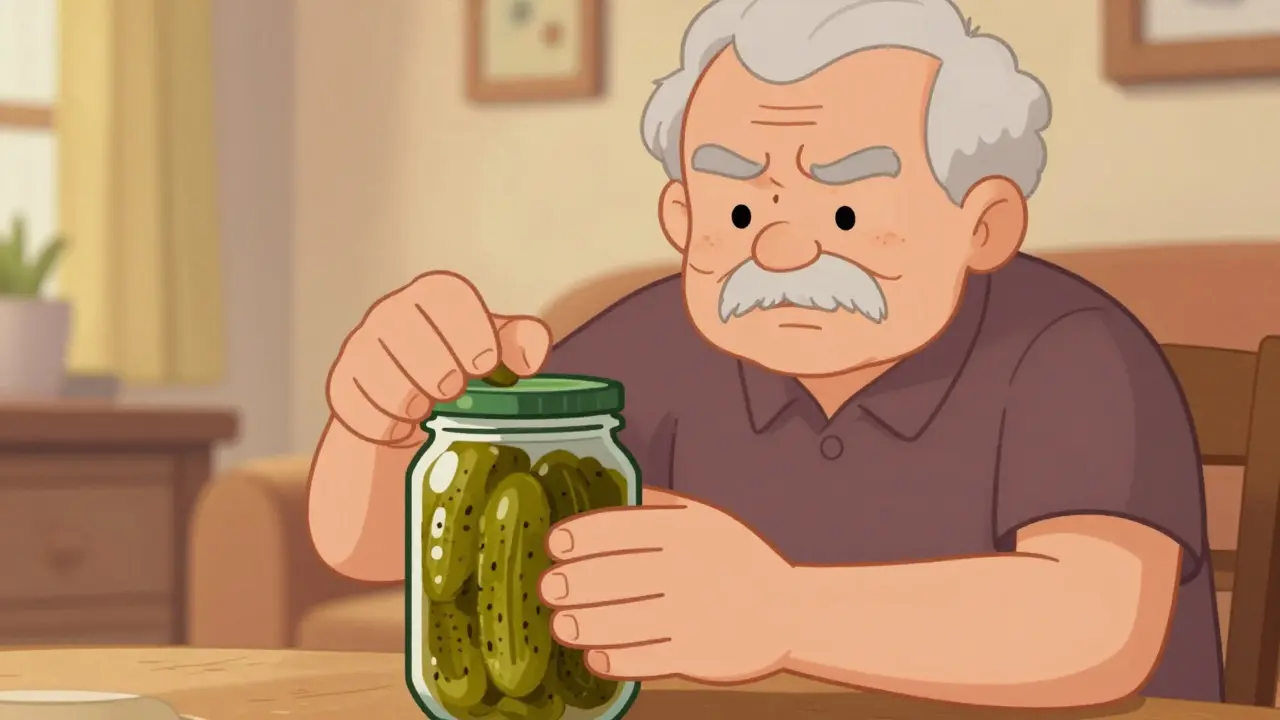
Imagine waking up one day and realizing that opening a jar of pickles or getting out of your favorite armchair has become a struggle. For many, this isn't just "getting old"-it's a clinical condition. Sarcopenia is the progressive, age-related decline in skeletal muscle mass, strength, and physical function. It often starts as early as your 30s or 40s, but the real acceleration happens between ages 65 and 80. If you're wondering why your grip feels weaker or why you're walking a bit slower, you're not imagining it. Your body is likely losing muscle at a rate of 1-2% every single year.
The good news is that muscle loss isn't an inevitable one-way street. While we can't stop the clock, we can change how our bodies age. Through targeted strength training, it's possible to not only slow down this decline but actually rebuild the muscle you've lost. Whether you're already feeling the effects or you're in your 40s looking to build a "muscle pension" for later in life, understanding the mechanics of muscle loss is the first step toward staying independent.
What Exactly Happens to Your Muscles as You Age?
Sarcopenia isn't just about "smaller" muscles; it's about a breakdown in the system. As we age, we lose motor neurons-the messengers that tell muscles to move-at a rate of 3-5% per year after age 60. This creates a communication gap between your brain and your biceps.
The loss isn't even. Your body specifically targets Type II Muscle Fibers, which are the fast-twitch fibers responsible for power and quick reactions. By age 80, some people see a 30-40% reduction in these fibers. This is why an older adult might be able to walk slowly for a long time but struggles to catch themselves quickly if they trip, leading to a higher risk of falls.
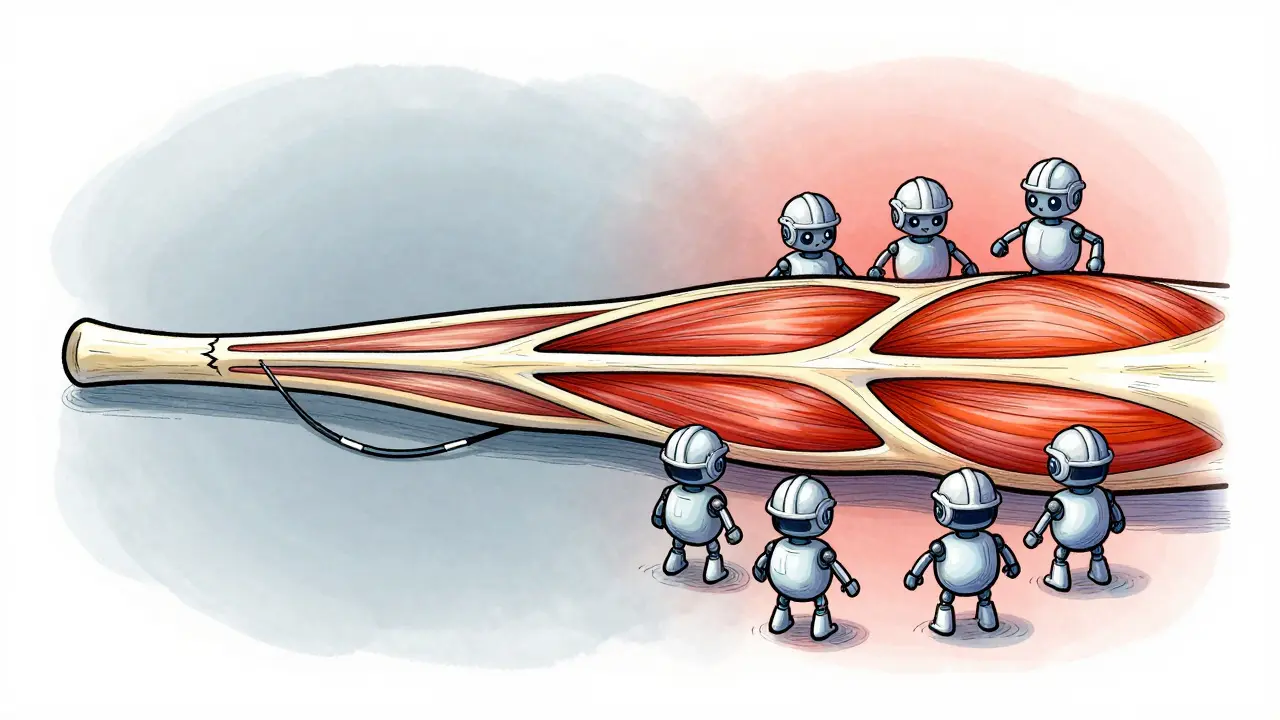
Under the hood, your cells are also slowing down. Satellite Cells, which act like the repair crew for your muscles, see a 50-60% drop in regenerative capacity by age 70. Combined with mitochondrial dysfunction-where your cellular power plants produce 15-20% less ATP (energy)-your muscles simply don't have the fuel or the tools to maintain themselves without a strong external stimulus.
Sarcopenia vs. Other Types of Muscle Loss
It's easy to confuse sarcopenia with other conditions, but they are biologically different. You might have heard of muscular atrophy, which happens if you're bedridden or have a cast on your arm; that's usually due to disuse. Sarcopenia, however, is a systemic part of aging. Then there's Cachexia, a severe wasting syndrome often linked to cancer or heart failure, involving systemic inflammation and rapid weight loss. Sarcopenia is a slower, more gradual burn.
You might also encounter the term Dynapenia. This refers specifically to the loss of muscle strength without necessarily losing muscle mass. Sarcopenia is more comprehensive; it requires both a loss of mass and a loss of function. Finally, there is sarcopenic obesity, where a person has low muscle mass but high body fat. This is particularly dangerous because the excess fat can increase inflammation, making the muscle loss even worse.
| Condition | Primary Cause | Key Characteristic | Typical Progression |
|---|---|---|---|
| Sarcopenia | Aging / Hormonal shift | Loss of mass AND function | Gradual (decades) |
| Dynapenia | Neuromuscular decline | Loss of strength only | Gradual |
| Cachexia | Disease / Inflammation | Systemic wasting / weight loss | Rapid |
| Atrophy | Disuse / Injury | Local muscle shrinkage | Fast (weeks/months) |
The Science of Strength Training for Older Adults
If you want to fight sarcopenia, walking isn't enough. While cardio is great for your heart, it doesn't provide the mechanical tension needed to trigger muscle growth. Progressive Resistance Training (PRT) is the gold standard. By placing a load on the muscle, you force the body to activate the mTOR pathway-a molecular "switch" that tells your body to synthesize more protein and build new muscle fibers.
The results are often surprising. Research shows that older adults can increase their muscle mass by 1-2kg and boost their strength by 25-30% in just 12-16 weeks. This isn't just about looking fit; it's about functional survival. Improving your gait speed by even 0.1-0.2 meters per second can slash your risk of falling by 30-40%.
To get these results, you need to follow a few basic rules. The American College of Sports Medicine suggests 2-3 sessions per week. You should aim for 1-3 sets of 8-12 repetitions, using a weight that is 60-80% of your one-rep max (the heaviest weight you can lift once). Crucially, you need 48 hours of recovery between sessions because older muscles take longer to repair.
How to Start: A Practical Progression Plan
Starting a gym routine at 70 can be intimidating, especially if you have joint pain or balance issues. The key is a tiered approach. Don't jump straight into the heavy weights; start where your body is today.
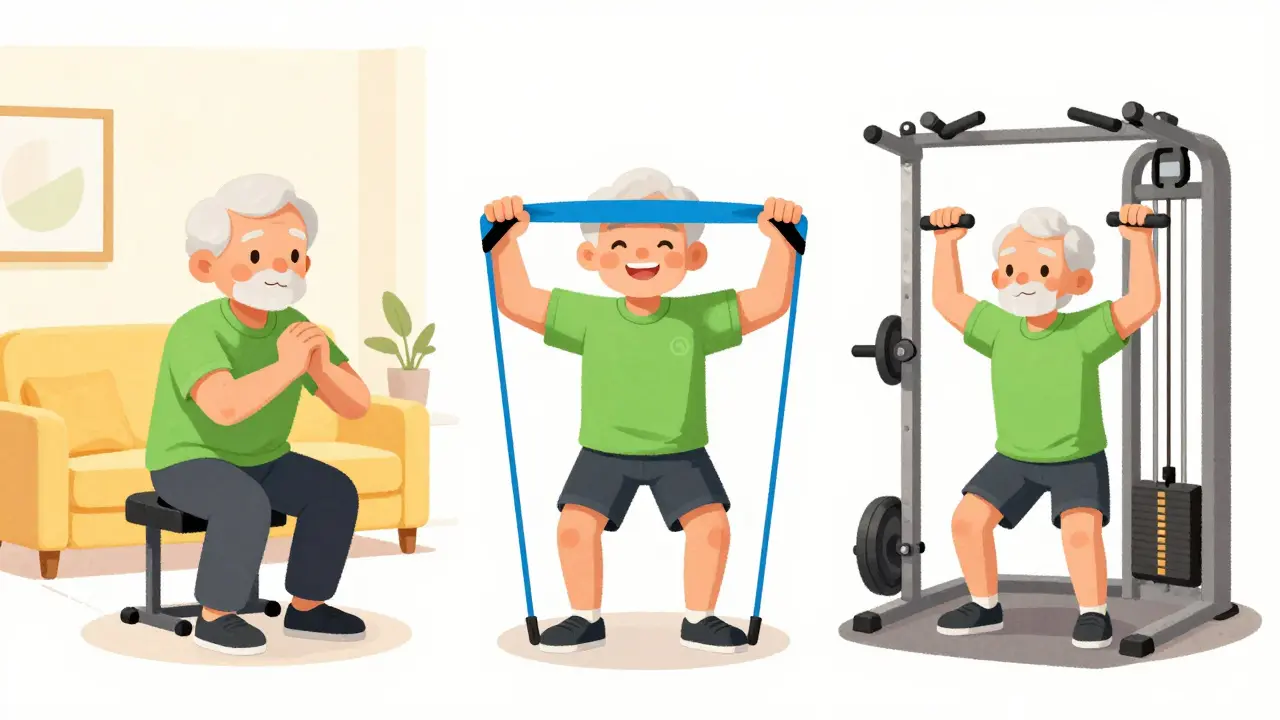
- Phase 1: Bodyweight Basics (Weeks 1-4)
Start with movements that mimic daily life. Try chair squats (sitting down and standing up without using your arms) and wall push-ups. Do these 2 days a week to wake up your nervous system. - Phase 2: Resistance Bands (Weeks 5-8)
Introduce tension using bands (like TheraBand). These are easier on the joints than dumbbells. Focus on 10-15 repetitions at a moderate effort. - Phase 3: Weight Machines (Weeks 9-16)
Move to machines that provide a stable path of motion. This reduces the risk of injury. Aim for 8-12 reps. If you feel joint pain, reduce the range of motion by 20-30 degrees-don't push through a sharp pain.
To make this stick, remember the rule of progressive overload. Your muscles won't grow if the weight stays the same. Try to increase the resistance by 2.5-5% every week or two. If 10 reps become easy, it's time to add a bit more weight.
The Nutrition Side: Feeding Your Muscles
You can't build a house without bricks, and you can't build muscle without protein. Older adults often suffer from "anabolic resistance," meaning their bodies aren't as efficient at using protein as they used to be. To counter this, timing and quantity matter.
Aim for 20-30 grams of high-quality protein within 45 minutes after your workout. This is the window when your muscles are most receptive to amino acids. Whether it's a Greek yogurt, a piece of grilled chicken, or a whey protein shake, getting that protein in immediately helps repair the micro-tears caused by strength training.
Don't forget hydration. Dehydrated muscles are more prone to cramps and injuries, and water is essential for the transport of nutrients to your muscle cells. A simple rule of thumb is to drink a glass of water before and after every set of exercises.
Overcoming Common Barriers
Let's be real: the hardest part of strength training isn't the lifting; it's the starting and staying. Many people quit because of initial muscle soreness (DOMS). This is normal, but it can be discouraging. The best way to handle this is to stay active with light walking on your "off" days to keep the blood flowing to those sore muscles.
Cost is another hurdle. Specialized senior training can be expensive, often costing $50-$75 a month. However, many Medicare Advantage plans now cover programs like SilverSneakers, which provides free access to gyms and coached classes. If you can't afford a gym, telehealth-delivered strength training has been shown to be 85% as effective as in-person coaching.
Lastly, the mental game is huge. Working out alone can be boring. Joining a social exercise group can increase your adherence by 35-40%. When you have a friend waiting for you at the gym, you're much more likely to actually show up.
How do I know if I have sarcopenia?
While a doctor uses DXA scans for a precise diagnosis, there are red flags you can notice. A handgrip strength below 27kg for men or 16kg for women, or a walking speed slower than 0.8 meters per second, are common clinical indicators. If you find it significantly harder to carry groceries or stand up from a chair, you should consult a healthcare provider.
Is it too late to start strength training if I'm over 80?
No, it is never too late. Even individuals in their 80s and 90s have shown the ability to increase muscle mass and improve their balance. The key is to start with a very low-impact program, such as seated exercises or water aerobics, and progress slowly under professional guidance.
Can protein supplements help if I can't eat much meat?
Yes. Whey protein, soy protein, or pea protein supplements can be an excellent way to hit that 20-30g post-workout target. They are easily digestible and can be added to smoothies or oatmeal, making it easier to maintain muscle mass without needing to eat large amounts of heavy meat.
Will lifting weights cause joint pain or arthritis to worsen?
Actually, strength training often reduces joint pain by strengthening the muscles that support the joint. However, form is critical. Using weight machines instead of free weights can provide more stability, and reducing the range of motion by 20-30 degrees can help you avoid pain points while still challenging the muscle.
How often should I train to see results?
For most older adults, 2 to 3 sessions per week is the sweet spot. This allows for the necessary 48 hours of recovery between workouts. Training more often can lead to overtraining and injury, while training less than twice a week may not provide enough stimulus to reverse muscle loss.
Next Steps for Your Muscle Health
If you're ready to take action, your first step should be a quick check-in with your doctor to ensure your heart and joints are ready for resistance work. Once you have the green light, start with the bodyweight basics-even if it's just ten chair squats while you're watching the news. Focus on the feeling of the muscle working, not the amount of weight you're lifting. Within 8 to 12 weeks, you'll likely notice those small wins, like a firmer grip or a steadier step, which are the building blocks of long-term independence.
Truman Media
April 18, 2026 AT 12:26It is truly a blessing to see such hope for our elders. Staying strong in body helps the spirit stay bright too! :)
Tanya Rogers
April 20, 2026 AT 11:35The simplistic framing of this "guide" ignores the nuanced intersection of genetic predisposition and socioeconomic access to high-quality protein. It is quaint to suggest that a few chair squats can counteract the systemic entropy of the human condition, yet the masses always crave such pedestrian optimism.
caesar simpkins
April 20, 2026 AT 21:36Man, the idea of losing your autonomy just because of age is absolutely terrifying. We really need to look out for our parents and help them get into these routines before it's too late!
Olushola Adedoyin
April 21, 2026 AT 22:31Wake up people!! They want us weak and fragile so we can't fight back. First they tell us it's just "aging," then they sell us the gym memberships and the protein powders made in some sketchy lab. It's all a big game to keep us in line while they hoard the real longevity secrets for the elite!
Quinton Bangerter
April 23, 2026 AT 05:09Exactly. The narrative that we need "approved" medical guidance before doing basic movements is just another layer of control. These guidelines are designed by people who profit from the pharmaceutical side of sarcopenia, not the preventative side. It's a classic shell game.
Cynthia Didion
April 24, 2026 AT 08:29American medicine is the only real way to handle this. Get a gym and get strong.
Shalika Jain
April 25, 2026 AT 07:54Honestly, the obsession with "muscle pensions" is just so tacky. Why are we treating our bodies like a 401k? It's honestly embarrassing how people turn basic health into a corporate metaphor. Give me a break.
Aman Tomar
April 27, 2026 AT 04:23The way our muscles just fade away is so heart braking... I feel for every elder struggling with a simple jar. Its truly a tragedy of life that we lose our strenght just when we want to enjoy our grand-children more. The science here is just amazing though, even if the spelling in some guides is off, the core idea is pure gold!
Akshata Kembhavi
April 27, 2026 AT 08:55Love the focus on the simple stuff like chair squats. It's such a chill way to start without feeling overwhelmed.
Venkatesh Venky
April 28, 2026 AT 03:17Let's get after it! Hypertrophy is for everyone regardless of age. Just keep that mTOR pathway firing and keep the protein high. We can all crush it!
Don Drapper
April 28, 2026 AT 11:21The sheer inefficiency of the aging process is a catastrophic failure of biological engineering. It is an absolute travesty that the human organism allows the degradation of Type II fibers with such reckless abandon. One must conclude that without a rigorous, almost militant approach to resistance training, the individual is merely consenting to their own decay. The data is clear: the lack of mechanical tension is a death sentence for functionality. It is a grim reality that most will simply succumb to the void of dynapenia because they lack the fortitude to lift a dumbbell. The systemic inflammation accompanying sarcopenic obesity is a masterclass in biological irony. We are witnessing the collapse of the physical form in real-time. It is an utterly dismal prospect for those who believe a stroll in the park suffices. Only those who embrace the brutality of the weights can hope to stave off the inevitable. The mitochondrial dysfunction mentioned is merely the first domino in a sequence of failures. We are essentially decaying while still breathing. The failure to synthesize protein is the ultimate betrayal of the body. It is a tragedy of the highest order. The only solution is an uncompromising adherence to the protocol provided here, or one might as well accept the armchair as a permanent residence.
anne camba
April 28, 2026 AT 21:07Time... is a thief... and it steals our strength...