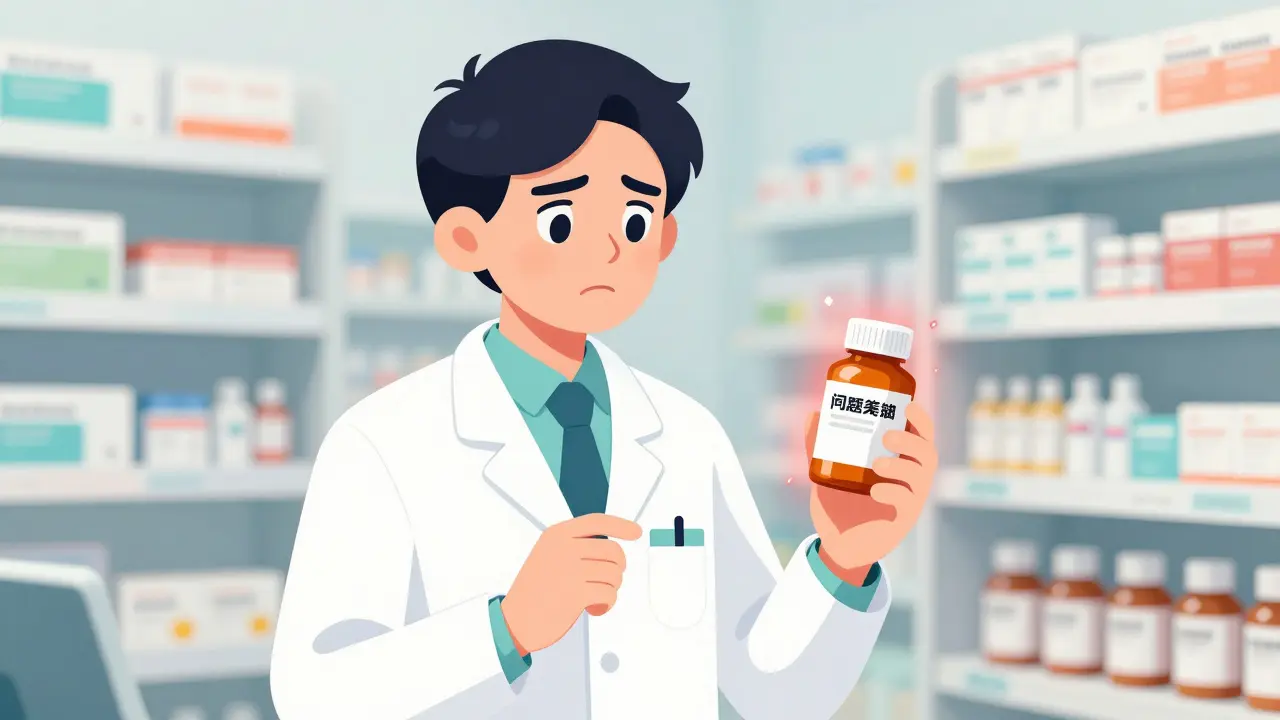
Most of the time, switching a patient to a generic medication is a win-win: the patient saves a significant amount of money, and the clinical outcome remains exactly the same. However, there is a small but dangerous gap where a generic isn't just a cheaper alternative, but a clinical liability. While the FDA is the gold standard for regulation, the reality of pharmacy practice is that problem generics can slip through the cracks, leading to therapeutic failure or unexpected toxicity. For a pharmacist, knowing when to stop a substitution and flag a product can be the difference between a stable patient and a medical emergency.
| Feature | Standard Generic | Problem Generic (Red Flag) |
|---|---|---|
| Bioequivalence | 80-125% of brand drug | Clinically significant variation |
| Patient Response | Consistent with brand | Unexplained TSH/INR spikes or drops |
| Stability | Meets USP standards | Inconsistent dissolution/early degradation |
| Cost | 80-85% lower than brand | Same cost, higher risk |
The Bioequivalence Gap: Why 'Equivalent' Isn't Always Enough
To understand why problems occur, we have to look at how generics are approved. Under the Hatch-Waxman Act, a generic doesn't have to be an exact carbon copy of the brand; it just needs to be bioequivalent. Specifically, the FDA requires a 90% confidence interval for the area under the curve (AUC) and maximum concentration (Cmax) to fall between 80% and 125% of the reference drug.
For most drugs, like statins, this 20% variance is noise. For example, a 2022 meta-analysis in JAMA Internal Medicine showed only a 0.3% difference in LDL reduction between brand and generic atorvastatin. But for other medications, that 20% window is a cliff. When a drug has a narrow margin between a dose that works and a dose that is toxic, a slight dip in bioavailability can cause a patient to relapse, while a slight spike can lead to toxicity.
High-Risk Zones: Narrow Therapeutic Index (NTI) Drugs
The most critical area for pharmacists to monitor is Narrow Therapeutic Index (or NTI) medications. These are drugs where small changes in blood concentration lead to significant changes in clinical effect. The FDA has designated 18 such drugs that require extreme caution during substitution.
Common examples include levothyroxine, warfarin, and phenytoin. A 2021 study in the Journal of the American Pharmacists Association revealed that NTI drugs have 2.3 times higher rates of therapeutic failure when patients are switched between different generic manufacturers. Imagine a patient on levothyroxine whose TSH is perfectly stable at 2.1; a switch to a different generic manufacturer could potentially push that TSH up to 8.7 in just six weeks, necessitating an urgent dose adjustment.
Digoxin is another prime example, showing a significantly higher rate of adverse events (12.7 per 10,000 prescriptions) when manufacturer switches occur compared to non-NTI drugs. If you see a patient whose labs are suddenly swinging despite no change in dose, the first question should be: "Did the manufacturer of your generic change recently?"
Complex Formulations and Dissolution Failures
Beyond NTI drugs, the *way* a drug is delivered can create problems. Complex generics-like inhalers, topicals, and extended-release (ER) tablets-are harder to replicate than simple tablets. This is why they only make up a small fraction of generic approvals despite being a huge part of the brand market.
The danger here often lies in dissolution. In 2020, FDA testing found that 7.2% of generic extended-release opioids failed dissolution testing, compared to only 1.1% of immediate-release versions. When an ER formulation fails, it can lead to "dose dumping," where the medication is released all at once instead of over 12 or 24 hours. We saw this with certain generic versions of diltiazem CD, where inconsistent dissolution profiles led to nearly 50 reported cases of therapeutic failure.
When to Flag: Red Flags and Protocol
Pharmacists shouldn't just wait for a patient to complain. A proactive approach involves specific triggers that should prompt a flag to the prescribing physician or a report to the FDA MedWatch system.
- The 2-4 Week Window: If a patient reports a return of symptoms or new side effects within a month of a generic switch, it is a primary red flag.
- Lab Instability: Any unexplained jump in TSH, INR, or serum creatinine shortly after a change in generic supplier.
- Physical Changes: Patients reporting a change in tablet color, shape, or taste can sometimes signal a change in the excipients or the manufacturer, which may correlate with a change in efficacy.
- The 'BX' Code: Always verify the Orange Book. While 'AB' rated products are therapeutically equivalent, 'BX' rated products are not. Dispensing a BX product as a substitute for a brand is a major safety risk.
To manage this, the University of Florida College of Pharmacy recommends documenting the specific manufacturer for every NTI drug dispensed. This allows for a traceback analysis; if five different patients on the same generic manufacturer of warfarin all show unstable INRs, you have a systemic problem rather than five individual patient issues.
The Human Element: Look-Alike/Sound-Alike (LASA) Errors
Not all "problem generics" are about chemistry; some are about packaging and naming. The Institute for Safe Medication Practices (ISMP) has highlighted that look-alike/sound-alike confusion causes over 14% of generic medication errors. This often happens with high-volume combinations, such as oxycodone/acetaminophen and hydrocodone/acetaminophen.
When a generic manufacturer changes the bottle design or the font on the label, it can confuse pharmacy technicians and pharmacists during the filling process. This is a systemic failure of the generic's "presentation," and it should be flagged as a safety concern to the pharmacy manager to implement extra warnings or distinct storage locations.
Is it safe to switch generic manufacturers every month?
For most medications, yes. However, for Narrow Therapeutic Index (NTI) drugs like levothyroxine or warfarin, switching manufacturers frequently can lead to unstable blood levels due to the allowable 20% variation in bioequivalence. It is generally recommended to keep NTI patients on the same manufacturer to ensure stability.
What is the difference between an AB and BX rating in the Orange Book?
An 'AB' rating means the generic is therapeutically equivalent to the brand and can be substituted without prescription changes. A 'BX' rating means the generic is NOT therapeutically equivalent, often due to unresolved bioequivalence issues, and should not be substituted without explicit physician approval.
How can I report a problematic generic to the authorities?
The most effective way is through the FDA MedWatch program or the MedWatcher app. Providing the specific manufacturer, lot number, and the clinical symptoms the patient experienced helps the FDA conduct facility inspections and identify quality control failures.
Why do some patients feel different side effects with generics?
While the active ingredient is the same, the inactive ingredients (excipients, fillers, and dyes) differ between manufacturers. Some patients may be sensitive to a specific filler or dye used by one generic company but not another, leading to gastrointestinal distress or allergic reactions.
Are all extended-release generics equally reliable?
No. Extended-release formulations are more complex to manufacture. Some generics have failed dissolution tests, meaning they may release the drug too quickly or too slowly. This is why pharmacists should be extra vigilant with ER opioids or cardiac medications.
Next Steps for Pharmacy Teams
If you suspect a generic is problematic, don't just switch the patient and forget about it. Document the manufacturer and the specific adverse event in the patient's profile. For high-risk patients, consider requesting "Dispense as Written" (DAW) for the brand name or a specific, trusted generic manufacturer to prevent future swaps.
Pharmacy managers should also review their inventory for LASA (Look-Alike/Sound-Alike) risks. If two different generic manufacturers' bottles look nearly identical, use "Tall Man" lettering or separate the stock on the shelf to reduce the chance of a dispensing error.