You pack your toothbrush, your passport, and your favorite novel. You double-check your flight times and hotel reservations. But what about the bottle of painkillers in your bag or the ADHD medication in your pocket? For millions of travelers, this is the blind spot that turns a dream vacation into a legal nightmare.
It is a harsh reality: a prescription that is perfectly legal in your home country can land you in jail in another. From common decongestants to essential heart medications, borders are not just lines on a map; they are strict regulatory checkpoints. In 2023 alone, there were over 1,800 documented cases of medication confiscation globally. Worse yet, ignorance is rarely a valid defense. If you carry the wrong pill across the wrong border, you might face fines, detention, or even deportation.
Why Are My Legal Meds Banned?
To understand the risk, you need to know why these rules exist. It isn't personal; it's political and historical. Most countries base their drug laws on three major United Nations treaties: the 1961 Single Convention on Narcotic Drugs, the 1971 Convention on Psychotropic Substances, and the 1988 UN Convention against Illicit Traffic.
These agreements aim to stop global drug trafficking and abuse. However, they create a patchwork of regulations that often clash with modern medical needs. For example, while one nation sees a stimulant as a vital treatment for ADHD, another sees it as a precursor to illegal manufacturing. This disconnect creates significant barriers for legitimate medical travelers who simply want to stay healthy while exploring the world.
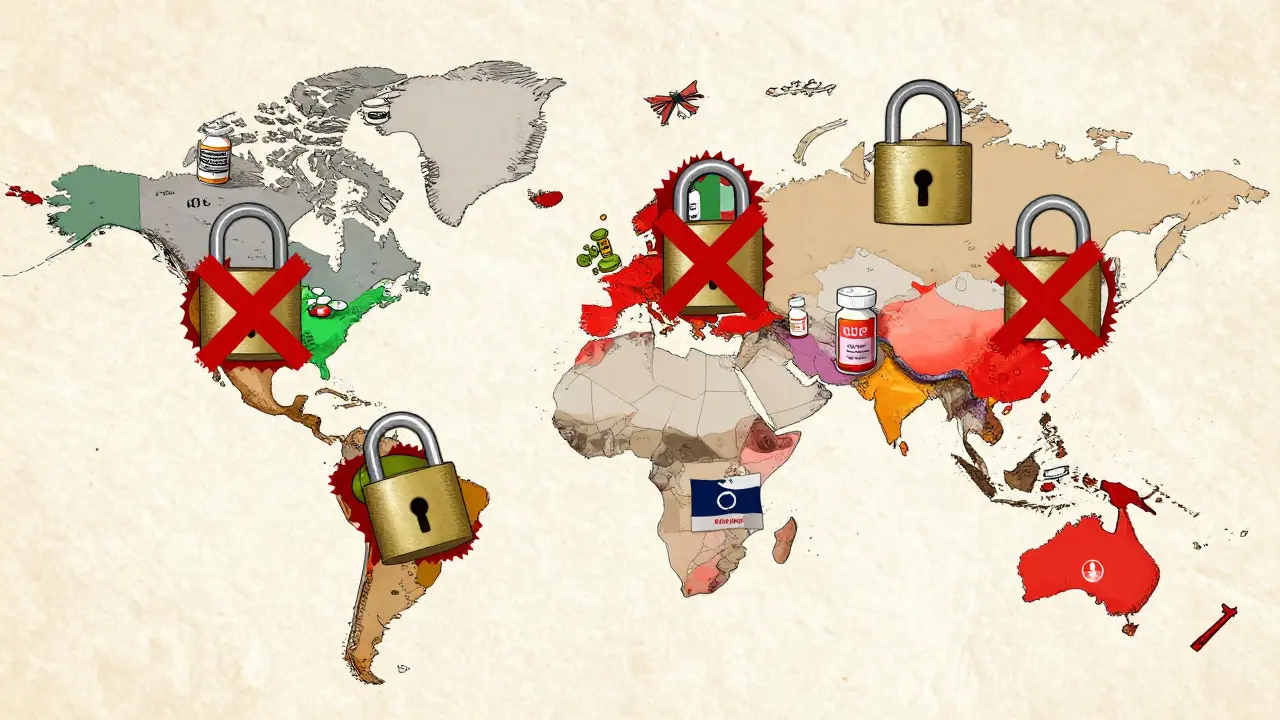
The enforcement varies wildly. Some countries have lenient "personal use" exceptions, while others treat any controlled substance as a criminal offense regardless of intent. According to data from the International Narcotics Control Board (INCB), nations like China, Japan, Singapore, and the UAE enforce some of the strictest controls in the world. Understanding this landscape is the first step in protecting yourself.
High-Risk Countries: Where Rules Are Strictest
If you are traveling to certain regions, you need to be hyper-vigilant. Based on recent travel incident reports and regulatory updates, here are the hotspots where travelers most frequently run into trouble:
- Japan: Japan prohibits pseudoephedrine (found in Sudafed) because it can be used to make methamphetamine. They also strictly limit controlled medications to a 3-month supply. In 2023, Japanese authorities recorded over 1,200 incidents involving travelers with banned decongestants.
- United Arab Emirates (UAE): The UAE classifies many common drugs as Class A controlled substances. This includes codeine, diazepam (Valium), and methylphenidate (Ritalin). Without pre-approval from the Ministry of Health, carrying these can lead to prison sentences of 1 to 3 years.
- China: China has tightened its laws significantly. ADHD medications like Adderall and Concerta are banned in all provinces without special permits. Even small amounts can trigger serious legal consequences.
- Thailand: Recent amendments to Thailand’s Pharmaceutical Act have increased penalties for stimulants. Violations can now result in 5 to 10 years in prison and fines up to $28,500 USD.
- Singapore & Malaysia: Both nations maintain zero-tolerance policies for many psychotropic substances. Singapore, in particular, is known for rigorous airport screenings.
| Country | Key Restricted Items | Max Supply Allowed | Potential Penalty |
|---|---|---|---|
| Japan | Pseudoephedrine, Amphetamines | 3 Months | Fines, Detention |
| UAE | Codeine, Diazepam, Ritalin | Requires Pre-Approval | 1-3 Years Prison |
| China | Adderall, Concerta | Banned w/o Permit | Deportation, Fines |
| Thailand | Stimulants, Sedatives | Varies by Drug | 5-10 Years Prison |
| Germany | Narcotics, Psychotropics | 30 Days (Personal Use) | Confiscation, Fines |
The Most Commonly Confiscated Medications
You might think only heavy-duty narcotics are at risk, but the reality is different. Everyday medicines are the biggest culprits behind travel disruptions. Here is what you need to watch out for:
- ADHD Medications: Drugs containing amphetamine or dextroamphetamine (like Adderall) and lisdexamfetamine (Vyvanse) are illegal in nearly 70% of surveyed countries. Even if you have a valid prescription from your doctor, many nations classify these as hard drugs.
- Pain Killers: Combinations of acetaminophen and hydrocodone are banned in more than half of the strict-regulation countries. Even simple codeine-containing cough syrups can trigger alarms in places like the UAE and Saudi Arabia.
- Sedatives and Sleep Aids: Alprazolam (Xanax), diazepam (Valium), and zolpidem (Ambien) are heavily regulated. Zolpidem, often taken for jet lag, is prohibited in over 30% of destinations studied by health organizations.
- Decongestants: Pseudoephedrine is the most commonly confiscated over-the-counter ingredient globally. Because it is a key ingredient in making methamphetamine, countries like Japan and South Korea ban it entirely for travelers.
Dr. Jane Smith, Director of the CDC's Travelers' Health Branch, warns that sedatives and narcotics require particular caution. She notes that travelers often underestimate how strictly these categories are enforced compared to their home countries.
How to Prepare: Your Step-by-Step Guide
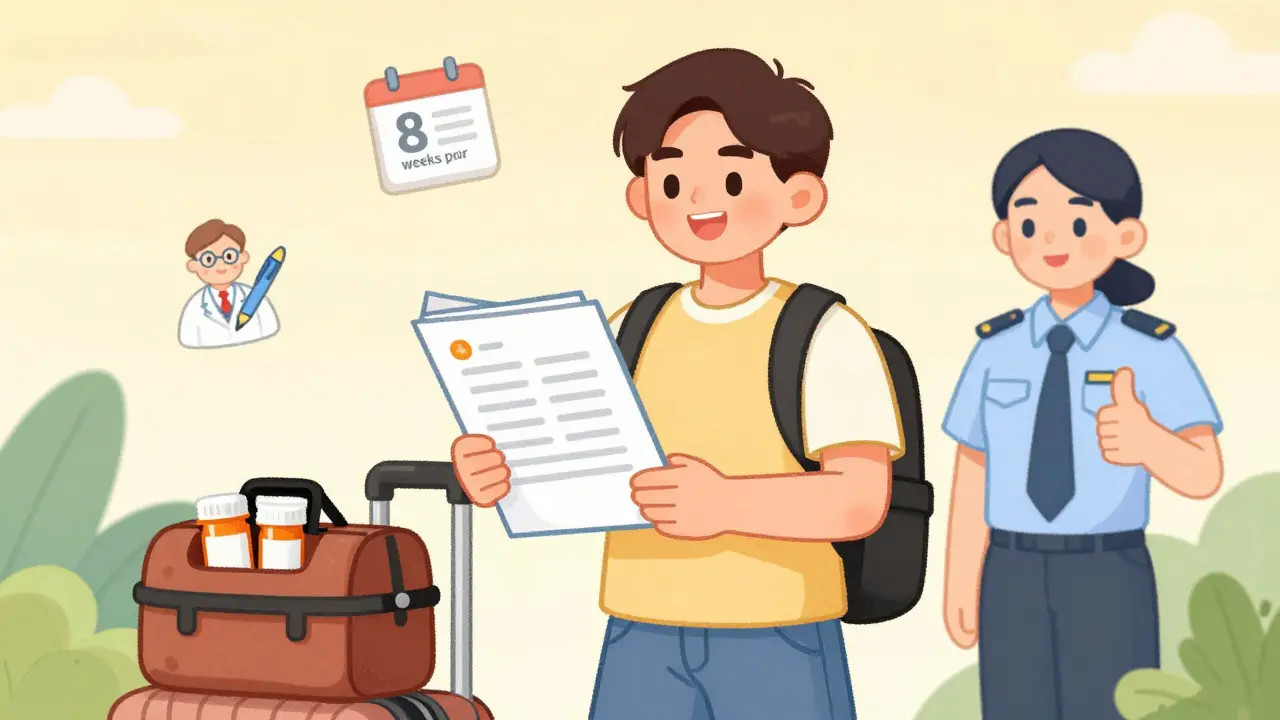
Preparation is your best defense. Don't wait until you are at the airport. Start this process 8 to 12 weeks before your trip. Here is exactly what you need to do:
1. Check Official Sources Early
Do not rely on blogs or forums. Go directly to the source. Check the website of the destination country’s Ministry of Health or their embassy. For example, the UAE has an online portal called 'Medicines for Patients' where you can apply for pre-approval. This process takes 10-14 business days, so timing is critical.
2. Get the Right Documentation
A pharmacy label is usually not enough. You need a formal letter from your prescribing physician. This letter should include:
- Your full name and date of birth.
- The doctor’s contact information and license number.
- Your diagnosis (briefly).
- The generic name of the medication (not just the brand name).
- The dosage and the quantity you are carrying.
- A statement confirming the medication is for your personal use during the trip.
3. Carry the Original Prescription
Keep your original prescription bottle in your carry-on luggage. Never check your meds. Security scanners will flag them anyway, and you don't want to be digging through checked bags if questioned. Keep the documentation in the same bag as the pills.
4. Translate if Necessary
If you are traveling to a non-English speaking country, get your doctor’s letter translated into the local language. Italy, for instance, mandates notarized Italian translations of all prescriptions. This extra step can save you hours of confusion at customs.
5. Calculate Quantities Carefully
Stick to the minimum amount needed. Germany, for example, defines "appropriate quantity" as no more than a 30-day supply without special authorization. If you need more, you must get prior approval. Carrying six months’ worth of pills for a two-week trip looks suspicious to border agents.
What Happens If You Get Caught?
If you are stopped, remain calm and polite. Show your documentation immediately. In many cases, having proper paperwork resolves the issue quickly. However, if you are unprepared:
- Confiscation: The most common outcome. Your meds are seized, and you may have to buy alternatives locally, which can be difficult if the drug isn't available there.
- Fines: You may be required to pay a substantial fine before being allowed to enter or exit the country.
- Detention: In severe cases, especially in countries with strict anti-drug laws, you could be detained for questioning. This can delay your travel plans by days or weeks.
- Criminal Charges: For large quantities or high-control substances, you could face criminal prosecution. This is rare for genuine patients but happens when travelers are unaware of the severity of the laws.
Real-world examples highlight the stakes. One traveler shared on Reddit how their 30-day supply of Adderall was confiscated at Tokyo Narita Airport despite having documentation, due to Japan's strict prohibition on amphetamine derivatives. Another traveler faced 72-hour detention in Dubai for carrying codeine painkillers without prior approval. These stories serve as stark reminders that preparation is non-negotiable.
Tips for Smooth Travel
Beyond the basics, consider these pro tips to minimize stress:
- Use Generic Names: Brand names vary by country. Always know the generic name of your medication (e.g., alprazolam instead of Xanax).
- Consult a Travel Clinic: Specialized travel medicine clinics can provide certified letters and advice specific to your destination. Tools like the DocHQ Travel Medicine Checker have helped reduce documentation errors by over 70%.
- Check Insurance: Some travel insurance policies now offer add-ons for medication coverage. Check if your policy covers legal fees or emergency medication replacement abroad.
- Stay Updated: Laws change. The Philippines updated its regulations in January 2025 to introduce a faster digital pre-approval system. Always check for the latest news before you book.
Traveling with prescription medication doesn't have to be scary, but it does require respect for local laws. By doing your homework, getting the right papers, and packing smart, you can ensure your journey is defined by adventure, not anxiety.
Can I take my prescription medication to Japan?
Yes, but with strict conditions. Japan bans pseudoephedrine and limits controlled medications to a 3-month supply. You must complete an International Certificate for Psychoactive Substances within 30 days of travel and carry it with your English-language prescription. Failure to do so can result in confiscation or denial of entry.
Is Adderall illegal in most countries?
Adderall (containing amphetamine/dextroamphetamine) is illegal or heavily restricted in approximately 68% of surveyed countries, including China, Japan, Singapore, and the UAE. Even with a valid US prescription, you often need special pre-approval or a permit from the destination country's health ministry to bring it across the border.
What documents do I need to travel with medication?
You should carry the original prescription in its pharmacy bottle, a detailed letter from your doctor on official letterhead (including diagnosis, dosage, and necessity), and any country-specific forms or translations required. For controlled substances, an International Certificate for Psychoactive Substances may also be mandatory.
Can I be arrested for carrying painkillers abroad?
Yes, particularly in countries with strict drug laws like the UAE, Saudi Arabia, and Thailand. Medications containing codeine, hydrocodone, or oxycodone are often classified as controlled narcotics. Without prior approval or proper documentation, carrying these can lead to fines, detention, or even prison sentences.
How far in advance should I check medication restrictions?
You should start checking restrictions 8 to 12 weeks before your trip. Some countries, like the UAE, require pre-approval processes that take 10-14 business days. Additionally, obtaining doctor's letters and translations can take time, so early preparation prevents last-minute panic.
Are over-the-counter meds safe to travel with?
Not always. Pseudoephedrine, found in many cold and flu remedies like Sudafed, is banned in several countries including Japan and South Korea due to its use in manufacturing methamphetamine. Always check the active ingredients of OTC meds against your destination's restricted list.
What if I forget my medication documentation at the airport?
If you forget documentation, you risk confiscation or further questioning. Try to email a copy to yourself or access it via cloud storage to show on your phone. Contact your doctor immediately to fax or email a new letter to the airport if possible. However, prevention is always better than cure-keep physical copies in your carry-on.