SSRI Pharmacogenomic Risk Estimator
This tool estimates potential risks associated with specific SSRIs based on your known or suspected genetic metabolizer status for the liver enzymes CYP2C19 and CYP2D6. Select your medication and your metabolic speed to see how it might affect your treatment.
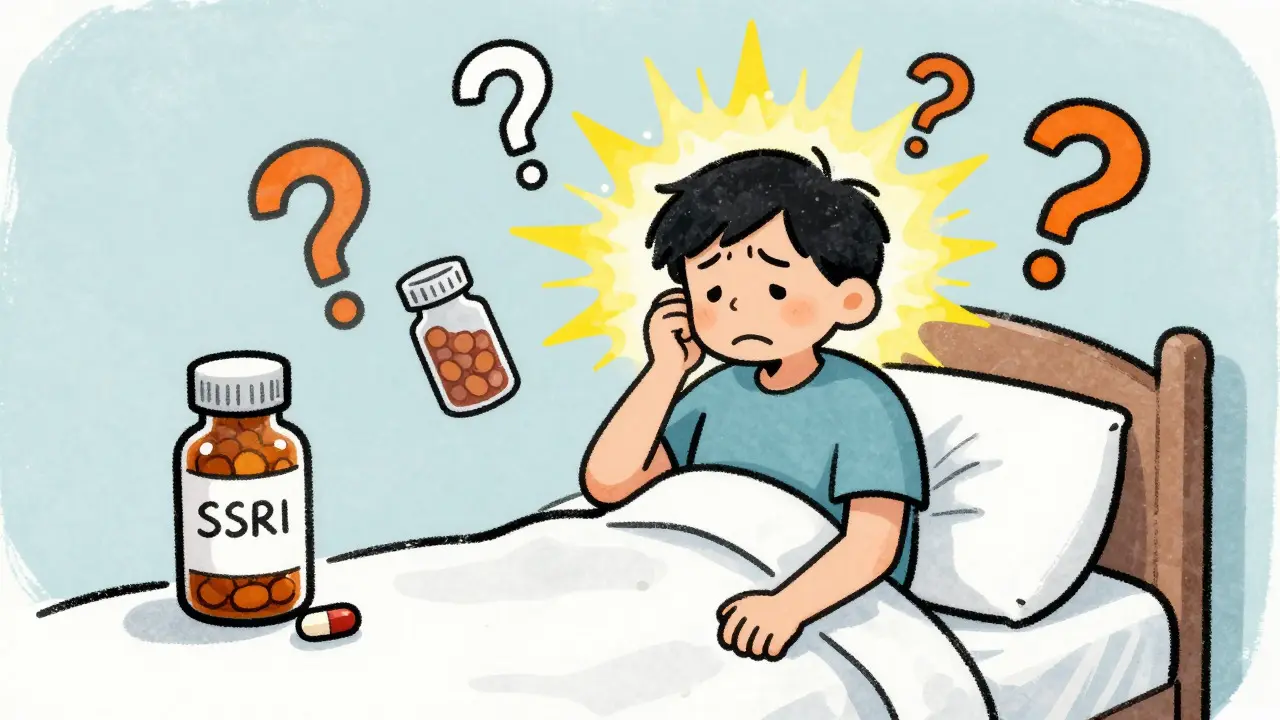
You’ve been on an SSRI for weeks. The depression hasn’t lifted, but the nausea, dizziness, or insomnia have definitely shown up to the party. You switch doctors, try a different pill, maybe adjust the dose. It feels like a guessing game where you’re the only one losing sleep. What if there was a way to know before you started which medication your body could actually handle? That’s where pharmacogenomic testing comes in.
This isn’t science fiction. It’s a growing standard of care that looks at specific genes-primarily CYP2C19 and cytochrome P450 enzymes that process drugs in your liver. These two genetic markers dictate how fast or slow your body breaks down Selective Serotonin Reuptake Inhibitors (SSRIs). If you metabolize too slowly, toxic levels build up, causing severe side effects. If you metabolize too quickly, the drug never reaches therapeutic levels, leaving you untreated. Understanding this can save you months of trial and error.
The Science Behind Your Liver’s Speed Limit
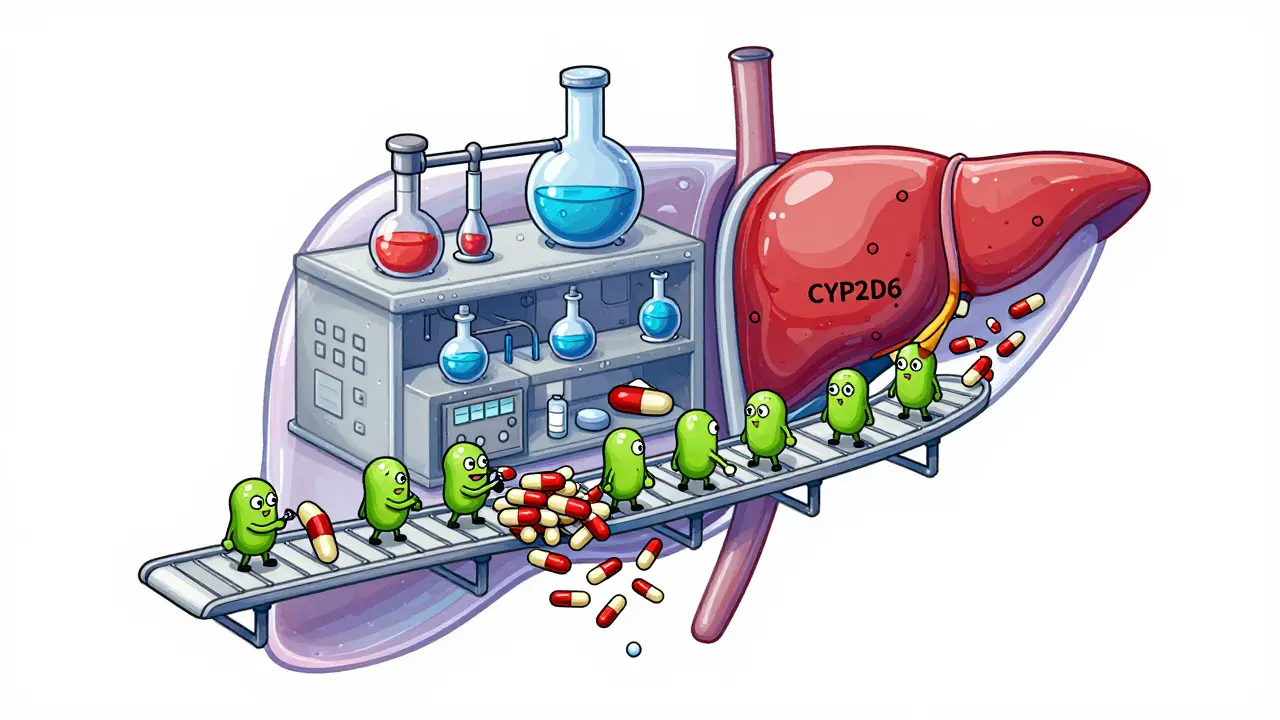
Your liver is essentially a chemical processing plant, and cytochrome P450 enzymes are its workers. Two specific teams, CYP2D6 and CYP2C19, handle most antidepressants. Think of these enzymes as having a speed limit set by your DNA. Some people are born with high-performance engines (Ultrarapid Metabolizers), while others have older models that struggle to keep up (Poor Metabolizers).
The Clinical Pharmacogenetics Implementation Consortium (CPIC) released updated guidelines in April 2023 that formalized how we interpret these speeds. They classify patients into categories based on star allele nomenclature-a complex naming system for genetic variants. For CYP2D6, there are over 100 known variant alleles, making it highly variable across populations. CYP2C19 has about 35 known variants. This variability explains why two people taking the same dose of Lexapro can have wildly different experiences.
When you take an SSRI like citalopram or escitalopram, CYP2C19 does the heavy lifting. If you are a Poor Metabolizer (PM) for CYP2C19, studies show you might have 2.3 to 3.5 times higher plasma concentrations of escitalopram compared to normal metabolizers. That means the standard 10mg or 20mg dose acts like a much larger dose in your blood, significantly raising the risk of adverse reactions.
Which SSRIs Are Affected?
Not all antidepressants rely on these enzymes equally. Knowing which drugs are linked to which gene helps target the right test. Here is the breakdown:
| Antidepressant | Primary Metabolic Enzyme | Risk Profile |
|---|---|---|
| Citalopram (Celexa) | CYP2C19 | High risk of QT prolongation in poor metabolizers |
| Escitalopram (Lexapro) | CYP2C19 | Elevated serum levels in PMs; lower efficacy in UMs |
| Sertraline (Zoloft) | CYP2C19 & CYP2B6 | Variable response; mixed pathway complexity |
| Paroxetine (Paxil) | CYP2D6 | Significant side effects in PMs due to saturation |
| Fluoxetine (Prozac) | CYP2D6 | Inhibits its own enzyme; long half-life issues |
Notice that Paroxetine and Fluoxetine lean heavily on CYP2D6. If you carry certain CYP2D6 variants, you might experience severe nausea, sexual dysfunction, or weight gain because the drug accumulates. Conversely, if you are an Ultrarapid Metabolizer (UM) for CYP2D6, your body clears the drug so fast that even high doses might fail to lift your mood.
Predicting Side Effects vs. Efficacy
Here is the tricky part: genetics predict metabolism very well, but they don’t always predict success. A large retrospective study involving over 5,800 participants found clear differences in drug exposure based on genotype. However, treatment effectiveness wasn’t consistently tied to CYP2C19 status. So, just because you process a drug normally doesn’t guarantee it will cure your depression. But it does strongly predict whether you’ll feel sick while taking it.
Dr. Craig Bousman from the University of Calgary notes that poor metabolizers tend to exhibit higher residual concentrations of antidepressants in their serum. This increases the likelihood of adverse drug reactions (ADRs). In fact, a meta-analysis of 94 studies showed that ADRs occur in 30-50% of patients on standard therapy. Pharmacogenomic testing aims to cut that number down by avoiding drugs your body can’t handle.
For example, a case series published in Frontiers in Pharmacology described a patient who developed severe dizziness and insomnia on standard venlafaxine doses. Genetic testing revealed she was a CYP2D6 poor metabolizer. By reducing her dose to 37.5mg/day, she achieved tolerability without losing therapeutic benefit. Without the test, she might have quit the medication entirely, thinking she was "immune" to treatment.
The Cost-Benefit Analysis
Is it worth the money? As of 2024, adoption is rising. In the US, pharmacogenetic testing for depression jumped from 0.4% of patients in 2015 to 8.7% in 2023. Insurance coverage varies, with only 62% of major insurers covering these tests for antidepressants. Out-of-pocket costs can range from $200 to $500 depending on the provider.
However, consider the cost of failure. A 2022 analysis suggested potential savings of $1,200-$1,800 per patient by reducing trial-and-error prescribing. Each failed medication attempt involves doctor visits, pharmacy trips, and lost productivity. If a test helps you find the right drug on the first or second try, it pays for itself.
- Turnaround Time: Results typically arrive in 1-3 weeks.
- Accuracy: Commercial tests have 95-99% sensitivity and specificity.
- Methodology: Requires targeted genotyping arrays, not just standard genome-wide scans, to catch structural variants.
Limitations and Realities
Don’t expect magic. Dr. Pedro Ruiz from the University of Miami cautions that genetics is just one piece of the puzzle. Environment, diet, stress, and other medications also affect how you respond to SSRIs. The FDA issued a safety communication in 2022 warning against relying solely on genetic tests without clinical correlation.
Also, evidence strength varies. CPIC assigns an "A" level (strongest) evidence for using CYP2D6 to guide tricyclic antidepressant dosing, but only a "B" level (moderate) for SSRIs. This means the data is solid, but not as definitive as it is for older drugs like amitriptyline. Some patients report minimal impact from testing, especially if their symptoms are driven more by psychological factors than metabolic ones.
How to Get Tested
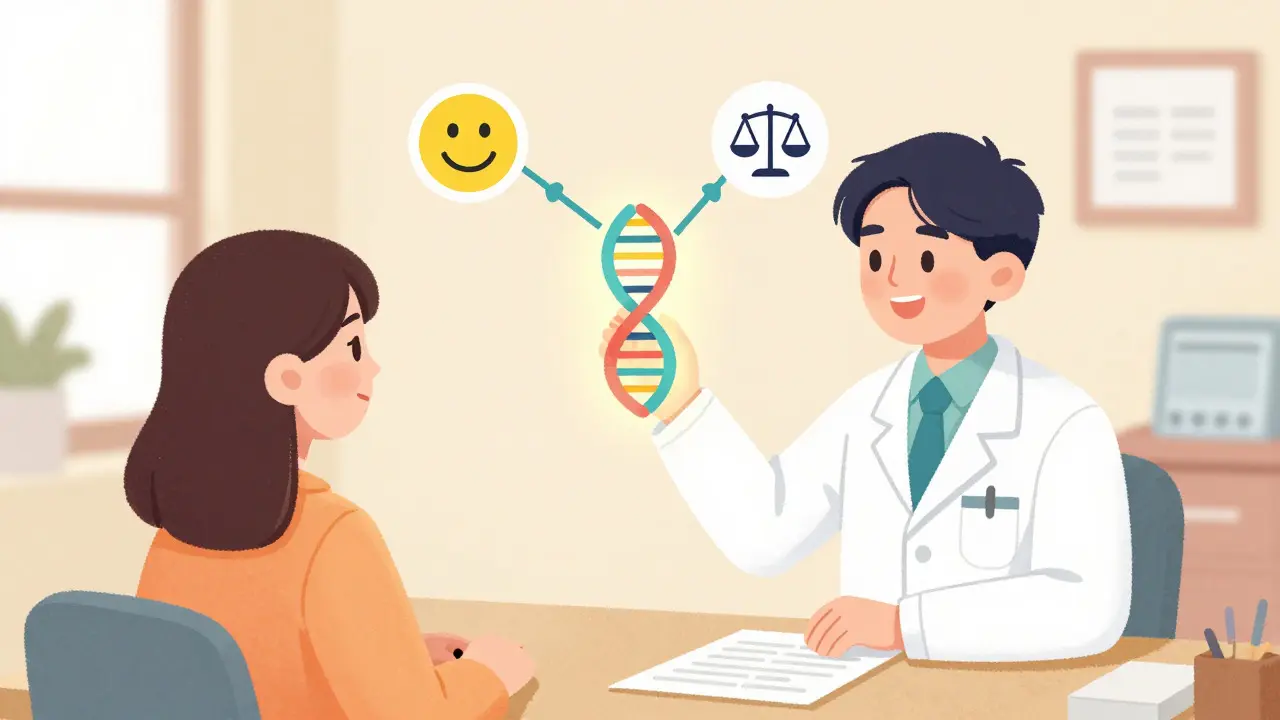
If you’re struggling with side effects or lack of efficacy, ask your psychiatrist about pharmacogenomic testing. Here’s what to expect:
- Consultation: Discuss your history of adverse reactions with your provider.
- Sample Collection: Usually a cheek swab or saliva sample. No blood draw needed for most panels.
- Lab Analysis: The lab sequences or genotypes specific regions of CYP2C19 and CYP2D6.
- Interpretation: Your doctor reviews the report alongside CPIC guidelines. Look for providers trained in pharmacogenomics, as interpreting star alleles requires specialized knowledge.
In Canada, access is improving but still fragmented. Many private clinics offer these services, and some provincial health systems are beginning to cover them for treatment-resistant cases. Always check if your insurance covers the interpretation fee separately from the lab fee.
Frequently Asked Questions
Does CYP2C19 testing tell me if an SSRI will work?
Not necessarily. It primarily predicts how fast your body processes the drug, which correlates with side effect risk and required dosage. While it helps avoid ineffective doses due to rapid metabolism, it doesn't guarantee the drug will treat your specific type of depression. Efficacy depends on many factors beyond metabolism.
What happens if I am a CYP2D6 Ultrarapid Metabolizer?
If you are an Ultrarapid Metabolizer (UM) for CYP2D6, your body breaks down drugs like paroxetine or fluoxetine very quickly. Standard doses may result in sub-therapeutic blood levels, meaning you get little to no relief from symptoms. Your doctor might recommend a higher dose or switching to a medication metabolized by a different enzyme, such as CYP2C19.
Are genetic results permanent?
Yes, your DNA sequence for these genes does not change throughout your life. Once you have tested positive for a specific metabolizer phenotype, you can use that information for any future medication decisions. There is no need to repeat the test unless new scientific discoveries significantly alter the interpretation of specific variants.
Can I take multiple SSRIs if I have a poor metabolizer status?
It depends on the specific drugs involved. If both drugs rely on the same enzyme (e.g., CYP2C19), combining them can lead to dangerous accumulation. Doctors often prefer switching to a drug processed by a different pathway rather than stacking multiple drugs that compete for the same metabolic bottleneck. Always consult your pharmacist for interaction checks.
How accurate are home kit pharmacogenomic tests?
Commercial home kits generally have high accuracy (95-99%) for detecting common variants. However, they may miss rare structural variants or copy number variations, particularly in the complex CYP2D6 gene region. For critical medical decisions, laboratory-grade testing ordered by a physician is often preferred over direct-to-consumer kits due to deeper sequencing capabilities.
Emmanuel Umana
August 30, 2026 AT 02:35It is fascinating how our biology dictates our experience of healing. We often forget that the body is not a machine but a garden with its own weather patterns. Knowing the soil type before planting saves so much heartache.
Owen John
August 30, 2026 AT 22:23They tell you it's standard care now but I've seen this pattern before. Big Pharma pushes these tests to justify higher costs while the actual efficacy data for SSRIs remains shaky at best. It feels like they are monetizing our desperation rather than solving the root cause of mental health crises. The CPIC guidelines are just another layer of bureaucracy designed to keep us dependent on their interpretation of our DNA.
Colin Finch
September 1, 2026 AT 01:22I absolutely agree with the sentiment here! Oh my goodness, the trial and error phase is truly hellish. I spent two years feeling like a zombie because no one checked my CYP2D6 status. If I had known earlier, I could have saved myself so much misery and money. It’s heartbreaking to think about all those lost months.
John Park
September 1, 2026 AT 21:03Let's be real here. This isn't just science it's a market play. The pseudo-philosophical angle of 'personalized medicine' masks the fact that insurance companies use this to deny coverage if you don't test first. You're paying for a permission slip to take a pill. The liver doesn't care about your star alleles it cares about load.
Lilian Binda
September 3, 2026 AT 03:18Finally someone says it plain. In Nigeria we struggle just to get basic meds let alone fancy genetic tests. But yeah the side effects suck big time. My aunt took Lexapro and felt worse than before. Why didn't anyone check her genes? This stuff should be free not a luxury for rich folks in US/UK.
Fabian Saldana
September 4, 2026 AT 15:39This is such an empowering step forward for mental healthcare! Imagine walking into a doctor's appointment with the confidence that your medication choice is backed by hard data. It turns a guessing game into a strategic plan. Every patient deserves this clarity. Let's spread the word and make sure more people know this option exists!
Alex Brown
September 5, 2026 AT 06:12The distinction between metabolic prediction and therapeutic efficacy is crucial. Many patients conflate the two, expecting a cure when the test only promises tolerability. We must remember that depression is multifactorial. Genetics provide a map of the terrain, but they do not determine the destination. It is a tool for reducing friction, not a guarantee of happiness.
Betty Childers
September 7, 2026 AT 01:00I tried this last year and honestly it was a mixed bag for me. The report said I was a normal metabolizer for most things which meant nothing changed really. But it did help rule out a few drugs quickly so I guess that's a win. Still wish there was more guidance on what to actually do with the info though.
Maneesh kv
September 8, 2026 AT 14:26Bro this is huge 🙌🏽 finally some logic in psych meds!! I was a poor metabolizer for CYP2D6 and Paxil destroyed me 😭😭. Once I switched based on the test life got better fast. Don't sleep on this guys. Your liver is trying to talk to you listen up!!! 💊✅
joyce Hogewoning
September 9, 2026 AT 05:55I mean look i dont even know where to start with how much i hate the idea of being told my brain chemistry is broken because of a gene variant i cant control. Its like they want us to believe were defective products off the assembly line instead of complex humans dealing with trauma and stress and whatever else. And then they charge us hundreds of dollars to tell us what we already knew from suffering through three different prescriptions. It feels predatory and cold and honestly kind of insulting to my intelligence as if i didnt realize my body hated the drug after vomiting for a week straight. So yeah thanks for the article but im still skeptical about whether this helps or just profits.
Amy Zalkin
September 9, 2026 AT 15:10lol yeah the cheek swab thing is weirdly invasive in a non-blood way. Felt like i was doing a dna ancestry test for my serotonin levels. Pretty cool tech though if u can afford it.
Thhomas Fox
September 11, 2026 AT 05:01Great points. Knowledge is power. Use it wisely.
Kaylyn Mello
September 12, 2026 AT 11:39my mom did this and it helped her find the right dose for zoloft so she stopped getting dizzy
i think its worth trying if ur stuck