
Citrus Drug Interaction Risk Checker
Interaction Analysis
Mechanism of Action
Potential Symptoms to Watch For
Quick Reference: Furanocoumarin Levels
| Fruit Type | Bergamottin (μM/L) | Primary Enzyme Blocked | Clinical Risk Level |
|---|---|---|---|
| Grapefruit | 1.0 - 2.0 | CYP3A4 | Moderate to High |
| Pomelo | 1.5 - 2.5 | CYP3A4, OATP | High |
| Seville Orange | 3.0 - 4.0 | CYP3A4 | Very High |
| Sweet Orange/Lemon | < 0.5 | Minimal | Low |
Most people know that grapefruit can mess with their prescription meds. But what about the big, pale fruit sitting next to it in the produce aisle? Or the bitter marmalade you spread on toast? Pomelo and Seville orange are often overlooked hazards, yet they carry similar biochemical baggage as grapefruit. If you take certain medications, eating these fruits could quietly boost drug levels in your blood to dangerous heights. This isn't just theoretical; it’s a real risk that leads to hospital visits for muscle breakdown or organ toxicity.
The Hidden Chemicals Behind the Bitter Taste
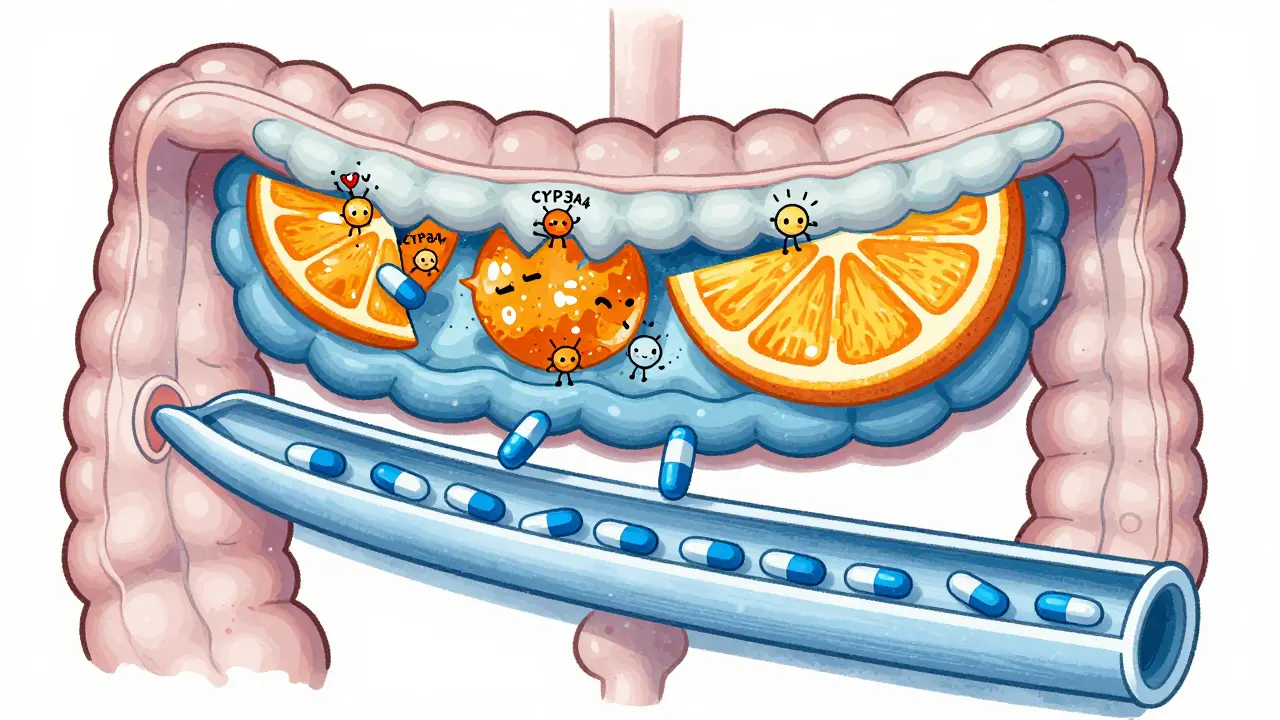
To understand why these fruits matter, you have to look at what’s inside them. The main culprits are compounds called furanocoumarins, specifically bergamottin and 6',7'-dihydroxybergamottin. These substances inhibit an enzyme in your gut known as CYP3A4. When this enzyme is blocked, your body doesn’t break down your medication as quickly as it should. Instead, more of the drug enters your bloodstream, increasing its effect. For some drugs, this is helpful. For others, like statins or immunosuppressants, it’s a recipe for trouble.
Pomelo, native to Southeast Asia and the largest citrus fruit, contains these inhibitors at concentrations comparable to or even higher than grapefruit. A 2014 study in the Journal of Agricultural and Food Chemistry found pomelo juice has bergamottin levels ranging from 1.5 to 2.5 micromoles per liter, compared to 1.0 to 2.0 in grapefruit. Seville orange, primarily grown in Spain and used in traditional marmalades, takes it further. Some cultivars contain up to 3.0 to 4.0 micromoles per liter of bergamottin. That means the inhibition potential is stronger, not weaker, than the famous grapefruit warning.
How Pomelo and Seville Orange Compare to Grapefruit
You might assume that because grapefruit gets all the press, it’s the worst offender. Data suggests otherwise. While grapefruit interactions are well-documented, pomelo and Seville orange can be more potent. Here is how they stack up:
| Fruit Type | Bergamottin Concentration (μM) | Primary Enzyme Inhibited | Clinical Risk Level |
|---|---|---|---|
| Grapefruit | 1.0 - 2.0 | CYP3A4 | Moderate to High |
| Pomelo | 1.5 - 2.5 | CYP3A4, OATP | High |
| Seville Orange | 3.0 - 4.0 | CYP3A4 | Very High |
A 2018 study in the British Journal of Clinical Pharmacology highlighted this difference clearly. Participants who drank pomelo juice saw their simvastatin exposure increase by 350%, whereas grapefruit juice increased it by 300%. Seville orange shows similar trends, particularly when consumed in concentrated forms like marmalade. One case report in Transplantation Proceedings documented a patient whose tacrolimus levels spiked by 400% after eating Seville orange marmalade, leading to kidney stress. These aren't minor fluctuations; they are significant shifts that require medical attention.
Which Medications Are at Risk?
Not every pill reacts to citrus. The danger lies with drugs metabolized by CYP3A4 or transported by OATP proteins. If your medication falls into these categories, you need to be cautious. Common high-risk groups include:
- Statins: Drugs like simvastatin, lovastatin, and atorvastatin can accumulate, raising the risk of rhabdomyolysis (muscle breakdown).
- Calcium Channel Blockers: Used for high blood pressure, such as nifedipine and verapamil, can cause drops in blood pressure if levels get too high.
- Immunosuppressants: Tacrolimus and cyclosporine, critical for transplant patients, can reach toxic levels, damaging kidneys or liver.
- Anticoagulants: Warfarin sensitivity may change, affecting bleeding risk.
- Sedatives: Midazolam and triazolam can lead to excessive drowsiness or respiratory depression.
The University of Florida Center for Pharmacogenomics maintains a list of over 100 medications with significant interaction potential. If you’re unsure whether your specific drug is affected, check this list or ask your pharmacist. It’s a quick step that can prevent serious side effects.
Why Awareness Is Still Low
If the science is clear, why do so many people still get hurt? Partly because these fruits fly under the radar. Grapefruit warnings are everywhere-on labels, in doctor’s offices, and in news articles. Pomelo and Seville orange? Not so much. A 2022 FDA compliance review found that only 37% of pomelo and Seville orange products carry drug interaction warnings, compared to 78% for grapefruit products. That gap leaves consumers guessing.
There’s also confusion about what counts as “Seville orange.” Many people don’t realize that bitter orange marmalade is made from Seville oranges. They see “orange” and think it’s safe. Similarly, pomelo is sometimes mislabeled as “Chinese grapefruit” in markets, which helps, but other times it’s just called “pomelo,” leaving buyers unaware of the link. Dr. Paul Watkins of the University of North Carolina noted that Seville orange marmalade presents a unique risk because consumers simply don’t recognize it as a hazard. It looks like breakfast food, not a drug interaction trigger.

Practical Steps to Stay Safe
You don’t have to give up citrus entirely, but you do need to be strategic. Here’s how to manage the risk:
- Check Your Meds: Ask your pharmacist if any of your current prescriptions interact with CYP3A4 or OATP pathways. Get a written list if possible.
- Read Labels Carefully: Look for “bitter orange,” “Seville orange,” or “pomelo” in ingredient lists, especially in jams, jellies, and flavored drinks.
- Time It Right: If you must consume these fruits, try to space them out. The FDA recommends avoiding interacting foods for at least 3 days before and during treatment with sensitive medications, though the effect can last up to 72 hours due to irreversible enzyme inhibition.
- Swap When Possible: Sweet oranges, lemons, and limes generally have lower furanocoumarin levels and pose minimal risk. They’re safer alternatives for most people.
- Talk to Your Doctor: Mention any regular consumption of pomelo or bitter orange products. Don’t assume they’ll ask. Only 42% of community pharmacists routinely screen for these specific interactions, according to a 2023 survey.
For transplant patients or those on narrow-therapeutic-index drugs, strict avoidance is often the best strategy. The cost of a hospital stay for tacrolimus toxicity far outweighs the taste of a piece of pomelo.
What’s Changing in the Future?
Regulators are catching up. The FDA proposed expanding warning labels to include all furanocoumarin-containing citrus fruits, with implementation expected by Q2 2025. The European Food Safety Authority recommended mandatory warnings in 2020, and 17 EU countries have adopted this as of 2023. Meanwhile, global production of pomelo has risen from 1.2 million metric tons in 2015 to 1.8 million in 2022, meaning more people will encounter this fruit. As awareness grows, electronic health records are starting to flag these interactions automatically. A $2.1 million NIH-funded study at the University of Washington is currently examining pomelo-drug interactions in depth, which should provide clearer guidance in the coming years.
Until then, the ball is in your court. Knowledge is power, and in this case, it’s literally life-saving. Don’t let a slice of fruit undo weeks of careful medication management.
Is pomelo the same as grapefruit?
No, but they are closely related. Pomelo is larger, has thicker skin, and often a paler flesh. Biochemically, it contains similar or higher levels of furanocoumarins than grapefruit, making it equally or more likely to interact with medications.
Can I eat Seville orange marmalade if I take statins?
It’s risky. Seville orange contains high levels of bergamottin, which inhibits CYP3A4. Since many statins are metabolized by this enzyme, consuming marmalade can increase drug levels significantly. Check with your pharmacist first.
How long does the interaction last after eating pomelo?
The effect can last up to 72 hours. This is because the inhibition of CYP3A4 is irreversible; your body needs time to produce new enzymes. So, one serving today can affect your medication levels for three days.
Are sweet oranges safe to eat with medications?
Generally, yes. Sweet oranges have much lower concentrations of furanocoumarins compared to grapefruit, pomelo, and Seville orange. They are considered a safer alternative for most people taking common medications.
What symptoms should I watch for if I accidentally ate interacting fruit?
Symptoms depend on the drug. For statins, watch for muscle pain or weakness. For blood pressure meds, look for dizziness or low blood pressure. For immunosuppressants, signs of infection or kidney issues may appear. If you feel unwell, contact your healthcare provider immediately.