SGLT2 Inhibitor Side Effect Risk Calculator
This calculator helps you assess your personal risk of dehydration and dizziness when starting an SGLT2 inhibitor. These side effects are common but often preventable with proper monitoring and adjustments.
Key Risk Factors
Age > 65
Systolic BP < 120 mmHg
eGFR < 60
Other diuretics
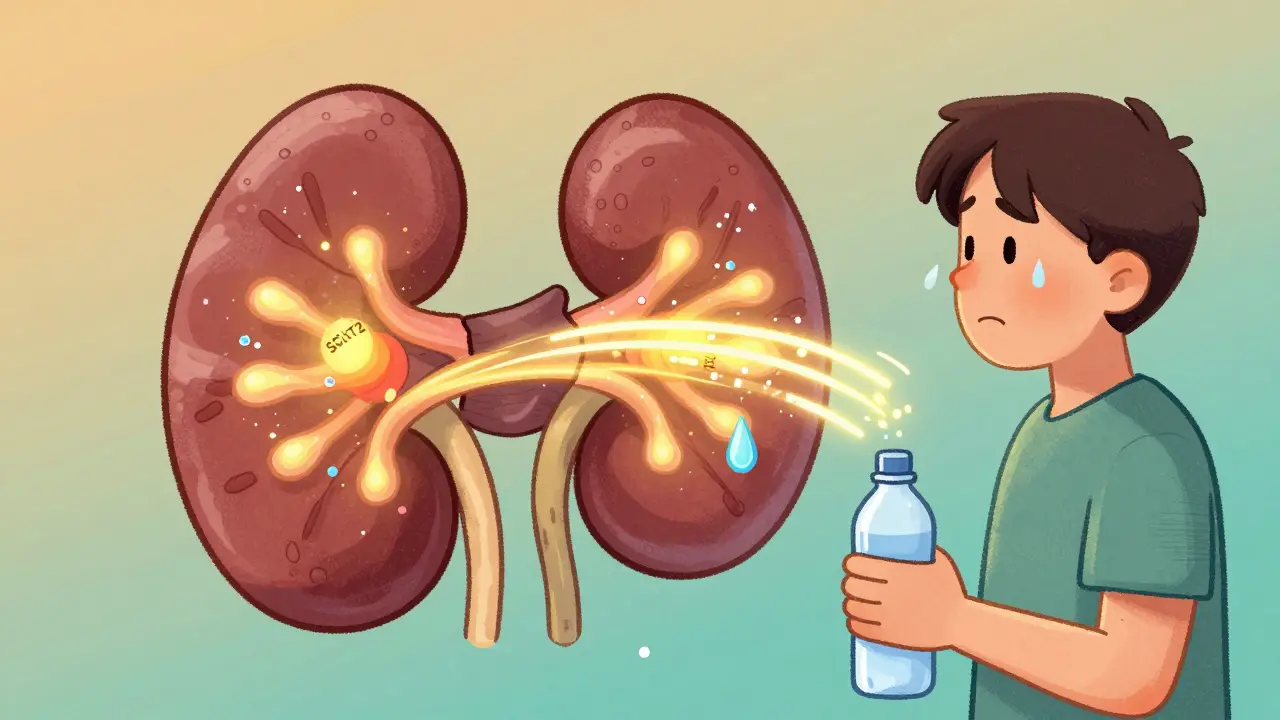
When you start taking an SGLT2 inhibitor for type 2 diabetes, you might not expect to feel dizzy or unusually thirsty. But these side effects are real-and they’re not random. They’re directly tied to how the drug works in your body. SGLT2 inhibitors like empagliflozin, dapagliflozin, and canagliflozin don’t just lower blood sugar. They act like gentle diuretics, pulling extra glucose, sodium, and water out through your urine. That’s why they help your heart and kidneys. But it’s also why some people feel lightheaded, dry-mouthed, or faint when standing up.
How SGLT2 Inhibitors Work (And Why They Cause Diuresis)
These drugs block a protein in your kidneys called SGLT2. Normally, this protein reabsorbs about 90% of the glucose your kidneys filter. When it’s blocked, glucose spills into your urine-along with sodium. Water follows both of them out, creating what’s called osmotic diuresis. You’re not just peeing out sugar; you’re losing 200-300 grams of glucose daily. That’s the equivalent of burning 700-1,000 extra calories a day.
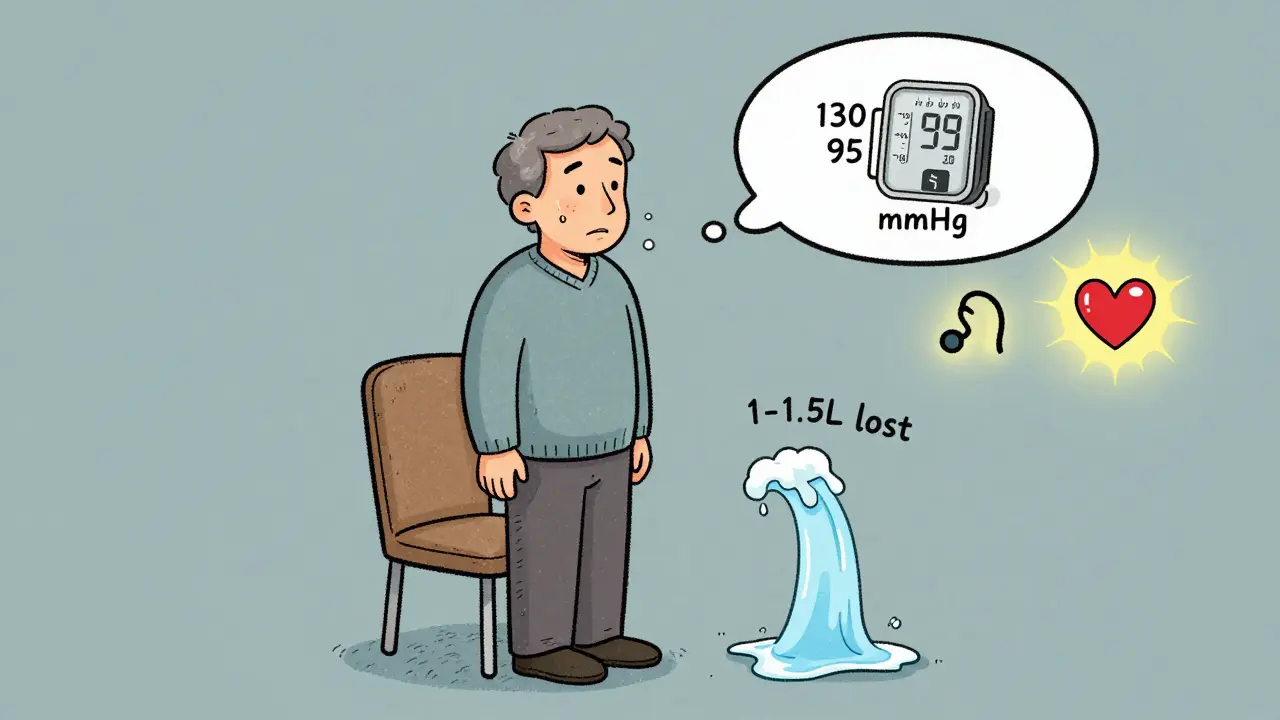
This process also reduces sodium reabsorption by 30-50 mmol per day. That’s similar to taking a low-dose diuretic. Your body loses 1-1.5 liters of fluid in the first week. That’s why people often lose 1.5-2.5 kg (3-5 lbs) right after starting the medication. It’s not fat-it’s water.
That fluid loss is what leads to the three main concerns: dehydration, dizziness, and blood pressure drops. The good news? These effects are predictable, manageable, and often temporary. The even better news? They’re tied to the same mechanism that protects your heart and kidneys.
Dehydration: More Common Than You Think
Dehydration isn’t just about feeling thirsty. In clinical trials, 1.3% to 2.8% of people taking SGLT2 inhibitors had volume depletion events-like dizziness, low blood pressure, or even hospitalization-compared to under 1% on placebo. That might sound low, but the risk jumps significantly in certain groups.
If you’re over 65, have kidney issues (eGFR under 60), or are already on a diuretic like furosemide, your risk doubles. Older adults often don’t feel thirsty even when they’re dehydrated. Add in hot weather, exercise, or an illness like the flu, and your fluid balance can tip fast.
Real-world reports back this up. On patient forums, people describe dry mouth, dark urine, and fatigue so severe they stopped the drug. One user on Reddit wrote: “Canagliflozin made me so dehydrated I had to stop after 3 weeks-constant thirst but dry mouth.” That’s not an outlier. Studies show patients on canagliflozin 300 mg had nearly triple the risk of volume depletion compared to placebo.
Doctors now recommend checking your hydration status before starting. If you’re already on blood pressure meds or have a history of low blood pressure, your provider might start you on a lower dose-or delay the drug until you’re better hydrated.
Dizziness: It’s Usually Orthostatic
Dizziness is one of the most common complaints. In trials, 3.5% to 5.8% of people reported it, compared to 2.5%-3.2% on placebo. But here’s the key: 63% of those cases were linked to orthostatic hypotension-that’s when your blood pressure drops sharply when you stand up.
You might feel lightheaded, see spots, or even nearly pass out when getting out of bed or standing from a chair. It usually happens in the first 2-4 weeks, right when your body is adjusting to the fluid loss. The risk is highest if your systolic blood pressure was already below 130 mmHg before starting the drug.
Age matters too. People over 75 are 2.4 times more likely to experience dizziness. Combine that with other blood pressure medications-especially ACE inhibitors or diuretics-and your odds go up even more. One study found patients on both a diuretic and an SGLT2 inhibitor had a 3.1 times higher risk of dizziness than those on neither.
But here’s the silver lining: most cases are mild. On Drugs.com, 62% of users said their dizziness was temporary and faded after a few weeks. Your doctor might ask you to check your blood pressure when lying down and then again after standing. If it drops more than 20 mmHg systolic, they’ll know it’s related.
Blood Pressure: A Hidden Benefit
While dizziness and dehydration are side effects, the blood pressure drop from SGLT2 inhibitors is actually a therapeutic benefit. On average, these drugs lower systolic blood pressure by 4-6 mmHg and diastolic by 1-2 mmHg within the first few weeks. That’s similar to what you’d see with a low-dose thiazide diuretic.
What’s surprising is that this happens even in people without diabetes. In the DAPA-HF trial, heart failure patients without diabetes still saw the same blood pressure reduction. That’s because the effect isn’t about sugar-it’s about sodium and fluid balance.
The drop comes from two places: less fluid in your blood vessels (lower preload) and relaxed arteries (lower afterload). SGLT2 inhibitors improve how your blood vessels respond to stress, reducing stiffness. Over 24 weeks, arterial stiffness can drop by 8-12%. That’s huge for long-term heart health.
For people with high blood pressure and diabetes, this means fewer strokes and heart attacks. That’s why major guidelines now recommend SGLT2 inhibitors as first-line therapy for heart failure-even if you don’t have diabetes. The blood pressure benefit is part of why they reduce cardiovascular death by up to 17%.
Who’s at Highest Risk?
Not everyone will have problems. But some people need extra caution:
- Age 65 or older
- Systolic blood pressure below 120 mmHg before starting
- Chronic kidney disease (eGFR under 60)
- Taking loop diuretics (furosemide, bumetanide)
- History of low blood pressure or fainting
- Dehydrated from illness, heat, or poor fluid intake
If you fit one or more of these, your doctor should start you on the lowest available dose-like empagliflozin 10 mg instead of 25 mg-and check in within 7-10 days. Many endocrinologists now schedule a follow-up visit just to measure orthostatic blood pressure and ask about thirst or dizziness.
How to Manage These Side Effects
You don’t have to quit the drug if you feel dizzy. Here’s what works:
- Drink more water. Add 500-1,000 mL (about 2-4 cups) extra daily, especially in heat or during exercise. Don’t wait until you’re thirsty.
- Stand up slowly. Give your body time to adjust. Sit on the edge of the bed for 30 seconds before standing.
- Check your weight weekly. A sudden drop of more than 2 kg (4.5 lbs) in a week could mean too much fluid loss.
- Don’t skip meals. Low blood sugar can worsen dizziness. Eat regular, balanced meals.
- Temporarily pause the drug during illness. If you have vomiting, diarrhea, or fever, hold the SGLT2 inhibitor until you’re back to normal. Talk to your doctor first.
- Ask about diuretic doses. If you’re on a water pill, your doctor might reduce it by 25-50% to avoid over-diuresis.
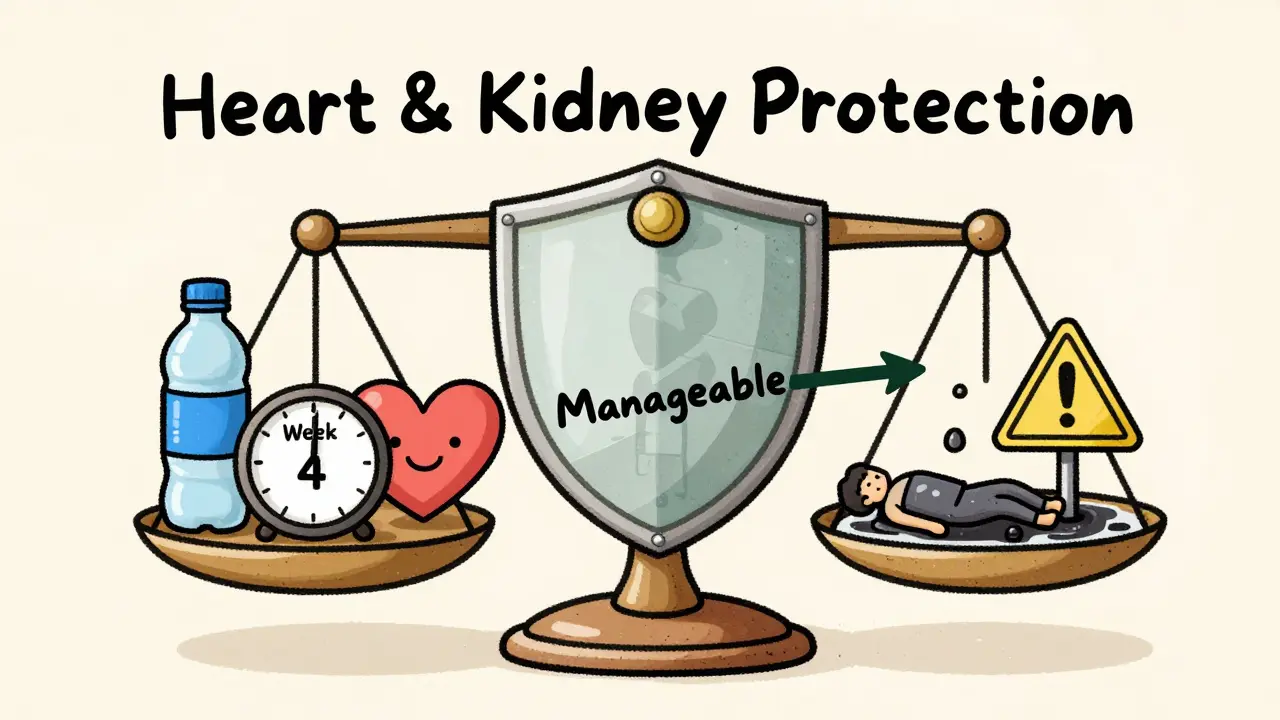
Most people adapt within a month. The dizziness fades. The thirst eases. The blood pressure stabilizes at a healthier level. And the heart and kidney protection continues.
When to Call Your Doctor
Not every dizzy spell is harmless. Call your provider if you experience:
- Fainting or near-fainting
- Confusion or extreme fatigue
- Dark, infrequent urine
- Heart palpitations or chest discomfort
- Systolic blood pressure below 90 mmHg
These could signal severe volume depletion. In rare cases, hospitalization is needed for IV fluids. But with early recognition, it’s almost always preventable.
The Bigger Picture: Why It’s Worth It
It’s easy to focus on the side effects. But remember: SGLT2 inhibitors don’t just help control blood sugar. They cut heart failure hospitalizations by 30%, reduce kidney disease progression by 40%, and lower the risk of dying from cardiovascular causes by up to 17%.
Dr. Bertram Pitt, lead investigator of the DAPA-HF trial, put it simply: “The 17% reduction in cardiovascular death translates to 6.1 lives saved per 100 patients treated for 18 months.” That’s not a small gain. For many, the trade-off of temporary dizziness is worth it.
As generic versions become available, more people will start these drugs. Primary care providers need to know how to manage them-not avoid them. The goal isn’t to eliminate side effects completely-it’s to anticipate them, monitor them, and turn them into a manageable part of treatment.
If you’re on an SGLT2 inhibitor and feel dizzy or dry-mouthed, don’t panic. Talk to your doctor. Adjust your water intake. Check your blood pressure. Most of the time, you’ll feel better in a few weeks-and your heart will thank you for it.
Can SGLT2 inhibitors cause severe dehydration?
Yes, but it’s uncommon and usually preventable. Clinical trials show volume depletion events occur in 1.3% to 2.8% of users, mostly in older adults, those with kidney disease, or those taking other diuretics. Symptoms include extreme thirst, dark urine, dizziness, and low blood pressure. Staying well-hydrated and avoiding the drug during illness reduces risk significantly.
Why do I feel dizzy after starting empagliflozin?
Dizziness is often caused by orthostatic hypotension-a sudden drop in blood pressure when standing. SGLT2 inhibitors remove fluid and sodium from your bloodstream, which lowers blood pressure. This effect peaks in the first 2-4 weeks. Standing too quickly can make you feel lightheaded. Slowing down when standing and increasing fluid intake usually helps within a few weeks.
Do SGLT2 inhibitors lower blood pressure too much?
They lower blood pressure by 4-6 mmHg systolic on average, which is beneficial for most people. But if your blood pressure was already low (below 120 mmHg systolic), you’re at higher risk of symptomatic hypotension. Your doctor should check your blood pressure before starting and again after one week. If systolic pressure drops below 90 mmHg or you feel faint, they may adjust your dose or other medications.
Should I stop taking my SGLT2 inhibitor if I get dizzy?
Not necessarily. Dizziness is often temporary and improves with time and hydration. Stopping the drug means losing its heart and kidney protection. Instead, talk to your doctor. They may recommend increasing fluid intake, slowing your movements when standing, or reducing your dose. In many cases, switching from a higher dose (like 25 mg empagliflozin) to 10 mg helps without losing benefits.
Are SGLT2 inhibitors safe for elderly patients?
Yes, but with caution. People over 65 are twice as likely to experience dehydration or dizziness. Doctors often start them on lower doses and monitor closely. Regular weight checks, orthostatic blood pressure measurements, and fluid intake advice are key. The cardiovascular benefits often outweigh the risks, especially in those with heart failure or chronic kidney disease.
Can I take SGLT2 inhibitors with other diuretics?
Yes, but it increases the risk of dehydration and low blood pressure. If you’re on a loop diuretic like furosemide, your doctor may reduce its dose by 25-50% when starting an SGLT2 inhibitor. Close monitoring of blood pressure, kidney function, and symptoms is essential. Never adjust your diuretic dose on your own.
Vu L
December 29, 2025 AT 10:46Sydney Lee
December 30, 2025 AT 04:29oluwarotimi w alaka
December 30, 2025 AT 21:03Debra Cagwin
December 30, 2025 AT 22:29Hakim Bachiri
December 31, 2025 AT 05:43Celia McTighe
January 2, 2026 AT 02:30Teresa Marzo Lostalé
January 2, 2026 AT 09:34Nicole Beasley
January 3, 2026 AT 04:51sonam gupta
January 4, 2026 AT 17:29Julius Hader
January 5, 2026 AT 06:43James Hilton
January 6, 2026 AT 04:01