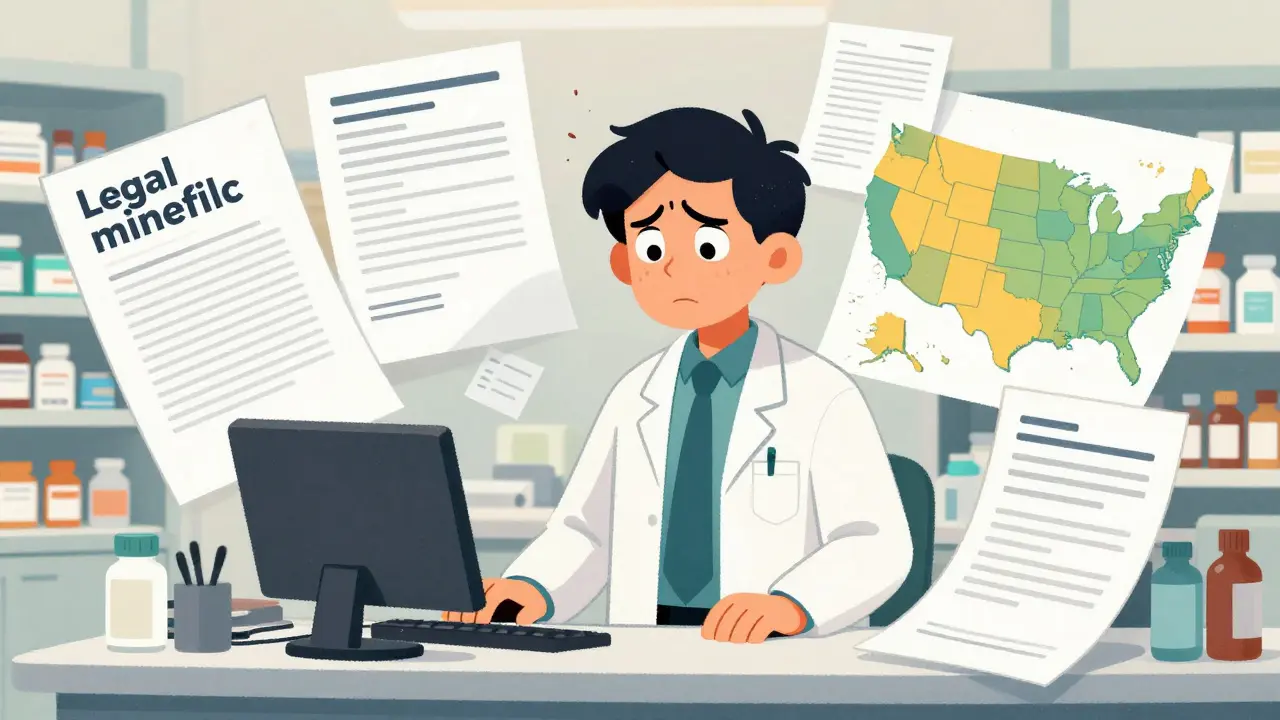
Giving a patient a generic version of a brand-name drug seems straightforward, but for a pharmacist, it's a legal minefield. One wrong move-like substituting a medication in a state where it's prohibited or ignoring a "dispense as written" order-can lead to serious disciplinary action from a state board. The goal is always to save the patient money without compromising their health, but the rules change the moment you cross a state line. To stay compliant, you have to balance federal bioequivalence standards with a patchwork of state laws that dictate when you can actually make the switch.
The Core of Generic Substitution
At the heart of this practice is the generic substitution laws is a regulatory framework that allows pharmacists to dispense a therapeutically equivalent generic drug in place of the brand-name version prescribed by a doctor. This system was largely shaped by the Hatch-Waxman Act a 1984 law designed to increase competition by lowering the barriers for generic drug entry into the market. Because of these rules, generics now make up over 90% of prescriptions dispensed in the U.S., saving the healthcare system hundreds of billions of dollars annually.
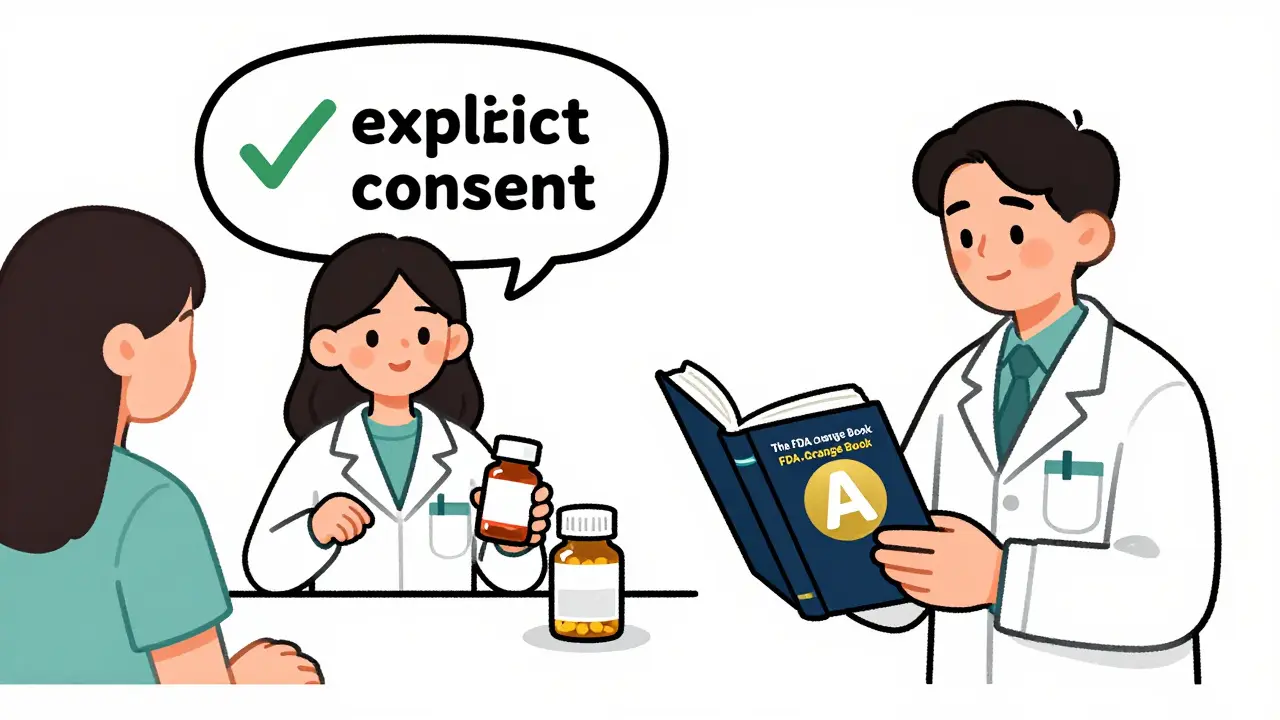
But how do you know if a generic is actually "equivalent"? Pharmacists rely on the FDA Orange Book the official FDA publication that lists approved drug products with therapeutic equivalence evaluations. For a drug to be substituted, it generally needs an "A-rating," meaning it has the same active ingredient, strength, dosage form, and route of administration, and has proven bioequivalence through the ANDA Abbreviated New Drug Application process, which allows generic manufacturers to rely on the brand-name drug's safety and efficacy data.
Navigating State Substitution Frameworks
Depending on where you practice, your legal authority to substitute varies wildly. You generally fall into one of two categories: mandatory or permissive.
- Mandatory Substitution: In about 24 jurisdictions, you are legally required to dispense a generic for multi-source drugs unless the prescriber explicitly forbids it. In states like New York or California, this leads to much higher generic utilization rates.
- Permissive Substitution: In 26 other jurisdictions, you have the professional discretion to substitute, but you aren't forced to do so.
Then there is the issue of patient consent. In "presumed consent" states, you can switch to a generic without a formal conversation. However, in 32 "explicit consent" states, you must get the patient's okay first. If you skip this step, you're not just risking a grumpy patient-you're risking a board complaint. Many negative patient reviews in the industry specifically cite a lack of notification as a primary reason for dissatisfaction.
| Feature | Mandatory States | Permissive States |
|---|---|---|
| Pharmacist Authority | Required to substitute (unless prohibited) | Optional/Discretionary |
| Typical Generic Rate | Higher (approx. 92.7%) | Lower (approx. 87.3%) |
| Primary Driver | Cost-saving mandates | Professional judgment |
High-Risk Medications and "Narrow Therapeutic Index" Drugs
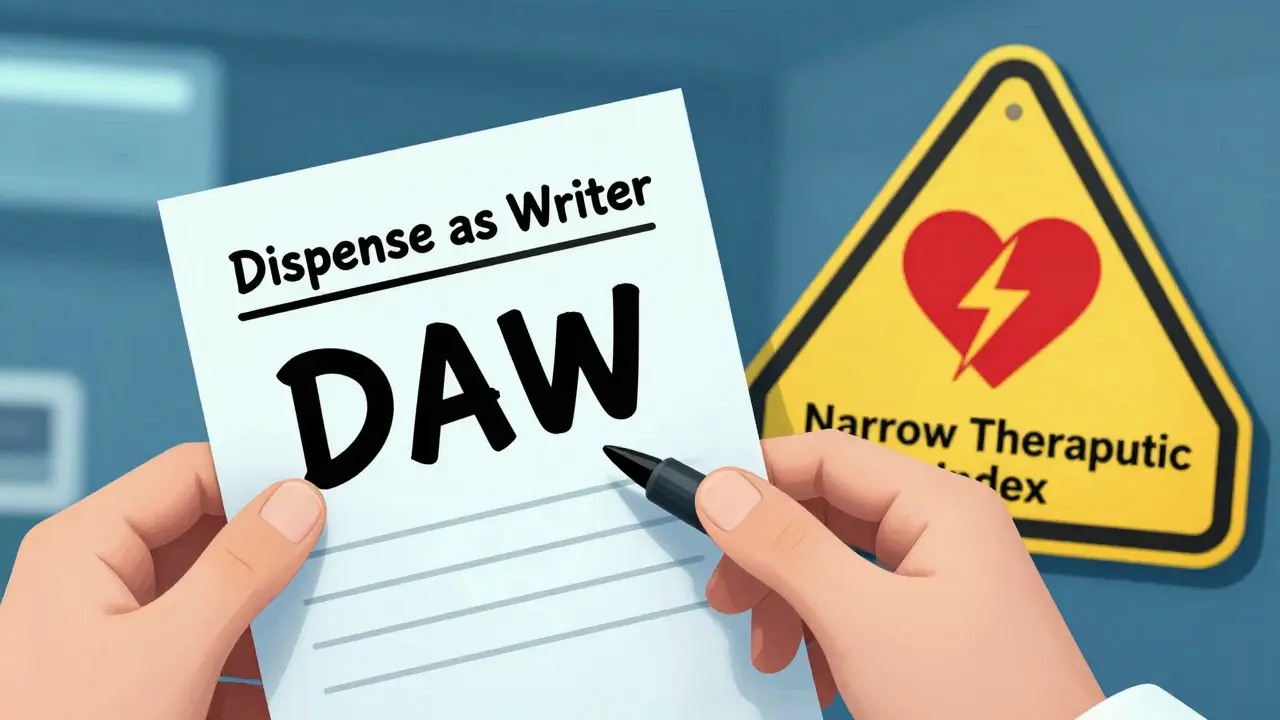
Not all drugs are created equal. For most medications, an A-rating in the Orange Book is the gold standard. However, for Narrow Therapeutic Index (NTI) drugs medications where small differences in dose or blood concentration may lead to serious therapeutic failures or adverse drug reactions, the stakes are much higher. These include certain anticoagulants, anticonvulsants, and cardiac glycosides.
Some states have specific "negative formularies" that prohibit substitution for these classes. For example, in Tennessee, pharmacists are prohibited from substituting antiepileptic drugs for patients with epilepsy, regardless of the FDA rating. In California, there are specific restrictions around thyroid medications like levothyroxine. If you treat every drug as a generic candidate, you might cause a clinical disaster. Research has shown that substituting certain cardiac glycosides can lead to a 12.7% increase in adverse events, even when the drugs are technically bioequivalent.
Handling "Dispense As Written" (DAW) Orders
When a doctor writes "Dispense As Written" (DAW) or "Brand Chemically Necessary," they are exercising their right to prevent substitution. Your legal obligation is to respect this, but the requirements for the doctor vary. In Florida, the law is strict: prescribers must often write "MEDICALLY NECESSARY" in their own handwriting or perform a specific "overt act" during electronic transmission to block the generic switch.
If you see a DAW order, your role shifts from a cost-saver to a strict executor of the prescription. However, the American Pharmacists Association notes that you still have a professional obligation to use independent judgment. If you suspect a DAW order is based on a misunderstanding or could jeopardize patient safety, you should consult the prescriber. But remember, the legal burden of the "medically necessary" designation usually rests with the doctor, while the burden of following that designation rests with you.
Practical Compliance and Avoiding Board Actions
Most disciplinary actions by state boards aren't caused by a lack of pharmaceutical knowledge, but by poor documentation. According to NASPA data, documentation errors account for 68% of substitution-related violations. If you substitute a drug and the patient has a bad reaction, your only defense is a clear record showing that the drug was A-rated and that proper consent was obtained.
To keep your license safe, follow these rules of thumb:
- Check the Orange Book Monthly: Bioequivalence ratings can change. Don't rely on a list from six months ago.
- Verify State Specifics: If you are working in a chain across multiple states, ensure your software is configured for the specific consent laws of that zip code.
- Document the Consent: In explicit consent states, a note in the patient's profile stating "Patient notified and agreed to generic switch" is your best insurance policy.
- Watch for NTI Warnings: Set up alerts in your system for Narrow Therapeutic Index drugs to trigger a manual review before dispensing.
The Future of Substitution: Biosimilars
The landscape is shifting toward Biosimilars biologic medications that are highly similar to a reference biologic product, though not identical due to the complexity of biological proteins. Unlike small-molecule generics, biosimilars are much more complex. Between 2017 and 2022, 32 states introduced new laws specifically for biosimilar substitution. These aren't just "generics 2.0"; they often require different frameworks for interchangeability. As these drugs become more common, you'll need to distinguish between a biosimilar that is "similar" and one that is officially "interchangeable" according to the FDA.
Can I substitute a drug if it has a B-rating in the Orange Book?
Generally, no. Most state laws only allow the automatic substitution of "A-rated" products, which are considered therapeutically equivalent. B-rated products are pharmaceutically equivalent but may not have proven bioequivalence, meaning they require a prescriber's explicit permission to be used as a substitute.
What happens if I substitute a drug in a "dispense as written" scenario?
This is a serious compliance violation. If a prescriber has indicated that a brand is medically necessary, substituting it without a direct conversation and agreement from the doctor can lead to state board disciplinary action and potential legal liability if the patient suffers a therapeutic failure.
Are there any drugs that can NEVER be substituted?
While most drugs have generics, some state laws create absolute prohibitions for specific categories. For example, Tennessee prohibits substitution for certain antiepileptic drugs used in epilepsy treatment, and some states have similar restrictions for specific high-risk cardiac or thyroid medications.
Do I need to tell the patient every single time I substitute?
It depends on your state. In "explicit consent" states, you must obtain affirmative permission. In "presumed consent" states, it isn't legally required for every fill, but it is a professional best practice to inform patients, especially when the drug appearance (color or shape) changes significantly.
How do biosimilars differ from generics in terms of legal substitution?
Generics are chemically identical to the brand. Biosimilars are highly similar but not identical. Because of this, the legal standard for "interchangeability" is stricter. You must check if the specific biosimilar has been designated as interchangeable by the FDA before substituting without a prescriber's order.
Trey Kauffman
April 11, 2026 AT 14:59Ah, the wonderful tapestry of American bureaucracy where a pill's legality depends entirely on which side of an imaginary state line you're standing on. Truly a pinnacle of logical governance.
Simon Jenkins
April 11, 2026 AT 21:01The sheer audacity of suggesting that a mere 'note' in a patient profile is sufficient insurance for a professional license! It is an absolute tragedy that we reduce the sacred art of pharmacy to a checklist of documentation. The stakes are astronomical, yet we treat it like filing a tax return. I find it utterly appalling that anyone could navigate this minefield without an exhaustive, daily review of the Orange Book, which is essentially the bible for those of us who actually care about clinical precision. The incompetence in some of these chain pharmacies is nothing short of a Shakespearean drama, where the pharmacist is the tragic hero fighting against a corporate machine that only values speed over safety!
Chad Miller
April 13, 2026 AT 13:30honestly just sounds like more red tape to hide the fact that the system is broken and pharmacists just do whatever they want anyway lol
Robin Walton
April 14, 2026 AT 12:06It really is a lot of pressure on the pharmacists to get it right every single time. I can only imagine how stressful it is to worry about a board complaint just because of a misunderstanding with a patient.
Julie Bella
April 15, 2026 AT 05:07Omg this is so scary!! 😱 I once had a pharmacist change my meds and didnt even tell me until I got home and saw the bottle was diferent! That is literally stealing my right to know what goes in my body!! We need way more strict laws to protect us from these mistakes!! 😡
emmanuel okafor
April 16, 2026 AT 05:49laws are just ways to keep peace in the city so we should just follow them and be kind to the people helping us get well
Rakesh Tiwari
April 16, 2026 AT 22:24Oh yes, let's trust the 'professional discretion' of a pharmacist who is being paid by a corporate giant to push whichever pill has the highest rebate. Purely altruistic, I'm sure.
Will Gray
April 17, 2026 AT 03:09Typical government overreach. First they tell you what you can dispense, then they create these 'Orange Books' to control the market. It's all a scheme to funnel money into the hands of a few select pharmaceutical lobbyists while the actual American pharmacist is treated like a glorified vending machine operator. Wake up people, the biosimilar shift is just the next phase of total control over our biological data.
Franklin Anthony
April 18, 2026 AT 10:11the whole thing is a setup really but i agree that following the rules keeps the heat off you while the big guys play their games in the shadows
Victor Parker
April 20, 2026 AT 00:15Big Pharma just wants us all on the same cheap stuff so they can track us better 🙄 keep your eyes open folks the biosimilars are the real trap!
Ryan Hogg
April 21, 2026 AT 06:22I just can't believe how much anxiety this causes. I spent three hours yesterday worrying if my pharmacy did this right and now I can't even sleep because the thought of a 'clinical disaster' is just haunting me.