
Ever wonder why your pharmacist tells you to take one pill in the morning and another four hours later? It isn't just about remembering your doses. For many people, the clock is the difference between a medication that works and one that does absolutely nothing-or worse, causes a dangerous reaction. When two drugs are taken at the same time, they can clash in your stomach or bloodstream, leading to what experts call drug interactions. The good news is that for a huge chunk of these problems, the solution isn't to stop the medication, but simply to change when you take it.
About 20-30% of documented drug interactions are "time-dependent." This means the conflict happens because the drugs are meeting at the wrong time. By spacing them out, you give your body the chance to absorb one drug before the next one arrives to interfere. Whether you're managing a complex regimen or just starting a new prescription, understanding these windows of time can prevent hospital visits and make your treatment far more effective.
| Medication Type | What to Separate It From | Recommended Gap | Why it Matters |
|---|---|---|---|
| Levothyroxine (Thyroid) | Iron Supplements | 4 Hours | Iron blocks thyroid hormone absorption. |
| Ciprofloxacin (Antibiotic) | Antacids (Al/Mg) | 2 Hours | Antacids can reduce absorption by up to 90%. |
| Alendronate (Bisphosphonate) | Food and Other Drugs | 30 Minutes | Needs a clear path to the small intestine. |
| Tetracycline Antibiotics | Calcium Products | 2-3 Hours | Calcium binds to the drug, stopping it from working. |
How Time-Dependent Interactions Actually Work
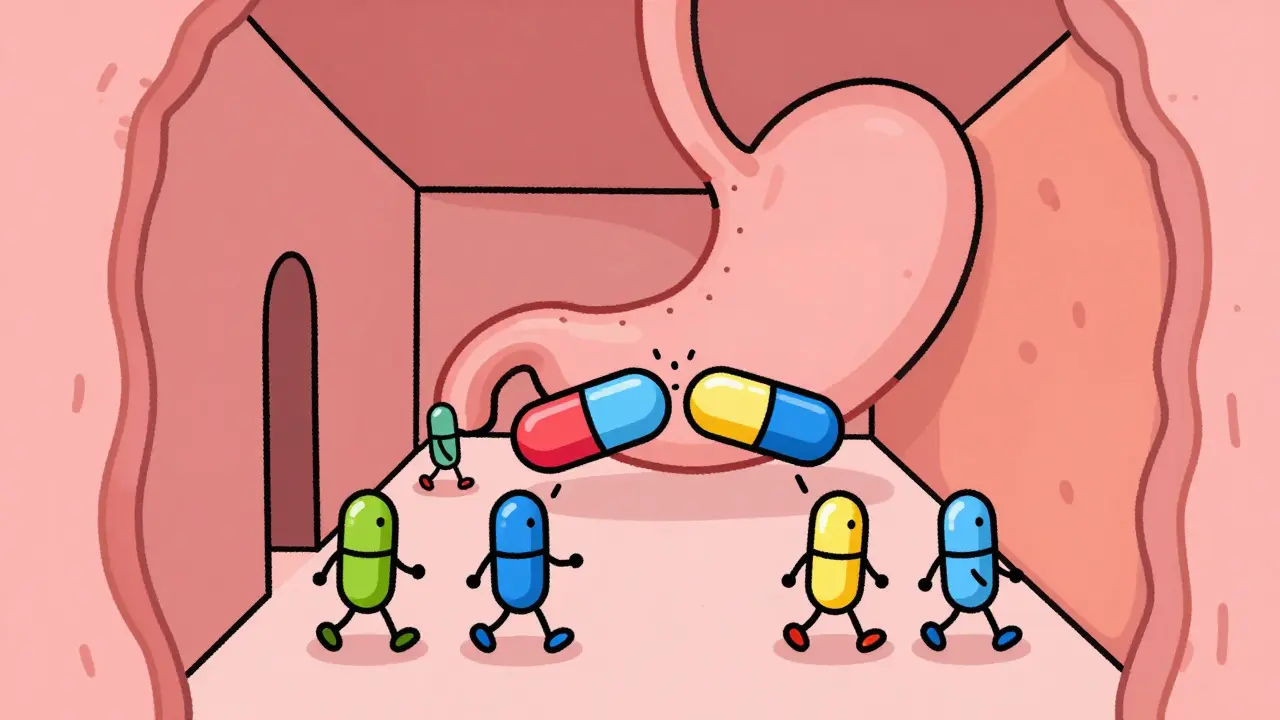
To understand why timing matters, you have to look at how your body processes medicine. Most time-dependent interactions happen during the "absorption phase." Imagine your stomach and intestines as a narrow hallway. If two drugs enter that hallway at once, they might bump into each other and stick together. When this happens, the body can't absorb them, and the medication simply passes through you without ever entering your bloodstream.
For instance, Antacids-those common over-the-counter tablets for heartburn-often contain aluminum or magnesium. These minerals are like magnets for certain antibiotics. If you take a fluoroquinolone antibiotic like ciprofloxacin at the same time as an antacid, the minerals bind to the antibiotic, creating a compound too large for your body to absorb. By waiting two hours, you allow the antibiotic to move past the stomach and into the small intestine before the antacid arrives.
It's also important to know that not all interactions can be fixed with a timer. There are "metabolic interactions" involving the Cytochrome P450 enzyme system in your liver. If one drug blocks the enzyme that breaks down another drug, they will interact regardless of whether you take them five hours apart or five days apart. For example, the clash between warfarin and metronidazole happens in the liver, not the stomach, so spacing them out won't help. In those cases, your doctor has to change the dose or swap the drug entirely.
The Risks of Poor Timing
When medication timing is ignored, the results range from "it's not working" to "I feel terrible." One of the most common issues is therapeutic failure. If your thyroid medication, Levothyroxine, is taken with iron supplements, you might not absorb enough of the hormone. You'll feel the symptoms of hypothyroidism-fatigue, weight gain, and coldness-even though you're taking your pills every day. You aren't failing the treatment; the timing is failing you.
In more severe cases, timing can actually lead to toxicity. The FDA has flagged specific high-risk combinations, such as clarithromycin and colchicine. Taking these together without a proper two-hour gap can significantly increase the risk of colchicine toxicity, which can be life-threatening. When the timing is right, the risk of this toxicity can drop by as much as 60%.
For elderly patients who take five or more medications-a situation called polypharmacy-the risks multiply. Research shows these patients experience time-dependent interactions at three times the rate of younger people. When you're juggling ten different bottles, a simple mistake in timing can lead to a cascade of side effects that look like a new medical condition but are actually just a scheduling conflict.
Practical Steps to Manage Your Schedule
If you're feeling overwhelmed by a complex dosing schedule, you aren't alone. Many people struggle with "spacing fatigue." The key is to move away from memory and toward a visual or digital system. Here is a straightforward way to get your timing under control:
- Do a Medication Reconciliation: List everything you take, including vitamins and herbal supplements. Many people forget that a "natural" calcium supplement can interfere with a prescription antibiotic.
- Ask for the "Window": Don't just ask when to take a pill. Ask your pharmacist, "Does this need to be separated from my other meds? If so, by how many hours?"
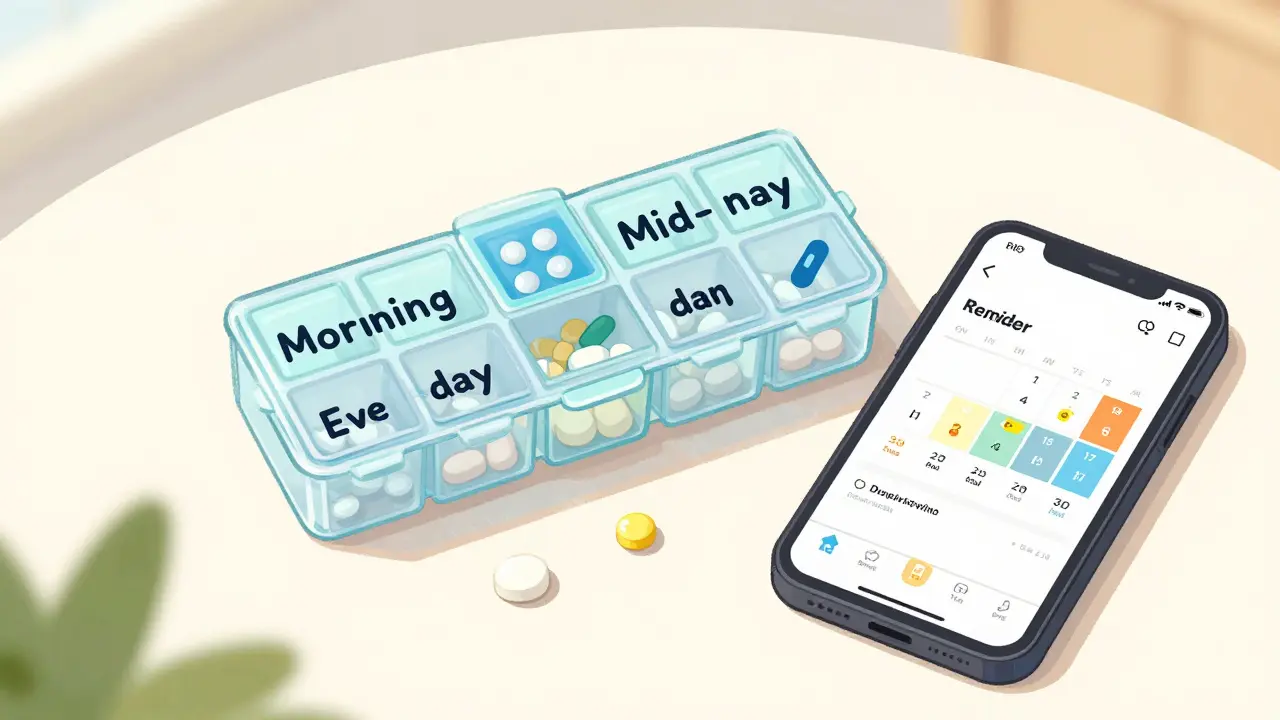
- Create a Visual Map: Instead of a list, use a timeline. Mark your wake-up time and bedtime, then plot your medications. If two drugs overlap and need spacing, slide one to a different slot.
- Use Technology: Apps like Medisafe can provide customized alerts that remind you not just that it's time for a pill, but that you've waited the required amount of time since your last dose.
- Invest in Multi-Compartment Organizers: Using a pill box with "Morning," "Mid-day," and "Evening" slots can reduce timing errors by over 40% because it forces a natural gap between doses.
When Timing Isn't the Answer
It is a common misconception that you can "time your way out" of any drug interaction. While spacing works for absorption issues, it does nothing for pharmacodynamic interactions. This is when two drugs have similar effects on the body that add up to a dangerous level.
A classic example is the combination of warfarin (a blood thinner) and NSAIDs (like ibuprofen). Both increase your risk of bleeding. Because this is about how the drugs affect your blood clotting and stomach lining, taking them four hours apart won't stop the combined effect. In these scenarios, the only solution is a dose adjustment or choosing a different pain reliever, like acetaminophen, which doesn't have the same bleeding risk.
Always remember: if you feel a new side effect after starting a second medication, don't just assume it's "part of the process." It could be a timing issue. A quick call to your pharmacist can often solve the problem without needing to stop a medication that is helping you stay healthy.
Can I take my vitamins and medications at the same time?
Not always. Many vitamins and minerals, especially calcium, iron, and magnesium, act as "binders." They can attach to medications like certain antibiotics or thyroid hormones in your stomach, preventing them from being absorbed. Always check if your supplements require a 2- to 4-hour gap from your prescriptions.
What happens if I forget the gap and take two interacting drugs together?
In most cases, the primary result is that one or both medications won't work as well as they should. For example, an antibiotic might not clear your infection because it wasn't absorbed. However, in rare cases, it can lead to toxicity. If you make a mistake, contact your pharmacist to see if you need to take an extra dose or just wait until the next scheduled time.
Do I need to space out medications if I take them with food?
Yes, and in some cases, food itself is the interaction. Some drugs, like bisphosphonates for osteoporosis, must be taken on an empty stomach at least 30 minutes before food or other medications to ensure they get absorbed properly. Always follow the "empty stomach" or "with food" instructions strictly.
Why doesn't my doctor just give me a schedule?
Doctors focus on what medication you need, but pharmacists are the experts on how those medications interact. Often, the specific timing requirements are found in the drug's detailed labeling rather than the general prescription. It is always a good idea to ask your pharmacist to help you build a custom timing schedule.
How do I know if a drug interaction is "time-dependent" or "metabolic"?
You generally can't tell just by looking at the pill. Time-dependent interactions usually involve absorption in the gut, while metabolic interactions involve the liver (like the CYP450 enzymes). Your pharmacist or a drug interaction database (like Lexicomp) can tell you which is which and whether spacing the doses will solve the problem.
Next Steps for Your Medication Safety
If you are currently taking more than three medications, the best next step is to request a "brown bag review." Put all your current prescriptions, over-the-counter meds, and supplements in a bag and take them to your pharmacist. Ask them specifically to look for time-dependent interactions.
For those caring for elderly parents, keep a written log of when medications are actually administered. If you notice a dip in the effectiveness of a drug, check if a new supplement or a change in the timing of another pill coincided with the change. Small adjustments in the clock can lead to big improvements in health.
Sue Stoller
April 25, 2026 AT 02:05This is such a wonderful reminder! 🌟 I honestly had no idea that my morning vitamins could be messing with my prescriptions. It's so empowering to take control of our health like this! 💊✨ Let's all try to be more mindful of our timing and support each other in staying healthy! You've got this everyone! rainbows and sunshine! 🌈☀️
Ajinkya Joshi
April 26, 2026 AT 04:07Oh wow, thank you so much for explaining that doctors aren't actually the ones who know how drugs work. Truly groundbreaking stuff here. I'm sure the medical school tuition was well spent on learning how to just tell people to go talk to the pharmacist instead. 🙄
vimal purwal
April 26, 2026 AT 22:49I must strongly agree that the concept of the brown bag review is an absolutely indispensable tool for any patient, especially those within our aging community who often struggle with the overwhelming burden of polypharmacy, and it is imperative that we insist on this level of professional oversight to ensure that the efficacy of our treatments is not compromised by a simple lack of scheduling coordination, which is a failure of the system rather than the individual patient, and we should all proactively demand this level of care from our healthcare providers to prevent avoidable complications that can lead to unnecessary hospitalizations.
Chidi Prosper
April 27, 2026 AT 21:56The point about the CYP450 enzymes is a critical distinction. Many people think spacing is a cure-all, but the metabolic path is a completely different beast and needs a professional dose adjustment immediately.
Emma Cozad
April 28, 2026 AT 18:23typicaly american healthcare failur where you gotta read a blog to know how to take your meds because the docs are too busy overchargung for a 5 min visit. totaly pathetic system
Olayinka Ibukunoluwa Mercy
April 30, 2026 AT 14:45I truly believe that using a visual map is the best way to help our elderly parents!!! ❤️ It brings such peace of mind to know they are safe... and not confused by all the bottles!!! 🌸 We must be patient and guiding with them during this process!!! 🙏✨
Nicole Antunes
May 2, 2026 AT 08:35It is quite reassuring to know that simple adjustments can prevent toxicity. :) I appreciate the detailed breakdown of the differences between absorption and metabolic interactions. It allows us to approach our health with a bit more clarity and calm. 🌿