Obesity Dosing Weight Metric Calculator
Patient Profile
BMI:
- TBW: Best for lipophilic drugs (e.g., diazepam).
- IBW: Often used for hydrophilic drugs with narrow therapeutic index (e.g., colistin) to prevent toxicity.
- AdjBW: Common compromise for many beta-lactams and vancomycin in obesity.
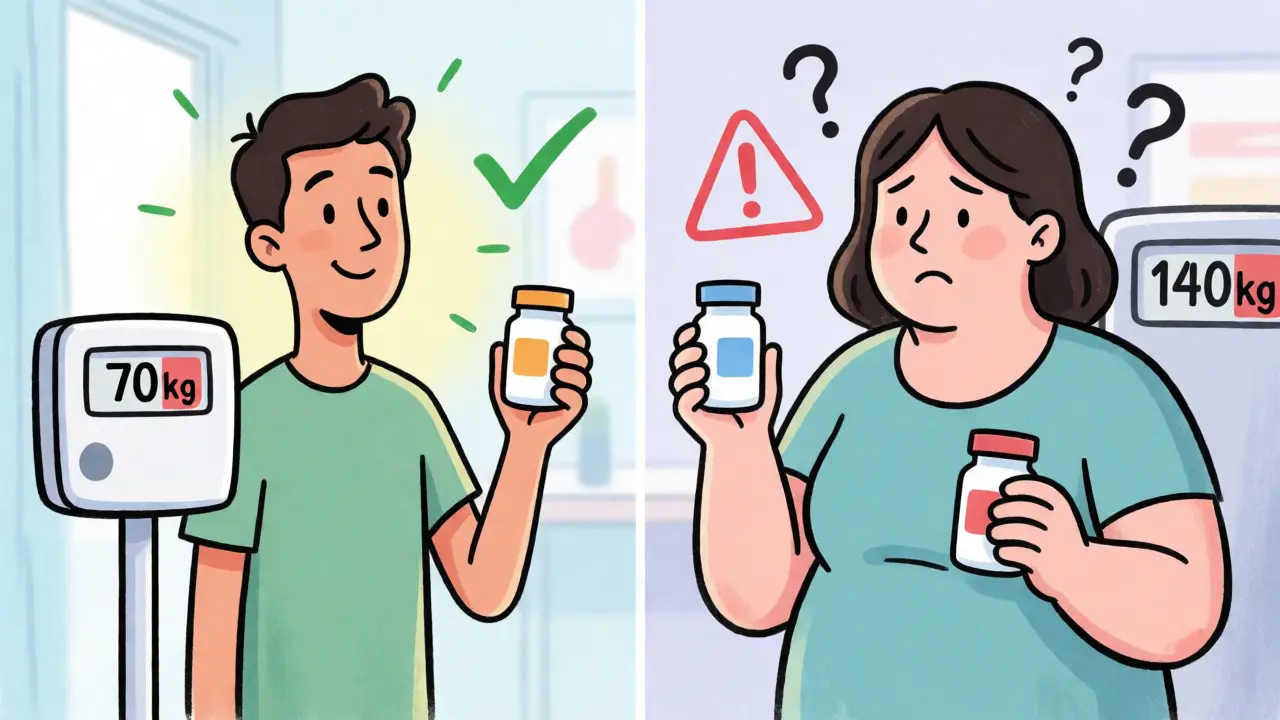
Imagine you’re a pharmacist or a prescriber. You have two patients with the same infection, same age, same kidney function. One weighs 70 kg, the other 140 kg. You follow the standard package insert, which often says "1 gram every 8 hours" for everyone. The lighter patient gets better. The heavier patient doesn’t. In fact, they might get worse, or develop resistance. This isn’t bad luck; it’s physics and biology working against a one-size-fits-all approach. Obesity changes how drugs move through the body, and if you ignore that, you’re guessing.
The core problem is simple but often overlooked: obesity fundamentally alters pharmacokinetics (what the body does to the drug) and pharmacodynamics (what the drug does to the body). Yet, most clinical trials historically excluded obese participants, leaving us with sparse data. Today, with nearly 40% of adults in the U.S. classified as obese, this gap is dangerous. We need to stop treating body weight as just a number on a scale and start treating it as a complex variable that dictates dose, frequency, and even drug choice.
Why Body Weight Isn’t Just Body Weight
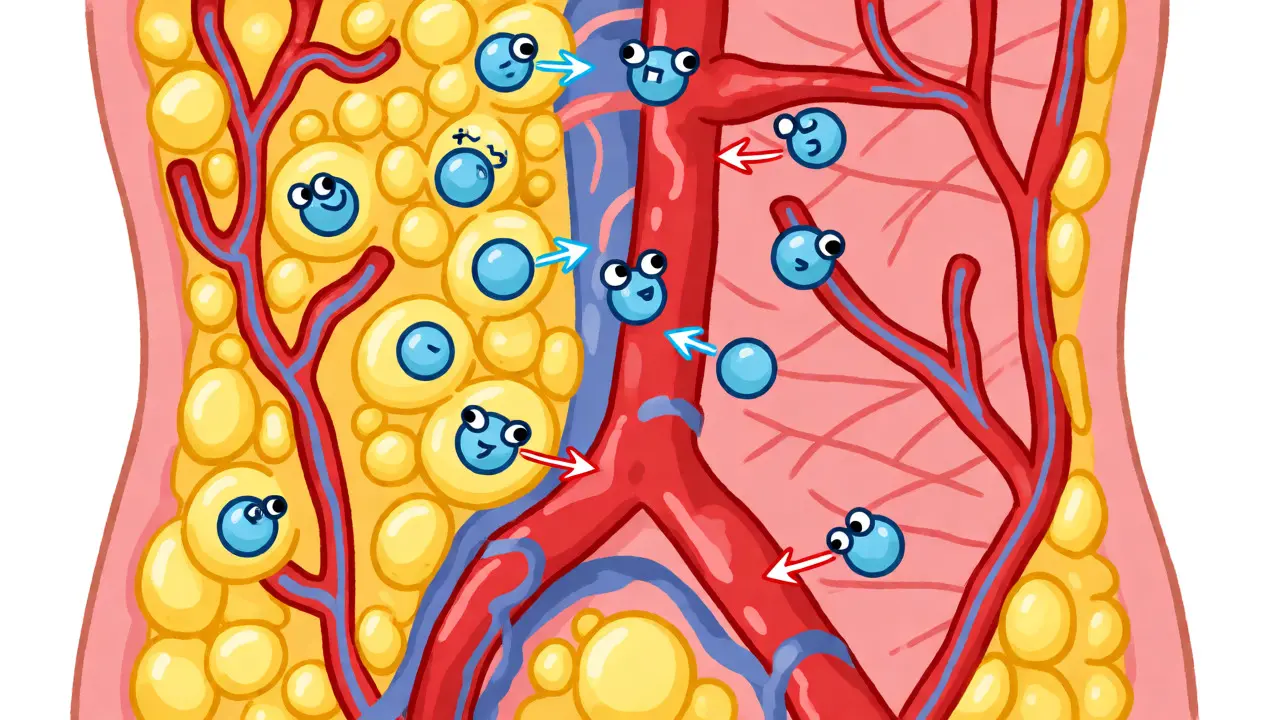
To understand why dosing fails, you have to look at what happens inside an obese body. It’s not just about having more fat. Adipose tissue is metabolically active. It produces inflammatory markers, changes blood flow, and alters protein binding. But the biggest factor is distribution.
Drugs are either hydrophilic (water-loving) or lipophilic (fat-loving). This distinction is critical.
- Lipophilic drugs (like diazepam or some anesthetics) dissolve in fat. In an obese person, there’s a massive reservoir of fat to soak up these drugs. This increases the Volume of Distribution ($V_d$). For example, diazepam’s $V_d$ can jump from 1.1 L/kg in normal-weight individuals to 2.8 L/kg in those with Class III obesity. If you give a standard dose, much of it gets trapped in fat, lowering the concentration in the blood where it needs to work.
- Hydrophilic drugs (like many antibiotics, e.g., cefazolin) stay mostly in water-filled spaces (blood, muscle). They don’t distribute into fat well. However, obese patients often have increased blood volume and cardiac output. This means the kidneys filter these drugs faster. Clearance can increase by 28-42%. So, a standard dose might be cleared too quickly, leading to subtherapeutic levels before the next dose is due.
This creates a paradox: for some drugs, you need more because it’s hiding in fat; for others, you need more because it’s being flushed out too fast. Using Total Body Weight (TBW) blindly usually overestimates the dose for hydrophilic drugs (risking toxicity) and underestimates it for lipophilic ones (risking failure).
The Weight Metrics That Actually Matter
If TBW is problematic, what should you use? There is no single magic formula, but there are three main metrics used in modern practice. Knowing when to use which is half the battle.
| Metric | Formula/Definition | Best Used For | Risk if Misused |
|---|---|---|---|
| Total Body Weight (TBW) | Actual measured weight on scale. | Lipophilic drugs; drugs with linear kinetics across wide weight ranges. | Overdosing hydrophilic drugs (toxicity); Underdosing lipophilic drugs (failure). |
| Ideal Body Weight (IBW) | Men: 50kg + 2.3kg per inch over 5ft. Women: 45.5kg + 2.3kg per inch over 5ft. |
Hydrophilic drugs with narrow therapeutic index (e.g., colistin, aminoglycosides). | Underdosing if the drug distributes beyond lean mass; ignoring increased clearance. |
| Adjusted Body Weight (AdjBW) | IBW + 0.4(TBW - IBW) | Many beta-lactams (e.g., ceftriaxone), vancomycin, enoxaparin. | Still may underestimate needs for extreme obesity (BMI >50). |
The Adjusted Body Weight (AdjBW) formula is a compromise. It assumes that only 40% of excess weight contributes to drug distribution/clearance. This works surprisingly well for many antibiotics. For instance, UCSF protocols recommend using AdjBW for ceftriaxone in patients with BMI >30. Studies show that sticking to the standard 1g dose based on TBW leads to subtherapeutic troughs in 63% of obese patients. Switching to a minimum 2g daily dose (often calculated via AdjBW logic) drops surgical site infections significantly.
Antimicrobials: The High-Stakes Arena
Antibiotics are where obesity dosing errors hurt the most. Treatment failure here isn’t just inconvenient; it breeds resistance and prolongs hospital stays. The Infectious Diseases Society of America (IDSA) and recent studies highlight specific pitfalls.
Take Vancomycin. It’s hydrophilic. Obese patients clear it faster. If you dose by TBW, you might hit toxic levels initially but fail to maintain them later. If you dose by IBW, you’ll likely underdose. The sweet spot is usually AdjBW, combined with Therapeutic Drug Monitoring (TDM). TDM involves drawing blood levels to check if the drug is actually in the right range. A Stanford study found that implementing strict TDM protocols reduced supratherapeutic levels in obese patients from 39% to 12%.
Then there’s Colistin, a last-resort antibiotic for resistant bacteria. It’s tricky because it’s nephrotoxic (damages kidneys). Obese patients have higher rates of colistin-induced kidney injury (44% vs. 29% in normal-weight patients). Here, dosing by IBW is often recommended to cap the maximum daily dose (e.g., 360mg colistin base activity) to protect the kidneys, even if it risks slightly lower efficacy. It’s a trade-off between killing the bug and saving the organ.
Beta-Lactams like Ceftriaxone and Piperacillin-Tazobactam also require attention. For severe infections, standard doses often fail in BMI >30 patients. Current guidelines suggest doubling the dose or shortening the interval (e.g., giving it every 6 hours instead of every 8) to keep concentrations above the Minimum Inhibitory Concentration (MIC) for longer periods.
Non-Antimicrobial Drugs: Don’t Forget These
It’s not just antibiotics. Common chronic medications behave differently in obesity too.
Enoxaparin (Lovenox) is a blood thinner used to prevent clots after surgery. For years, people debated whether to use fixed doses or weight-based. The evidence now leans toward weight-based dosing for high-risk patients. For BMI 40-49.9, 40mg twice daily is often preferred over the standard 40mg once daily. For BMI ≥50, 60mg twice daily may be needed. A JAMA Surgery trial showed this approach reduced venous thromboembolism (VTE) by 37% compared to lower doses. However, without anti-Xa monitoring (a blood test for heparin effect), you’re flying blind. Some centers monitor levels in extreme obesity to ensure safety.
Apixaban (Eliquis) presents a different challenge. It’s a direct oral anticoagulant. The label has criteria for dose reduction (if you meet 2 of 3: age ≥80, weight ≤60kg, creatinine ≥1.5). But what about the obese patient who weighs 120kg? Does the standard 5mg dose suffice? Medicare claims data suggests a potential risk zone around 85kg. Patients just above this threshold had a 47% higher bleeding risk than those just below, hinting that dichotomized dosing rules (all-or-nothing thresholds) can create discontinuities in drug exposure. While current guidelines don’t mandate adjustment for obesity alone, clinicians must watch for signs of over-anticoagulation in super-obese patients.
Voriconazole, an antifungal, is another headache. It’s lipophilic but also heavily metabolized by the liver. Obese patients can achieve unpredictable levels. Dosing by TBW led to supratherapeutic levels in 39% of patients in one study, increasing side effects. Using AdjBW dropped that rate to 12%. This shows that even for non-antibiotic drugs, the "adjusted" approach often yields safer profiles.

The Role of Therapeutic Drug Monitoring (TDM)
If calculations are hard, why not just measure the result? That’s the promise of TDM. Instead of guessing the dose, you give a starting dose, wait, draw blood, and adjust.
TDM is essential for drugs with a narrow therapeutic index-where the difference between a helpful dose and a harmful one is small. Vancomycin, aminoglycosides, voriconazole, and phenytoin are prime candidates. The IDSA strongly recommends TDM for these in obese patients.
However, TDM isn’t free. It requires lab resources, trained staff, and time. A survey of pharmacists found that while 87% agreed TDM is essential for obesity dosing, 63% cited lack of institutional support as a barrier. Hospitals that implement automated alerts in their Electronic Health Records (EHR) see better outcomes. For example, Mayo Clinic’s EHR alert system for obesity dosing cut subtherapeutic vancomycin levels from 31% to 9% and shortened hospital stays by 2.3 days for MRSA patients.
Implementation Challenges and Future Directions
So, why isn’t everyone doing this? Complexity. A 2021 ASHP survey reported that 68% of hospital pharmacists experienced dosing errors in obese patients, compared to 29% in normal-weight patients. Residents often struggle with which weight metric to use. A University of Michigan study found 43% of internal medicine residents were confused about when to use TBW vs. IBW, leading to medication errors.
The solution lies in standardized protocols and education. Tools like clincalc.com provide updated reference tables for over 140 drugs, grading the evidence for each recommendation. Software like DoseMe uses Bayesian modeling to predict optimal doses based on patient-specific factors, moving us closer to precision medicine.
Regulatory bodies are catching up. The FDA’s 2021 guidance now requires obesity subgroup analysis in Phase 3 trials. The NIH is funding long-term studies on obesity pharmacokinetics. The future points toward integrating body composition imaging (like DXA scans) with pharmacogenomics to tailor doses not just by weight, but by metabolic profile.
For now, the rule of thumb is: don’t assume. Check the literature for the specific drug. Use AdjBW for many hydrophilic agents. Consider higher doses or shorter intervals for beta-lactams. And whenever possible, verify with TDM. Your patient’s health depends on getting the concentration right, not just the prescription filled.
Should I always use Adjusted Body Weight for obese patients?
No, not always. Adjusted Body Weight (AdjBW) is useful for many hydrophilic drugs like certain antibiotics and anticoagulants, but it’s not universal. Lipophilic drugs may require dosing based on Total Body Weight (TBW) or Lean Body Weight (LBW), depending on their volume of distribution. Always consult specific drug guidelines or a clinical pharmacist.
What is the biggest risk of using standard dosing in obese patients?
The primary risks are treatment failure due to subtherapeutic concentrations (especially for antibiotics) or toxicity due to supratherapeutic levels (for drugs with narrow therapeutic indices). Both scenarios lead to prolonged illness, increased healthcare costs, and potential development of drug-resistant organisms.
How does obesity affect drug clearance?
Obesity often increases renal clearance for hydrophilic drugs due to higher glomerular filtration rates associated with increased cardiac output and blood volume. Conversely, hepatic metabolism can vary unpredictably depending on fatty liver disease status. These changes mean standard half-lives no longer apply, requiring dose adjustments or more frequent administration.
Is Therapeutic Drug Monitoring (TDM) necessary for all obese patients?
Not for all, but it is highly recommended for drugs with a narrow therapeutic index (e.g., vancomycin, aminoglycosides, voriconazole) or in critically ill obese patients. TDM helps confirm that the chosen dosing strategy achieves target concentrations, reducing the guesswork inherent in weight-based calculations.
Why do some drug labels not mention obesity dosing?
Historically, clinical trials excluded patients with high BMI, leaving insufficient data for regulators to mandate specific obesity dosing. Only about 18% of drug labels currently contain obesity-specific information. This is changing with new FDA guidance requiring obesity subgroup analyses in newer trials, but older drugs still lack explicit recommendations.
Aditya Tiwari
September 7, 2026 AT 04:37Finally!!! Someone says it out loud!!!! The pharmaceutical industry is LAZY, and the doctors are IGNORANT!!! They exclude obese people from trials because they don't want to deal with the complexity, then act surprised when standard doses fail?! It's pure negligence, absolutely disgraceful behavior by the medical establishment!!! We need to demand better data NOW, not wait for another decade of "guidelines" that ignore half the population!!!
Stephanie Adams
September 7, 2026 AT 04:46yeah this is spot on honestly. i work in a hospital pharmacy and we see this all the time with vancomycin. it’s frustrating bc the package insert literally doesn’t help you when your patient is 140kg.
i’ve started using adjBW as a default for most hydrophilic stuff unless there’s specific evidence otherwise, and yeah, TDM is non-negotiable if you can get it. but getting the labs done quickly is always the bottleneck lol. anyway, good read.
P.m P.m
September 8, 2026 AT 19:21Overblown. Most pharmacists just aren't smart enough to calculate IBW vs TBW correctly so they blame the system. If you can't handle basic math, maybe medicine isn't for you. Also, who cares about 'resistance' if the drug kills the bug? Stop complicating simple biology with political correctness about body types.
Christopher Ornelas
September 8, 2026 AT 19:58Actually, that's incorrect. Resistance develops specifically *because* of subtherapeutic levels allowing survival of mutants. You're conflating bactericidal activity at peak concentration with time-dependent killing requirements. For beta-lactams, it's about T>MIC, not just 'killing the bug.' If you underdose, you select for resistant strains. This isn't political; it's microbiology. I'd suggest reading up on PK/PD indices before dismissing the clinical relevance here. It affects patient outcomes directly, not just theoretical debates.
Laura Banuelos
September 9, 2026 AT 06:23Aww thank you for sharing this!! 🥺 It really helps us understand why our meds might not be working sometimes 😔💊 We need more awareness like this! Keep spreading the knowledge bestie ✨🙌
danica negs
September 10, 2026 AT 20:53It is truly tragic, isn't it? That we live in an era where advanced science exists, yet we still treat patients as mere numbers on a scale. The moral imperative here is clear: to do no harm means to dose correctly. Ignoring obesity is a form of systemic bias that disproportionately harms those already marginalized by health disparities. We must advocate for precision medicine not just as a luxury, but as a fundamental right. The neglect of these protocols reflects a deeper societal failure to value diverse bodies equally in healthcare settings. It is heartbreaking to think of the preventable suffering caused by such oversight.
Henrietta Freeman
September 10, 2026 AT 22:09The exclusion from trials wasn't accidental... it was strategic. Big Pharma wants simple dosing rules to keep costs low and compliance high. Complex dosing requires monitoring, which requires money. Who benefits from vague guidelines? The insurance companies. 🧐
They know exactly what they are doing. Standardizing ignorance saves billions. Wake up sheeple. 👁️
Josie Parry
September 11, 2026 AT 17:04the paradox of choice... or rather, the paradox of calculation?? 🤯
we are trapped between the simplicity of one-size-fits-all and the chaos of individual physiology. is it ethical to guess? or is it unethical to over-monitor? 🧠
the body is a landscape, not a container. we map it poorly. very poorly indeed. 📉