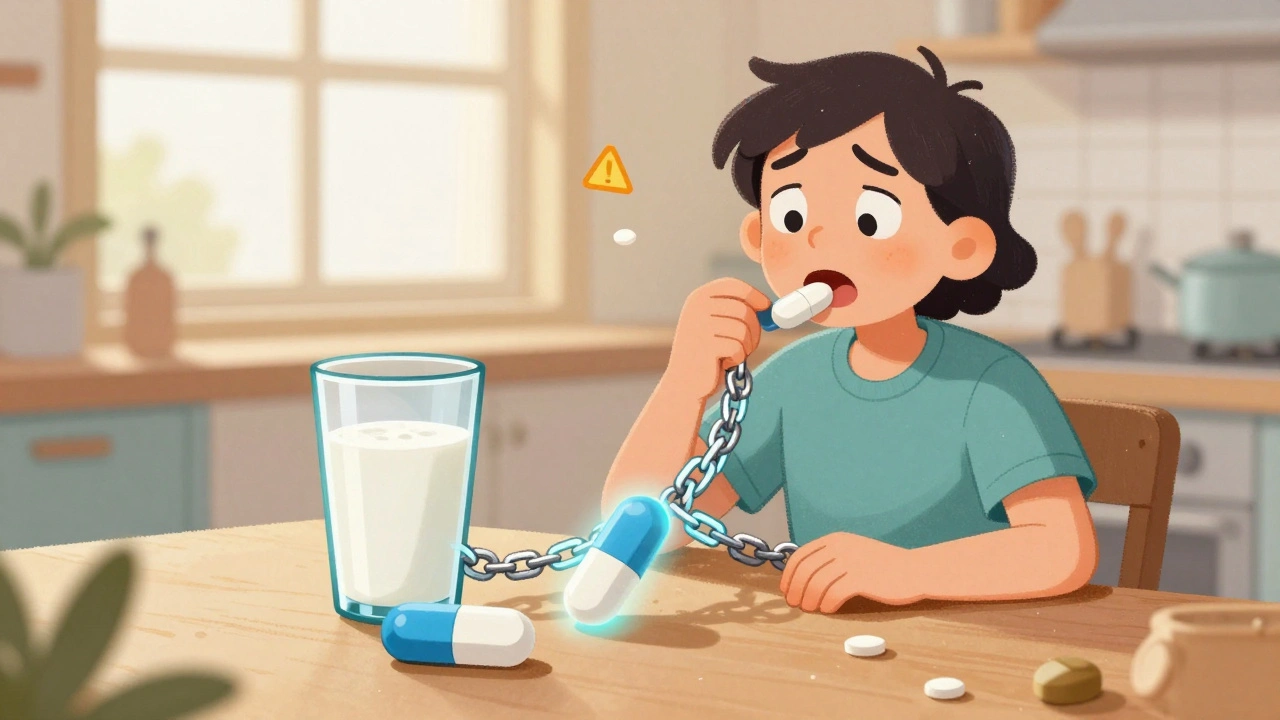
Many people take calcium and iron supplements without realizing they could be making their medications less effective-or even useless. If you're on antibiotics, thyroid medicine, or heartburn pills, the calcium in your milk or iron pill might be quietly blocking your treatment. This isn't theoretical. It happens every day, and it can lead to failed infections, untreated thyroid conditions, or ongoing anemia-all because of simple timing mistakes.
How Calcium Blocks Antibiotics
Calcium doesn’t just build bones. It also binds to certain antibiotics in your gut, forming a hard, insoluble shell that your body can’t absorb. This is called chelation. When you take calcium supplements or even a glass of milk with tetracycline or ciprofloxacin, the drug gets trapped and never reaches your bloodstream where it needs to work.Research shows calcium carbonate can reduce the absorption of ciprofloxacin by up to 40%. That means if you’re taking it for a serious infection like a urinary tract infection or pneumonia, you might not get enough of the drug into your system to kill the bacteria. The result? The infection doesn’t clear. It gets worse. You might need stronger drugs, longer treatment, or even hospitalization.
The fix is simple: don’t take calcium within two hours before or after these antibiotics. For extra safety, experts recommend spacing them four to six hours apart. That includes calcium from supplements, fortified plant milks, dairy products, and even some antacids like Tums, which contain calcium carbonate.
Iron and Antibiotics: A Similar Problem
Iron supplements-especially ferrous fumarate or ferrous sulfate-do the same thing to tetracycline, doxycycline, and minocycline. Iron binds to these antibiotics just like calcium does. If you take them together, the antibiotic becomes almost useless.Doctors and pharmacists recommend taking iron at least two hours before or four hours after these antibiotics. That’s because iron also needs stomach acid to be absorbed properly. If you take it with heartburn medicine, the problem gets worse.
Why Heartburn Medications Ruin Iron Absorption
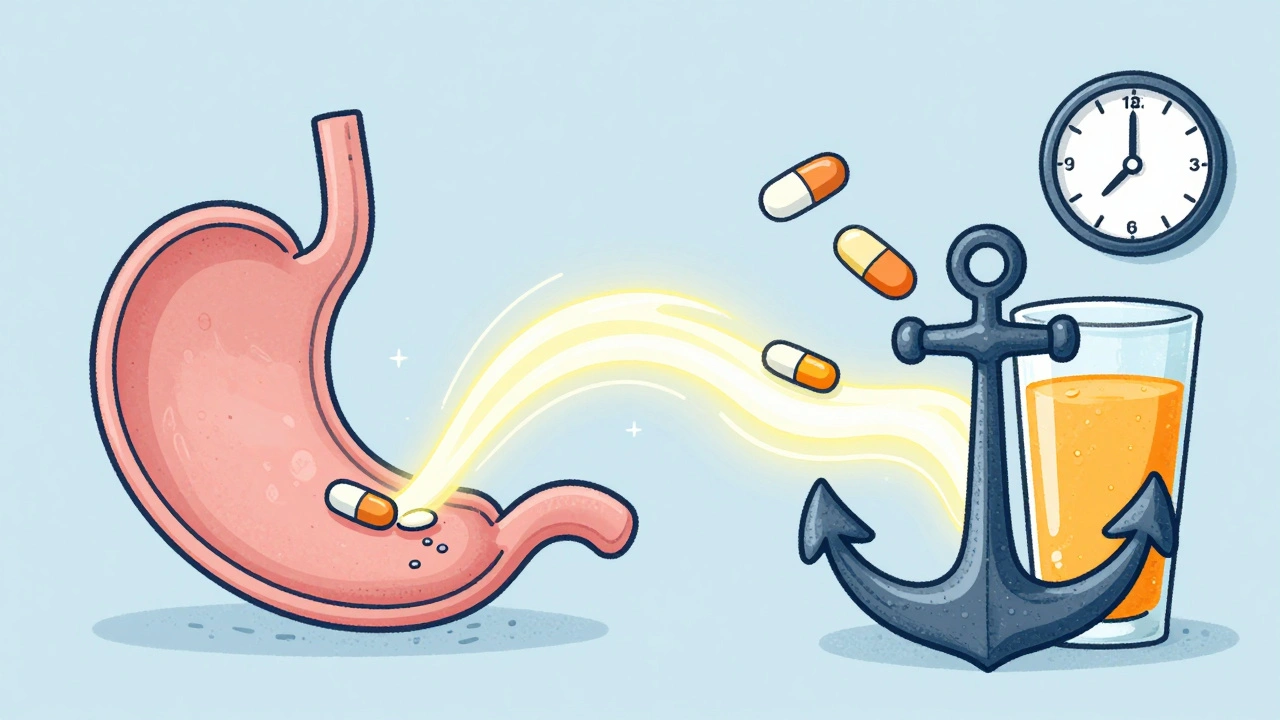
Iron needs an acidic environment to dissolve and get absorbed. Proton pump inhibitors (PPIs) like omeprazole and pantoprazole, and H2 blockers like famotidine, reduce stomach acid. Less acid = less iron absorbed.People taking iron for anemia often end up on PPIs for acid reflux. It’s a common combo. But if you take your iron pill right after your heartburn medicine, you’re not getting the benefit. Studies show iron absorption can drop by 30-50% when taken with these drugs.
The solution? Take your iron supplement at least two hours before your PPI or H2 blocker. That gives your stomach time to be acidic before the acid-suppressing drug kicks in. If you can’t wait that long, talk to your doctor about adjusting your iron dose or switching to an intravenous form.
Calcium and Thyroid Medication: A Silent Saboteur
Levothyroxine, the most common thyroid hormone replacement, is especially sensitive to calcium. Even a single calcium supplement taken at the same time can cut thyroid hormone absorption by 20-30%.That might not sound like much, but for someone managing hypothyroidism, even a small drop in hormone levels can mean fatigue, weight gain, depression, and brain fog. Many patients don’t realize their symptoms are back because of their calcium pill-not because their thyroid condition is worsening.
Studies from the South Medical Journal show a four-hour gap between levothyroxine and calcium is needed to avoid this. That means if you take your thyroid pill first thing in the morning on an empty stomach, you shouldn’t have your calcium supplement, multivitamin, or even a glass of fortified orange juice until at least 4 a.m.
Some people switch to taking levothyroxine at night instead. That works too-as long as you wait at least four hours after your last calcium-containing meal or supplement.
Iron and Milk: A Bad Pair
Parents often give kids iron supplements with milk, thinking it helps them take it better. But milk contains calcium-and calcium binds to iron just like it does to antibiotics.HealthyChildren.org notes this is a common mistake. Children with iron-deficiency anemia who drink milk with their iron pills don’t improve as quickly as those who take it with orange juice. Why? Vitamin C in orange juice helps iron absorb better. Calcium in milk blocks it.
The same applies to adults. If you’re taking iron and you’re used to having a glass of milk with breakfast, you’re sabotaging your treatment. Switch to water or orange juice instead. Skip the dairy for at least two hours before and after your iron dose.
Timing Is Everything
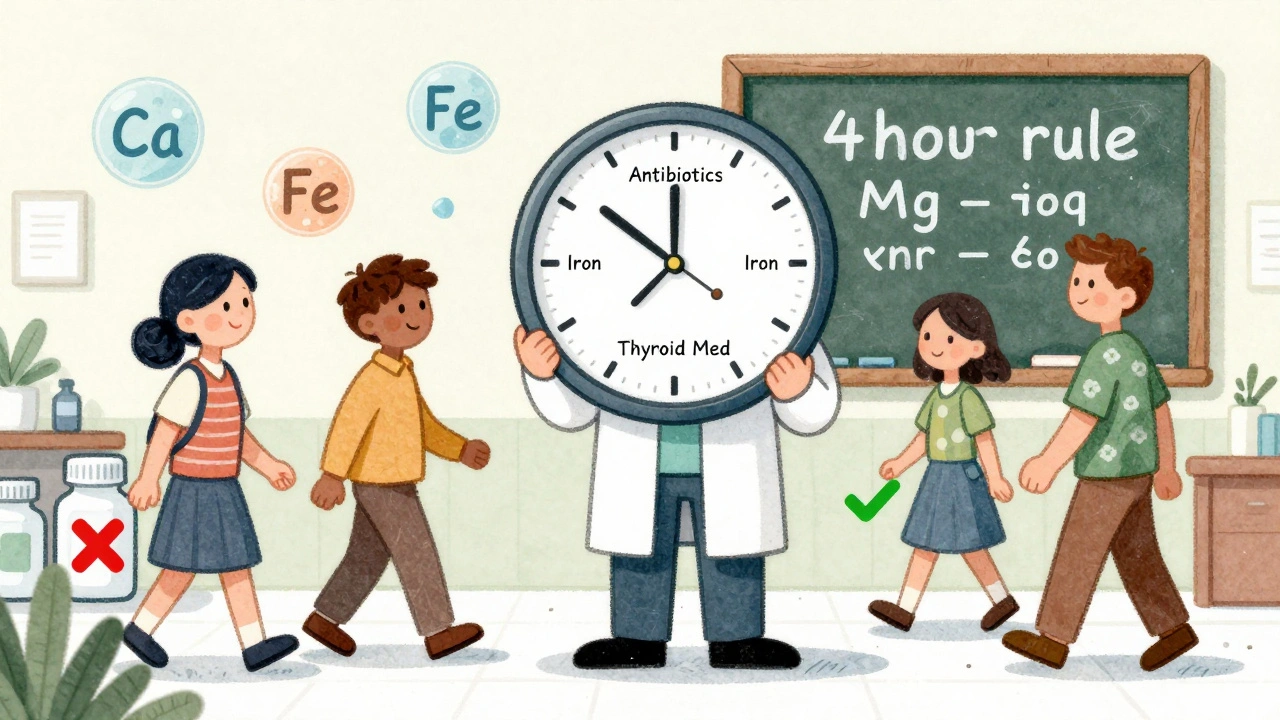
There’s no one-size-fits-all schedule. But here’s a practical guide based on real-world evidence:- Calcium and antibiotics (tetracycline, ciprofloxacin): Separate by 4-6 hours
- Iron and antibiotics (tetracycline, doxycycline): Take iron 2 hours before or 4 hours after
- Calcium and levothyroxine: 4-hour gap minimum
- Iron and PPIs/H2 blockers (omeprazole, famotidine): Take iron 2 hours before the heartburn medicine
- Iron and milk/dairy: Avoid within 2 hours before or after
Don’t assume your pharmacist automatically knows you’re taking supplements. Most people don’t mention them unless asked. A 2004 study in U.S. Pharmacist found that 67% of women and 25% of men regularly take calcium supplements-but only half of them tell their doctor.
What to Do Next
If you take any of these supplements and medications:- Write down everything you take daily-prescription, over-the-counter, vitamins, and supplements.
- Check the labels. Most antibiotics and thyroid meds now warn about calcium and iron interactions.
- Ask your pharmacist: “Do any of my supplements interfere with my meds?”
- Set phone alarms for timing. If you take levothyroxine at 7 a.m., set a reminder for 11 a.m. to take your calcium.
- Don’t change your routine without talking to your doctor. Some people need adjusted doses, not just timing changes.
These interactions aren’t rare. They’re common. And they’re preventable. You don’t need to stop taking calcium or iron. You just need to take them at the right time.
What About Other Minerals?
Magnesium, zinc, and aluminum (found in some antacids) also interfere with antibiotics and thyroid meds. The same rules apply: space them out by at least two to four hours. If you’re on multiple supplements, the safest approach is to take them all at once, away from your prescription meds-preferably at bedtime, if your doctor approves.Some newer iron supplements are designed to be less affected by food or acid blockers, but they’re still not foolproof. Until you know for sure, assume the worst and time things carefully.
Can I take calcium and iron together?
No. Calcium and iron compete for absorption in the gut. Taking them together reduces how much of each your body can use. If you need both, take them at least 4 hours apart. Iron is usually more critical for immediate health, so prioritize it in the morning and calcium later in the day.
Is it safe to take calcium with vitamin D?
Yes. Vitamin D helps your body absorb calcium, so they’re often paired. But if you’re also on levothyroxine, take the calcium-vitamin D combo at least 4 hours after your thyroid pill. Vitamin D doesn’t interfere with antibiotics the way calcium does.
What if I forget and take my iron with my antibiotic?
Don’t panic. One accidental mix-up won’t ruin your treatment. But don’t repeat it. If you’re on a short course of antibiotics (like 7-10 days), skip the iron for the rest of the course. If you’re on long-term iron for anemia, talk to your doctor about whether you need a higher dose or a different form.
Can I take mineral supplements at night to avoid interactions?
Yes, and it’s often the best solution. Take your calcium, iron, or multivitamin at bedtime, at least 2-4 hours after your last prescription dose. This works well for people on levothyroxine (taken in the morning) or antibiotics taken during the day. Just make sure you haven’t eaten a calcium-rich meal right before bed.
Do all calcium supplements interact the same way?
Most do. Calcium carbonate and calcium citrate both bind to antibiotics and thyroid meds. Calcium citrate is slightly better absorbed on an empty stomach, but it still interferes with medications. Don’t assume one form is safer. Always space them out.
Are there any supplements that don’t interfere?
Vitamin B12, vitamin C, and omega-3 fatty acids don’t interfere with these medications. You can take them at the same time. But always check with your pharmacist before adding anything new-even if it’s labeled “natural” or “herbal.”
Paul Dixon
December 10, 2025 AT 15:33Man, I had no idea calcium could mess with my antibiotics. I’ve been taking my Tums with my cipro like it’s nothing. Guess I’m switching to water now. Thanks for the wake-up call.
Vivian Amadi
December 11, 2025 AT 09:27Wow. Just wow. You’re telling me people are dumb enough to take iron with milk? Like, is this a joke? Are we still in 1998? This is why medicine is broken.
Jimmy Kärnfeldt
December 12, 2025 AT 11:46This is the kind of post that makes me love the internet. So many of us are just blindly taking pills without knowing how they interact. I used to take my levothyroxine with my morning smoothie-calcium-fortified oat milk and all. Now I take it with a glass of water at 6 a.m. and wait till 10 a.m. for anything else. Life changed. No more brain fog.
It’s not just about timing-it’s about respecting your body’s chemistry. We treat supplements like candy, but they’re not. They’re powerful little molecules with agendas.
Also, shoutout to pharmacists. They’re the unsung heroes who catch this stuff before it becomes a crisis. If you’re not talking to yours, you’re playing Russian roulette with your health.
Ariel Nichole
December 14, 2025 AT 06:21Great breakdown! I’ve been taking my iron at night with my multivitamin and just assumed it was fine. Now I’ll move it to bedtime, away from my PPI. Simple fix, huge difference.
john damon
December 14, 2025 AT 19:12Bro I just took my calcium with my doxycycline yesterday 😅 guess I’m doing it wrong again 🤦♂️
matthew dendle
December 16, 2025 AT 13:47so you mean like… calcium and iron dont just magically disappear when u take em with meds?? wow i learned something today lmao
next thing ull tell me water dont mix with alcohol
Monica Evan
December 16, 2025 AT 22:41I’m a nurse and I see this every week-patients come in with worsening anemia and we find out they’ve been taking iron with their omeprazole. Same with thyroid patients on calcium. It’s not rocket science but it’s so easily missed. I always tell folks: write it down, set alarms, don’t guess. And if you’re unsure? Call your pharmacy. They won’t judge. They’ve seen it all.
Also-vitamin C with iron? Yes. Orange juice? Perfect. Milk? Nope. Don’t let tradition override science.
Taylor Dressler
December 18, 2025 AT 22:26This is an excellent, well-researched summary. I appreciate the clear spacing guidelines and the emphasis on pharmacist consultation. Many people assume their doctor knows about their supplements, but studies show most don’t disclose them. The 67% statistic for women is alarming-and likely underreported.
I recommend using a pill organizer with labeled time slots. Morning: thyroid med. Midday: antibiotics. Evening: iron and calcium. Simple, visual, and foolproof.
Also, calcium citrate isn’t safer-it’s just absorbed better on an empty stomach. It still chelates antibiotics. Don’t be fooled by marketing.
Aidan Stacey
December 20, 2025 AT 21:09Imagine if we treated our bodies like we treat our phones-reading the manual before plugging something in. We’d be so much healthier. This isn’t just about pills. It’s about paying attention. It’s about caring enough to ask, ‘What does this do to me?’
Thank you for writing this. Someone’s life might be saved because of it.
Jean Claude de La Ronde
December 21, 2025 AT 18:31so like… we’re supposed to be scientists now? schedule our lives around when we take our vitamins like it’s a space mission? next thing you know they’ll tell us to meditate before taking ibuprofen
also canada has better healthcare so we just dont worry bout this stuff
Jim Irish
December 23, 2025 AT 11:18Important information. I’ve been taking my levothyroxine with coffee and calcium-fortified almond milk. I’ll change that today. Thank you for the clarity.
Mia Kingsley
December 24, 2025 AT 02:08Wait so you’re saying my grandma was wrong when she told me to take my iron with milk? I’m 32 and she’s been doing this for 20 years? So all this time I’ve been ‘not improving’ because of HER? I’m mad now.
Katherine Liu-Bevan
December 25, 2025 AT 23:15This is one of the most practical health guides I’ve read in years. I especially appreciate the distinction between calcium carbonate and citrate-many sources gloss over that. Also, the note about IV iron as an option for those on long-term PPIs is critical. Not everyone knows that’s an option.
One addition: some newer iron supplements like ferrous bisglycinate are less affected by food and acid blockers. They’re not perfect, but they’re better. Ask your doctor if you’re struggling with absorption despite timing.
Courtney Blake
December 26, 2025 AT 05:03So let me get this straight. You want me to plan my entire day around when I take my pills? And I’m supposed to believe this is ‘preventable’? What about people who work three jobs and don’t have time to micromanage their supplements? This isn’t helpful. It’s guilt-tripping.
Lisa Stringfellow
December 26, 2025 AT 13:09Wow. Another article telling people they’re doing everything wrong. When are we gonna stop blaming patients for not being perfect? Maybe the system should make it easier instead of making us into pharmacists.