
When you’re pregnant, your body changes in ways you never expected. One of the most surprising? Your pancreas suddenly has to work three times harder just to keep your blood sugar in check. That’s because the placenta makes hormones that block insulin - your body’s natural way of moving sugar from your blood into your cells. When your body can’t keep up, you get gestational diabetes. It’s not your fault. It’s not because you ate too much sugar. It’s biology. And the good news? You can manage it - and protect your baby’s health in the process.
What Gestational Diabetes Really Means
Gestational diabetes, or GDM, happens when your body can’t make enough insulin during pregnancy to handle the extra sugar in your blood. It usually shows up between weeks 24 and 28, which is why most doctors screen for it then. About 2 to 10 out of every 100 pregnant women in the U.S. get diagnosed. That’s more than 1 in 10. And it’s rising - from 4.6% in 2000 to over 9% today. Why? Older moms, higher body weight, and more sedentary lifestyles all play a role.This isn’t the same as Type 1 or Type 2 diabetes. It’s temporary. For most women, blood sugar returns to normal after birth. But here’s the catch: if you had GDM, you’re 50% more likely to develop Type 2 diabetes within 10 years. That’s why managing it now isn’t just about the baby - it’s about your long-term health too.
What Your Blood Sugar Numbers Should Be
Managing gestational diabetes means tracking your numbers. Not guessing. Not hoping. Measuring. The American Diabetes Association sets clear targets:- Fasting or before meals: under 95 mg/dL
- One hour after eating: under 140 mg/dL
- Two hours after eating: under 120 mg/dL
These aren’t arbitrary. Going over these numbers increases your risk of having a very large baby (over 9 pounds), which can lead to birth injuries, C-sections, and even NICU stays for your newborn. Babies born to moms with uncontrolled GDM are also more likely to have low blood sugar right after birth - a scary, preventable situation.
Most women check their blood sugar four to six times a day: first thing in the morning, and one or two hours after each meal. Some use continuous glucose monitors (CGMs), which track sugar levels all day. For women with Type 1 diabetes, CGMs cut the risk of having a very large baby by nearly 40%. While they’re not yet standard for GDM, more doctors are starting to recommend them - especially if diet and exercise alone aren’t enough.
Diet: It’s Not About Cutting Carbs - It’s About Timing and Pairing
The biggest myth? You have to give up carbs. You don’t. You just need to be smarter about them.Most women with GDM need about 45 grams of complex carbs per meal, plus 15 to 30 grams per snack. That’s not a lot - but it’s enough. One slice of whole grain bread = 15 grams. One small apple = 15 grams. Half a cup of cooked brown rice = 22 grams.
The key is pairing carbs with protein or fat. Eat an apple alone? Your sugar spikes fast. Eat an apple with a tablespoon of peanut butter? That spike drops by about 30%. Same with yogurt and berries, or cheese and crackers. Protein and fat slow down digestion, which keeps your blood sugar steady.
Another trick? Eat protein first. Then vegetables. Then carbs. A UCSF Health survey found that 74% of women who followed this order saw their post-meal sugar drop by 25 to 40 mg/dL. That’s the difference between staying in range and needing insulin.
Meal timing matters too. Three meals and two to three snacks a day prevents big swings. Skipping meals or going too long without eating can cause your liver to dump stored sugar into your blood - leading to high fasting numbers in the morning. A bedtime snack of 15 grams of carbs plus protein (like 6 crackers and 1 oz of cheese) can help keep morning sugars in check.
Exercise: Walk After Meals, Not Just When You Feel Like It
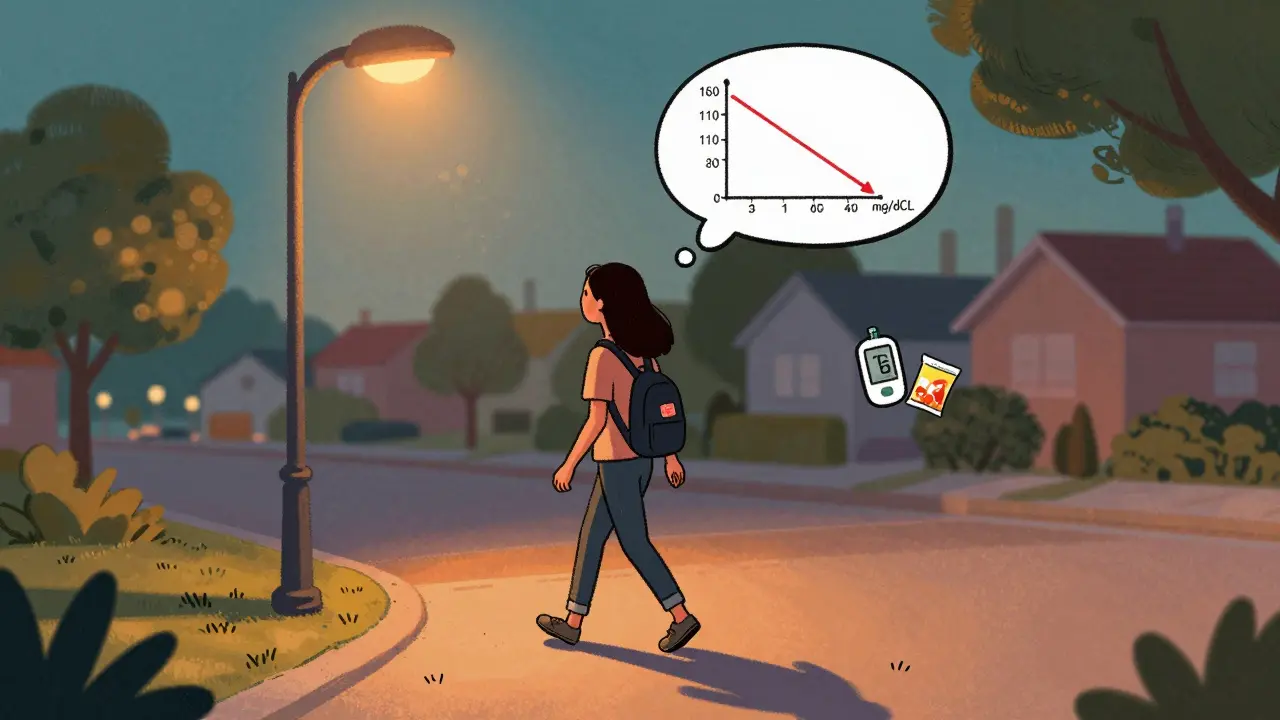
You don’t need to run a marathon. Just move. Thirty minutes of brisk walking, swimming, or prenatal yoga five days a week can drop your blood sugar by 20 to 30 mg/dL. The best time? Fifteen to thirty minutes after eating. That’s when your blood sugar is rising - and movement helps your muscles soak up the glucose.One mom in Toronto shared on Reddit: “I started walking after dinner. Within a week, my post-meal numbers dropped by 25 points. I didn’t even need insulin.” That’s not luck. It’s science. Exercise makes your cells more sensitive to insulin - even during pregnancy.
If you’re not used to exercising, start slow. Ten minutes after lunch. Ten minutes after dinner. Build up. The goal isn’t to exhaust yourself - it’s to keep your sugar from climbing.
When Diet and Exercise Aren’t Enough
About 70 to 85% of women control their GDM with food and movement alone. But for 15 to 30%, that’s not enough. That’s when insulin becomes necessary.Insulin is safe during pregnancy. It doesn’t cross the placenta. It’s not the same as the pills you might take for Type 2 diabetes. Some doctors try metformin first - it’s a pill that helps your body use insulin better. But research shows about 30% of women on metformin still end up needing insulin. Insulin is more predictable, and it’s been used safely for decades.
Injecting insulin sounds scary. But most women say the fear is worse than the shots. The needles are tiny. The pens are simple. And the relief of seeing your numbers drop? Worth it.
What to Expect After Diagnosis
Once you’re diagnosed, you’ll meet with a certified diabetes care and education specialist (CDCES). They’ll teach you how to check your blood sugar, count carbs, and recognize patterns. You’ll get a logbook or app to record your meals and numbers. Most clinics schedule weekly visits for the first month, then every two weeks.It takes about two to three weeks to get comfortable with carb counting. At first, you’ll overestimate. You’ll underestimate. You’ll feel overwhelmed. That’s normal. By the end of the month, most women can estimate portions without measuring cups. You’ll start noticing which foods spike you - and which ones keep you steady.
One common challenge? High fasting blood sugar in the morning. It’s not because you ate too much the night before. It’s your body’s natural hormone surge. A small bedtime snack with protein and a little carb can help. Talk to your provider - don’t just guess.
Postpartum: The Real Test Begins After Birth
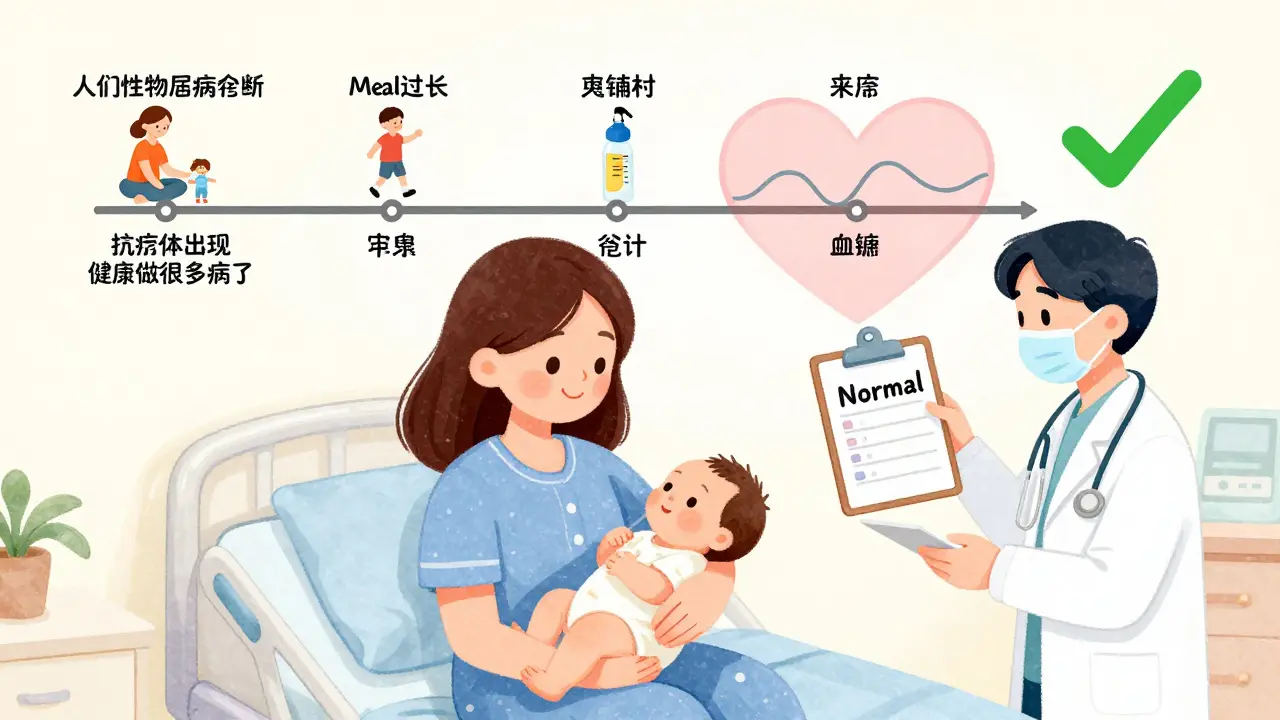
You think it’s over when the baby arrives. But here’s what no one tells you: your risk of Type 2 diabetes doesn’t disappear. It’s just waiting.Within 6 to 12 weeks after birth, you need a glucose test - usually a 75-gram oral glucose tolerance test. If your fasting number is over 126 mg/dL or your 2-hour number is over 200 mg/dL, you have Type 2 diabetes. If it’s between 140 and 199 mg/dL, you have prediabetes.
And here’s the most powerful part: losing 5 to 7% of your body weight after pregnancy cuts your risk of Type 2 diabetes by 58% over 15 years. That’s not about being thin. It’s about being healthy. A daily walk. More vegetables. Less processed food. These aren’t just “good habits.” They’re your shield.
Many women skip this follow-up. But 50% of those who do end up with Type 2 diabetes. Don’t be one of them. Make that appointment. Even if you feel fine. Even if you lost the baby weight. Your body just went through a major metabolic shift. You need to know where you stand.
What Works - Real Stories From Real Moms
On Reddit’s r/GestationalDiabetes, women share what actually helped:- “I used MyFitnessPal to log every bite. It made me aware of hidden carbs in sauces and yogurt.”
- “Morning walks cut my fasting sugar by 15 points. I did it even when I was exhausted.”
- “I started eating protein before carbs. My post-lunch sugar dropped from 165 to 110.”
What didn’t work? Confusing advice. One woman said her OB told her to eat low-carb, but her endocrinologist said to eat whole grains. She felt lost. That’s why working with a CDCES is critical. They’re trained to give clear, consistent guidance.
And emotional support? Huge. Sixty-eight percent of women say the diagnosis felt overwhelming. But 85% felt confident once they had a plan. You’re not alone. There are apps, online groups, and trained professionals ready to help.
What to Avoid
Don’t wait to act. If you’re diagnosed after 28 weeks, your baby’s already been exposed to higher sugar levels for weeks. That’s why screening at 24 to 28 weeks matters.Don’t skip checks. Women who test less than four times a day have 2.3 times higher risk of NICU admission. It’s not about being perfect - it’s about being consistent.
Don’t believe the myths. You don’t need to eat “diabetic food.” You don’t need to buy special snacks. You don’t need to starve yourself. You just need to eat real food - in the right amounts, at the right times, with the right partners.
What You Can Do Today
If you’ve just been diagnosed:- Write down your blood sugar targets and keep them visible.
- Start logging meals and numbers - even just for three days.
- Take a 10-minute walk after your next meal.
- Ask for a referral to a certified diabetes educator.
- Plan your next appointment - don’t wait for them to call you.
If you’re not diagnosed but are pregnant - ask your doctor about screening. Especially if you’re over 25, overweight, have a family history of diabetes, or had GDM before.
Gestational diabetes isn’t a life sentence. It’s a warning - and a chance to change your health for good. You’re not just managing sugar. You’re building a healthier future for you and your child.
Can gestational diabetes go away after pregnancy?
Yes, in about 70% of cases, blood sugar returns to normal after delivery. But that doesn’t mean the risk is gone. About half of women who had gestational diabetes will develop Type 2 diabetes within 10 years. That’s why follow-up testing at 6 to 12 weeks after birth - and regular screening every two years after that - is critical.
Do I need to take insulin if I have gestational diabetes?
Not everyone does. About 70 to 85% of women manage their blood sugar with diet and exercise alone. But if your numbers stay high after a few weeks, insulin is the safest and most effective next step. It doesn’t cross the placenta, so it won’t affect your baby. Many women are surprised to find insulin injections are easier than they expected.
Can I eat fruit with gestational diabetes?
Yes - but in controlled portions. One small apple, one cup of berries, or half a banana are all about 15 grams of carbs - one carb choice. Pair fruit with protein or fat, like a handful of nuts or a spoonful of Greek yogurt, to slow sugar absorption. Avoid fruit juice, dried fruit, and smoothies - they spike blood sugar fast.
Is gestational diabetes my fault?
Absolutely not. Gestational diabetes is caused by hormones from the placenta that make your body resistant to insulin. It’s not about how much sugar you ate or how much you exercised before pregnancy. Even women who are thin and healthy can develop it. It’s a common condition - not a personal failure.
What happens to my baby if my blood sugar is high?
High blood sugar crosses the placenta, telling your baby’s pancreas to make more insulin. Extra insulin acts like a growth hormone - leading to a larger baby, which increases risks of birth injury, C-section, and breathing problems. After birth, the baby’s blood sugar can drop dangerously low because they’re used to high insulin levels. Proper management reduces these risks to near-normal levels.
Should I use a continuous glucose monitor (CGM)?
CGMs are not yet standard for gestational diabetes, but they’re becoming more common - especially if diet and exercise aren’t enough. Studies show they reduce the risk of having a very large baby by 39% and severe low blood sugar in newborns by 54%. If your provider offers one, it’s worth considering. It gives you real-time feedback without constant finger pricks.
Can I breastfeed if I have gestational diabetes?
Yes - and you should. Breastfeeding helps lower your blood sugar and reduces your risk of developing Type 2 diabetes later. It also helps your baby’s metabolism adjust after birth. Many women find their blood sugar drops naturally while nursing. Keep snacks nearby during feedings - your body is working hard.
What’s the best way to track my carb intake?
Use an app like MyFitnessPal or Carb Manager. Start by logging everything for a week. Learn what 15 grams of carbs looks like: one small apple, half a cup of rice, one slice of whole grain bread. Once you get the hang of it, you won’t need to log every meal. Many women find that counting carbs becomes second nature after two to three weeks.
Michelle M
December 15, 2025 AT 23:21It’s wild how much our bodies adapt during pregnancy - and how little we’re told about the real metabolic shift happening under the hood. I was diagnosed at 26 weeks and thought I’d failed until I learned it’s not about willpower. It’s biology. The fact that insulin doesn’t cross the placenta? That alone took away so much fear. I started walking after dinner, paired carbs with cheese, and stopped obsessing over perfection. My numbers stabilized. It’s not easy, but it’s manageable. You’re not alone in this.
Cassie Henriques
December 16, 2025 AT 22:02As a registered dietitian specializing in maternal metabolism, I’ve seen the data: carb timing + protein pairing reduces postprandial spikes by 30–40% in GDM cohorts. The glycemic load framework is more useful than low-carb dogma. Also, CGMs are underutilized - studies show a 39% reduction in LGA neonates when used consistently. Not everyone needs insulin, but if HbA1c >5.5 or fasting >95 after 2 weeks of lifestyle intervention, don’t delay. Early insulin = better perinatal outcomes. Stop the stigma. It’s not a moral failing.
Lisa Davies
December 16, 2025 AT 22:20Just wanted to say THANK YOU for writing this. I was diagnosed last week and felt like I was drowning in conflicting advice. Your breakdown of carb pairing? Game changer. I had no idea eating protein first could drop my numbers by 40 points. Started doing it after lunch today - my meter showed 108 instead of 150. I cried. Not from sadness - from relief. You’re right - it’s not about being perfect. It’s about being consistent. And you’re not alone. 💪🍎🧀
Mike Nordby
December 17, 2025 AT 05:44The assertion that gestational diabetes is not the mother’s fault is scientifically accurate, yet the societal narrative often implies otherwise. The rise in prevalence correlates strongly with delayed childbearing, increased maternal BMI, and reduced physical activity - all modifiable population-level factors. While individual blame is unwarranted, public health interventions targeting preconception nutrition and exercise could significantly reduce incidence. The current screening paradigm is adequate, but proactive prevention remains underfunded.
Nupur Vimal
December 18, 2025 AT 15:49Jake Sinatra
December 20, 2025 AT 11:16One of the most overlooked aspects of GDM management is sleep quality. Cortisol spikes from poor sleep elevate fasting glucose independently of diet. Women with GDM who averaged fewer than 6.5 hours of sleep per night had 2.1 times higher odds of requiring insulin, even after controlling for BMI and carb intake. Prioritizing sleep hygiene - consistent bedtimes, minimizing blue light, and avoiding late meals - should be integrated into standard care protocols. This isn’t anecdotal. It’s in the journals.
John Samuel
December 21, 2025 AT 05:20Let me be blunt: the medical system treats gestational diabetes like a bureaucratic checkbox rather than a metabolic emergency. We’ve got women Googling ‘can I eat honey during pregnancy?’ while their OBs hand them a pamphlet written in 2008. The fact that a continuous glucose monitor - a device that reduces NICU admissions by over half - is still considered ‘experimental’ for GDM is a scandal. And yet, here we are, clinging to finger pricks like they’re sacred rites. It’s not innovation we lack. It’s willpower. We know better. Why aren’t we doing better?
Sai Nguyen
December 22, 2025 AT 05:36