Medication Hiccup Risk Calculator
Medication Hiccup Risk Assessment
Ever had hiccups that wouldn’t stop-not from eating too fast, not from drinking soda, but right after taking a pill? If you’ve been stuck with hiccups for more than a day or two after starting a new medication, you’re not alone. What seems like a silly, harmless glitch can actually be a direct side effect of drugs you’re taking. And it’s more common than most doctors admit.
Why Your Medication Is Making You Hiccup
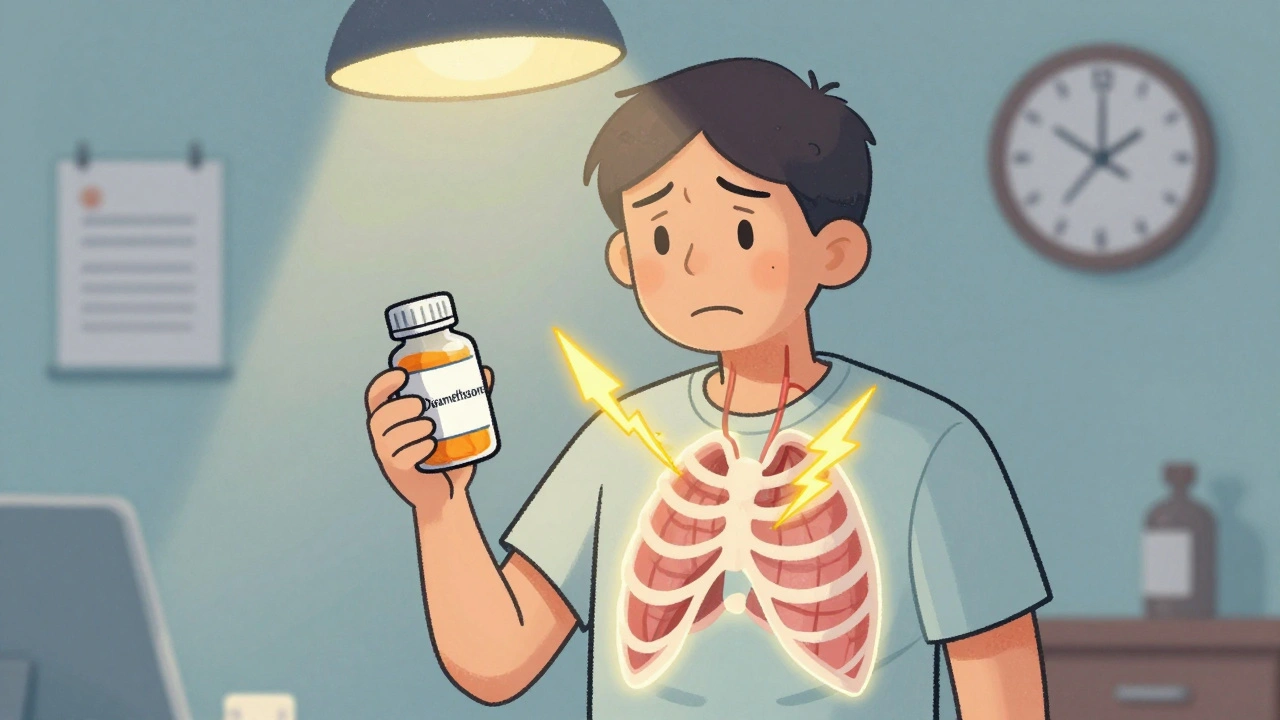
Hiccups aren’t just an annoyance. They’re a reflex caused by sudden spasms in your diaphragm, followed by the quick closure of your vocal cords. That ‘hic’ sound? It’s your body’s involuntary reaction. But when it’s triggered by medicine, the cause is usually neurological or gastrointestinal. Certain drugs mess with the nerves that control breathing. The vagus and phrenic nerves, which connect your brain to your diaphragm, can get irritated by medications. Others change brain chemistry-especially drugs that affect dopamine or GABA receptors. That’s why corticosteroids like dexamethasone and prednisone are top culprits. In one study, over 40% of cancer patients got hiccups after receiving dexamethasone before chemotherapy. And it wasn’t just high doses-some cases started with just 4mg a day. Opioids like morphine are another big offender. About 5-7% of people on long-term pain meds get hiccups. That’s because opioids can slow digestion, leading to stomach bloating, which tugs on the diaphragm. Even antibiotics like azithromycin and moxifloxacin have been linked to hiccups, though it’s rare. Benzodiazepines, often used for anxiety or before surgery, can also trigger them in up to 12% of patients. The real problem? Most drug labels don’t list hiccups as a side effect. You’re more likely to see nausea, dizziness, or fatigue. That means doctors often miss the connection. A 2019 study found that 35% of medication-induced hiccup cases were misdiagnosed as something else-like acid reflux or a nervous tic.Which Medications Are Most Likely to Cause Hiccups?
Not all drugs are created equal when it comes to triggering hiccups. Here’s what the data shows:| Medication Class | Common Examples | Hiccup Incidence | Typical Dose Linked |
|---|---|---|---|
| Corticosteroids | Dexamethasone, Prednisone | Up to 41% | 4-20 mg daily |
| Opioids | Morphine, Oxycodone | 5-7% | Varies by pain level |
| Benzodiazepines | Midazolam, Diazepam | 8-12% | 5-10 mg pre-op |
| Chemotherapy Agents | Cisplatin (with dexamethasone) | 30-40% | 50-100 mg/m² |
| Antibiotics | Moxifloxacin, Azithromycin | 0.5-2% | Standard course |
Dexamethasone is the worst offender. It’s used to reduce swelling and nausea during chemo, but it also activates receptors in the brainstem that control the hiccup reflex. One patient on Reddit described hiccups lasting 72 hours after a single 8mg dose-so bad she couldn’t sleep, eat, or talk. On Drugs.com, dexamethasone has a 2.3 out of 5 rating specifically for hiccups, based on nearly 90 reviews.
What to Do When Hiccups Won’t Stop
If your hiccups started within hours or days of beginning a new drug, it’s worth considering the medication as the cause. Don’t panic-most cases go away on their own. But if they last longer than 48 hours, you need to act. Start with simple, proven home remedies:- Swallow a teaspoon of granulated sugar. Studies show it works in 72% of cases.
- Gargle ice water. It cools the vagus nerve and stops the spasm in 65% of people.
- Hold your breath for as long as you can, then exhale slowly. This resets your breathing rhythm.
- Drink a glass of water quickly while pinching your nose.
These aren’t just old wives’ tales. A 2021 JAMA Internal Medicine study confirmed sugar and ice water as the most effective non-drug options. They’re safe, cheap, and work fast-often within minutes.
When You Need Medication to Stop the Hiccups
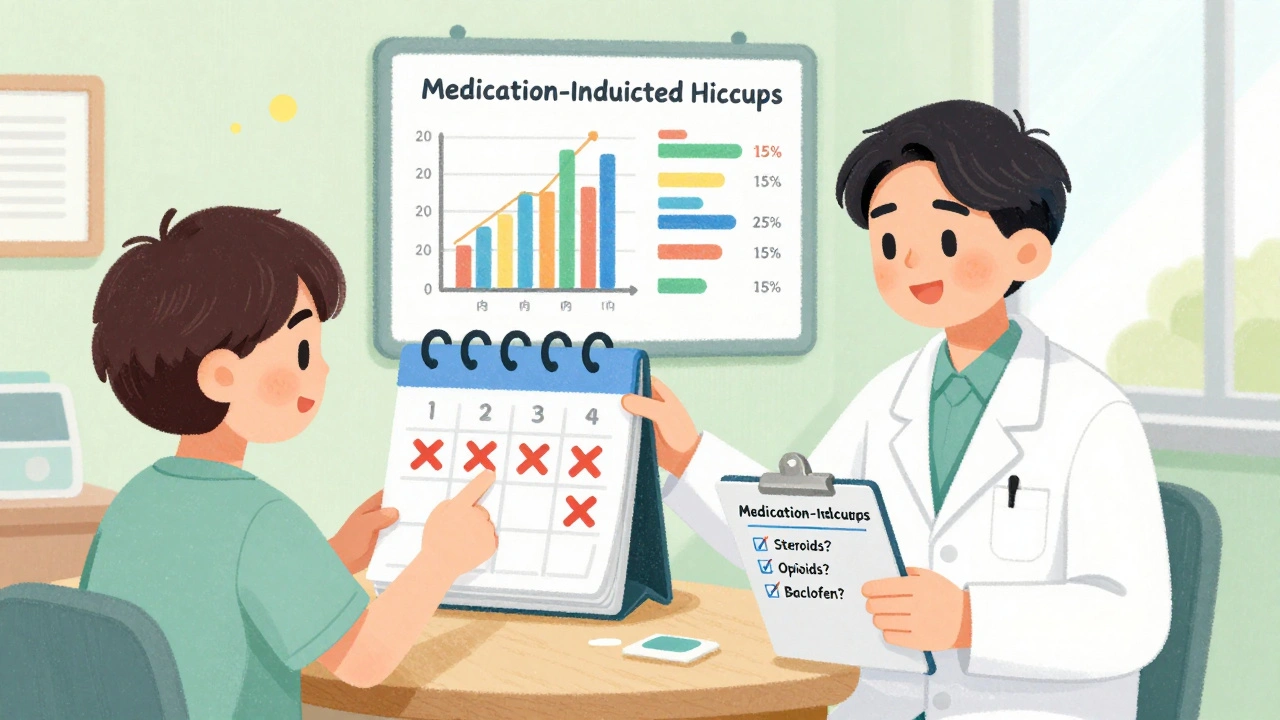
If home remedies fail and the hiccups keep going, your doctor may prescribe something. But here’s the catch: only one drug is FDA-approved for hiccups-chlorpromazine (Thorazine). It’s an old antipsychotic, and while it works for about half of patients, it comes with side effects: drowsiness, low blood pressure, and muscle stiffness. That’s why doctors often turn to baclofen first. It’s a muscle relaxant that targets GABA-B receptors in the brainstem-the same ones affected by dexamethasone. Studies show baclofen works in 60-70% of steroid-induced hiccups. The usual starting dose is 5mg three times a day. Many patients report relief within 24 hours. One patient on Patient.info described her 5-day hiccup attack vanishing within two hours of switching from dexamethasone to ondansetron (an anti-nausea drug) and starting baclofen. That’s the power of targeted treatment.What If You Can’t Stop the Medication?
This is the toughest scenario-especially for cancer patients. Dexamethasone is often essential to manage chemo side effects. You can’t just stop it. So what then? Prophylaxis. That means preventing hiccups before they start. In a 2012 clinical trial, giving cancer patients 5mg of baclofen twice daily before dexamethasone cut hiccup rates from 41% down to just 13%. That’s a massive improvement. Some hospitals now use a checklist: if you’re getting dexamethasone with cisplatin, you automatically get baclofen too. It’s becoming standard practice in oncology centers across North America.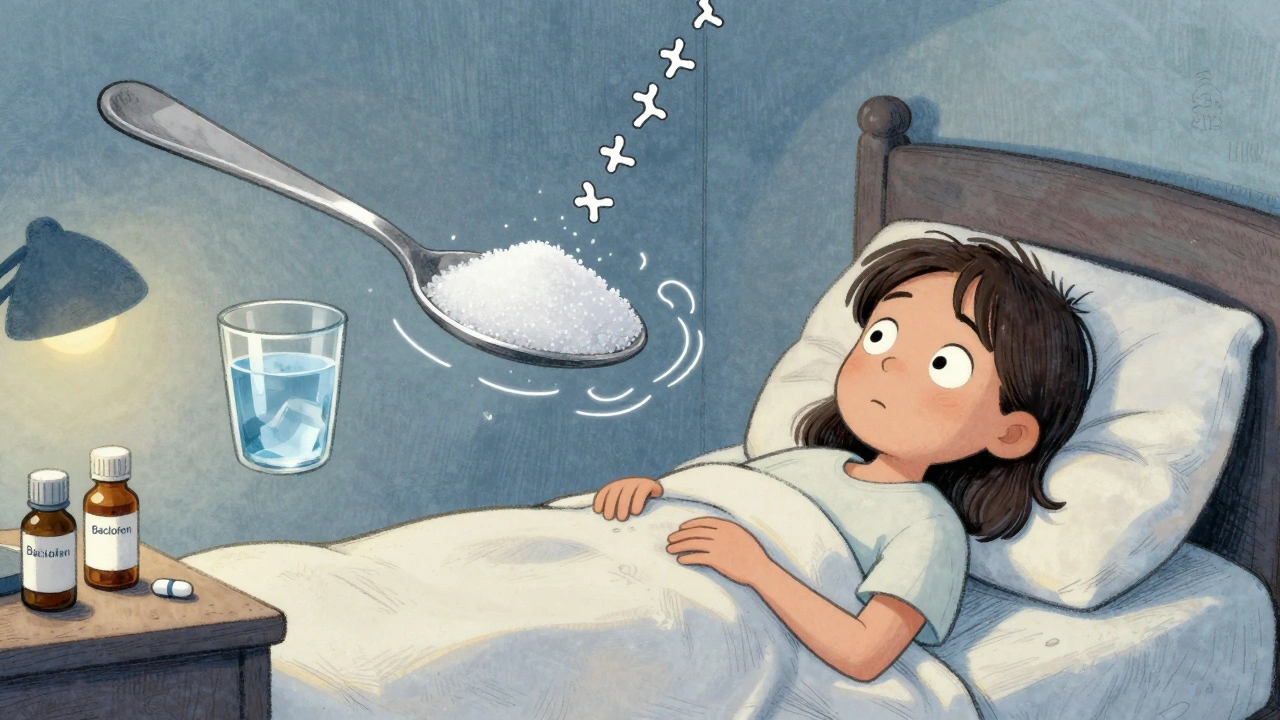
Why This Is Getting More Attention
In 2024, the American Medical Association created a new ICD-10 code specifically for medication-induced hiccups: R09.2-MIH. That means doctors can now officially document it in medical records. Before this, hiccups were just listed as “unspecified” or ignored entirely. The FDA updated dexamethasone’s label in 2021 to include hiccups as a clinically significant side effect. The European Medicines Agency now requires hiccup data for all new CNS drugs. And the global market for hiccup treatments hit $187 million in 2022-with a big chunk coming from people needing help after starting steroids or opioids. Still, awareness is low. A 2023 FDA survey found only 37% of doctors correctly identified medication-induced hiccups when shown a case. Most still think it’s just a random, harmless quirk.When to See a Doctor
You don’t need to rush to the ER for a 10-minute hiccup fit. But if you have any of these, call your doctor:- Hiccups lasting more than 48 hours
- Hiccups that interfere with eating, sleeping, or breathing
- Hiccups that started within 72 hours of starting a new drug
- Hiccups along with chest pain, vomiting, or weight loss
These could signal something more serious-or they could be a simple drug side effect you can fix with a dose change or a little baclofen.
Bottom Line
Hiccups from medication aren’t rare. They’re underdiagnosed. If you’ve been stuck with them after starting a new pill, especially steroids, opioids, or chemo drugs, don’t just endure it. Talk to your doctor. Ask: “Could this be from the medicine?” The good news? Most of the time, you can fix it. Either by switching the drug, lowering the dose, or adding a simple, safe treatment like baclofen or sugar. You don’t need expensive tests or scans. Just a little awareness-and the courage to speak up.Can dexamethasone cause hiccups even at low doses?
Yes. Hiccups from dexamethasone have been reported at doses as low as 4mg per day, especially when combined with chemotherapy drugs like cisplatin. It’s not about the dose being high-it’s about how the drug interacts with nerve receptors in the brainstem. Even small amounts can trigger the reflex in sensitive individuals.
Is baclofen safe for long-term use to prevent hiccups?
Baclofen is generally safe for short-term use, like a few days or weeks, to treat or prevent medication-induced hiccups. For long-term use-beyond a month-it can cause muscle weakness, dizziness, or withdrawal symptoms if stopped suddenly. It’s not meant for lifelong use unless you have a neurological condition like spinal cord injury. For hiccup prevention, it’s typically used only while taking the triggering drug.
Why isn’t hiccup listed as a side effect on most drug labels?
Drug manufacturers only list side effects that appear in clinical trials at a certain frequency (usually 1% or higher). Hiccups are often underreported because patients don’t mention them, and doctors don’t ask. Also, they’re seen as minor. But recent data shows they’re more common than thought, especially with steroids. That’s why the FDA added them to dexamethasone’s label in 2021-and why new drugs now must report hiccup incidence.
Can antibiotics like azithromycin cause hiccups?
Yes, though it’s rare. Cases have been documented, including one in 2023 involving moxifloxacin in a patient with tuberculosis. The mechanism isn’t fully understood, but it may involve irritation of the vagus nerve or gut-brain signaling. If you get hiccups after starting an antibiotic and no other cause is found, it’s worth considering the drug-even if it’s not commonly listed.
What’s the fastest way to stop medication-induced hiccups?
The fastest proven methods are swallowing a teaspoon of granulated sugar or gargling ice water. Both work by stimulating the vagus nerve, which interrupts the hiccup reflex. Sugar has a 72% success rate in clinical studies. If those don’t work within 5-10 minutes, and you’re on a known trigger like dexamethasone, contact your doctor about baclofen-it can stop hiccups in under 24 hours.
Ada Maklagina
December 4, 2025 AT 14:16Harry Nguyen
December 5, 2025 AT 03:20Chris Brown
December 6, 2025 AT 18:56Stephanie Fiero
December 6, 2025 AT 19:51Laura Saye
December 7, 2025 AT 02:05Michael Dioso
December 8, 2025 AT 01:41Mark Curry
December 8, 2025 AT 06:19luke newton
December 8, 2025 AT 08:17Ali Bradshaw
December 10, 2025 AT 03:45an mo
December 11, 2025 AT 15:05