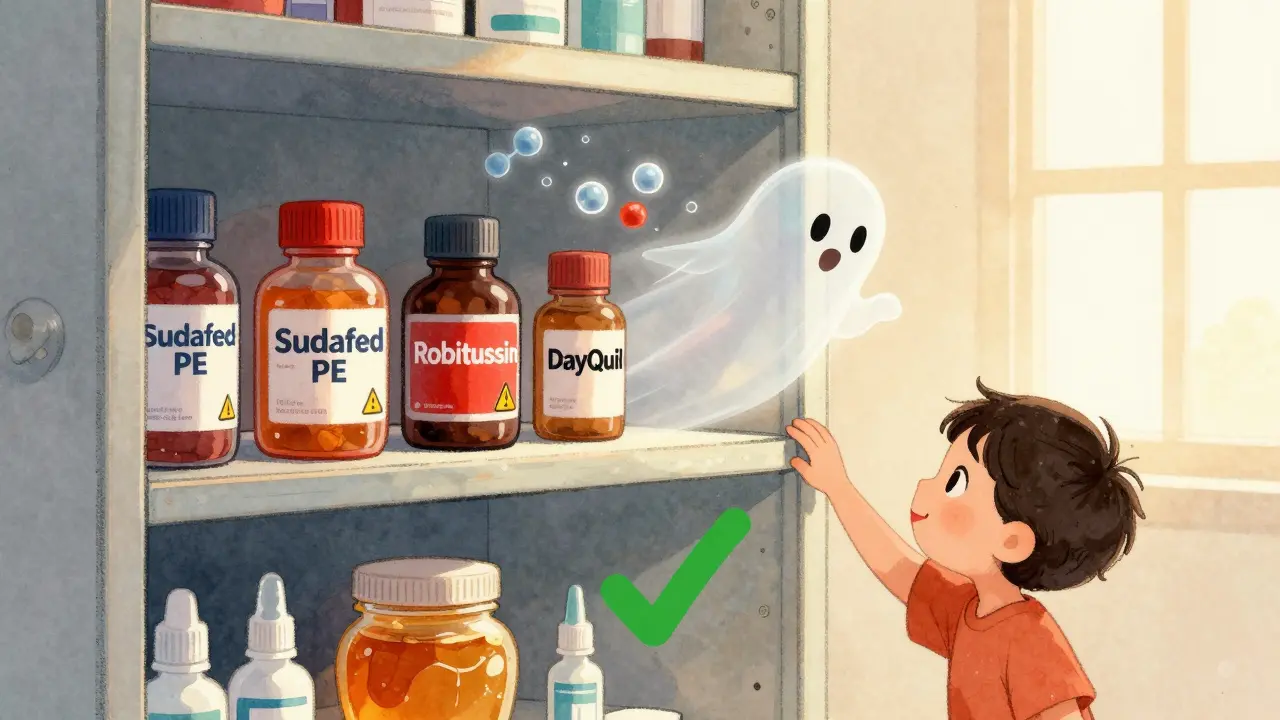
Every winter, millions of people reach for OTC cough and cold medicines hoping for quick relief. But what if the bottle in your cabinet isn’t helping at all - and might even be risky? The truth is, many of the most common over-the-counter cold remedies, especially those with phenylephrine, don’t work the way they’re supposed to. And for kids, the risks often outweigh any tiny benefit.
Why Most OTC Cough and Cold Meds Don’t Work
Phenylephrine is in nearly every cold medicine you’ll find on the shelf: Sudafed PE, DayQuil, Robitussin, and more. It’s labeled as a decongestant. But here’s the problem: in 2023, the FDA’s own advisory panel concluded that oral phenylephrine - at the 10mg dose used in all OTC products - is no better than a sugar pill at relieving nasal congestion. A 2007 study found that even at 25mg (a dose not sold to the public), it only reduced congestion by about 28%. And patients didn’t even feel better.
It’s not just phenylephrine. Dextromethorphan, the cough suppressant in Robitussin and Mucinex DM, has mixed results. A 2014 review of 29 clinical trials showed no clear benefit over placebo for acute cough. Guaifenesin, the expectorant meant to loosen mucus, also lacks solid proof it works in real-world doses. Yet these ingredients are still everywhere, because they’ve been on the market for decades - not because science backs them.
The Real Danger: Accidental Overdose
Many OTC cold medicines are combo packs. One bottle might have dextromethorphan, guaifenesin, phenylephrine, and an antihistamine all in one. That’s fine - until you take another product for your headache or allergy, and suddenly you’re doubling up on the same active ingredient.
The FDA warns this is a leading cause of accidental overdose, especially in kids. Between 2000 and 2007, 20 children in the U.S. died after ingesting OTC cold medicines. Thirteen of them were under two years old. Even today, parents often think, “It’s just medicine,” and give a half-dose hoping it’ll help. But the active ingredients aren’t gentle. Dextromethorphan can cause hallucinations and seizures in high doses. Antihistamines can make kids hyper, not sleepy. And phenylephrine can spike blood pressure, especially if someone is on other meds like antidepressants.
Children Under 6: Don’t Use OTC Cold Medicine
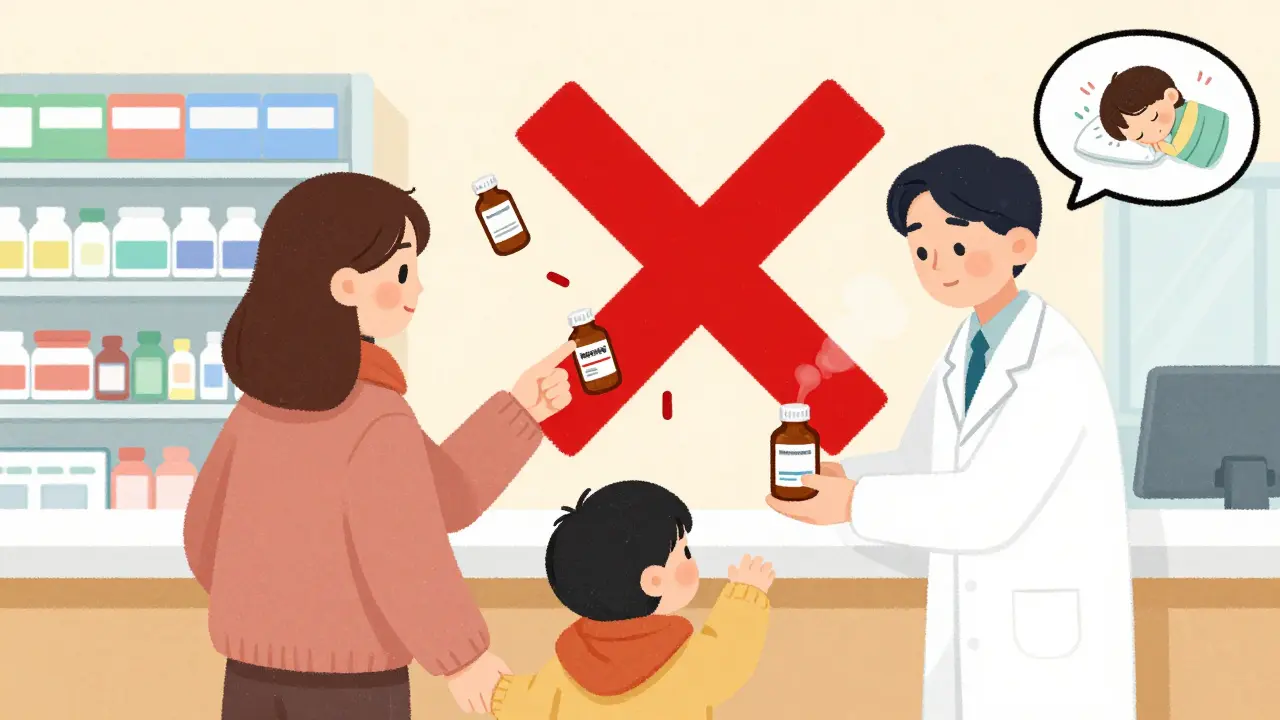
The American Academy of Pediatrics has said since 2007: don’t give OTC cough and cold medicine to kids under 6. The FDA reinforced this in 2008 and still stands by it. Why? Because kids aren’t small adults. Their bodies process drugs differently. There’s zero proof these medicines make kids feel better faster. But there’s plenty of proof they can cause serious side effects - rapid heart rate, seizures, even coma.
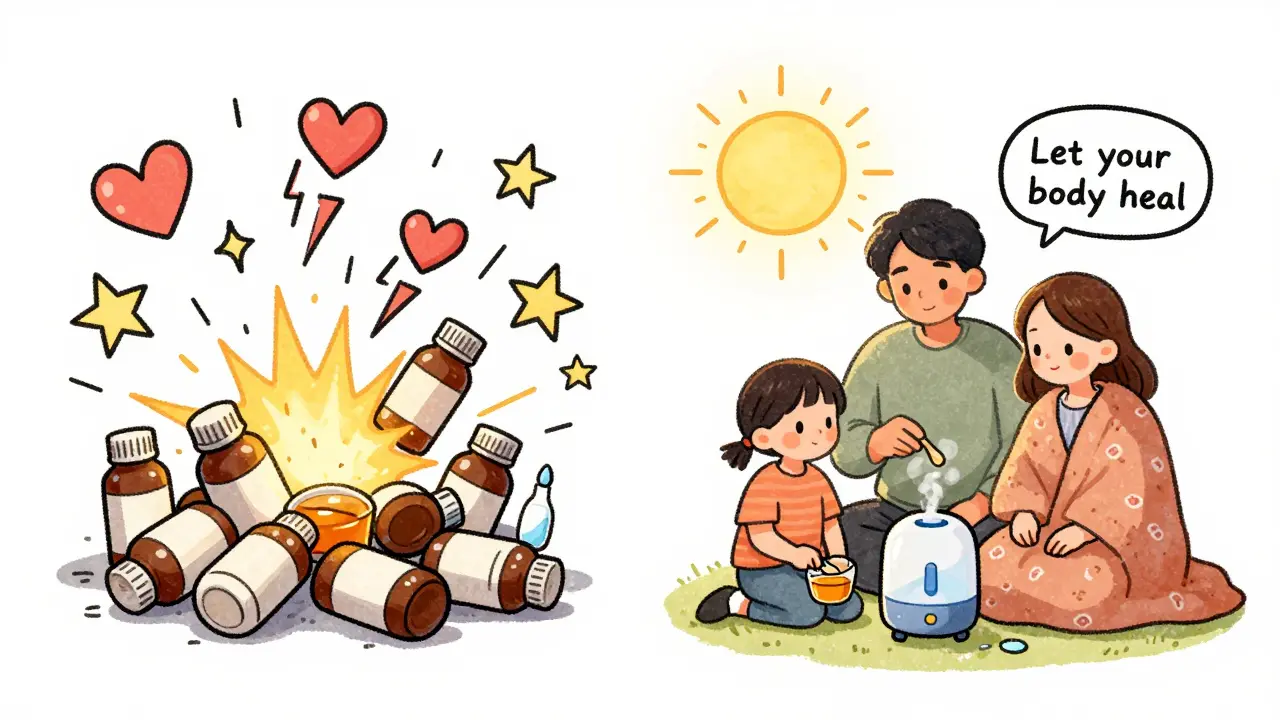
Instead, try what actually works: saline nose drops, a bulb syringe to clear mucus, a cool-mist humidifier, and plenty of fluids. For kids over 12 months, honey is a proven alternative. A 2023 study showed 2.5 mL (half a teaspoon) of honey before bedtime reduced nighttime coughing just as well as dextromethorphan - and without any drug risks. Parents are catching on: 73% of those surveyed stopped giving OTC meds to kids under 6 after learning the facts.
Adults: What Actually Helps?
For adults, the same rules apply. If you’re taking something with phenylephrine, you’re wasting your money. Skip it. Look for products with pseudoephedrine instead - it’s the real decongestant. But here’s the catch: you have to ask the pharmacist, show ID, and it’s kept behind the counter. That’s because pseudoephedrine can be used to make methamphetamine. But it works. People who switch from phenylephrine to pseudoephedrine report real relief - 68% of positive reviews mention it. Only 22% say phenylephrine helped.
For cough, try honey. For congestion, try a nasal spray with oxymetazoline (like Afrin) - but don’t use it for more than three days. For sore throat, saltwater gargles. For fever or body aches, acetaminophen or ibuprofen. You don’t need a five-in-one syrup. Just pick one thing that targets your worst symptom.
What’s Changing in 2025?
The FDA is moving to remove phenylephrine from the list of approved OTC ingredients. If finalized - expected by late 2024 - manufacturers will have until Q3 2025 to reformulate their products. That means next winter, you won’t see Sudafed PE on the shelf. You’ll see something else. Maybe pseudoephedrine. Maybe a nasal spray. Maybe nothing at all.
Companies are already preparing. Consumer Reports says sales of OTC cold medicine dropped 12% in late 2023 after the FDA announcement. People are switching. Honey-based syrups are growing at 12.7% a year. Saline nasal sprays are selling faster than ever. The market is shifting - not because of marketing, but because people are finally listening to science.
How to Read a Drug Facts Label (And Stay Safe)
Always check the active ingredients. Don’t just look at the brand name. Two different bottles might have the same thing inside. Here’s what to watch for:
- Phenylephrine - skip it. Doesn’t work.
- Pseudoephedrine - effective, but requires ID.
- Dextromethorphan - may help cough slightly, but risky in high doses.
- Guaifenesin - unlikely to help mucus.
- Antihistamines (like diphenhydramine) - can cause drowsiness, dry mouth, and confusion in older adults.
Never mix two products with the same active ingredient. If you’re taking Tylenol Cold, don’t also take Robitussin. Both have acetaminophen - and too much can damage your liver.
Alternatives That Actually Work
You don’t need a pharmacy aisle full of pills. Here’s what science supports:
- Honey - for cough in kids over 12 months and adults. 2.5 mL at bedtime.
- Saline nasal spray or drops - clears congestion without drugs. Safe for babies.
- Bulb syringe - for infants with stuffy noses.
- Humidifier - moist air soothes irritated airways.
- Fluids - water, broth, tea. Keeps mucus thin and helps your body heal.
- Rest - your immune system doesn’t work well when you’re exhausted.
These aren’t fancy. They’re simple. And they’ve been proven in studies to be safer and just as effective as most OTC drugs.
Final Takeaway: Less Medicine, More Common Sense
OTC cough and cold medicine isn’t broken because it’s dangerous - it’s broken because it doesn’t work. The ingredients we’ve trusted for decades are based on old assumptions, not modern science. The FDA is finally catching up. And you don’t need to wait for reformulated bottles to make smarter choices.
Stop buying products with phenylephrine. Stop giving them to kids. Stop mixing pills. Start using honey, saline, and rest. You’ll save money. You’ll avoid side effects. And you might actually feel better - not because of a drug, but because you let your body heal the way it’s meant to.
Nicki Aries
February 2, 2026 AT 10:31So let me get this right: we’ve been paying for sugar pills labeled as decongestants for 20 years? And now the FDA is finally admitting it? I’m not mad-I’m just disappointed. I spent hundreds on Sudafed PE over the last decade thinking I was doing the right thing. Turns out, I was just funding pharmaceutical placebo marketing. Thanks for the wake-up call.
Ishmael brown
February 2, 2026 AT 19:39LOL at people who still believe in honey for coughs 😂 I mean, it’s just sugar water with a fancy label. My kid coughed for 3 weeks, I gave him honey, he coughed harder. Then I gave him Mucinex DM and he slept for 8 hours straight. Science? Maybe. But my kid sleeping? That’s real science.
Deep Rank
February 4, 2026 AT 03:29OMG I JUST REALIZED I GAVE MY 4-YEAR-OLD ROBITUSSIN LAST WEEK 😭 I THOUGHT IT WAS SAFE BECAUSE IT WAS IN THE KIDS SECTION. NOW IM SCARED TO SLEEP. I’M SURE MY KID WILL BE FINE BUT WHAT IF HE HAS A SEIZURE AT 3AM? I’M SO STUPID. WHY DID NO ONE TELL ME THIS BEFORE? I FEEL LIKE A TERRIBLE MOTHER. I’M GOING TO CRY NOW.
Bryan Coleman
February 4, 2026 AT 03:33For real though, the saline spray + humidifier combo is a game-changer. I used to rely on those 5-in-1 syrups until I had a bad reaction to the antihistamine. Now I just use a neti pot before bed, a humidifier, and chamomile tea. No more grogginess, no more jitters. Just… peace. And my sinuses actually feel better. It’s weird how simple stuff works better than pills.
Aditya Gupta
February 5, 2026 AT 22:43Phenylephrine is a scam. Pseudoephedrine works. But you gotta ask for it like you’re buying ammo. Sad, but true. Also, honey > dextromethorphan. Trust me, I’m from India-we’ve been using it for centuries. No FDA needed.
Nidhi Rajpara
February 6, 2026 AT 19:19While I appreciate the sentiment behind this post, it is imperative to note that the FDA’s advisory panel findings are not yet codified into regulation. Until phenylephrine is formally delisted, its presence in OTC formulations remains legally permissible. Furthermore, anecdotal reports of efficacy, however statistically insignificant, should not be conflated with clinical invalidity. One must exercise caution before dismissing decades of pharmacological precedent on the basis of a single meta-analysis.
Jaden Green
February 7, 2026 AT 01:07Of course the FDA is finally doing something. After 20 years of people dying, after millions wasted on fake medicine, after parents giving their toddlers syrup like it’s juice… now they care. But let’s be real-this isn’t about safety. It’s about lawsuits. The real scandal? The companies knew. They just didn’t care. And now they’re just going to slap ‘new formula’ on the bottle and charge $5 more. Same scam, new label.
Melissa Melville
February 7, 2026 AT 19:08So you’re telling me the reason my grandma’s cough syrup worked was because it had honey in it? Not the ‘medicinal’ stuff? 🤯 I always thought she was just being old-fashioned. Turns out she was the smart one. She also used to say ‘rest and soup’ cure everything. I thought she was being dramatic. Now I’m just… impressed.
Naomi Walsh
February 9, 2026 AT 04:49How quaint. You people think honey is a substitute for pharmaceutical-grade medicine? I suppose you also believe in bloodletting and leeches. The fact that you’d trust a viscous carbohydrate over a rigorously tested (even if flawed) compound speaks volumes about your understanding of pharmacology. This isn’t herbalism-it’s public health. And you’re doing it wrong.
Nancy Nino
February 11, 2026 AT 03:36Let me just say, as someone who has spent 17 years in clinical pharmacology: this is the most balanced, evidence-based, and desperately needed public service announcement I’ve seen in years. The fact that phenylephrine remains on shelves while pseudoephedrine is locked away is a national embarrassment. Thank you for writing this. You’ve done more for public health than most medical schools.
June Richards
February 11, 2026 AT 19:07Wow, another ‘honey is magic’ post. 🙄 I’ve seen this exact article 3 times this month. It’s like the internet’s favorite winter fairy tale. Meanwhile, my 7-year-old is coughing up a lung and I’m supposed to give him a teaspoon of sugar? No thanks. I’ll stick with the medicine that actually works-even if it’s ‘just a placebo.’ At least it makes me feel better.
Lu Gao
February 12, 2026 AT 00:51My mom used to say ‘if it doesn’t kill you, it makes you stronger.’ I thought she meant emotional stuff. Turns out she meant cough medicine. I took every OTC cold drug as a kid. Never died. Never had a seizure. So… maybe the risks are overblown? 🤷♀️
Ed Di Cristofaro
February 13, 2026 AT 20:01People who give honey to kids are just trying to look like they’re ‘natural’ while ignoring real medicine. You’re not a hero for skipping the drug-you’re just being reckless. If your kid can’t breathe, you don’t get to say ‘I trusted honey.’ That’s not parenting. That’s a reality TV episode waiting to happen.
Jamie Allan Brown
February 14, 2026 AT 02:37I’ve been a pharmacist for 22 years. I’ve watched parents buy three different cold meds at once, thinking they’re covering all bases. I’ve watched kids end up in ERs because someone mixed dextromethorphan with antidepressants. I’ve watched people spend $40 on a bottle that does nothing. This post? It’s not revolutionary. It’s just… true. And it’s long overdue. I wish I could hand this out with every cold medicine I sell.