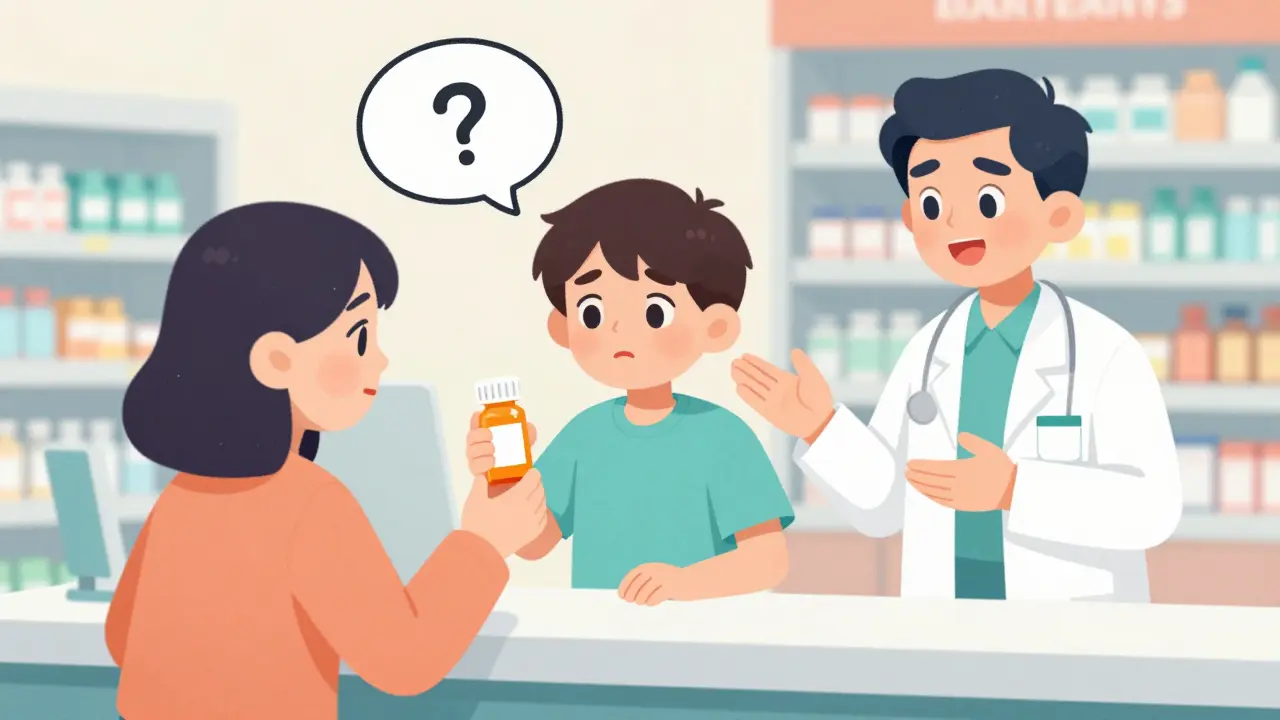
For most people, switching to a generic is a seamless process that saves a lot of money. But for a small group of patients, the experience isn't as smooth. The core of the issue isn't usually the active drug itself, but the "extras" that come with it. Understanding the difference between a pharmacological reaction and a psychological one can help you manage your health without unnecessary anxiety.
The Basics: What Actually Makes a Generic "Equivalent"?
To understand why reactions happen, we first need to look at what a generic drug actually is. A generic medication is a pharmaceutical product that contains the same active ingredient as a brand-name drug but is sold under its chemical name after the original patent expires.
In the U.S., the FDA (Food and Drug Administration) requires these drugs to prove bioequivalence. This means the generic must deliver the same amount of the active drug into your bloodstream in the same amount of time as the brand name. Specifically, the pharmacokinetic parameters must fall within a 90% confidence interval between 80% and 125% of the original drug.
While this sounds like a tight window, it does allow for some variation. For most medications, this difference is invisible to the patient. However, for drugs with a narrow therapeutic index-where a tiny change in dosage can mean the difference between a working drug and a toxic one-these small variations can actually matter. Think of medications like warfarin or levothyroxine; a slight shift in how the body absorbs them can lead to unstable levels in the blood.
Do Generics Actually Cause More Side Effects?
If you look at the big data, the answer is generally no. A massive 2018 study published in PLOS Medicine looked at 38 clinical trials and found no evidence that generic cardiovascular drugs were less safe or less effective than brand-name versions. In some surprising cases, generics actually performed better. For example, research on simvastatin showed that people were actually more likely to stop taking the brand-name version due to side effects (43.4%) than those taking the generic (27.6%).
However, the story changes when we look at where the drugs are made. A study from Ohio State University found that generic drugs manufactured in India were linked to 54% higher rates of severe adverse events, such as hospitalizations, compared to those made in the U.S. This suggests that while the formula is the same, manufacturing quality and oversight can vary by region.
| Attribute | Brand-Name Drug | Generic Drug |
|---|---|---|
| Active Ingredient | Identical | Identical |
| Inactive Ingredients (Fillers/Dyes) | Specific to manufacturer | Varies by manufacturer |
| FDA Requirement | Safety/Efficacy trials | Bioequivalence |
| Cost | Higher (Patent protected) | Lower (Competitive market) |
| Absorption Window | Baseline | 80% to 125% of baseline |
The Nocebo Effect: Is It in Your Head?
Sometimes, the side effect isn't caused by the chemical, but by the perception of the drug. This is called the nocebo effect-the opposite of a placebo. If you believe a generic drug is inferior, your brain can actually trigger real, physical symptoms of distress.
A fascinating 2012 study proved this by giving patients identical placebo pills. One group was told they were taking a brand-name drug, and the other was told they were taking a generic. The group told they were taking the generic reported significantly more side effects, even though there was no active medication in either pill. This tells us that a huge portion of "generic side effects" are actually psychological reactions to the label, not the medicine.
The Culprit: Inactive Ingredients
If it's not the active drug and it's not in your head, what is it? The answer is usually the inactive ingredients, also known as excipients. These are the binders, fillers, dyes, and preservatives that hold the pill together or help it dissolve.
While the FDA doesn't require generics to have the same inactive ingredients as the brand name, some people are hypersensitive to specific dyes or fillers. If you have a known allergy or a very sensitive stomach, you might react to a filler in a generic version that wasn't present in the brand-name version. This isn't a failure of the drug's efficacy, but rather an individual sensitivity to the formulation.
When Should You Be Concerned?
For the vast majority of people, a generic is a safe and smart choice. However, there are specific scenarios where you should have a more detailed conversation with your doctor. If you are taking a medication for a complex condition or a drug with a narrow therapeutic window, consistency is key. This is why some doctors use the phrase "Dispense as Written" (DAW) on prescriptions for drugs like phenytoin or warfarin. This ensures you get the exact same manufacturer every time, preventing "yo-yoing" levels of the drug in your system.
Another area of concern is complex generics, such as inhalers or modified-release creams. These are harder to replicate than a simple tablet, and the FDA has acknowledged that ensuring equivalence in these products requires more rigorous testing. If you feel your inhaler isn't delivering the same relief as the brand name, it's worth mentioning to your provider.
How to Manage a Switch Smoothly
If you're nervous about switching to a generic, you don't have to just "hope for the best." There are practical steps you can take to ensure the transition is easy:
- Ask about the manufacturer: If you've had a bad experience with one generic, ask your pharmacist if they can source a version from a different manufacturer.
- Request a "consistent source": Ask your pharmacy to keep you on the same generic manufacturer rather than switching brands every month based on what's cheapest.
- Track your symptoms: Keep a simple log for two weeks after a switch. Note any new symptoms and when they occur. This helps your doctor determine if the reaction is pharmacological or just a temporary adjustment.
- Educate yourself: Understanding that the active ingredient is identical can actually reduce the risk of the nocebo effect.
Can I actually be allergic to a generic drug but not the brand name?
Yes, but you aren't allergic to the "generic drug" itself. You are likely reacting to an inactive ingredient, such as a specific dye, lactose, or a binding agent used by that specific generic manufacturer. The active medication remains the same in both versions.
Why do some people feel the generic doesn't "work" as well?
This can happen for two reasons. First, for drugs with a narrow therapeutic index, a small difference in absorption (within the allowed 80-125% range) can be noticeable. Second, the nocebo effect can make a person perceive a drug as less effective because it is cheaper or a different color.
Are generics from other countries less safe?
Some studies have indicated higher rates of severe adverse events with generics from certain regions, like India, potentially due to quality control variations. However, the FDA inspects facilities worldwide and maintains that most approved generics are safe regardless of the country of origin.
Should I ask my doctor for "Dispense as Written"?
You should consider this if you are taking high-risk medications (like blood thinners or thyroid hormones) or if you have a history of severe reactions to different generic formulations. For most other drugs, the cost increase usually isn't worth the lack of clinical benefit.
What should I do if I experience a new side effect after switching?
Don't stop taking your medication abruptly. Instead, contact your pharmacist or doctor. Document exactly what the symptom is and when it started. They can help you decide if you should try a different generic manufacturer or return to the brand-name version.
Next Steps for Patients
If you're currently on a brand-name drug and want to save money, start by asking your pharmacist if a bioequivalent generic is available and if it's appropriate for your specific condition. If you've already switched and feel "off," don't panic. Most of the time, your body just needs a few days to adjust to a slightly different filler or binder. Keep a symptom diary and schedule a brief check-in with your healthcare provider to confirm your levels are still in the target range.
Tama Weinman
April 17, 2026 AT 10:07Funny how they mention a "tight window" for bioequivalence but then admit it's actually an 80% to 125% range
basically just telling us that the drug could be 25% stronger or 20% weaker and it's "fine" according to the FDA
it's all just a game to let big pharma dump cheap remnants on the public while pretending the quality is the same
Cheryl C
April 19, 2026 AT 07:55Omg thank god for US made meds!! 🇺🇸🇺🇸 dont trust those overseas ones they are total garbage and probably fake anyway lol 🚩
Nathan Berlin
April 21, 2026 AT 02:31The audacity to target India in this post is simply laughable 🙄 our pharmaceutical sector is the pharmacy of the world and we provide life saving medication to millions while the west just complains about a few fillers 💅✨
Richard Moore
April 22, 2026 AT 14:53Honestly some people just love to complain and stir up drama over nothing 🙄 if you can't handle a generic you should just pay for the brand and stop whining 👊
Ben Ferguson
April 24, 2026 AT 07:28I remember a time when the relationship between a patient and their pharmacist was a sacred bond of trust and care, yet here we are in an era where we must scrutinize every single binder and filler in a tiny tablet as if our very lives depend on the specific shade of dye used in a factory thousands of miles away, which is just a heartbreaking reflection of how fragmented our healthcare system has become!
Agatha Deo
April 25, 2026 AT 21:00Oh please, let's not pretend the "nocebo effect" isn't just a convenient way for doctors to gaslight patients into thinking their real physical reactions are just imagination
it's a classic move to discredit the consumer so the pharmaceutical companies can keep pushing the cheapest possible alternatives without any real accountability
Rob Schlautman
April 27, 2026 AT 10:49the whole idea that a person is just imagining their symptoms because they think a drug is too cheap is just such a lazy way to look at medicine and frankly i find the lack of nuance in these studies just exhausting because who actually has the time to track every single symptom for two weeks like some sort of unpaid lab rat for their own doctor who probably doesn't even read the notes
Kim Hyunsoo
April 28, 2026 AT 09:11The concept of a nocebo effect is honestly so trippy... like our brains are just out here fabricating rashes because of a label? (o_O)
Nell O'Leary
April 29, 2026 AT 03:04The pharmacokinetic variability in narrow therapeutic index drugs is definitely the crux of the issue here
especially when dealing with suboptimal bioavailability in certain generic formulations (^-^)
Jon lee
April 29, 2026 AT 04:25Just a friendly reminder that if anyone is feeling anxious about their switch, it's totally okay to reach out to your doctor for a bit of extra support! We're all in this together and your peace of mind is just as important as the medication itself.
Rock Stone
April 29, 2026 AT 11:16Keep your head up everyone!