Narrow Therapeutic Index Drug Checker
Check if your medication has a narrow therapeutic index (NTI). These drugs have a small margin between effective and toxic doses. For NTI drugs, switching to generics may require extra monitoring.
When you pick up a prescription, you might see two options: the brand-name pill you recognize from TV ads, or a cheaper generic with a plain label. Many people wonder-are generics as safe as brand names? The short answer is yes, for almost all drugs. But the details matter, especially if you’re taking something for a serious condition like thyroid disease, epilepsy, or heart failure.
What Makes a Generic Drug "Generic"?
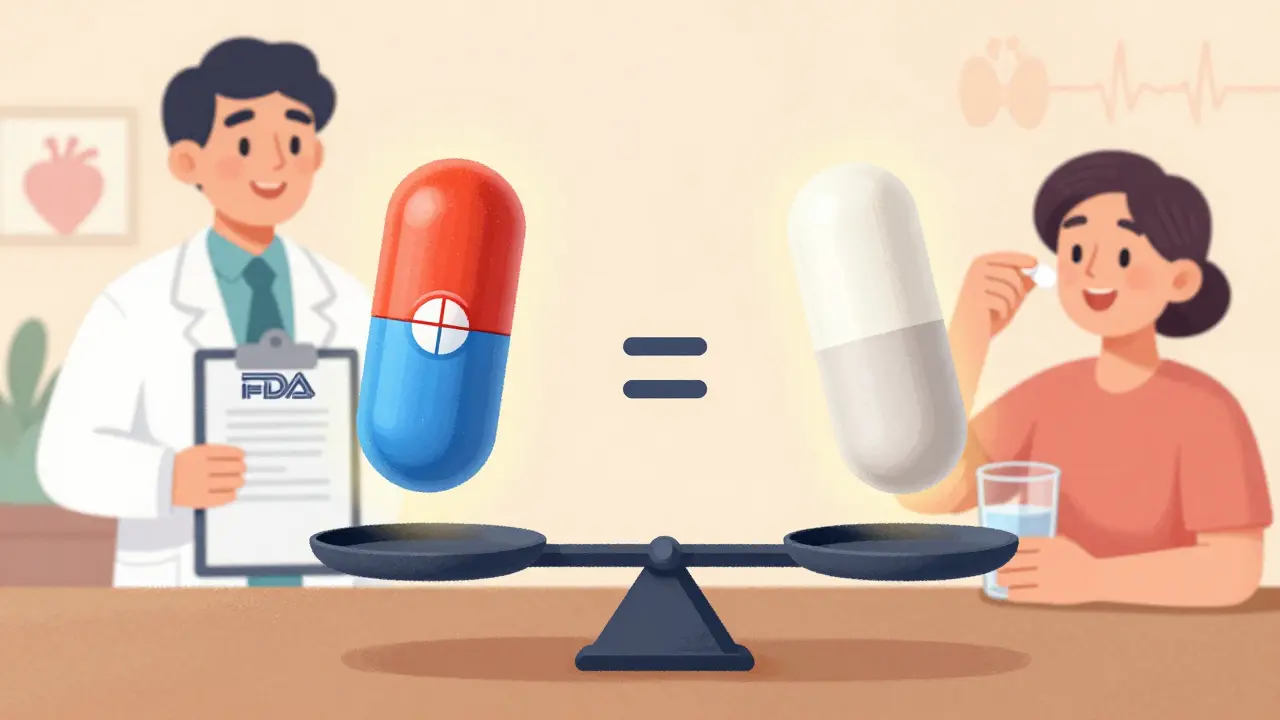
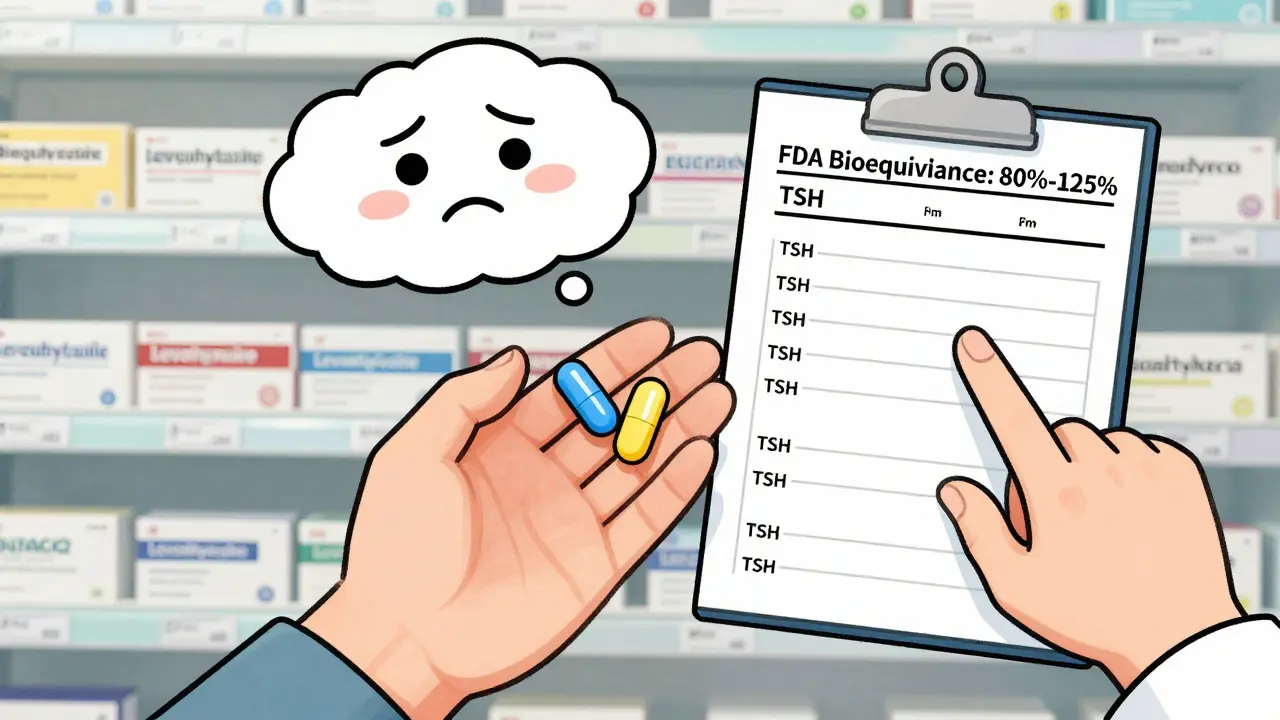
A generic drug isn’t a copycat. It’s required by law to contain the exact same active ingredient, in the same strength, and delivered the same way as the brand-name version. That means if you’re taking 10 mg of lisinopril for high blood pressure, whether it’s called Zestril or a generic, the chemical doing the work is identical. The U.S. Food and Drug Administration (FDA) doesn’t approve a generic unless it proves it delivers the same amount of medicine into your bloodstream at the same rate as the original. This is called bioequivalence, and it’s measured within a strict 80% to 125% range of the brand-name drug’s absorption.
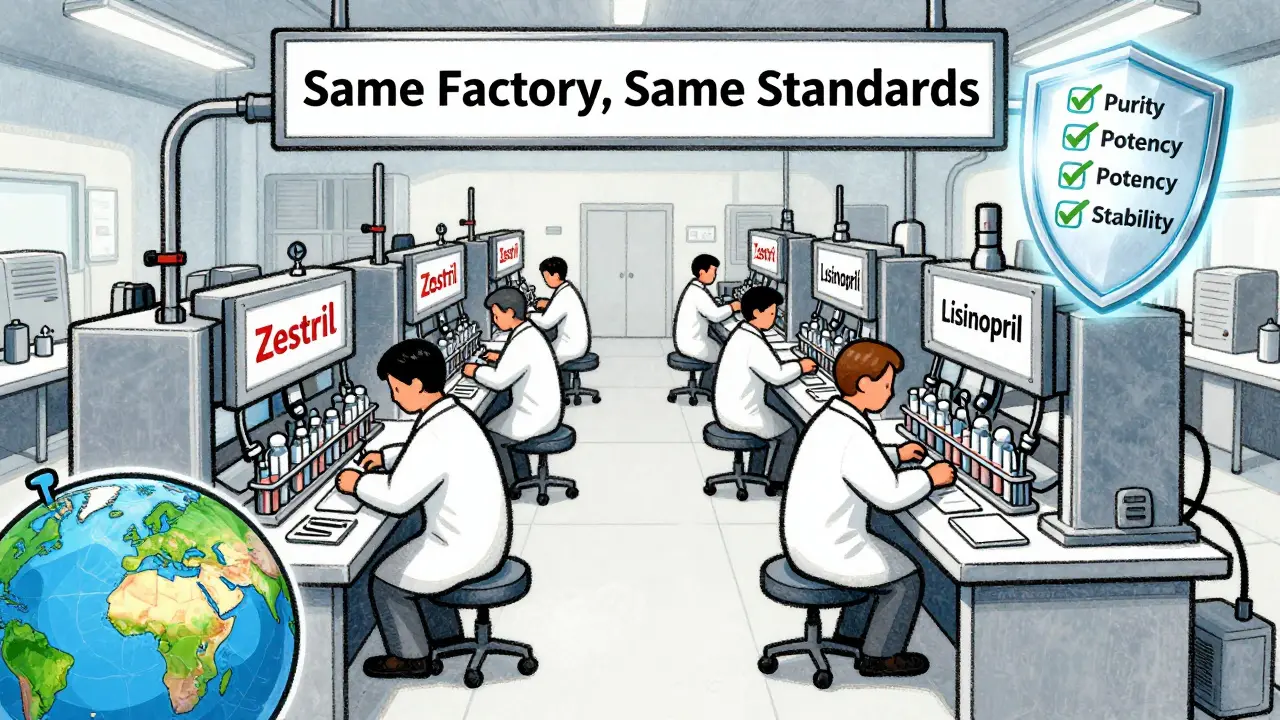
The FDA reviews over 1,000 generic applications every year. Each one must pass lab tests, manufacturing inspections, and clinical data reviews. In 2023, the agency inspected more than 12,000 facilities worldwide that make generic drugs-same as those making brand-name pills. Generic manufacturers aren’t given a pass on quality. They’re held to the same standards: purity, potency, shelf life, and stability.
Where Generics Differ-And Why It Matters
While the active ingredient is identical, generics can look different. They might have a different color, shape, or taste. That’s because U.S. trademark laws prevent generics from copying the exact appearance of brand-name drugs. The differences come from inactive ingredients-things like fillers, dyes, preservatives, and coatings. These don’t treat your condition, but they can affect how the pill breaks down in your stomach.
For most people, this doesn’t matter. But for a small group-those taking drugs with a narrow therapeutic index (NTI)-even tiny changes in absorption can be risky. NTI drugs have a very thin line between being effective and being toxic. Examples include warfarin (for blood clots), levothyroxine (for hypothyroidism), phenytoin (for seizures), and digoxin (for heart rhythm). If your blood levels dip too low, the drug stops working. If they rise too high, you could have a dangerous reaction.
That’s why the FDA requires extra testing for generics of NTI drugs. In 2023, they released new draft guidance demanding more detailed pharmacokinetic studies for these medications. It’s not because generics are unsafe-it’s because the stakes are higher when even a 5% difference in absorption could cause problems.
What Does the Science Say?
Large studies back up the safety of generics. A 2019 study in JAMA Internal Medicine followed 1.5 million Medicare patients on levothyroxine. Half took the brand-name Synthroid, half took a generic. After a full year, there was no difference in hospital visits, emergency room trips, or thyroid lab results. Another study of over 136,000 older adults on blood pressure meds found slightly more ER visits after switching to generics-but researchers couldn’t rule out other factors like changes in health, diet, or adherence.
On the flip side, a 2022 study in the Journal of Managed Care & Specialty Pharmacy found that patients switched from brand to generic antiepileptic drugs were 12% more likely to stop taking their medication within six months. That’s not because the drug stopped working-it’s because some people noticed a change in pill size, color, or how it felt in their throat. That small difference led to fear, confusion, or distrust-and sometimes, non-adherence.
Adverse event reports tell a similar story. The FDA’s database shows generics have 1.7 reports per 100,000 prescriptions, while brands have 1.5. That gap isn’t because generics are riskier-it’s because far more generics are prescribed. In the U.S., 90% of all prescriptions filled are generics. More use means more reports, even if the rate of problems is nearly identical.
Why Do People Doubt Generics?
Despite the evidence, skepticism runs deep. A 2022 Kaiser Family Foundation survey found 68% of U.S. adults believe generics are less effective than brand-name drugs. That’s a big gap between perception and reality. Why? Partly because of marketing. Brand-name companies spend billions on ads that make their drugs feel more trustworthy. Partly because of personal experience.
On Drugs.com, patients report more side effects with generic levothyroxine than with Synthroid. Reddit threads are full of comments like, “I switched to generic and my TSH shot up,” or “I felt awful until I went back to brand.” But here’s the catch: many of these people didn’t get their blood tested after switching. Thyroid levels can fluctuate naturally due to stress, weight changes, or even seasonal variations. Without lab data, it’s hard to know if the generic caused the problem-or if it was something else.
Pharmacists, who see this daily, are far more confident. A 2023 Pharmacy Times poll found 92% of pharmacists believe generics are just as effective. Only 5% say they regularly see patients having trouble with generic substitutions.
Cost Savings Are Real-and Huge
Generics aren’t just safe-they’re a lifeline for affordability. The average brand-name prescription costs $657. The generic? Around $11. That’s an 85% drop. For people paying out-of-pocket, switching to a generic can save $387 per prescription. Over a year, that’s thousands saved. The Medicare program saved $1.67 trillion from 2006 to 2020 thanks to generics. Without them, millions would skip doses or go without treatment.
Even more surprising: nearly half of all generic drugs in the U.S. are now made by the same companies that produce the original brand-name versions. Pfizer’s generic arm, Greenstone, and Novartis’s Sandoz are among the biggest suppliers. So when you take a generic, you’re often getting a pill made in the same factory, by the same team, using the same equipment as the brand.
When You Should Be Cautious
Here’s what you need to know if you’re on a critical medication:
- If you’re taking warfarin, levothyroxine, phenytoin, or digoxin, ask your doctor before switching between brand and generic-or between different generic brands.
- Get your blood levels checked 4 to 6 weeks after any switch. Thyroid, kidney, and liver function tests can catch small changes early.
- Don’t switch back and forth. Consistency matters more than cost for NTI drugs.
- If your prescription says “dispense as written,” the pharmacist can’t substitute a generic without your doctor’s approval.
- Keep the same manufacturer if possible. Some patients report better stability sticking with one generic brand.
The FDA’s Orange Book lists every approved generic and rates its equivalence. Most (97%) are rated “A,” meaning they’re fully substitutable. A few are rated “B,” meaning they’re not recommended as replacements. Your pharmacist can check this before filling your prescription.
What’s Changing Now?
Regulators are stepping up. The FDA’s new GDUFA III program, running through 2027, increases inspection frequency for generic drug factories-especially in India and China, where most raw materials come from. In 2022, 15% of all FDA warning letters went to generic manufacturers for data integrity issues. That’s not a sign of widespread failure-it’s a sign of better oversight.
Also, the Inflation Reduction Act is pushing for faster generic approval on Medicare drugs. That means more competition, lower prices, and more choices. Complex generics-like inhalers, injectables, and biosimilars-are growing fast. The FDA approved 72 complex generics in 2022, up from 45 in 2020.
Still, supply chain issues remain. In 2022, there were 287 generic drug shortages-up 17% from the year before. Most were for injectable antibiotics and emergency medications. That’s a system problem, not a safety one. But it’s why some pharmacies can’t always offer your usual generic.
Bottom Line
For the vast majority of people, generic drugs are just as safe and effective as brand names. The science is clear. The data is solid. The savings are massive. But if you’re on a narrow therapeutic index drug, pay attention. Test your levels. Talk to your doctor. Don’t switch randomly. And if you feel something’s off after a switch-don’t ignore it. Get your blood checked.
Generics aren’t second-rate. They’re a smart, safe, and essential part of modern healthcare. The real risk isn’t in taking them-it’s in avoiding them out of fear.
Are generic drugs as safe as brand-name drugs?
Yes, for the vast majority of medications. The FDA requires generics to have the same active ingredient, strength, dosage form, and bioequivalence as brand-name drugs. They must pass the same manufacturing and quality standards. Studies involving millions of patients show no meaningful difference in safety or effectiveness for most drugs.
Can generic drugs cause different side effects?
The active ingredient doesn’t change, so the core side effects are the same. But inactive ingredients-like dyes or fillers-can cause rare reactions in sensitive individuals. For example, someone allergic to a dye in one generic might react, while another generic without that dye doesn’t. These cases are uncommon, and switching to a different generic brand often solves the issue.
Why do some people say generics don’t work for them?
Often, it’s not the drug itself-it’s perception. Changing pill size, color, or how it tastes can make people feel like something’s wrong. In rare cases, especially with narrow therapeutic index drugs like levothyroxine or warfarin, small differences in absorption can affect blood levels. That’s why doctors recommend checking lab values after a switch. But for most people, the difference is psychological, not biological.
Should I avoid generics if I’m on a critical medication?
No-but be cautious. If you’re taking a drug with a narrow therapeutic index (like thyroid, seizure, or heart meds), talk to your doctor before switching. Get your blood levels tested 4-6 weeks after any change. Stick with the same generic brand if it works well. Don’t switch back and forth unless advised.
Are generics made in the same factories as brand-name drugs?
Yes, often. Major brand-name companies like Pfizer, Novartis, and Merck also produce generic versions through their own subsidiaries. Many generic drugs are made in the same facilities, with the same equipment, and sometimes even the same production lines. The difference is in the label, not the factory.
Why are generics so much cheaper?
Generics don’t have to repeat expensive clinical trials because they’re proven to be equivalent to an already-approved drug. They also face competition from multiple manufacturers once a patent expires, which drives prices down. Brand-name companies spend billions on marketing and R&D-costs generics don’t carry.
Next time you’re handed a generic, don’t hesitate. It’s not a compromise-it’s a scientifically validated, cost-effective, and widely trusted option. Unless your doctor says otherwise, take it with confidence.
Zacharia Reda
February 28, 2026 AT 19:07Let me get this straight - we’re told generics are just as good, but then we’re also told to get blood tests after switching? Sounds like they’re trying to have it both ways. If they’re *really* identical, why do we need a whole lab report to prove it? I get the cost savings, but I’m not convinced this isn’t just corporate cost-cutting dressed up as science.
Jeff Card
March 1, 2026 AT 14:41I switched my mom from Synthroid to generic last year. She was terrified. I told her the science says it’s fine, but I also got her TSH checked before and after. Guess what? Her levels were identical. No drama. No side effects. Just a $400 savings per year. Sometimes the fear is worse than the actual change.
Matt Alexander
March 1, 2026 AT 15:31Generic = same medicine. Same factory. Same quality. The only difference? Price. And sometimes the shape. If your pill looks different, that doesn’t mean it works different. I’ve been on generic blood pressure meds for 8 years. Still alive. Still healthy. No magic pills needed.
Gretchen Rivas
March 2, 2026 AT 10:01My pharmacist checks the FDA’s Orange Book before filling any NTI prescription. I trust her more than any ad. Generics aren’t second-rate - they’re the backbone of affordable care. Just don’t switch back and forth. Consistency matters.
Mike Dubes
March 3, 2026 AT 05:50People freak out over pill color but don’t even notice their phone’s battery life dropped 20% in a year. We’re wired to notice small changes even when they mean nothing. I switched to generic levothyroxine and felt fine. Then I Googled it and started feeling weird. Turns out my brain was the problem, not the pill.
Helen Brown
March 3, 2026 AT 21:13Who really controls the FDA? Big pharma owns the regulators. You think they’d let a cheap pill pass if it could hurt people? Think again. The real danger is not the generic - it’s the fact that the same companies that make the brand also make the generic. They’re not saving you money. They’re just rebranding.
John Cyrus
March 5, 2026 AT 01:13If you’re too lazy to research your meds then you deserve to get sick. The FDA doesn’t approve generics without proof. Period. Stop listening to Reddit stories and read the actual studies. JAMA. 1.5 million patients. No difference. End of story. Your fear is not a valid medical concern.
John Smith
March 5, 2026 AT 14:00Brand names are just fancy wrappers. The real drug? Same chemical. Same factory. Same guy in a lab coat measuring it. You think Pfizer cares if you call it Zestril or lisinopril? Nah. They’re just cashing in on your nostalgia. Wake up. The system’s rigged - but not because generics are bad. Because they’re too damn good.
Sharon Lammas
March 7, 2026 AT 02:08It’s interesting how we attach identity to medication. A pill’s color, size, even taste - we project meaning onto it. But the medicine itself? It doesn’t care. It just reacts with our biology. Maybe the fear isn’t about the drug. Maybe it’s about losing control.
marjorie arsenault
March 8, 2026 AT 06:26Generics saved my life. I was choosing between food and my meds before I switched. Now I take my thyroid pill, my blood pressure pill, my cholesterol pill - all generic. No issues. No drama. Just health. Don’t let fear cost you your well-being.
Deborah Dennis
March 9, 2026 AT 23:56Wow. Just… wow. You wrote a whole essay to say ‘generics are fine’? But what about the 3% who have bad reactions? What about the people who lost their jobs because they couldn’t afford the brand? This post is so… optimistic. It’s almost naive.
Shivam Pawa
March 10, 2026 AT 04:43From India - we make 40% of global generics. Factories here follow USFDA rules. Same machines. Same audits. The only difference? No marketing budget. You think we’re cutting corners? We’re cutting ads. The science is solid. Trust the data, not the brand.
Diane Croft
March 10, 2026 AT 23:15My dad’s on warfarin. We stuck with one generic brand. Checked labs every 6 weeks. No issues. Generics aren’t risky - unpredictability is. Pick one, stick with it, and monitor. Simple.
Donna Zurick
March 12, 2026 AT 12:29My pharmacy switched my generic without telling me. I felt weird for two days. Then I checked my TSH. Normal. Turned out I was just stressed. The pill didn’t change. My anxiety did. Don’t assume the worst. Test. Don’t guess.