Drug-Induced Tremor Risk & Management Tool
Step 1: Select Your Medications
Check all medications you are currently takingStep 2: Personal Risk Factors
Toggle factors that apply to youYour Assessment
Select medications and factors to see your personalized assessment.
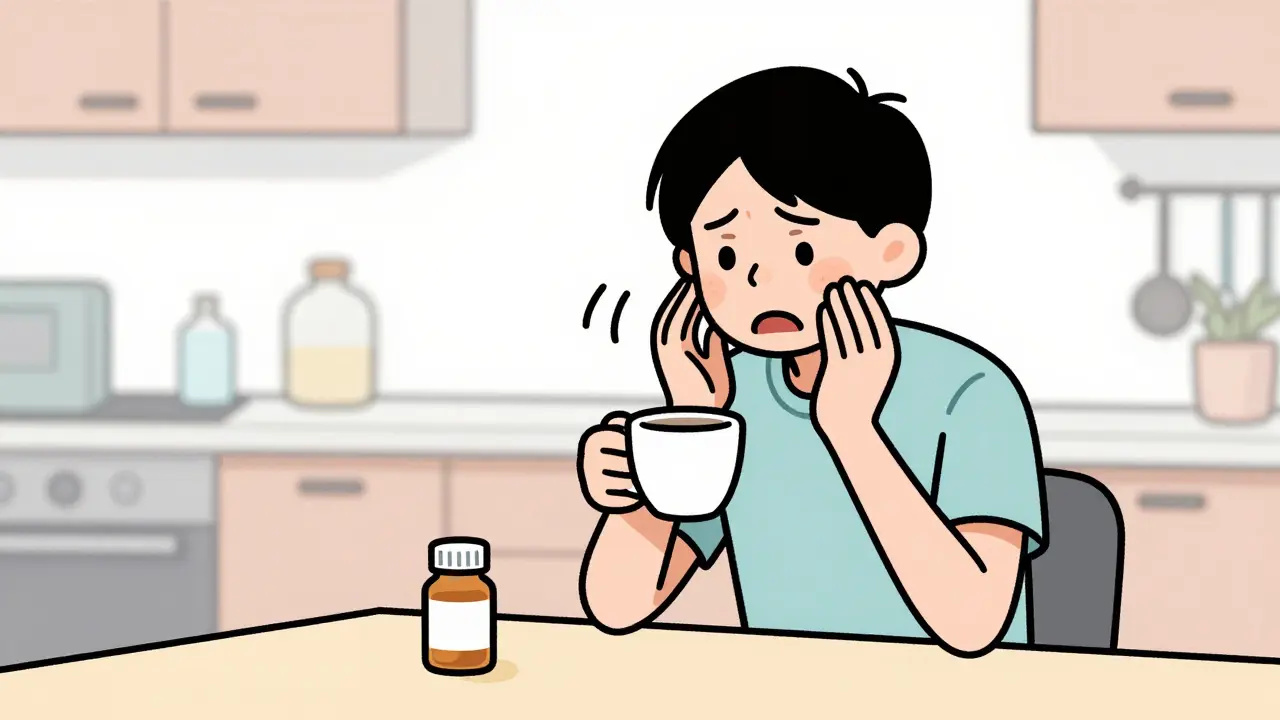
Have you ever started a new prescription and noticed your hands shaking? It’s not just in your head. Drug-induced tremor is a condition where involuntary, rhythmic shaking occurs as a direct side effect of taking specific medications. This isn't a sign that something is fundamentally wrong with your brain structure; it's a chemical reaction to the drugs you're ingesting. In fact, this condition accounts for about 5% to 10% of all tremor cases seen by neurologists today.
The good news? Unlike progressive neurological disorders, drug-induced tremors are often reversible. Studies show that 70% to 90% of these cases resolve completely within weeks or months after adjusting the medication. Understanding why this happens and how to manage it can save you from unnecessary worry and potentially incorrect diagnoses.
What Exactly Is Drug-Induced Tremor?
A tremor is defined as an involuntary, rhythmic muscle contraction leading to oscillatory movements of one or more parts of your body. When we talk about drug-induced tremor, we mean these shakes are triggered specifically by pharmaceutical agents. The shaking typically happens at frequencies between 4 and 12 Hz (cycles per second). You might notice it most when you’re trying to hold a position, like holding a coffee cup steady, or when moving your limbs.
These tremors usually start quickly-often within the first hour of taking a dose, though some medications can cause delayed onset lasting several weeks. Interestingly, these tremors generally stop while you are sleeping. If your shaking continues through your sleep, it might point to a different underlying issue rather than a simple medication side effect.
Which Medications Cause Shakiness?
Not every pill causes shakes, but certain classes of drugs are notorious culprits. Based on data from the FDA Adverse Event Reporting System, here are the main offenders:
- Antidepressants: Selective serotonin reuptake inhibitors (SSRIs) and SNRIs are among the top causes. Specific drugs like clomipramine (Anafranil), fluvoxamine (Luvox), and paroxetine (Paxil) have higher incidence rates compared to others in their class.
- Heart Medications: Amiodarone, used for irregular heartbeats, accounts for over 15% of reported drug-induced tremor cases.
- Mood Stabilizers: Lithium carbonate (Lithobid) causes tremors in nearly 19% of patients at therapeutic doses, especially if blood levels rise above 0.8 mmol/L.
- Asthma Inhalers: Beta-agonists like albuterol can stimulate the nervous system, leading to hand shakes.
- Antipsychotics: Both first-generation (like haloperidol) and second-generation (like risperidone) antipsychotics can cause movement disorders, including tremors.
Tremor vs. Parkinson’s: How to Tell the Difference
Finding out you have a tremor can be scary because people immediately think of Parkinson’s disease. However, there are clear differences between drug-induced tremors and Parkinsonian tremors.
| Feature | Drug-Induced Tremor | Parkinson’s Disease |
|---|---|---|
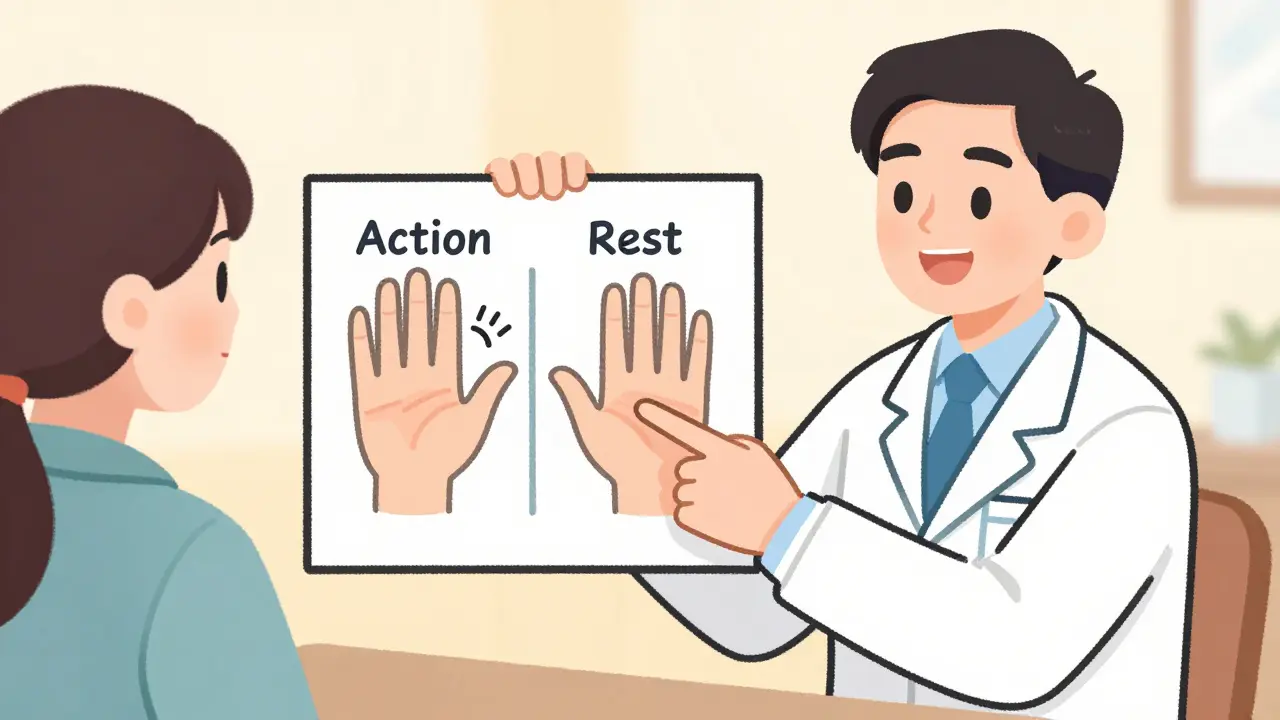
| Timing | Occurs during action or posture maintenance | Typically occurs at rest |
| Frequency | Higher frequency (6-12 Hz) | Lower frequency (4-6 Hz) |
| Onset | Sudden, linked to starting/changing meds | Gradual, progressive over years |
| Reversibility | Resolves after stopping/reducing drug | Progressive without treatment |
| Other Symptoms | Usually isolated to shaking | Rigidity, slowness of movement (bradykinesia) |
If your tremor improves when you move your arm actively, it’s less likely to be Parkinson’s. Conversely, if your hand shakes mostly when it’s resting in your lap, that’s a classic Parkinsonian sign. Always consult a neurologist for a definitive diagnosis, as misdiagnosis happens in about 10% of initial Parkinson’s cases due to drug-induced factors.
Why Do Some People Get Tremors More Than Others?
You might wonder why your friend takes the same antidepressant as you but doesn’t shake. Genetics play a huge role here. Recent research identified that individuals who are "poor metabolizers" of certain enzymes, specifically CYP2D6, are 2.4 times more susceptible to antidepressant-induced tremors. This means their bodies process the drug slower, leading to higher concentrations in the bloodstream.
Age is another major factor. Elderly patients taking five or more medications (polypharmacy) face a 34% risk of developing tremors, compared to just 4.2% for those on one or two drugs. The cumulative effect of multiple substances interacting in the body creates a perfect storm for neurological side effects.
How to Manage and Reduce Drug-Induced Tremors
If you suspect your medication is causing shakes, do not stop taking it abruptly. Suddenly quitting SSRIs, for example, can cause withdrawal symptoms that include *more* tremors in 22% of cases. Instead, follow these steps:
- Document the Timeline: Note when you started the medication and when the shaking began. 87% of drug-induced tremors appear within 72 hours of starting the drug.
- Contact Your Doctor: Discuss your symptoms. They may check your blood levels (crucial for lithium users) to see if you’re in the toxic range.
- Dose Adjustment: Often, simply lowering the dose reduces the tremor severity. About 63% of patients find relief this way.
- Switch Medications: If you need an antidepressant, switching from high-risk drugs like paroxetine to lower-risk options like sertraline or escitalopram can cut your tremor risk by up to 40%.
- Add a Counter-Medication: For persistent tremors, doctors may prescribe propranolol, a beta-blocker. Doses between 20-80 mg daily reduce tremor severity in 58% of patients.
For asthma patients, switching from albuterol to levalbuterol can reduce tremors by 37%, offering better breathing control with fewer side effects.

When to Seek Immediate Medical Attention
While most drug-induced tremors are annoying but harmless, some signs indicate serious complications. Seek emergency care if your tremors are accompanied by:
- High Fever: This could signal Neuroleptic Malignant Syndrome, a rare but life-threatening reaction to antipsychotics.
- Rapid Heartbeat (Tachycardia): Especially if you take thyroid medication like levothyroxine, this could indicate a thyroid storm.
- Confusion or Hallucinations: These suggest the drug level is too high and affecting your central nervous system broadly.
Living With Medication-Related Shakes
Dealing with tremors can affect daily tasks like writing, eating, or drinking. While waiting for medication adjustments to take effect, practical strategies can help. Use weighted utensils or cups to stabilize your movements. Avoid caffeine and alcohol, as both can exacerbate shaking. Stress management techniques, such as deep breathing, are also vital since stress worsens tremor intensity.
Remember, drug-induced tremor is a manageable side effect. By working closely with your healthcare provider, monitoring your symptoms, and understanding the mechanisms behind your medications, you can regain stability and confidence in your daily life.
Can drug-induced tremors go away permanently?
Yes, in most cases. Approximately 70% to 90% of drug-induced tremors resolve completely within weeks to months after discontinuing or reducing the dosage of the causative medication. The key is identifying the right drug culprit and adjusting it under medical supervision.
Which antidepressant is least likely to cause tremors?
Sertraline and escitalopram are considered to have a lower risk profile for tremors compared to other SSRIs like paroxetine or fluvoxamine. Sertraline has a tremor incidence rate of around 1.8%, making it a preferred alternative for patients prone to shakiness.
Does stopping my medication suddenly make tremors worse?
It can. Abruptly stopping certain medications, particularly SSRIs, can trigger withdrawal symptoms that include increased tremors in about 22% of patients. Always taper off medications gradually under a doctor's guidance to avoid rebound effects.
How do I know if my tremor is from Parkinson’s or a drug?
Drug-induced tremors usually happen when you are moving or holding a position (action tremor) and occur at a faster frequency (6-12 Hz). Parkinson’s tremors typically happen when you are resting (resting tremor) and are slower (4-6 Hz). Additionally, drug-induced tremors lack the rigidity and slowness of movement seen in Parkinson’s.
Can beta-blockers help with medication-induced shaking?
Yes, propranolol, a common beta-blocker, is often prescribed to manage persistent drug-induced tremors. Studies show it reduces tremor severity in 58% of patients when taken at doses ranging from 20 to 80 mg daily. It works by blocking adrenaline, which can amplify shaking.