Side Effect Type Quiz
Your Results
When you take a medication, you expect it to help - not hurt. But side effects happen. Some are mild, like a dry mouth or dizziness. Others can land you in the hospital. The big question isn’t just what side effect you get - it’s why you got it. And that comes down to one critical divide: dose-related versus non-dose-related reactions.
What Are Dose-Related Side Effects?
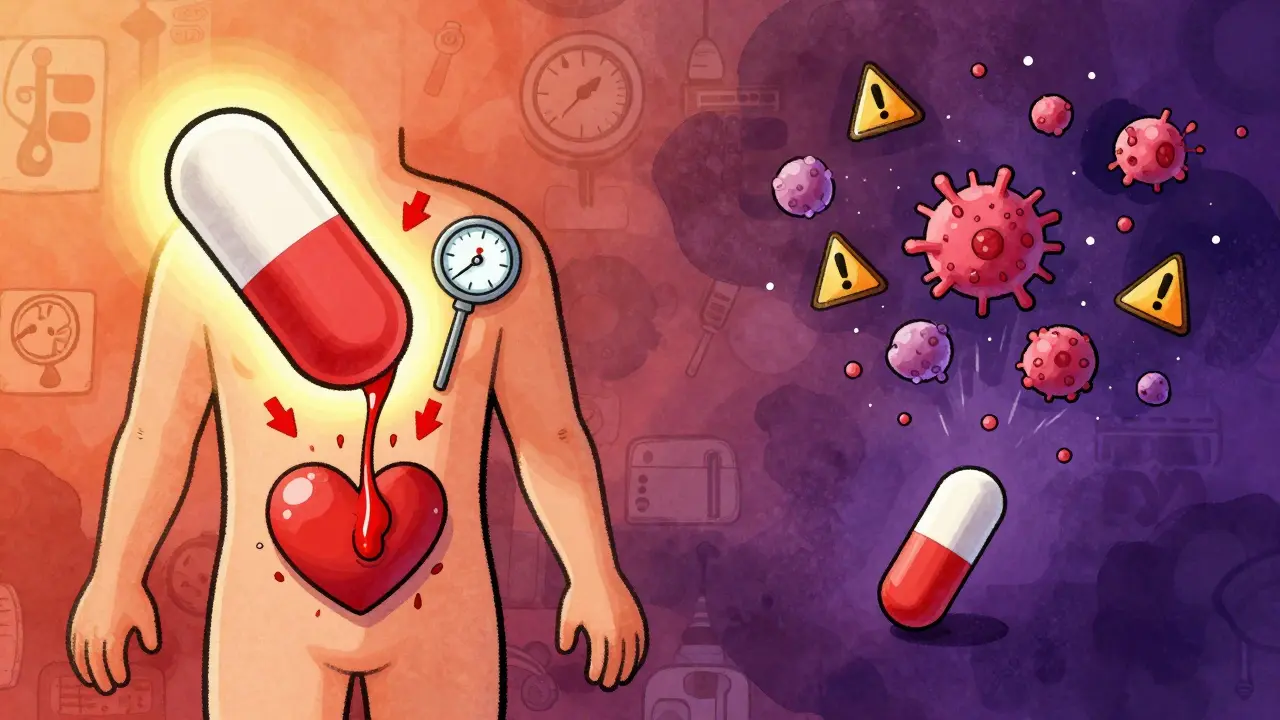
Dose-related side effects, also called Type A reactions, are the predictable kind. They happen because the drug is doing exactly what it’s supposed to do - just too much. Think of it like turning up the volume on a speaker: turn it too high, and it distorts. Same with medicine. These reactions follow the laws of pharmacology. The higher the dose, the stronger the effect. And they’re common - about 70% to 80% of all adverse drug reactions fall into this category. They’re also the reason why so many older adults end up in the emergency room. Drugs like warfarin, insulin, and antiplatelets cause nearly two-thirds of these hospital visits in people over 65. Examples are everywhere:- Too much insulin? Blood sugar drops below 70 mg/dL - hypoglycemia.
- Too much warfarin? INR spikes above 4.0 - you start bleeding internally.
- Too much diuretic? Blood pressure crashes below 90 mmHg systolic.
- Too much lithium? Tremors, confusion, even seizures - toxicity kicks in.
What Are Non-Dose-Related Side Effects?
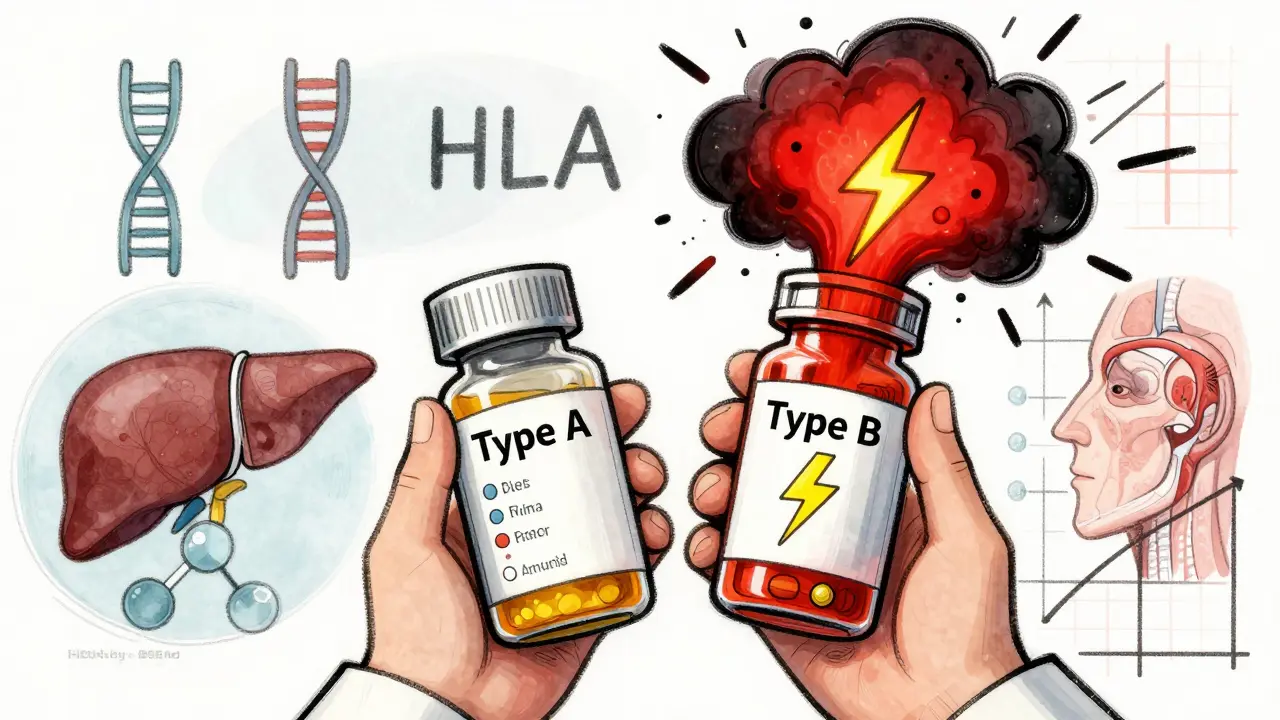
Now, flip the script. Non-dose-related side effects - Type B reactions - are the wild cards. They don’t care how much you take. One pill, and your body goes into overdrive. You didn’t overdose. You didn’t make a mistake. Your immune system just decided it was time to fight back. These reactions are rare - only 15% to 20% of all adverse events - but they’re responsible for 70% to 80% of serious, life-threatening cases. That’s why doctors fear them more than the common ones. They’re not predictable. You can’t look at a chart and say, “If you take 500 mg, you’ll get this rash.” Because sometimes you take 500 mg and feel fine. Other times, you take one 100 mg tablet - and your skin starts peeling. Classic examples:- Anaphylaxis from penicillin - swelling, trouble breathing, drop in blood pressure. Happens in 1-5 out of every 10,000 courses.
- Stevens-Johnson syndrome from lamotrigine or sulfonamides - a blistering skin reaction that can destroy your mucous membranes.
- Drug-induced liver injury from amoxicillin-clavulanate - liver enzymes shoot up, jaundice appears, even after a normal dose.
- Abacavir hypersensitivity - a life-threatening reaction in people with the HLA-B*57:01 gene variant.
Why the Confusion? The Dose Paradox
You might be thinking: “If all drugs act on receptors, shouldn’t everything be dose-dependent?” You’re right. The truth is, there’s no such thing as a reaction that’s truly independent of dose. But here’s the twist: sometimes the dose threshold is so low - or so unpredictable - that it looks like it doesn’t matter. In 2015, experts like Aronson and Ferner explained four reasons why Type B reactions seem dose-free:- The reaction isn’t real - maybe it’s a coincidence, or misdiagnosed.
- Your body hits maximum response at a tiny dose - like a light switch that flips on at 1 mg and stays on.
- People vary wildly. One person reacts at 5 mg. Another takes 50 mg and feels nothing.
- We just don’t measure the dose accurately - maybe you missed a pill, or your stomach absorbed it unevenly.
Which One Is More Dangerous?
It’s not about frequency - it’s about impact. Type A reactions? Common. Often mild. Rarely fatal. But they cost the U.S. system $130 billion a year. They’re the reason so many prescriptions get changed, so many patients get readmitted. Type B reactions? Rare. But deadly. Mortality rates? 5% to 10%. That’s 10 times higher than Type A. And they’re the main reason drugs get pulled from the market. The European Medicines Agency says Type B reactions cause 70% of all drug withdrawals due to safety concerns. Think about it this way: a Type A reaction is like a car brake failing because you didn’t maintain it. Fix the maintenance, and it won’t happen again. A Type B reaction is like a tire exploding because of a hidden manufacturing flaw - you didn’t do anything wrong. It just happened.How Doctors Handle Each Type
The treatment approach is completely different. For Type A reactions:- Lower the dose.
- Monitor blood levels - like checking vancomycin troughs or digoxin concentrations.
- Adjust for kidney or liver function.
- Watch for drug interactions - clarithromycin can make statins 10x more toxic.
- Stop the drug - permanently.
- Never use it again - even in small doses.
- Avoid similar drugs - if you reacted to penicillin, you’re likely allergic to amoxicillin too.
- Use genetic screening when possible - HLA-B*15:02 testing before carbamazepine in Asian populations cuts SJS risk by 97%.
What This Means for You
If you’re on a medication, here’s what to do:- Know your drug’s common side effects. If you’re on warfarin, know your INR target. If you’re on lithium, know the signs of toxicity.
- Report anything unusual - even if it seems minor. A rash after a new drug? Tell your doctor. It might be Type B.
- Ask about genetic testing if you’re prescribed abacavir, carbamazepine, or thiopurines.
- Keep a list of all your meds - including supplements. Interactions cause most Type A reactions.
- Don’t assume “it’s just a side effect.” If something feels wrong, it probably is.
The Future: Personalized Dosing
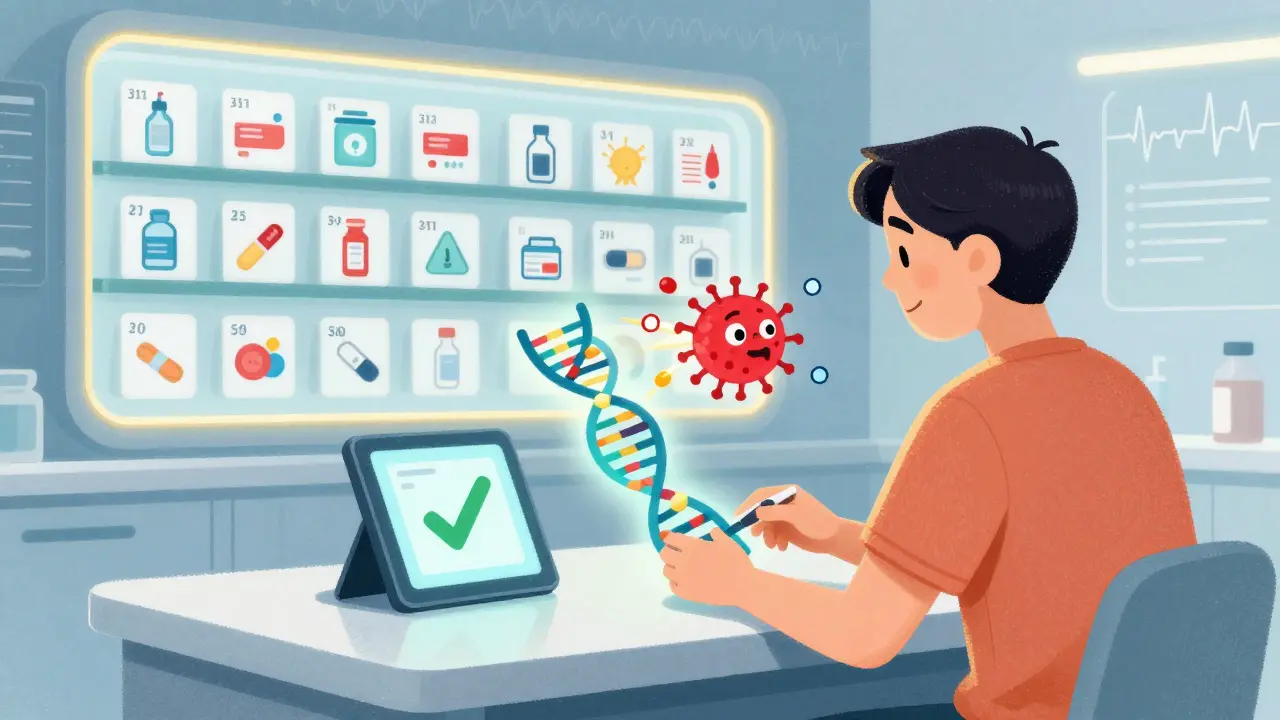
We’re moving toward precision medicine. The FDA now lists pharmacogenomic info on 311 drug labels. Twenty-eight of them require genetic testing before use. Companies are building AI tools that analyze your genes, your age, your kidney function, your other meds - and spit out a personalized dose. One study showed machine learning could predict Type A reactions with 82% accuracy. Type B? Only 63%. That tells you everything. The goal isn’t just to avoid side effects. It’s to stop them before they start. By understanding whether a reaction is dose-related or not, doctors can choose smarter, safer treatments - for you.Are all side effects dose-related?
No. About 70-80% of side effects are dose-related (Type A), meaning they get worse with higher doses. The other 15-20% are non-dose-related (Type B), like allergic reactions or rare genetic responses. These can happen even with a tiny dose and aren’t predictable based on how much you take.
Can you have a Type B reaction on the first dose?
Yes. While some Type B reactions need prior exposure to trigger sensitization (like penicillin allergies), others - like Stevens-Johnson syndrome from lamotrigine - can occur after the very first dose. Your immune system may have been primed by a past infection or environmental trigger, making you unexpectedly vulnerable.
Is a drug allergy always a Type B reaction?
Most drug allergies are Type B reactions - immune-mediated, unpredictable, and not tied to dose. Examples include anaphylaxis, hives, and Stevens-Johnson syndrome. But not all Type B reactions are allergies. Some are idiosyncratic, meaning the cause isn’t fully understood, like certain types of liver injury.
Why do some people react to a drug and others don’t?
Genetics play a huge role. For example, people with the HLA-B*57:01 gene have a 53% chance of a severe reaction to abacavir. Others may have slower drug metabolism due to CYP enzyme variants. Age, organ function, and even gut bacteria can change how a drug behaves in your body - making reactions unpredictable across populations.
Can you prevent Type A side effects?
Absolutely. Regular monitoring helps. For example, checking INR for warfarin, blood lithium levels, or kidney function for metformin. Dose adjustments based on age, weight, or organ health can prevent toxicity. Avoiding drug interactions - like not mixing statins with grapefruit juice or certain antibiotics - also cuts risk significantly.
What should I do if I have a side effect?
Don’t ignore it. Write down when it happened, what you were taking, and how severe it was. Contact your doctor or pharmacist immediately. For severe symptoms like swelling, trouble breathing, or a widespread rash, go to the ER. Never restart a drug that caused a reaction without professional advice - especially if it was sudden or severe.
Lexi Karuzis
January 27, 2026 AT 22:56So let me get this straight-you’re telling me that if I take ONE pill of amoxicillin, my body might just decide to start eating my skin alive?!! And no one can predict it?!? That’s not medicine-that’s Russian roulette with a prescription pad!!! I’ve been saying this for YEARS: Big Pharma is hiding the truth about these ‘random’ reactions because they don’t want to test everyone’s DNA before giving out drugs!! They’d rather you die quietly than pay for genetic screening!!!
Mark Alan
January 28, 2026 AT 16:51YOOOOO THIS IS WHY AMERICA’S HEALTHCARE IS A DISASTER 😭😭😭 I mean, seriously-why are we still using 1980s dosing protocols?!?! My cousin got SJS from a single dose of ibuprofen and now she’s got scars on her eyeballs!!! 🇺🇸🇺🇸🇺🇸 WE NEED TO FORCE EVERYONE TO GET GENETIC TESTED BEFORE THEY GET A PRESCRIPTION!!! NO EXCUSES!!! #PharmaMurderers #StopTheRoulette
jonathan soba
January 29, 2026 AT 23:49Interesting framing, though the statistical distinction between Type A and Type B is misleading. The 70-80% figure for Type A is only accurate in controlled clinical populations-real-world polypharmacy in elderly patients inflates this number due to pharmacokinetic drift, not inherent drug properties. Also, calling Type B reactions ‘unpredictable’ is a convenient fiction; we’ve known about HLA associations since the 1990s. The real issue is systemic underfunding of pharmacovigilance, not biological randomness.
matthew martin
January 31, 2026 AT 00:46Man, this post hit different. I used to think side effects were just ‘bad luck’-like getting a bad avocado. But now I see it’s more like playing Jenga with your biology. One wrong move, and the whole tower comes down. Type A? That’s just your body saying, ‘Hey, slow down, buddy.’ Type B? That’s your immune system throwing a full-blown rave without an invite. 🤯
And the part about genetic testing? That’s the future. I’ve got a friend who got prescribed abacavir and nearly died-turns out he had HLA-B*57:01. If they’d tested him first? He’d still have all his skin. $200 for a test that could save your life? That’s not expensive-that’s a bargain.
Chris Urdilas
January 31, 2026 AT 15:42So… drugs are basically just tiny little gremlins that sometimes decide to eat your organs instead of fixing your headache? Cool. Cool cool cool. 🤡
Anyway, I’ve been on warfarin for five years. My INR’s been stable as a rock. But I still check it every week like it’s my spiritual daily meditation. Because yeah, you’re right-it’s not magic. It’s math. And math doesn’t care if you’re ‘feeling fine.’
Also, I just Googled ‘lamotrigine skin peeling’ and now I’m not sleeping tonight. Thanks for that, OP.
Phil Davis
January 31, 2026 AT 19:34Interesting how we treat Type A like a mistake and Type B like a curse. But really, both are just biology being biology. We just got better at naming the scary ones. Honestly? The biggest danger isn’t the reaction-it’s the silence after it. People don’t report rashes. They don’t mention the weird headache. Then six months later, someone’s in ICU and no one knows why.
Keep a journal. Talk to your pharmacist. Don’t be cool about it.
Irebami Soyinka
February 1, 2026 AT 11:49HAHAHAHAHAH! 😂 This is why Africa is smarter than America! We don’t take 17 pills a day like zombies! We use herbs, we pray, we eat fresh food-no magic pills! Why are you all so blind? Your bodies are poisoned by chemicals! One pill and your skin falls off? That’s not science-that’s punishment from the gods for trusting Big Pharma!!! 🙏🏽🔥 #AfricaKnowsBetter #StopWesternPoison
Mel MJPS
February 1, 2026 AT 20:15I just wanted to say thank you for writing this. My mom had a Type B reaction to sulfa drugs back in the 90s and they didn’t even know what happened. She was in the hospital for weeks. Now I make sure every doctor I see knows about it-even if they don’t ask. I keep it in my phone notes. ‘Allergic to sulfa-rash, swelling, don’t even think about it.’
Small thing. Huge difference.
Katie Mccreary
February 2, 2026 AT 03:00So you’re telling me I could die from a single Advil? 😬
SRI GUNTORO
February 3, 2026 AT 08:38This is why I stopped trusting doctors. They give you poison and call it medicine. I’ve seen too many people suffer. If you take pills, you’re already losing. The real cure is fasting, sunlight, and silence. Why do you think ancient people lived to 100 without drugs? Because they didn’t poison themselves daily. You think your body needs more chemicals? No. It needs less. Much less.