What Is Compulsory Licensing?
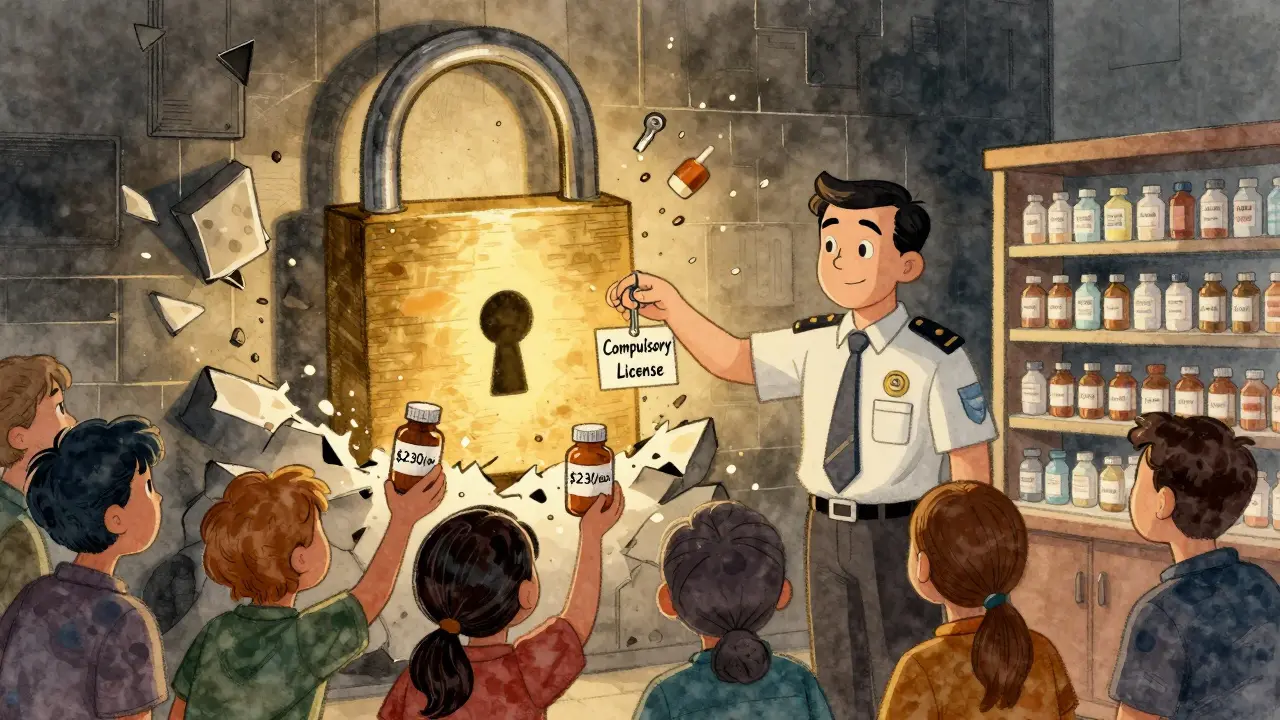
Compulsory licensing lets a government allow someone else to make or use a patented product without the patent holder’s permission. This isn’t about stealing ideas. It’s about balancing profit with survival. The patent owner still gets paid-just not by choice. This tool exists in nearly every country’s patent law, but it’s rarely used… until something urgent happens.
Think of it like this: a drug company holds a patent on a life-saving HIV medication priced at $1,200 a year. Thousands can’t afford it. The government steps in, authorizes a local manufacturer to copy the drug, and sells it for $230. The company still gets compensation, but now people live. That’s compulsory licensing in action.
Where Did This Come From?
The idea isn’t new. It was first written into international law in 1883 under the Paris Convention. But it became globally enforceable in 1994 with the TRIPS Agreement-the trade deal that tied intellectual property rules to global commerce. Article 31 of TRIPS says countries can issue compulsory licenses, but only under strict conditions: you must pay fair compensation, mostly serve your own population, and usually try to negotiate with the patent holder first.
There’s one big exception: emergencies. If a pandemic hits, a disease spreads fast, or a public health crisis demands immediate action, that “try to negotiate first” rule can be skipped. That’s what happened during COVID-19. Over 40 countries, including Canada and Germany, prepared to issue licenses for vaccines, tests, and treatments. Most didn’t need to use them-companies lowered prices voluntarily-but the threat alone changed the game.
How It Works in the U.S., Canada, and India
Every country does it differently.
In the United States, there are three main paths. One is under Section 1498 of federal law: if the government needs a patented tech (say, a medical device for a hospital), it can use it and then pay damages in court. Another is the Bayh-Dole Act, which lets the government force a license if a federally funded invention isn’t being made available to the public. But here’s the catch: the NIH has received over a dozen requests since 1980-and has never granted one. Why? They say the patent holder is “doing enough.”
Canada updated its Patent Act in 2020 to make it easier during emergencies. Before, the process took years. Now, if the government declares a public health crisis, it can issue a license in weeks. Canada’s only real use so far? In 2012, it licensed HIV drugs to Rwanda under a special WTO rule that lets countries without manufacturing capacity import generic versions made under compulsory license.
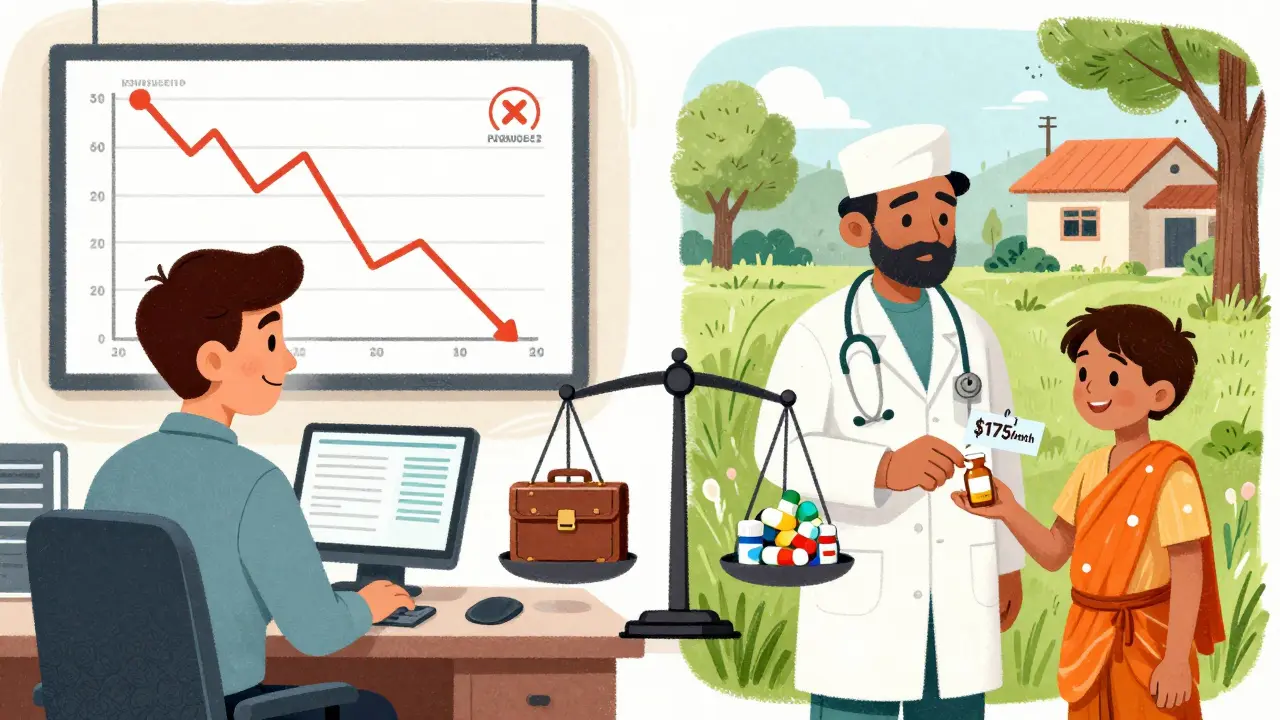
India is the most active user. Since 2005, it has issued 22 compulsory licenses-almost all for cancer drugs. The most famous case was Nexavar, a kidney and liver cancer drug priced at $5,500 a month. Natco Pharma got a license to make a generic version for $175 a month. Bayer, the original patent holder, sued. The case took eight years. India won. The price drop saved thousands of lives.
Real-World Impact: Price Drops That Saved Lives
The numbers don’t lie. When compulsory licensing kicks in, prices fall hard.
- In Thailand, the government issued licenses for HIV drugs in 2006. Lopinavir/ritonavir dropped from $1,200 to $230 per year. Efavirenz fell from $550 to $200.
- In Brazil, they licensed Merck’s efavirenz in 2007. Price per tablet went from $1.55 to $0.48. The country’s HIV treatment program expanded by 300%.
- Across low- and middle-income countries, the price of first-line HIV drugs dropped 92% between 2000 and 2020-mostly because of compulsory licenses and the threat of them.
Generic manufacturers like Teva saw their revenue from these markets jump by $3.2 billion between 2015 and 2020. That’s not just profit-it’s access.
Why Don’t More Countries Use It?
Even though 34 countries have laws allowing compulsory licensing, only 12 have ever actually used it for medicines. Why?
First, the process is slow and expensive. In the U.S., getting compensation under Section 1498 takes an average of 2.7 years and costs millions in legal fees. In India, applications take 18 to 24 months to be reviewed. Few governments have the legal teams or political will to push through.
Second, there’s pressure. The U.S. has listed countries that issue compulsory licenses on its “Special 301 Watch List,” a kind of trade blacklist. No sanctions have followed since 2012, but the threat lingers. Big pharma also spends millions lobbying against it. The International Federation of Pharmaceutical Manufacturers says each license announcement causes an 8.2% drop in their stock prices.
Third, some countries just don’t have the capacity. The WHO found that 60% of low- and middle-income nations lack the technical or legal infrastructure to draft, issue, and enforce a license properly. It’s not just about the law-it’s about having patent lawyers, health officials, and manufacturing partners ready to go.
Who Benefits-and Who Loses?
It’s not a simple win-lose situation.
Patients and public health systems win. More people get treatment. Governments save money. Generic drugmakers win too-they get access to technologies they couldn’t otherwise copy.
But the patent holders? They lose control. And some argue that’s dangerous. A 2018 study in the Journal of Health Economics found that countries with active compulsory licensing saw a 15-20% drop in pharmaceutical R&D investment. The fear? If companies can’t profit from their inventions, they won’t risk developing them.
But here’s the counterargument: the threat of a license often forces companies to lower prices voluntarily. Dr. Brook Baker from Northeastern University found that since 2000, 90% of HIV drug price cuts in developing countries happened before a license was issued-just because the government hinted they might.
So it’s less about taking patents and more about using them as leverage.
What’s Changing Now?
Things are shifting fast.
In June 2022, the WTO agreed to a temporary waiver on COVID-19 vaccine patents. It allows developing countries to produce vaccines without permission until 2027. But so far, only 12 facilities in 8 countries have been approved to use it. The rules are still too complicated. No one’s really using it the way it was meant to.
The European Union is pushing new rules: if a company doesn’t offer a license within 30 days of a government request, the license gets issued automatically. That’s a game-changer.
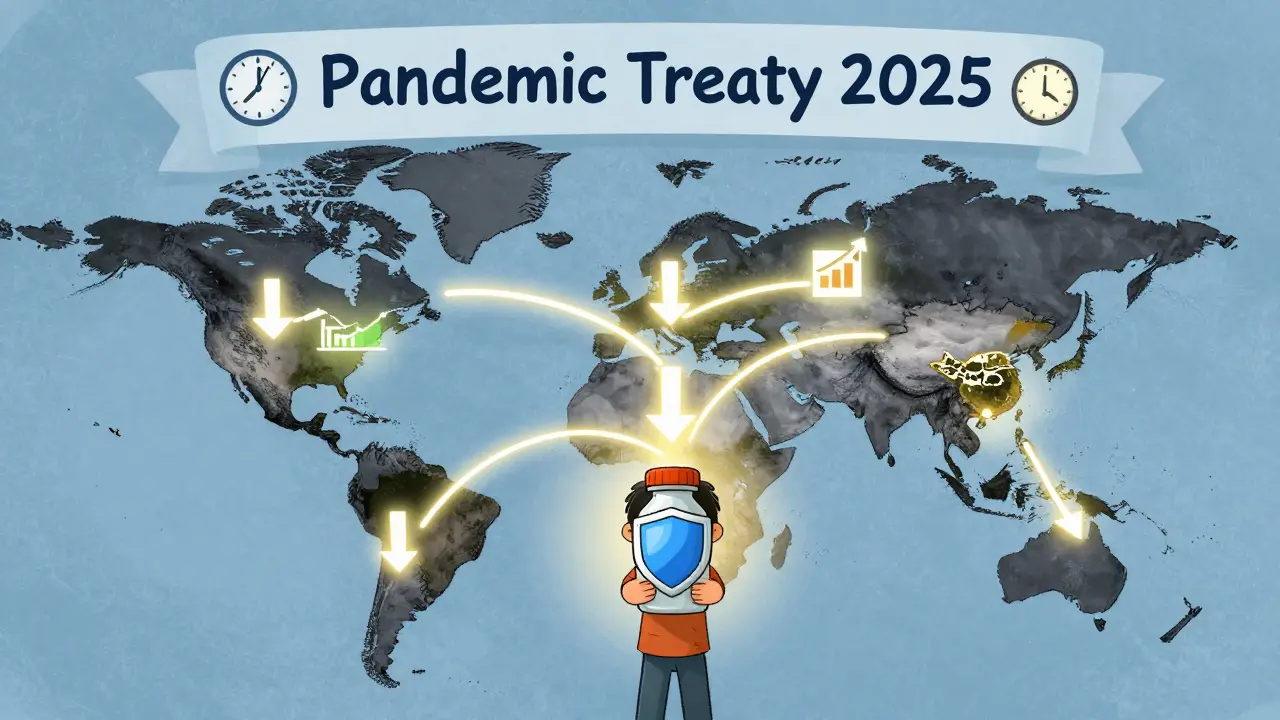
The World Health Organization is drafting a Pandemic Treaty that could make compulsory licensing automatic during declared global health emergencies. If passed, no country would need to ask permission or prove urgency-they’d just act.
And then there’s the tech angle. Experts predict compulsory licensing will expand beyond medicine. Antimicrobial resistance, climate adaptation tools, and clean energy patents could all be next.
The Bottom Line
Compulsory licensing isn’t about breaking the system. It’s about fixing it when it fails people.
Patents exist to encourage innovation. But when a patent keeps a life-saving drug out of reach, the system has to bend. The law already gives governments the power to do that. The question isn’t whether they can-it’s whether they will.
History shows that when they do, lives change. When they don’t, people die.
Frequently Asked Questions
Is compulsory licensing the same as breaking patents?
No. Compulsory licensing doesn’t cancel or invalidate a patent. The patent holder still owns the rights. The government just gives someone else permission to use it under strict conditions, including paying fair compensation. It’s a legal override, not a seizure.
Can any country issue a compulsory license?
Yes, under the TRIPS Agreement, all WTO member countries have the right to issue compulsory licenses. But they must follow rules: pay adequate compensation, mostly supply their own market, and usually try to negotiate first. Exceptions exist for emergencies, public non-commercial use, or when a country has no manufacturing capacity and needs to import.
Why hasn’t the U.S. issued more compulsory licenses?
The U.S. has the legal tools, but political and industry pressure keeps them unused. The Bayh-Dole Act allows the government to force licensing of federally funded inventions, but the NIH has denied every petition since 1980. Section 1498 is used for government use, but it’s slow and costly. Most drug companies in the U.S. rely on high prices and patent protection-there’s little incentive to change.
Does compulsory licensing discourage innovation?
Some studies suggest a short-term drop in R&D investment in countries that use it. But the bigger picture shows that the threat of a license often leads to voluntary price reductions. In fact, 90% of HIV drug price cuts in developing countries happened before any license was issued. Innovation isn’t killed-it’s redirected. Companies still invest in new drugs, but they’re more willing to negotiate access.
Can compulsory licensing be used for things other than medicine?
Absolutely. While 68% of cases involve pharmaceuticals, it’s also been used for agricultural chemicals, clean energy tech, and even assistive devices for the visually impaired. The 2017 Marrakesh Treaty allows compulsory licensing for accessible formats of copyrighted works. Canada and India have issued licenses under this for books and educational materials.
laura Drever
January 13, 2026 AT 16:23Angel Molano
January 14, 2026 AT 05:39Gregory Parschauer
January 15, 2026 AT 09:02Trevor Davis
January 17, 2026 AT 01:26Rosalee Vanness
January 17, 2026 AT 02:02James Castner
January 17, 2026 AT 07:25lucy cooke
January 18, 2026 AT 23:50John Tran
January 19, 2026 AT 03:40Trevor Whipple
January 20, 2026 AT 20:31Lethabo Phalafala
January 21, 2026 AT 00:35Adam Vella
January 21, 2026 AT 23:01Adam Rivera
January 21, 2026 AT 23:12Randall Little
January 23, 2026 AT 03:26