
Anticoagulant & Bleeding Risk Guide
Emergency Reversal Lookup
Select your medication to view specific emergency reversal protocols.
Bleeding Risk Awareness Check
Check if you have common risk factors that may increase bleeding complications.
Imagine you are taking a medication that saves your life by preventing deadly clots, but the same drug makes every cut or fall potentially dangerous. This is the daily reality for millions of people on anticoagulants, commonly known as blood thinners. The challenge isn't just stopping a clot; it's balancing that protection against the risk of severe bleeding, especially if you have an underlying condition like hemophilia or von Willebrand disease.
Hemorrhage prevention is not about avoiding all bleeding-it’s about managing risk so effectively that complications rarely happen. Whether you are starting a new prescription, switching from warfarin to a newer agent, or navigating surgery while on these drugs, understanding how these medications work and what triggers bleeding can give you control over your health.
Understanding Anticoagulants and Their Risks
To prevent hemorrhage, you first need to know exactly what you are taking. Anticoagulants do not "thin" your blood in the literal sense; they interfere with the proteins your body uses to form clots. The landscape has changed dramatically since the introduction of heparin in 1916. Today, we have several classes, each with different risks and monitoring needs.
The traditional standard is Warfarin, a vitamin K antagonist introduced clinically in 1954. Warfarin requires regular blood tests called INR (International Normalized Ratio) checks to ensure your dose is right. If your INR is too high, you bleed easily; too low, and you risk clots. For most conditions, the target INR is between 2.0 and 3.0, but mechanical heart valves may require a higher range of 2.5 to 3.5.
In contrast, Direct Oral Anticoagulants (DOACs) like apixaban, rivaroxaban, dabigatran, and edoxaban have become the go-to choice for many patients. By 2022, DOACs accounted for roughly 75% of new prescriptions in the United States. They offer fixed dosing and generally do not require routine blood monitoring. However, they are not without risks. Patients over 75 years old face a two-to-three-fold increase in bleeding rates, and those with kidney issues need careful dose adjustments.
Bleeding Disorders: Adding Complexity to the Equation
If you have a diagnosed bleeding disorder such as von Willebrand disease or hemophilia, adding an anticoagulant requires extreme caution. These conditions mean your blood already struggles to clot naturally. Combining this with a blood thinner significantly amplifies the risk of spontaneous bleeding or prolonged hemorrhage after minor injuries.
For example, women with von Willebrand disease often experience heavy menstrual bleeding. If they also need anticoagulation for atrial fibrillation, the combination can lead to severe anemia. In these cases, doctors might use desmopressin (DDAVP), which stimulates the release of von Willebrand factor, to help stabilize clotting before or during procedures. A randomized controlled trial involving 337 women showed that DDAVP significantly reduced measured blood loss, highlighting the importance of tailored treatments rather than one-size-fits-all approaches.
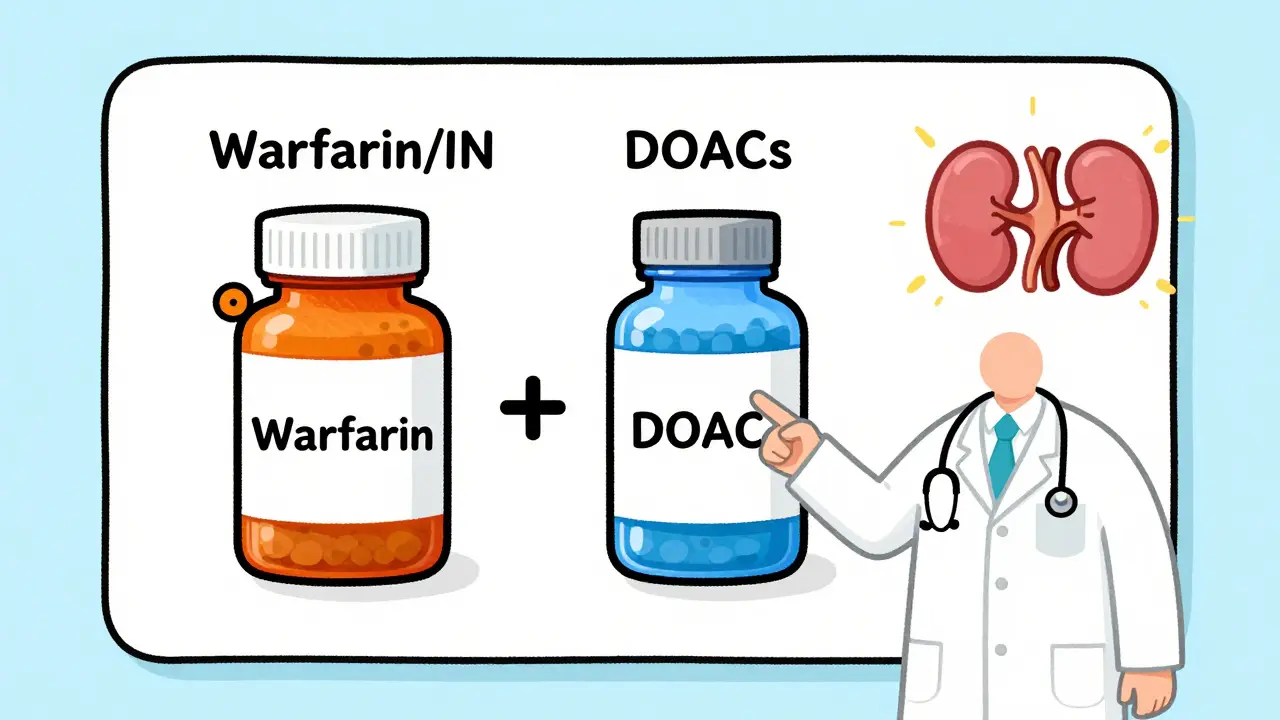
Key Strategies for Hemorrhage Prevention
Preventing hemorrhage starts with smart patient selection and ongoing vigilance. Here are the core strategies that experts recommend:
- Assess Kidney Function Regularly: Many DOACs are cleared through the kidneys. If your creatinine clearance (CrCl) drops below certain thresholds-such as 25 mL/min for apixaban or 50 mL/min for rivaroxaban-your dose must be reduced. Dr. Gregory Y.H. Lip, a leading thrombosis expert, emphasizes that renal function assessment is critical at initiation and every 3-6 months thereafter.
- Avoid Dual Antiplatelet Therapy Unless Necessary: Taking an anticoagulant alongside aspirin or clopidogrel increases major bleeding risk by 50-70%. Only combine them if you have a recent stent or specific cardiac indication, and stop the antiplatelet as soon as it is safe.
- Maintain Time in Therapeutic Range (TTR) for Warfarin: If you are on warfarin, aim for a TTR above 70%. Every 10% drop in TTR correlates with a 15% higher risk of major bleeding. Consistent diet and medication adherence are key here.
- Review Medications Annually: Look for drugs that interact with anticoagulants, such as certain antibiotics, antifungals, or NSAIDs like ibuprofen, which can irritate the stomach lining and increase bleeding risk.
What to Do in an Emergency: Reversal Agents
Despite best efforts, bleeding events can occur. Knowing the reversal protocols can save lives. The American College of Cardiology’s 2020 guidelines provide clear pathways for treating major bleeding.
| Anticoagulant Class | Specific Agent Examples | Reversal Agent | Key Considerations |
|---|---|---|---|
| Vitamin K Antagonists | Warfarin | 4-factor Prothrombin Complex Concentrate (4f-PCC) + Vitamin K | 4f-PCC corrects INR within 15 minutes. Preferred over fresh frozen plasma due to speed and volume. |
| Direct Thrombin Inhibitors | Dabigatran | Idarucizumab | Specific antidote approved in 2015. Administered as 5g IV dose. Rapidly neutralizes drug effect. |
| Factor Xa Inhibitors | Apixaban, Rivaroxaban, Edoxaban | Andexanet alfa | Approved in 2018. Highly effective but expensive (~$13,000 per dose). Limited availability in some hospitals. |
| Heparin Derivatives | Unfractionated Heparin | Protamine Sulfate | Neutralizes 60-100% of heparin activity. Less effective for Low Molecular Weight Heparins (LMWH). |
For instance, if a patient on warfarin presents with a life-threatening bleed, waiting for vitamin K alone to work can take 8-24 hours. Using 4f-PCC provides immediate correction of clotting factors. Similarly, idarucizumab acts like a "magic bullet" for dabigatran, binding to the drug and rendering it inactive within minutes.

Navigating Procedures and Surgery
One of the biggest anxieties for patients on anticoagulants is undergoing surgery or dental work. The goal is to minimize time off the medication to prevent clots while ensuring enough time for bleeding risk to decrease.
For elective surgeries, DOACs are usually stopped 24-48 hours before the procedure, depending on kidney function and bleeding risk. Warfarin typically requires stopping 5 days prior. After the procedure, restarting depends on your thromboembolic risk. If you have a mechanical heart valve or recent stroke, you may restart within 24 hours. For lower-risk conditions like stable atrial fibrillation, doctors might wait until hemostasis is secure, often 48-72 hours post-op.
It is crucial to communicate with all healthcare providers-including dentists and surgeons-about your anticoagulant use. Never stop your medication without explicit instructions from your prescribing doctor.
Living Safely on Blood Thinners
Daily habits play a huge role in hemorrhage prevention. Simple changes can reduce injury risks:
- Use Soft-Bristled Toothbrushes: Hard brushes can cause gum bleeding. Electric toothbrushes with pressure sensors can help.
- Wear Protective Gear: Helmets for cycling, knee pads for gardening, and non-slip mats in the bathroom can prevent falls and cuts.
- Monitor for Signs of Bleeding: Watch for unusual bruising, black tarry stools (indicating gastrointestinal bleeding), pink or brown urine, or coughing up blood. Report these immediately.
- Carry Medical ID: Wear a bracelet or carry a card stating you are on anticoagulants. This ensures emergency responders treat you correctly.
Remember, the goal is not fear, but awareness. With proper management, most people live full, active lives on anticoagulants. The key is partnering closely with your healthcare team, adhering to monitoring schedules, and staying informed about your specific risks.
Can I drink alcohol while on anticoagulants?
Moderate alcohol consumption is generally safe for most people on DOACs, but heavy drinking can increase bleeding risk and interact with liver metabolism. For warfarin, alcohol can cause unpredictable INR fluctuations. It is best to discuss your specific limits with your doctor, but limiting intake to one drink per day for women and two for men is a common guideline.
Do I need to change my diet if I am on warfarin?
You do not need to avoid vitamin K-rich foods like leafy greens, but you must keep your intake consistent. Sudden large changes in vitamin K consumption can alter your INR levels. Eat similar amounts of green vegetables week to week, and inform your pharmacist if you start taking new supplements.
What should I do if I miss a dose of my DOAC?
If you remember on the same day, take the missed dose as soon as possible. Do not double up on doses to make up for a missed one. If you miss a dose entirely, skip it and resume your normal schedule the next day. Consistency is key to maintaining steady drug levels in your bloodstream.
Are there natural supplements that interact with blood thinners?
Yes, many supplements affect clotting. Fish oil, ginkgo biloba, garlic, ginger, and vitamin E can increase bleeding risk when combined with anticoagulants. Always check with your doctor or pharmacist before starting any new herbal supplement or over-the-counter medication.
How long does it take for anticoagulants to wear off?
This varies by drug. DOACs like apixaban and rivaroxaban have half-lives of 8-15 hours, meaning their effects diminish significantly within 24-48 hours after stopping. Warfarin lasts longer, with effects persisting for several days due to its impact on clotting factor production. This is why timing matters for surgeries and emergencies.