
It starts with a tingling in your throat. Maybe your skin feels hot, or you get an unexplainable sense of doom. Within minutes, this sensation can spiral into a life-threatening crisis known as Anaphylaxis, which is a severe, systemic allergic reaction that requires immediate medical attention to prevent death. This isn't just a bad rash or a mild stomach ache. It is a full-body attack by your immune system that can shut down your breathing and crash your blood pressure if left untreated.
If you have ever been told you are at risk for anaphylaxis, or if you care for someone who is, knowing exactly what to do when seconds count is the difference between walking away from a hospital visit and facing a fatal outcome. The good news? You don't need to be a doctor to save a life. You just need to recognize the signs early and use the right tool-Epinephrine, also known as adrenaline, which acts as the only first-line medication capable of reversing the life-threatening effects of anaphylaxis. Let’s break down how to spot the danger, how to use the rescue device correctly, and why waiting is the most dangerous choice you can make.
What Is Anaphylaxis and Why Does It Happen So Fast?
To understand anaphylaxis, you have to look at what your body is doing behind the scenes. When your immune system mistakenly identifies a harmless substance as a deadly threat, it goes into overdrive. It releases a flood of chemicals, including histamine, into your bloodstream. These chemicals cause your blood vessels to widen (leading to low blood pressure) and your airways to tighten (making it hard to breathe).
The term comes from Greek roots meaning "without protection," which perfectly describes how vulnerable you feel during an episode. Unlike a standard allergy that might give you hives on one arm, anaphylaxis affects multiple systems at once. According to diagnostic criteria from the Resuscitation Council UK, established in their 2021 guidelines, anaphylaxis is defined by acute onset involving skin or mucosal tissue plus either respiratory compromise or reduced blood pressure. This usually happens within minutes to hours after exposure to the trigger.
The speed is what makes it scary. One moment you are fine; the next, your tongue is swelling, and you can’t catch your breath. That’s why recognition is step one. If you see two or more of the following symptoms developing rapidly after exposure to a likely allergen, assume it is anaphylaxis:
- Skin issues: Hives, itching, flushed or pale skin (present in 80-90% of cases).
- Breathing problems: Wheezing, shortness of breath, tightness in the throat, or hoarse voice.
- Circulatory collapse: Dizziness, fainting, rapid weak pulse, or confusion due to low blood pressure.
- Gastrointestinal distress: Severe nausea, vomiting, or abdominal cramps.
You don’t need all of these symptoms to act. If someone has a known allergy and develops even mild symptoms like hives along with any other sign like coughing or feeling lightheaded, treat it as an emergency.
Common Triggers: What Sets Off the Reaction?
Knowing what triggers anaphylaxis helps you avoid it, but accidents happen. Understanding the main culprits can help you stay vigilant. Food is the biggest offender, accounting for the majority of cases, especially in children. However, it’s not just about what’s on your plate.
| Trigger Category | Specific Examples | Prevalence / Notes |
|---|---|---|
| Foods | Peanuts, tree nuts, shellfish, milk, eggs | Accounts for ~90% of food-induced cases. Peanut allergies alone affect millions of children globally. |
| Insect Stings | Bee, wasp, hornet venom | Responsible for roughly 9.5% of ER visits for anaphylaxis in the US. Risk increases with age. |
| Medications | Penicillin, NSAIDs (ibuprofen), contrast dyes | Penicillin causes 75% of drug-induced anaphylaxis. Reactions can occur even after previous safe uses. |
| Latex | Rubber gloves, balloons, medical devices | More common in healthcare workers and people with spina bifida who had early exposure to latex products. |
| Exercise | Physical activity combined with certain foods | Known as food-dependent exercise-induced anaphylaxis. Often linked to wheat or shellfish consumed before working out. |
It’s important to note that sometimes the trigger is unknown. This is called idiopathic anaphylaxis. But regardless of the cause, the treatment remains the same: immediate epinephrine.
Why Epinephrine Is the Only Correct First Step
Here is where many people get it wrong. They think antihistamines like Benadryl will fix the problem. They won’t. Antihistamines work too slowly and only address surface-level symptoms like hives. They do nothing to stop your airway from closing or your blood pressure from plummeting. Corticosteroids take hours to kick in. In an emergency measured in minutes, they are useless.
Epinephrine is unique because it works on multiple fronts simultaneously through alpha-adrenergic and beta-adrenergic receptors. Here is what it does inside your body:
- Tightens Airways: It relaxes the muscles around your bronchial tubes, opening up your lungs so you can breathe.
- Raises Blood Pressure: It constricts blood vessels, which boosts blood pressure and reduces swelling in the throat and tongue.
- Supports the Heart: It strengthens heart contractions to maintain circulation.
Experts agree unanimously: there is no substitute for epinephrine. Dr. Robert Wood from Johns Hopkins University states clearly that antihistamines and steroids are merely adjunctive at best. Delaying epinephrine is the single greatest predictor of poor outcomes. If you have an auto-injector, use it at the first sign of a severe reaction. Do not wait to see if it gets worse. By then, it might be too late.
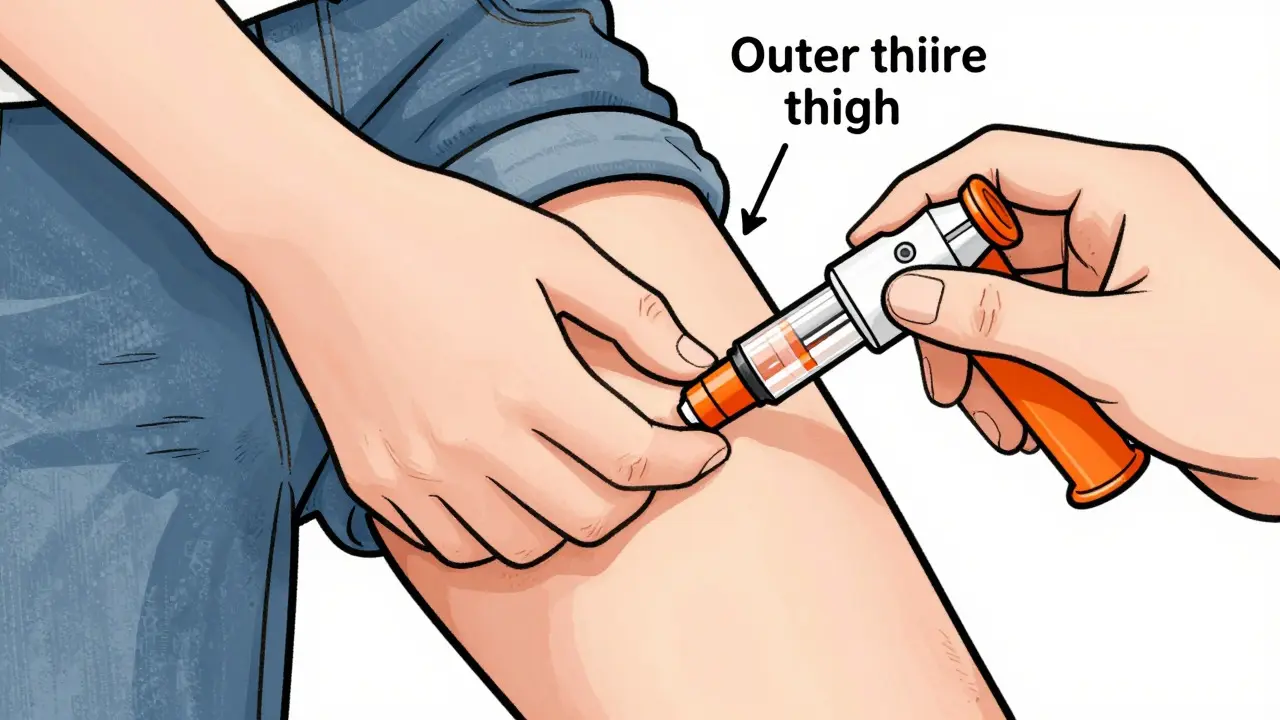
How to Use an Epinephrine Auto-Injector Correctly
Having the device is half the battle; using it correctly under stress is the other half. Most people freeze. Training can reduce this anxiety. The major brands include EpiPen, manufactured by Viatris, Auvi-Q, produced by Kaléo, and Adrenaclick, made by Impax Laboratories. While they look different, the principle is the same.
Follow these steps carefully. Practice with a trainer device monthly so your muscle memory takes over in an emergency.
- Remove the Safety Cap: Pull the blue safety release (for EpiPen) or the clear safety guard straight off. Don’t bend it; pull it straight back.
- Aim for the Outer Thigh: Place the orange tip against the middle of the outer thigh. You can inject through clothing if necessary. Avoid bones, hips, or buttocks.
- Push Hard and Hold: Swing or push the injector firmly against the thigh until you hear a click. Keep it in place for 3 seconds. This ensures the full dose is delivered.
- Massage the Area: After removing the needle, massage the injection site for 10 seconds to help absorption.
- Call 911 Immediately: Even if the person feels better, call emergency services. Epinephrine wears off in 10-20 minutes, and symptoms can return (biphasic reaction).
For dosing, adults and adolescents weighing over 30 kg (66 lbs) typically receive 0.3 mg. Children weighing 15-30 kg (33-66 lbs) receive 0.15 mg. If symptoms persist after 5-15 minutes, a second dose may be needed. Always carry two injectors if possible, as severe reactions sometimes require more than one dose.
Common Mistakes That Cost Lives
Despite widespread awareness, errors in treatment are shockingly common. Studies show that in nearly half of anaphylaxis cases, people delay administering epinephrine because they hope the symptoms will pass or they misinterpret them as mild. This hesitation is deadly.
Another major issue is improper storage. Epinephrine degrades when exposed to heat or light. Store your auto-injector at room temperature (68-77°F or 20-25°C). If you live in a hot climate, don’t leave it in your car glove box during summer. Check the solution regularly; if it looks pink or cloudy, throw it away and get a new one. Clear liquid is good; anything else means it has lost potency.
User error is also prevalent. Some people inject into the wrong part of the leg, such as near the hip bone or into the gluteal muscle, which slows absorption significantly. Intramuscular injection into the vastus lateralis muscle (outer thigh) achieves peak plasma concentrations in just 8 minutes, compared to 20 minutes for subcutaneous shots. Speed matters.
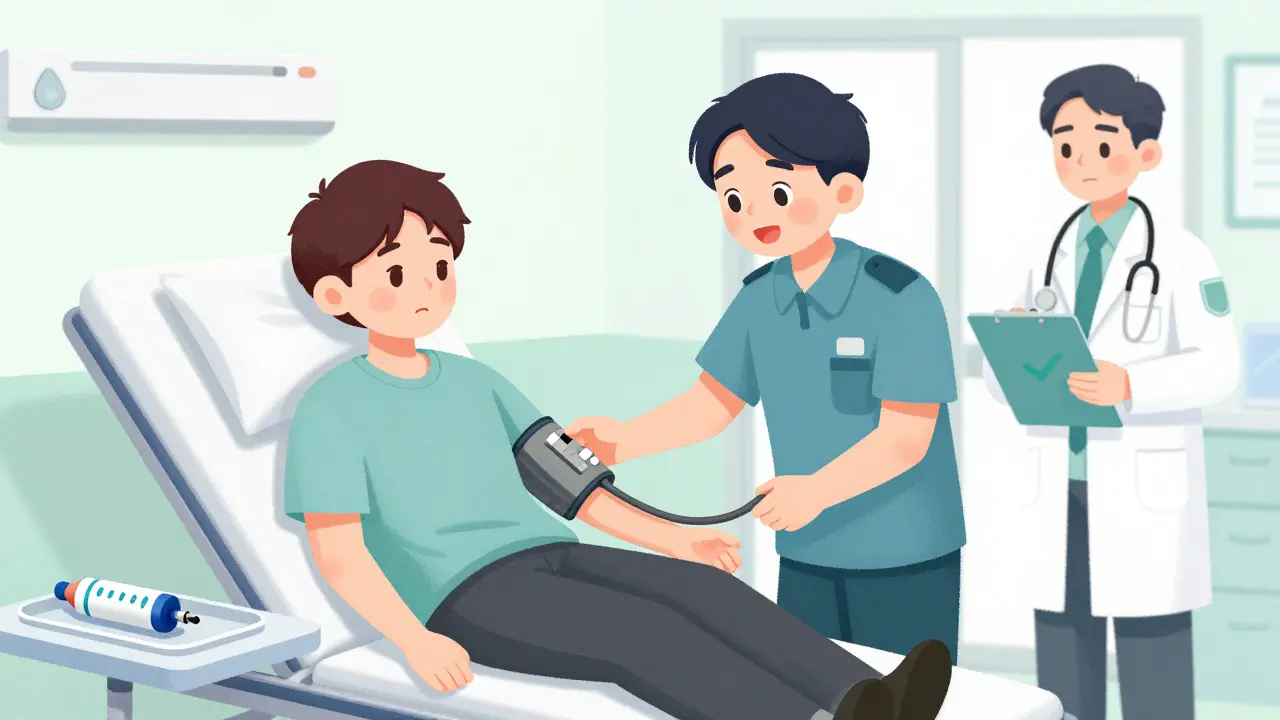
Finally, many patients forget to seek follow-up care. After using an auto-injector, you must go to the emergency room. Doctors need to monitor you for at least 4-6 hours, or longer if you have asthma or required multiple doses, to ensure the reaction doesn’t rebound.
Living with Allergies: Prevention and Preparedness
While epinephrine saves lives, avoiding the trigger is always the best strategy. Create an action plan with your allergist. This should include a list of known triggers, cross-reactive foods, and clear instructions on when to use epinephrine.
Educate those around you. Teachers, coaches, coworkers, and family members should know where your auto-injector is kept and how to use it. In schools, stock epinephrine programs are now mandatory in all 50 US states, which has improved survival rates among students. Ensure your workplace has a similar protocol if you are at high risk.
Consider wearing a medical alert bracelet. In a severe reaction where you become unconscious, first responders need to know immediately that you have a severe allergy. This information can guide their treatment decisions before they even ask questions.
New developments offer hope for the future. Nasal spray epinephrine (Neffy) was approved by the FDA in August 2023, offering a needle-free option for those with needle phobia. Generic alternatives are also becoming more widely available, reducing costs that previously prevented many families from keeping prescriptions current. As of 2023, generic epinephrine auto-injectors cover 70% of US prescriptions, making this life-saving medication more accessible.
When to See an Allergist
If you suspect you have had a severe allergic reaction, or if you have a history of mild allergies that seem to be worsening, see an allergist. They can perform skin prick tests or blood tests (specific IgE testing) to identify exact triggers. For insect sting allergies, immunotherapy (allergy shots) can actually cure the sensitivity over time, reducing the risk of future anaphylaxis by up to 98%. For food allergies, oral immunotherapy is emerging as a promising treatment to desensitize patients, though it requires strict medical supervision.
Don’t rely on internet searches for diagnosis. Anaphylaxis is complex, and personalized management plans are crucial. Your allergist can help you distinguish between true anaphylaxis and other conditions that mimic it, such as panic attacks or vasovagal syncope, ensuring you have the right tools and knowledge when you need them most.
How long does epinephrine last in the body?
Epinephrine has a short half-life, typically lasting 10 to 20 minutes. This is why it is critical to call 911 immediately after administration. Symptoms can return once the medication wears off, a phenomenon known as a biphasic reaction. Medical professionals may administer additional doses or IV fluids in the hospital to stabilize the patient.
Can I use an expired EpiPen?
Ideally, no. Expired epinephrine may lose potency, delivering less than the full therapeutic dose. However, in a life-threatening emergency where no current auto-injector is available, using an expired one is better than using nothing. Check the expiration date regularly and replace the device before it expires. Store it properly to maintain its effectiveness.
What are the side effects of epinephrine?
Common side effects include rapid heartbeat, tremors, anxiety, headache, and nausea. These are generally temporary and far less dangerous than the risks of untreated anaphylaxis. In rare cases, excessive doses can lead to high blood pressure or irregular heart rhythms, but in an emergency, the benefits of saving a life outweigh these transient side effects.
Do I need a prescription for an epinephrine auto-injector?
Yes, in most countries including the US, you need a prescription from a healthcare provider to obtain an epinephrine auto-injector. A doctor must evaluate your allergy history and determine the appropriate dosage based on your weight and medical condition. Some telehealth services now offer online consultations for renewing these prescriptions conveniently.
Is anaphylaxis hereditary?
Anaphylaxis itself is not inherited, but the tendency to develop allergies (atopy) runs in families. If parents have allergic diseases like asthma, eczema, or hay fever, their children are at higher risk of developing allergies, which could potentially lead to anaphylaxis. Early introduction of allergenic foods like peanuts, under medical guidance, has been shown to reduce the risk of peanut allergy in infants.