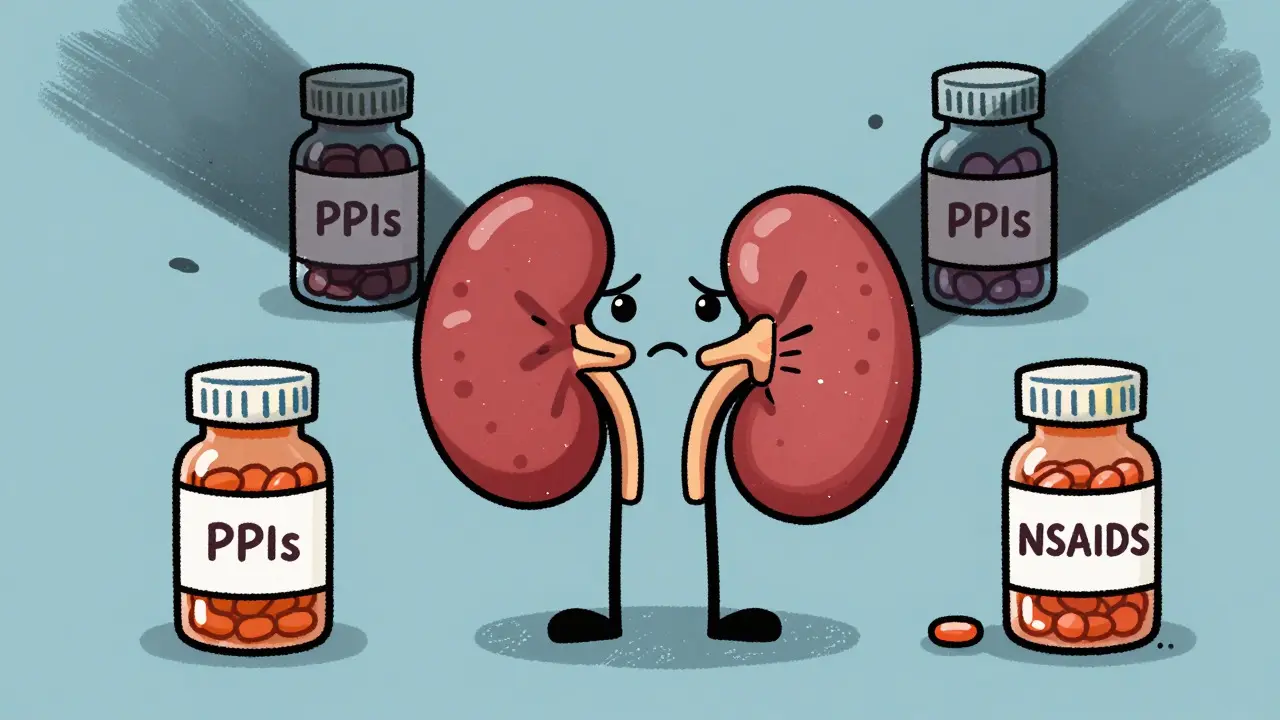
Your kidneys are working hard right now, filtering waste from your blood every second. But what if the very medicine you take to feel better starts attacking them? This is the reality of acute interstitial nephritis, a condition where inflammation strikes the tiny structures inside your kidneys, often triggered by common medications. It’s not just a rare medical curiosity; it accounts for up to 15% of all acute kidney injury cases in hospitals. The scary part? You might not feel sick at first. By the time symptoms appear, significant damage may have already occurred.
This guide breaks down exactly how drugs cause this reaction, which medicines are the biggest culprits, and what your recovery path looks like. We’ll cut through the medical jargon to give you clear, actionable information about protecting your renal health.
What Is Acute Interstitial Nephritis?
Think of your kidneys as complex filtration plants. They have tubes (tubules) and supporting tissue (interstitium) that work together to clean your blood. Acute interstitial nephritis (AIN) is a sudden inflammation of the renal tubulo-interstitium. Instead of filtering smoothly, these tissues swell up with immune cells, blocking normal function. This leads to acute kidney injury (AKI), meaning your kidneys suddenly stop doing their job effectively.
The term "acute" means it happens quickly-over days or weeks-not years. Unlike chronic kidney disease, which creeps up silently over decades, AIN can strike fast. If caught early, it’s often reversible. If ignored, it can lead to permanent scarring and chronic kidney disease.
The Main Culprit: Drug-Induced Reactions
Most cases of AIN aren’t caused by infections or autoimmune diseases. They’re caused by your body’s hypersensitivity reaction to medication. In fact, drugs trigger 60-70% of all AIN cases. Your immune system mistakenly identifies a harmless drug molecule as an invader, launching an attack that spills over into kidney tissue.
You don’t need to be allergic to a drug in the traditional sense (like hives after penicillin) to get AIN. It’s a different kind of immune response. And here’s the tricky part: you can take a medication safely for months or even years before your body decides to react against it.
| Drug Class | Percentage of Cases | Typical Onset Time | Key Risk Factors |
|---|---|---|---|
| Proton Pump Inhibitors (PPIs) | ~38% | Months to years | Long-term use, age >65 |
| NSAIDs (e.g., ibuprofen, naproxen) | ~44% | Weeks to months | Chronic pain, pre-existing kidney issues |
| Antibiotics (penicillins, sulfonamides) | ~29% | Days to weeks | Recent infection treatment |
| Immune Checkpoint Inhibitors | Emerging risk | Variable | Cancer therapy patients |
Spotting the Signs: Symptoms and Warning Signals
Here’s why AIN is dangerous: it rarely presents with the classic "allergy triad" of fever, rash, and eosinophilia (high white blood cell count). That combination appears in less than 10% of cases. Most people miss it because they look for obvious signs that aren’t there.
Instead, watch for these subtle clues:
- Fatigue and malaise: You feel unusually tired, even after good sleep.
- Nausea and loss of appetite: Food doesn’t sound appealing, and you might feel queasy.
- Changes in urination: Less urine output (oliguria) is common, but some people produce normal amounts initially.
- Flank pain: Dull ache in your back, below the ribs, on one or both sides.
- Unexplained weight gain: Due to fluid retention as kidneys fail to excrete water.
If you’ve recently started a new medication-or been on long-term PPIs or NSAIDs-and notice these symptoms, don’t brush them off as "just stress" or "aging." Get your kidney function checked immediately.
Diagnosis: Why Blood Tests Aren’t Enough
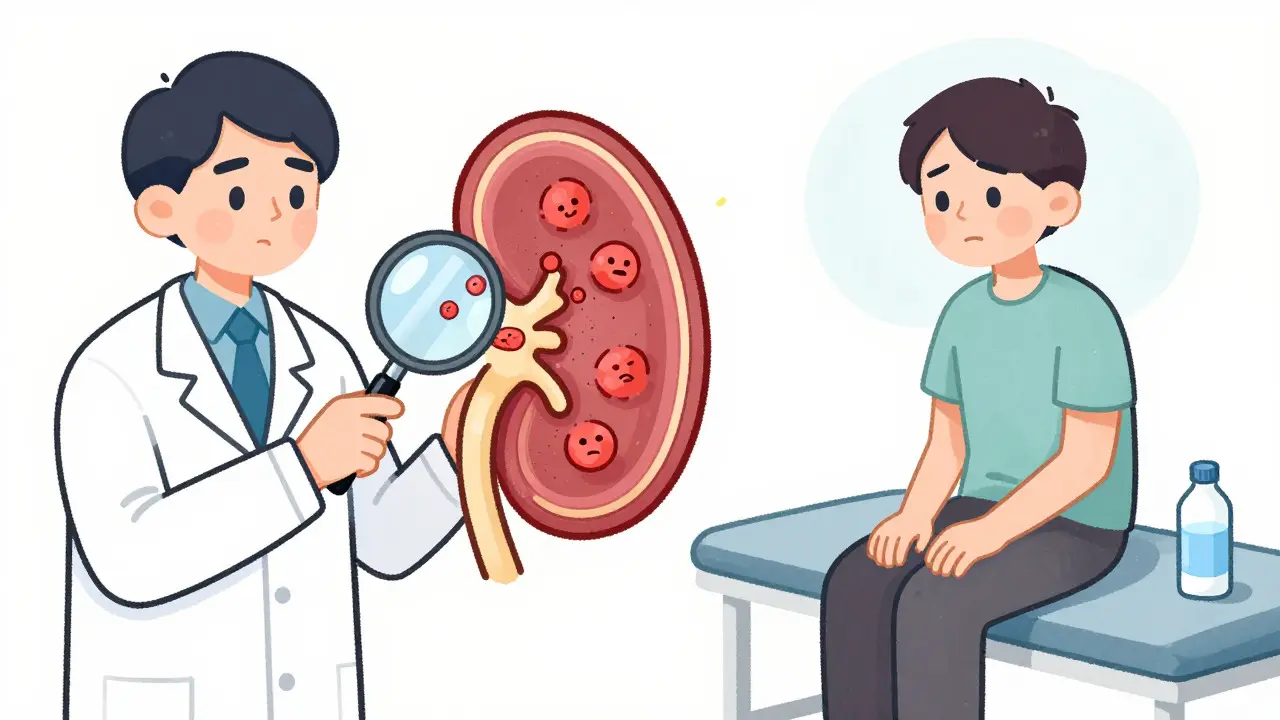
Your doctor will start with basic blood tests. Look for elevated creatinine and blood urea nitrogen (BUN)-markers that show your kidneys aren’t filtering properly. Urine tests might reveal white blood cells or mild proteinuria, but these findings are non-specific. Many conditions cause similar lab results.
The gold standard for diagnosing AIN is a kidney biopsy. Yes, it sounds invasive, but it’s often necessary. During the procedure, a small sample of kidney tissue is examined under a microscope. Pathologists look for characteristic signs: inflammatory cells infiltrating the interstitium, swelling around tubules, and sometimes eosinophils.
Why go through a biopsy? Because treatment depends on confirming the diagnosis. Steroids, the main treatment, carry risks. Doctors won’t prescribe them without solid evidence. Recent research is exploring biomarkers like urinary CD163, which shows 89% sensitivity in detecting AIN, potentially reducing the need for biopsies in the future.
Treatment Protocol: Stop the Drug, Start Healing
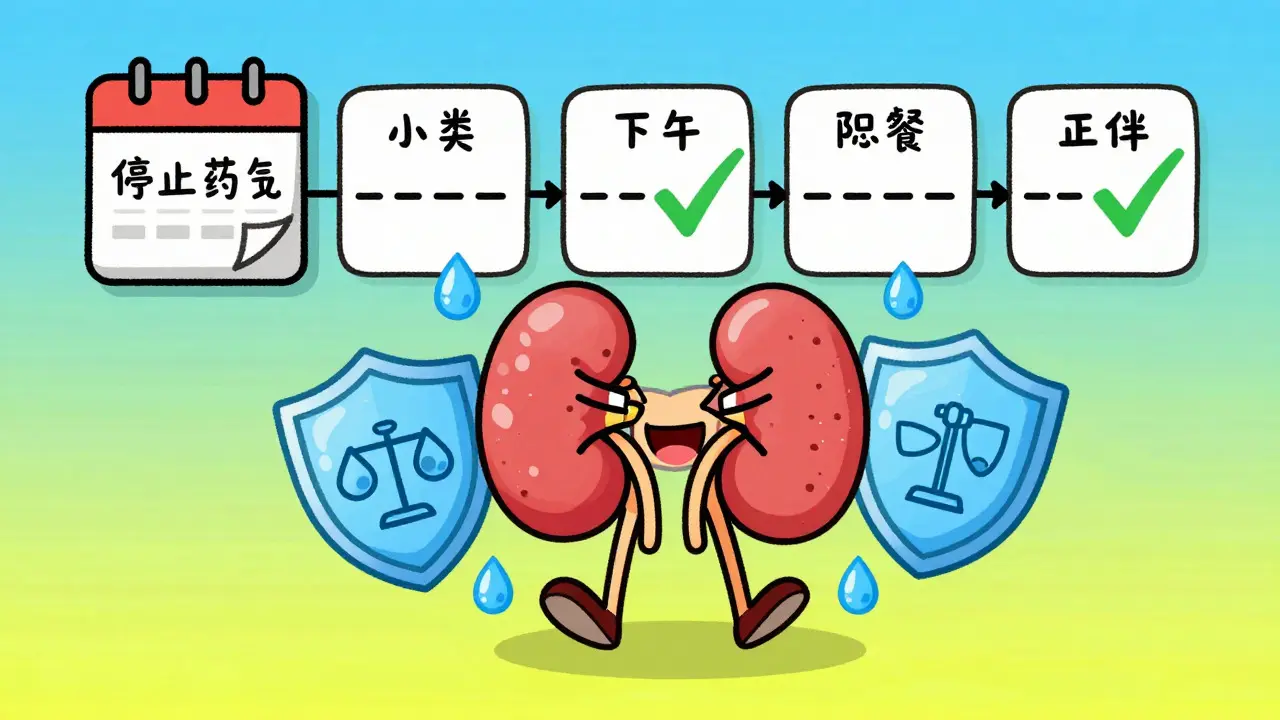
The single most important step in treating AIN is stopping the offending medication. Immediate discontinuation within 24-48 hours of suspicion dramatically improves outcomes. Every day you delay increases the risk of permanent scarring.
After stopping the drug, your care team will assess whether you need additional therapy:
- Corticosteroids: For severe cases or those not improving within 72 hours of drug cessation, doctors often prescribe prednisone (0.5-1 mg/kg/day) for 2-4 weeks, followed by a gradual taper over 6-8 weeks. While large randomized trials are lacking, clinical experience suggests steroids speed recovery and reduce fibrosis risk.
- Dialysis: About 15-20% of patients require temporary dialysis if kidney function drops critically low. This supports your body while kidneys heal. Most patients only need it for 2-6 weeks.
- Supportive care: Managing blood pressure, controlling fluid balance, and avoiding other kidney-stressing substances (like more NSAIDs or contrast dye).
Recovery Timeline and Long-Term Outlook
How fast do you bounce back? It depends heavily on which drug caused the problem and how quickly it was stopped.
- Antibiotic-induced AIN: Fastest recovery. Median time to improvement is 14 days. Most patients regain full or near-full function.
- NSAID-induced AIN: Slower. Median recovery takes 28 days. Higher risk of residual impairment.
- PPI-induced AIN: Slowest. Median recovery is 35 days. Only 50-60% achieve complete recovery, compared to 70-80% for antibiotic cases.
Early diagnosis is critical. Patients diagnosed within 7 days of symptom onset have a 35% higher chance of complete recovery than those diagnosed after 14 days. Unfortunately, many patients wait 2-4 weeks before getting the correct diagnosis, often misdiagnosed with urinary tract infections or dehydration.
Long-term, about 30% of AIN survivors develop chronic kidney disease (CKD) stage 3 or higher within 12 months. NSAID-induced cases have the worst prognosis, with 42% progressing to CKD. Regular monitoring of eGFR (estimated glomerular filtration rate) is essential for years after recovery.
Prevention Strategies for High-Risk Individuals
Can you prevent AIN? Not entirely, since reactions are unpredictable. But you can significantly reduce your risk:
- Review long-term PPI use: If you’ve been on omeprazole, pantoprazole, or similar drugs for over a year, ask your doctor if you still need them. Try stepping down to H2 blockers (like famotidine) or using PPIs intermittently.
- Limit NSAID exposure: Avoid daily ibuprofen or naproxen unless medically necessary. Use acetaminophen for pain when possible, especially if you’re over 65 or have existing kidney issues.
- Monitor kidney function: If you’re on high-risk meds, request annual creatinine and eGFR tests. Catching early changes allows prompt intervention.
- Avoid polypharmacy: Taking 5+ medications triples your AIN risk. Regularly review all prescriptions and supplements with your pharmacist.
- Know your history: If you’ve had AIN before, avoid the culprit drug class entirely. Tell every healthcare provider about this allergy-like reaction.
Is acute interstitial nephritis permanent?
Not necessarily. With early detection and removal of the triggering drug, many patients recover fully. However, delayed treatment increases the risk of permanent scarring and chronic kidney disease. About 30% of patients develop lasting kidney impairment.
Which proton pump inhibitors cause kidney damage?
All PPIs carry a risk, including omeprazole, lansoprazole, pantoprazole, esomeprazole, and rabeprazole. Omeprazole has the most reported cases, but any PPI used long-term can trigger AIN. The risk isn’t dose-dependent-it’s related to duration of use.
How long does it take for kidneys to heal after stopping the drug?
Recovery varies by drug type. Antibiotic-induced AIN typically improves within 2 weeks. NSAID-related cases take about 4 weeks. PPI-induced AIN may require 5 weeks or longer. Some patients never fully regain baseline function.
Do I need a kidney biopsy to diagnose AIN?
Ideally, yes. Biopsy confirms the diagnosis and rules out other causes of kidney injury. While emerging biomarkers like urinary CD163 show promise, biopsy remains the gold standard, especially before starting steroid treatment.
Can AIN come back if I restart the same medication?
Yes, and it can happen faster and more severely. Once sensitized, your immune system reacts more aggressively upon re-exposure. Always inform healthcare providers of your AIN history to avoid re-challenge with the same drug class.
Are natural supplements safe for kidneys during AIN recovery?
Be cautious. Some herbal supplements contain compounds that stress kidneys. Stick to approved medications and discuss any supplement with your nephrologist. Hydration and balanced nutrition are safer supportive measures.
What blood test results indicate AIN?
Elevated serum creatinine and BUN signal reduced kidney function. Urinalysis may show white blood cells, mild protein, or eosinophils. However, these markers alone can’t confirm AIN-they only suggest kidney injury requiring further investigation.
Who is at highest risk for drug-induced AIN?
Adults over 65, those taking multiple medications (polypharmacy), and individuals with pre-existing kidney disease face the highest risk. Incidence rises from 5 per 100,000 in young adults to 22 per 100,000 in seniors.