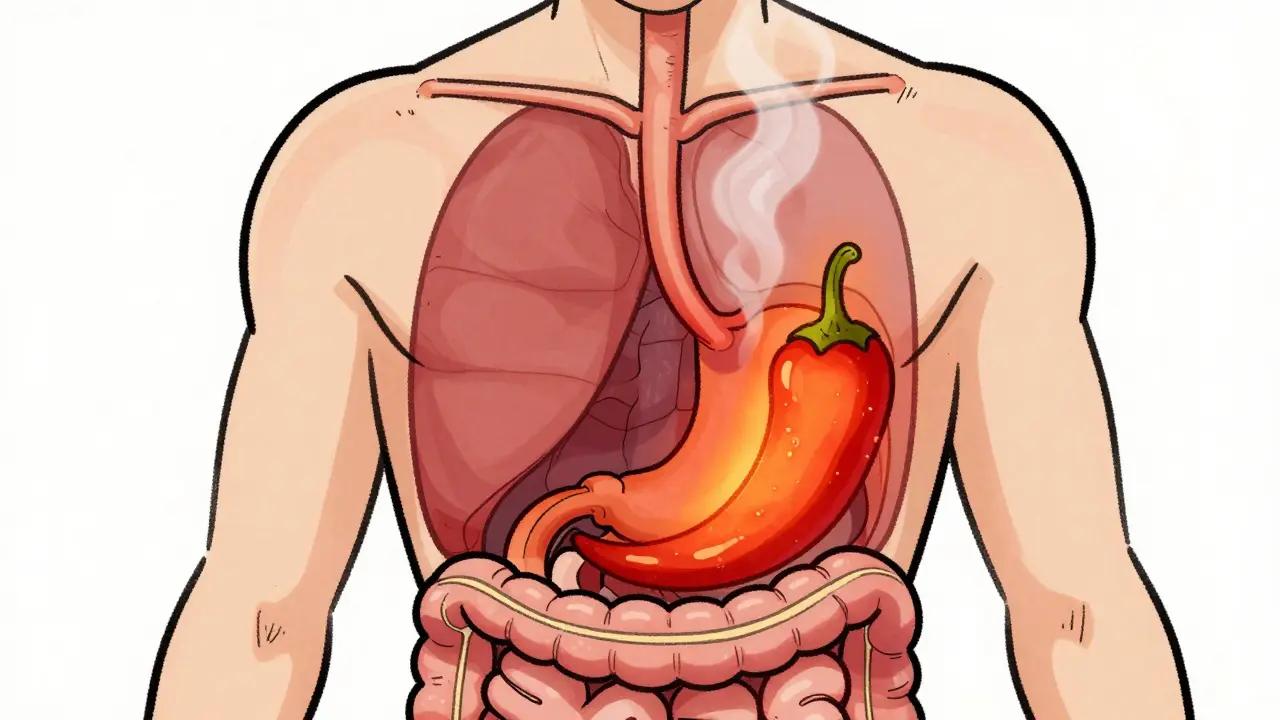
You love that extra kick in your dinner, but your stomach tells a different story. For millions of us, enjoying spicy foods while taking necessary medication feels like walking a tightrope. One wrong step leads to burning chest pain, bloating, or that classic reflux sensation climbing up your throat. You aren't imagining it; specific chemicals in peppers and active ingredients in common pills can team up to irritate your gut lining. Understanding exactly how they work together is the key to keeping your meals enjoyable without ruining your sleep or breaking your medication schedule.
The good news is that you don't necessarily have to give up your favorite curries or hot sauces forever. Many patients think they must avoid all spice entirely, yet clinical data suggests a more nuanced approach works better. By adjusting what you eat, when you take your medicine, and how you track your reactions, you can significantly lower that risk factor. This guide breaks down the mechanics of why spice hurts, which drugs make it worse, and practical strategies to manage the symptoms effectively in 2026.
Why Spicy Food Triggers Heartburn
To understand the burn, we have to look at the guardrail between your stomach and your esophagus. This muscle is called the Lower Esophageal Sphincter (LES). Think of it as a valve that stays closed so acid stays down. When you eat spicy food, specifically compounds called capsaicin found in chili peppers, this valve relaxes. Research from 2023 indicates that in sensitive individuals, LES pressure drops by about 30-40% within half an hour of eating. When that barrier weakens, stomach acid sneaks upward into the esophagus, causing the burning sensation we call heartburn.
It's not just about heat sensitivity. While some people handle a Habanero easily, others react to mild paprika. A systematic review noted by the NIH suggests individual variability in capsaicin sensitivity ranges wildly. Some people have receptors that fire intensely with tiny amounts of spice. This is why blanket advice to "never eat spice" often fails-it doesn't account for your specific body chemistry. Dr. Anish Sheth from Yale University notes that for many, the same meal causes issues one night but is fine the next, likely due to overall stress, previous meals, or hydration levels compounding the effect.
Beyond just relaxation of the sphincter, spicy foods increase gastric acid production directly. Your stomach responds to irritation by making more acid to protect itself, flooding the system. If your LES is already compromised-perhaps by age, weight, or surgery-this flood creates overflow damage.
Medications That Irritate the Gut
If spicy food loosens the door, certain medications push the acid through the frame. It's crucial to know which prescriptions fall into this risky category. We often view medications as purely therapeutic, ignoring their local effects on the digestive tract. Common culprits include NSAIDs, bisphosphonates, and even some blood pressure drugs.
| Medication Class | Example Drugs | Effect on Stomach/Esophagus | Risk Factor |
|---|---|---|---|
| NSAIDs | Ibuprofen, Aspirin | Direct mucosal erosion | Erosive esophagitis in 15-30% |
| Beta Blockers | Atenolol, Metoprolol | Increases reflux risk | 22% higher risk (Framingham Study) |
| Bisphosphonates | Alendronate | Chemical burns/esophagitis | Cause esophagitis in 15-30% |
| Anticholinergics | Omeprazole (rarely), Scopolamine | Relaxes LES muscle | Decreases pressure by 25% |
Nonsteroidal anti-inflammatory drugs (NSAIDs) like ibuprofen are notorious offenders. Studies show they can increase the risk of Gastroesophageal Reflux Disease (GERD) symptoms by 40-60% with regular use. They strip away the protective coating of the stomach lining. Similarly, beta-blockers used for heart conditions can elevate GERD risk by roughly 22%. These numbers come from large-scale data sets like the Framingham Heart Study update published in early 2023. Even calcium supplements can contribute if taken in high doses with food that increases acidity.
One critical class to watch is anticholinergics, often found in motion sickness patches or some antidepressants. These reduce the pressure holding the LES shut. Combined with a heavy, spicy meal, this physiological setup invites disaster.
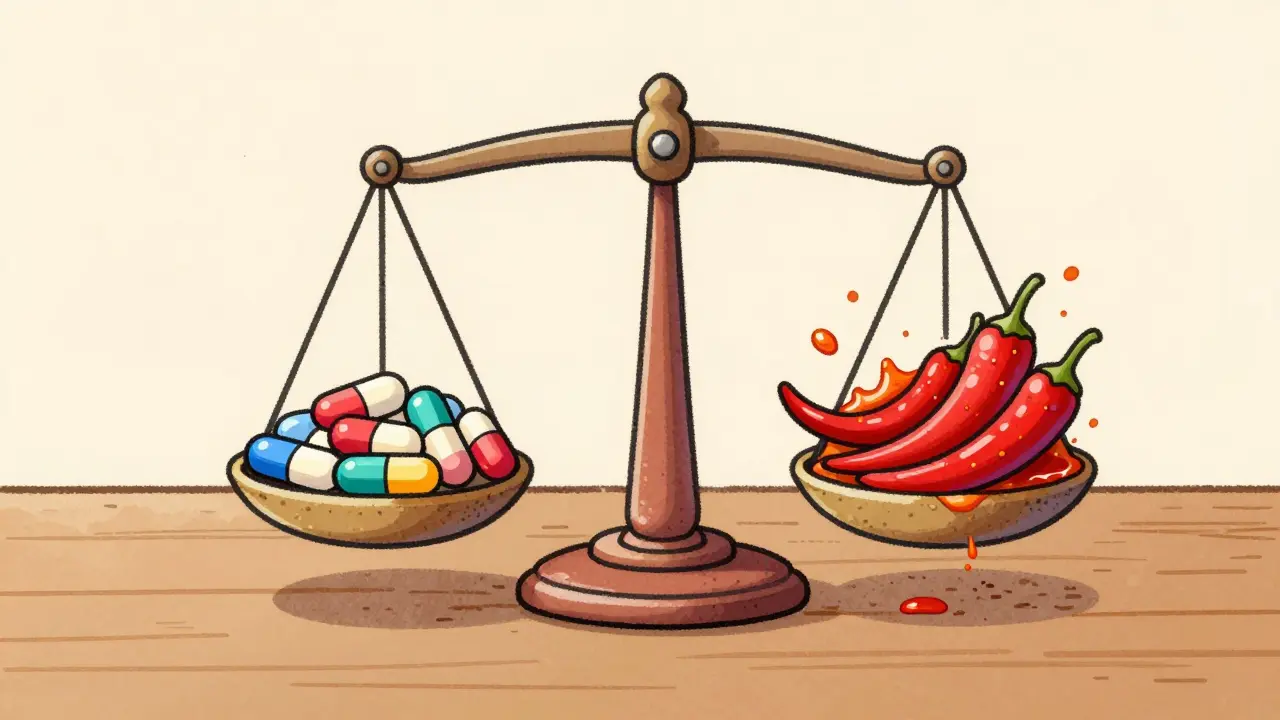
The Dangerous Combination: Timing Matters
The real danger zone isn't just eating spicy food while on meds; it's *when* you take them. Most people grab a pill after feeling symptoms start, but that can backfire. Proton Pump Inhibitors (PPIs) like Pantoprazole need time to reach peak effectiveness. Clinical reviews suggest absorption rates drop by 18-23% if you take the PPI within two hours of consuming trigger foods like chocolate or spicy peppers.
Imagine taking your morning reflux medication right before a spicy breakfast. The drug hasn't had time to block acid production, and the food triggers immediate LES relaxation. You get double-whammied. To mitigate this, the gold standard recommendation is to take PPIs 30-60 minutes before the first meal of the day. This allows the medication to bind to acid pumps before the food load arrives. For immediate relief, antacids like Rolaids or Tums act within minutes, but their effects fade quickly, usually lasting less than an hour.
There is a specific interaction loop involving H2 blockers like famotidine and aluminum-containing antacids. If taken simultaneously, they can interfere with antibiotic absorption (like tetracyclines) by up to 50%. Always space these treatments apart. A 2022 patient adherence study found this timing error is the single most common mistake leading to persistent symptoms despite treatment.

Building a Personalized Defense Plan
Relying solely on medication leaves you vulnerable. The most effective strategy combines diet tweaking with smart pharmacology. Start by identifying your baseline. Are you sensitive to raw onions? Hot peppers? Both? A structured elimination period works best. Remove suspected triggers for three to seven days until symptoms vanish. Then, reintroduce them one by one. Keep a detailed food-symptom diary. Data shows that tracking accuracy improves significantly after two weeks, predicting personal triggers with up to 90% precision.
This personalized approach aligns with updated guidelines from 2023 emphasizing "precision nutrition." Instead of banning all spice, you learn your tolerance threshold. Perhaps you can handle Thai green curry but not buffalo wings. Some clinics are now testing desensitization protocols where patients slowly increase spice intake over 12 weeks to rebuild tolerance. A trial at Johns Hopkins showed 65% of participants successfully increased their spice limits without worsening symptoms after following this protocol.
Sleep hygiene plays a massive role here too. Gravity helps keep acid down. Avoid lying flat for at least three hours after eating. If you have nighttime heartburn, elevating the head of your bed by six inches reduces nocturnal reflux events by nearly half. This physical positioning helps counteract the relaxed LES caused by earlier consumption of spicy foods or relaxing medications like sedatives.
New Developments in Treatment Options
If traditional PPIs aren't working, new options are emerging in the market. As of late 2023, Vonoprazan (Voquezna) received FDA approval as a potassium-competitive acid blocker (P-CAB). Unlike older PPIs, this drug blocks acid secretion more consistently regardless of how your liver metabolizes drugs. Early trials indicated 89% of patients achieved symptom control faster and more reliably. This is particularly useful for those whose metabolism varies or who find standard PPIs less effective when combined with complex diets.
However, always weigh the pros and cons. Long-term reliance on acid suppression carries risks, such as potential nutrient deficiencies or kidney issues highlighted in recent safety communications. Using lifestyle changes to reduce your need for high-dose medication is always the healthier long-term goal.
Goodwin Colangelo
April 2, 2026 AT 19:13It is genuinely fascinating how many people overlook the interaction timing aspect completely. Most patients assume the pill works instantly once swallowed but that is simply not biologically accurate. You need to give the acid pump blockers enough time to actually bind to the receptors before introducing the trigger. Clinical data consistently backs up the thirty-minute pre-meal window recommendation for optimal efficacy. If you skip that step you are essentially throwing money away on medication that never fully activates. Another critical factor involves the specific type of antacid used alongside primary prescriptions. Aluminum-containing compounds can absolutely ruin the absorption rates of antibiotics taken nearby in time. Spacing them out by at least four hours prevents this chemical interference loop from starting. Many folks also ignore the sleep posture adjustment which reduces nighttime reflux events significantly. Elevating the head of the bed acts as a physical barrier against gravity pulling acid upward. Combining mechanical advantage with proper pharmacological timing yields the best results for everyone. Ignoring one half of the equation usually leaves gaps where symptoms can slip through unnoticed. We should all prioritize tracking our intake diaries to spot patterns early. Small adjustments in routine often beat high doses of drugs in the long term honestly.
sophia alex
April 4, 2026 AT 02:10This is why modern nutrition advice always fails because nobody listens properly! 😒🍕
Brian Shiroma
April 6, 2026 AT 01:19Funny how people expect simple rules for complex biological systems. Science rarely offers magic pills for bad lifestyle choices. Everyone wants a fix without doing the work obviously.
simran kaur
April 7, 2026 AT 12:29The whole narrative about capsaicin sensitivity being individual is suspiciously vague for big pharma interests. They push expensive new drugs like Vonoprazan right when we could manage diet naturally. Why would they suddenly care about patient compliance with old methods now? It feels like a distraction from the fact that their products cause the irritation initially. Beta-blockers alone create a dependency loop that manufacturers benefit from financially. People taking NSAIDs regularly are statistically likely to develop GERD symptoms according to their own studies. This is designed to keep patients buying lifelong suppressants rather than fixing root causes. The NIH reviews cited here conveniently omit funding sources from pharmaceutical conglomerates mostly. We see increased tolerance protocols appearing in trials while ignoring cheaper elimination diets. Desensitization takes months but a prescription refill happens every thirty days quickly. They want you believing you are broken instead of eating differently. My research into alternative pathways suggests stress management lowers sensitivity significantly. Yet no clinic mentions cortisol regulation in favor of acid blocking pills constantly. Patients end up with kidney risks later due to long term usage of these chemicals. We must question why timing matters more than removing triggers from the source entirely. It seems like profit margins dictate the medical advice given to the public daily.
Hope Azzaratta-Rubyhawk
April 8, 2026 AT 16:21Your concerns regarding industry influence are noted but safety remains paramount here. We cannot dismiss clinical trial data solely based on financial speculation. The guidelines exist to protect individuals from severe esophageal damage physically. Trusting evidence-based recommendations ensures you avoid hospital visits for ulcer complications. Focus on actionable steps like meal logging rather than systemic doubt. Progress comes from managing your health directly regardless of external motives. Stay positive about the tools available to you today firmly.
Jenna Carpenter
April 10, 2026 AT 08:52If yuo think you can handle habanero while on meds you are just plain silly. Nobody should ever take such a rishk to their digestive system lightly. I know people who ended up in surgery just for ignoring warnings like this. Stop being lazy and just stick to bland food options permanently.
Rachelle Z
April 12, 2026 AT 06:34Oh my goodness!!! You sound so dramatic!!!😱😂 Not everyone needs surgery!! Just balance things!!! 😊😊
Branden Prunica
April 12, 2026 AT 15:29I felt a burning sensation in my throat last night that felt like lava poured directly down my chest!
Will Baker
April 13, 2026 AT 09:27That sounds incredibly uncomfortable unlike my perfectly managed digestive system. You should probably try elevating your sleep position tonight. It is always amusing watching others struggle with basic biology. Maybe read the full guide before suffering unnecessarily next week. Pain is just weakness leaving the body apparently.
HARSH GUSANI
April 15, 2026 AT 05:22Indian spices build immunity not diseases 🇮🇳💪
Dipankar Das
April 15, 2026 AT 21:18Suggesting cultural cuisine overrides physiological reality is dangerously incorrect scientifically. Capsaicin is a universal irritant regardless of national origin clearly. Relying on tradition alone ignores individual receptor sensitivity differences significantly. Modern medicine provides precise tools to mitigate these chemical reactions effectively. Dismissing medical evidence for national pride hinders proper health outcomes unfortunately. We must respect biological mechanisms above regional dietary habits objectively. Please reconsider this viewpoint for the sake of your wellness.
Dee McDonald
April 16, 2026 AT 14:51Take control of your gut health right now! You have the power to change your reaction to spicy food! Don't let fear stop you from enjoying life safely! Track your meals and see the difference yourself! Push forward with knowledge instead of hesitation! Your body deserves better than constant discomfort today!