
Imagine spending hundreds of dollars on a prescription that simply doesn't work because it wasn't taken correctly. It sounds frustrating, but this is the reality for millions of people managing chronic conditions. The World Health Organization reports that non-adherence rates range from 30% to 70% across different therapeutic areas. This isn't just about forgetting a dose; it's about the complex mechanics of medication adherence for devices like inhalers, transdermal patches, and injectable pens. When patients don't use these tools as prescribed, the consequences are severe. In the U.S., suboptimal adherence contributes to approximately 125,000 deaths annually and costs the healthcare system between $100 billion and $289 billion each year. But here is the good news: you can fix this. By understanding the specific barriers for each delivery method and using targeted strategies, you can turn a frustrating routine into a manageable part of your day. Let’s look at how to master each device.
Mastering Inhaler Technique and Tracking
Inhalers are often the most misunderstood medications. Unlike a pill, an inhaler requires coordination. You have to breathe in at the exact right moment while pressing down on the canister or triggering the powder mechanism. A 2021 study published in Dovepress found that educational interventions focusing specifically on technique improved proper use by 40% among patients who started with low baseline performance. The biggest hurdle? Most people think they are using their inhaler correctly when they aren't. Here is how to change that:
- Watch yourself: Use a mirror when practicing. If you see mist escaping around your lips, you aren't creating a seal.
- Use a spacer: For metered-dose inhalers (MDIs), a spacer device acts as a holding chamber for the medication. This makes it much easier to inhale the drug deeply without needing perfect timing.
- Rinse after use: If you use a steroid inhaler, rinse your mouth with water and spit it out to prevent oral thrush, a common side effect that makes people stop taking the med entirely.
Optimizing Patch Application and Skin Care
Transdermal patches deliver medication through the skin over several hours or days. They are discreet and convenient, but they come with their own set of traps. A 2022 survey by the American Diabetes Association noted that while 73% of users appreciated the discretion of patches, 31% struggled with skin irritation, which directly impacts consistent use. To keep patches working effectively:
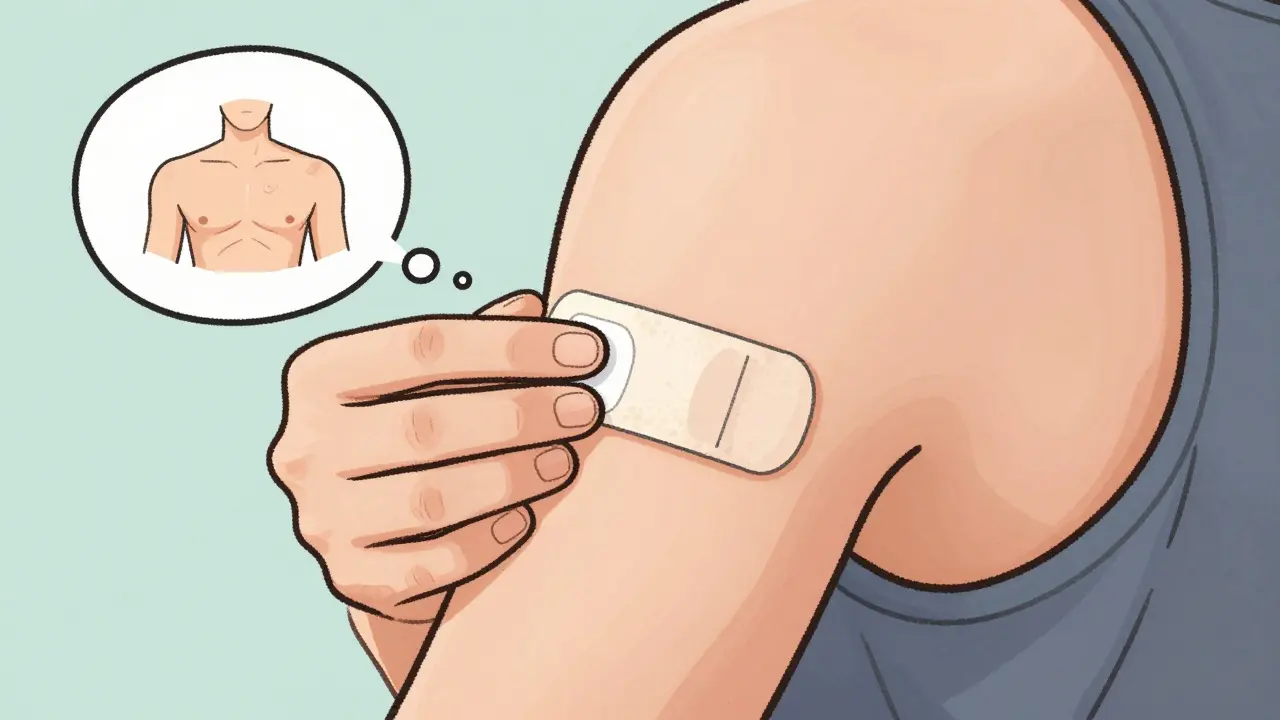
- Rotate sites: Never apply a new patch to the same spot where the old one was. Rotate between arms, chest, back, or abdomen to prevent skin breakdown.
- Prep the skin: Apply to clean, dry, hairless skin. Avoid areas with cuts, rashes, or excessive sweating. Do not use lotions or oils before application, as they can block absorption.
- Check the seal: After applying, press firmly for 10 seconds. If edges lift, the patch isn't sticking. Use a hypoallergenic medical tape to secure loose corners if needed.
Simplifying Injectable Pens and Syringes
For many, the fear of needles is the primary barrier to adherence. However, modern injectable devices have made this process significantly less painful and more precise. Smart pen technologies, like those developed by Novo Nordisk, which manufactures connected insulin pens that track injection metrics, offer a game-changer. These devices track injection time, dose, and location with 98% accuracy. Here is how to make injections less daunting:
- Let the alcohol dry: After cleaning the injection site, wait 30 seconds for the alcohol to evaporate. Injecting into wet alcohol stings more.
- Relax the muscle: Tensing up makes the needle go in harder. Take a deep breath and relax the area before injecting.
- Use the counter: Many smart pens have audible or visual counters. Listen for the click or watch the dial to ensure the full dose is delivered. A 2023 Novo Nordisk study showed that connected pens improved dose accuracy by 27%.
The Power of Multi-Modal Interventions
No single strategy works for everyone. Dr. Richard B. Martinello, Chief Quality Officer at Yale New Haven Health, argues that successful programs must address five dimensions: affordability, accessibility, acceptability, awareness, and activation. This means combining education, technology, and human support. Consider this three-step implementation model:
- Assess barriers: Use a tool like the Morisky Medication Adherence Scale to identify why you might be missing doses. Is it cost? Forgetfulness? Fear?
- Tailor the solution: If forgetfulness is the issue, set phone alarms or use a smart device. If technique is the problem, ask your pharmacist for a demonstration.
- Follow up: Schedule check-ins at 7, 30, and 90 days. Research shows this approach improves long-term adherence by 37% compared to one-time counseling.
| Device Type | Primary Barrier | Best Intervention | Expected Improvement |
|---|---|---|---|
| Inhalers | Poor Technique | Educational Coaching + Spacers | 40% better use |
| Patches | Skin Irritation | Site Rotation + Proper Prep | Reduced discontinuation |
| Injectables | Needle Fear/Dosing Error | Smart Pens + Relaxation Techniques | 27% better accuracy |

Navigating Costs and Technology Hurdles
Technology is powerful, but it comes with caveats. The global medication adherence solutions market is growing fast, projected to reach $8.5 billion by 2028. However, adoption remains uneven. Only 37% of U.S. commercial insurance plans cover smart inhaler sensors, though Medicare Advantage coverage is rising. Before investing in expensive digital trackers, consider the learning curve. Electronic systems require 45-60 minutes of initial setup. For patients over 65, technical literacy gaps affect 35% of users, leading to abandonment. If you or a loved one struggle with smartphones, simpler aids like traditional pillboxes or blister packaging still improve adherence to 71% compared to 63% for control subjects. Also, be mindful of privacy. A 2023 AMA survey found that 68% of patients worry about how adherence data might affect insurance premiums. Read the terms of service for any app you download. Ensure your data is encrypted and understand who has access to your usage patterns.
Building a Sustainable Routine
Adherence is not a one-time fix; it's a habit. Start small. Link your medication to an existing daily ritual, like brushing your teeth or having coffee. This "habit stacking" reduces the mental effort required to remember. If you miss a dose, don't panic. Double-check the instructions. For some medications, doubling up is dangerous. For others, taking it as soon as you remember is fine. When in doubt, call your pharmacist. They are there to help you navigate these slip-ups without judgment. Finally, celebrate the wins. Improved adherence leads to fewer hospital visits, better energy levels, and lower healthcare costs-averaging $1,200 saved annually per patient with high adherence. By mastering your inhaler, patch, or pen, you aren't just following orders; you're taking control of your health.
How can I tell if my inhaler technique is wrong?
Common signs include coughing immediately after use, visible mist escaping your lips, or no improvement in symptoms despite regular use. Ask your pharmacist to observe you using the device. They can identify issues like incorrect breathing speed or poor lip seal.
What should I do if my patch falls off?
Do not reapply the used patch. Discard it and apply a new one at the next scheduled dosing time. Reapplying an old patch can lead to unpredictable drug absorption and potential overdose. Always rotate application sites to prevent skin irritation.
Are smart pens worth the extra cost?
For patients who struggle with dosing accuracy or forgetfulness, yes. Studies show they improve dose accuracy by 27% and provide valuable data for doctors. However, check with your insurance first, as coverage varies. If you are comfortable with standard pens, they remain highly effective.
Can electronic monitors replace doctor visits?
No. Electronic monitors track device activation, not clinical outcomes. They cannot confirm if you inhaled properly or if the medication is working. Use them as a tool to discuss adherence with your healthcare provider during regular visits.
How does skin irritation affect patch adherence?
Skin irritation is a major reason patients stop using patches. To mitigate this, always apply to clean, dry, hairless skin and rotate sites daily. If irritation persists, consult your doctor; they may recommend a different formulation or a topical cream to soothe the area.