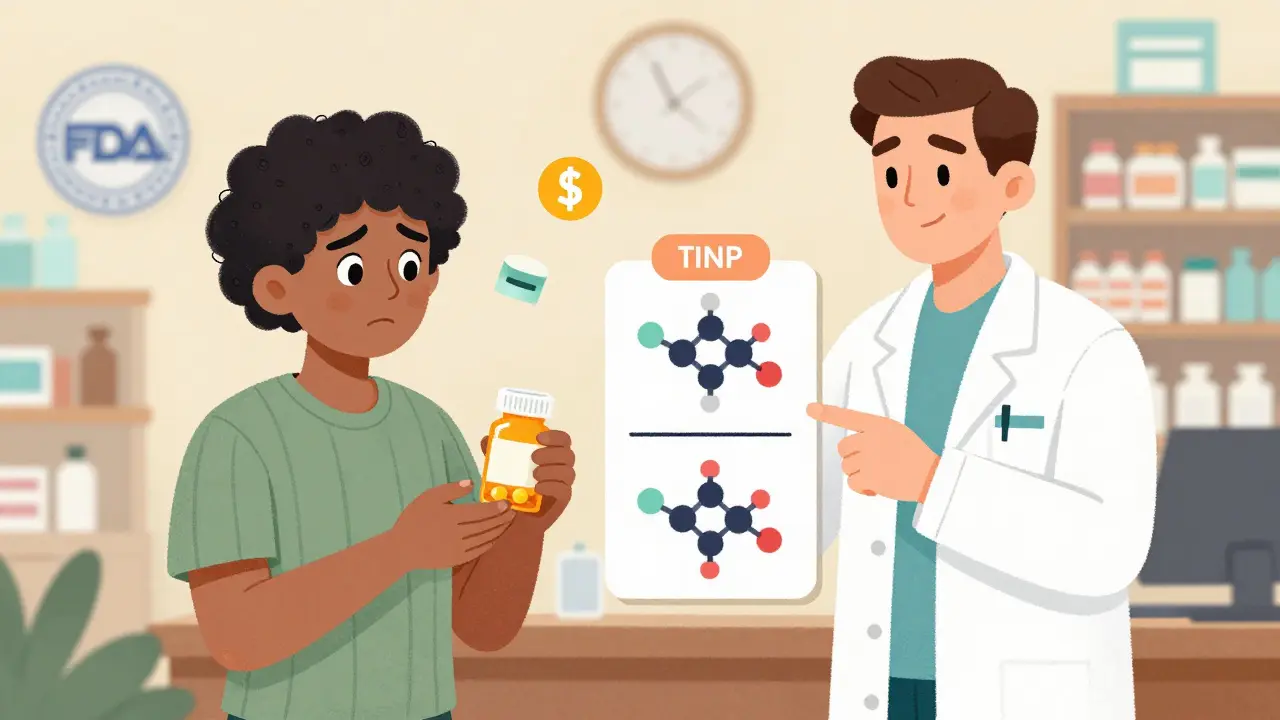
When a patient picks up a prescription and sees a different pill than what they’re used to, it’s natural to pause. The shape is different. The color is off. The name on the label isn’t familiar. For many, this triggers a silent question: Is this really the same? Despite generics making up 90% of all prescriptions filled in the U.S. and saving patients and the healthcare system billions each year, doubts still linger. Research shows nearly one in three patients worry about side effects, one in four question effectiveness, and nearly a third simply don’t want to switch - not because the science says otherwise, but because they weren’t properly informed.
Why Patients Doubt Generics - Even When They’re Safe
Generic drugs aren’t knockoffs. They’re exact copies in active ingredients, dosage, and how they work in the body. The FDA requires them to meet the same strict standards as brand-name drugs. To get approved, a generic must prove it delivers the same amount of medicine into the bloodstream at the same rate - within 80% to 125% of the brand. That’s not a guess. That’s science.
So why the hesitation? The answer lies in perception, not chemistry. A 2024 study in PLOS ONE found that patients who believed generics were less effective were more likely to have lower education levels, lower income, or rely on Medicaid. Non-white patients were also more likely to express skepticism - 21.7% less confident than white patients, according to data from the Journal of General Internal Medicine.
But the biggest factor isn’t cost or country of origin. It’s communication. Patients who weren’t told why they were switching, or who felt rushed during the process, were far more likely to refuse the generic. One Reddit user summed it up: "I switched to generic sertraline and felt weird. No one warned me. I thought I was going crazy." That’s not a flaw in the drug - it’s a flaw in the conversation.
The Role of the Pharmacist: The Most Trusted Voice
Pharmacists are often the last person a patient talks to before taking a pill. And they’re uniquely positioned to change minds. Studies show that when a pharmacist takes just 2-3 minutes to explain why the generic is safe, comfort with substitution jumps from 63% to 85%. That’s not magic. That’s clarity.
One simple script works: "This is the generic version of your medication. It has the same active ingredient, works the same way, and was tested to be just as safe and effective. The only difference is the price - and the name on the label. The FDA makes sure they match exactly."
But it’s not just about what you say. It’s how you say it. A 2023 study found patients who felt listened to - not rushed - were 40% more likely to stick with the generic long-term. That’s why CVS Health has a 4.2/5 rating for generic counseling, while Walmart Pharmacy sits at 3.1/5. The difference? Time. One offers structured education. The other often just checks out.
What Patients Really Think - And What They Don’t Say
Surveys reveal the real concerns behind the silence:
- 29.5% fear new or worse side effects
- 25.7% don’t want to change what’s "working" - even if it’s expensive
- 24.1% doubt the generic will work as well
- 20.8% say they’d rather pay more than risk their health
These aren’t irrational fears. They’re emotional responses to incomplete information. For example, patients using inhalers or injectables often worry about whether the generic device works the same way. A 2023 FDA report noted patients hesitated not because the drug was different, but because they weren’t shown how to use the new delivery system. That’s a training gap - not a safety gap.
And then there’s the "brand = better" myth. A 2024 machine learning analysis of Greek patients found 53.7% believed brand-name drugs were higher quality - even though no clinical evidence supports that. The same study showed that when a provider recommended a generic, acceptance jumped to 69.8%. That’s the power of trust.
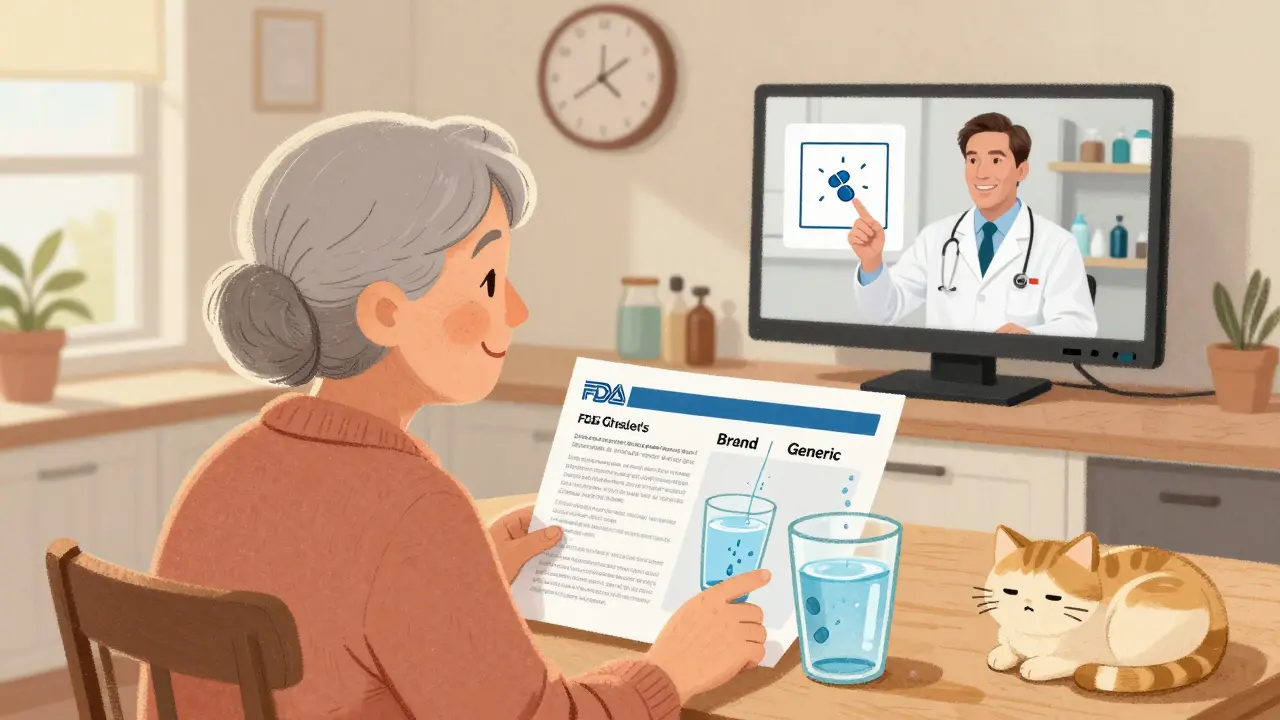
How Doctors and Pharmacists Can Talk About Generics - Without Sounding Like a Sales Pitch
There’s no one-size-fits-all script. But research points to five proven approaches:
- Start with empathy: "I know switching medications can feel unsettling. Let me explain why this change is safe."
- Use the FDA as your ally: "The FDA requires generics to meet the same standards as brand-name drugs - same strength, same purity, same stability. They’re not cheaper because they’re worse. They’re cheaper because no one paid to advertise them."
- Compare it to something familiar: "Think of it like store-brand aspirin. It’s the same active ingredient as Bayer. Just no logo on the bottle."
- Address the invisible concern: "Some people worry about side effects when switching. That’s normal. But it’s usually temporary - like when you first start any new medicine. If something feels off, we’ll adjust it together."
- Offer to document it: "I’ll write a note in your chart explaining why we switched. You can bring this to your next appointment if you have questions."
These aren’t just nice-to-haves. They’re evidence-backed. A 2023 study in US Pharmacist found that patients who received even a brief explanation were 36% more likely to refill their generic prescription. That’s adherence. That’s health outcomes.
Who Needs Extra Support - And How to Help Them
Not all patients are the same. Research shows certain groups need more attention:
- Older adults (60+): 71% feel safe with generics - but only if they understand why. Use large-print handouts. Avoid jargon. Say "the medicine works the same way" instead of "bioequivalence."
- Low health literacy: 50% believe generics are less effective. Use the Newest Vital Sign tool to check understanding. Ask: "Can you tell me in your own words why we switched?"
- Non-white patients: 11% less confident than white patients. Acknowledge cultural beliefs without dismissing them. "I hear you. Let me show you what the FDA actually requires."
- Patients on complex meds: Inhalers, insulin pens, injectables. Demonstrate the device. Let them try it. Offer a follow-up call.
One hospital in Minnesota started a "Generic Confidence Program" - pharmacists spent 5 extra minutes with high-risk patients, handed out simple one-page guides, and followed up with a phone call. Within six months, refill rates for generics increased by 22%. No policy changes. Just better conversations.
The Bigger Picture: Why This Matters
Generics aren’t just about saving money. They’re about access. In 2022, generics saved Americans $370 billion. That’s billions in out-of-pocket costs avoided. That’s thousands of people who could afford their medicine because of this one switch.
But if patients stop taking their meds because they don’t trust the generic, those savings vanish. Non-adherence costs the U.S. healthcare system over $300 billion annually. That’s more than the entire generic drug savings.
This isn’t about convincing people to choose cheaper. It’s about helping them understand that the same science, the same standards, and the same FDA oversight apply - no matter the price tag.
What You Can Do - Right Now
Whether you’re a pharmacist, nurse, or doctor, here’s what works:
- Always ask: "Have you taken this medication before?" - not just "Do you have any questions?"
- Keep simple, FDA-approved handouts on hand. The FDA’s "Generic Drugs: Questions and Answers" page has free, printable resources.
- Don’t assume silence means agreement. Say: "I know this might feel different. What’s your biggest concern?"
- Track your success. If 80% of patients who get a 2-minute explanation refill their prescription, you’re doing something right.
Change doesn’t come from laws or price tags. It comes from a quiet conversation. One that says: "I see your worry. Here’s what the science says. And I’m here if you need me."
Are generic drugs really as effective as brand-name drugs?
Yes. The FDA requires generic drugs to have the same active ingredient, strength, dosage form, and route of administration as the brand-name version. They must also prove bioequivalence - meaning they deliver the same amount of medicine into the bloodstream at the same rate. Studies show no meaningful difference in effectiveness or safety between generics and brand-name drugs in real-world use.
Why do some people feel different side effects when switching to generics?
The active ingredient is identical, but inactive ingredients - like fillers, dyes, or coatings - can differ. These rarely cause issues, but in rare cases, they may affect how quickly the drug is absorbed or trigger minor reactions in sensitive individuals. If someone feels worse after switching, it’s not because the generic is weaker - it’s because their body is adjusting. A short trial period and open communication with a provider usually resolves this.
Can pharmacists substitute generics without the doctor’s permission?
In 18 U.S. states, pharmacists can substitute a generic for a brand-name drug without contacting the prescriber - as long as it’s allowed by law and the prescription doesn’t say "dispense as written." In 12 states, the doctor must give explicit permission. But even where substitution is automatic, the best practice is always to inform the patient - not just assume they know.
Why do generics cost so much less than brand-name drugs?
Brand-name drugs require years of expensive research, clinical trials, and marketing before they can be sold. Once the patent expires, other companies can make the same drug without repeating those costs. They don’t need to advertise or fund new research - just prove they’re the same. That’s why generics typically cost 80-85% less - not because they’re inferior, but because the system works as intended.
What should I say to a patient who refuses a generic because "it’s not the same"?
Start by listening. Don’t argue. Say: "I understand you’re used to the brand. Many patients feel that way. Let me show you what the FDA requires for generics to be approved. They have to match the brand in every way that matters - the medicine inside, how it works in your body, and how safe it is. The only difference is the price and the label. Would you like to see the FDA’s official page on this?" Then hand them a printed summary. People trust facts more than opinions - especially when they’re from a trusted source like the FDA.
Kenzie Goode
February 26, 2026 AT 06:28Dominic Punch
February 27, 2026 AT 03:04Brooke Exley
February 27, 2026 AT 23:34Valerie Letourneau
March 1, 2026 AT 13:02Khaya Street
March 1, 2026 AT 20:59Lou Suito
March 2, 2026 AT 14:27Sanjaykumar Rabari
March 3, 2026 AT 03:58Joseph Cantu
March 5, 2026 AT 00:10Lisandra Lautert
March 5, 2026 AT 05:09