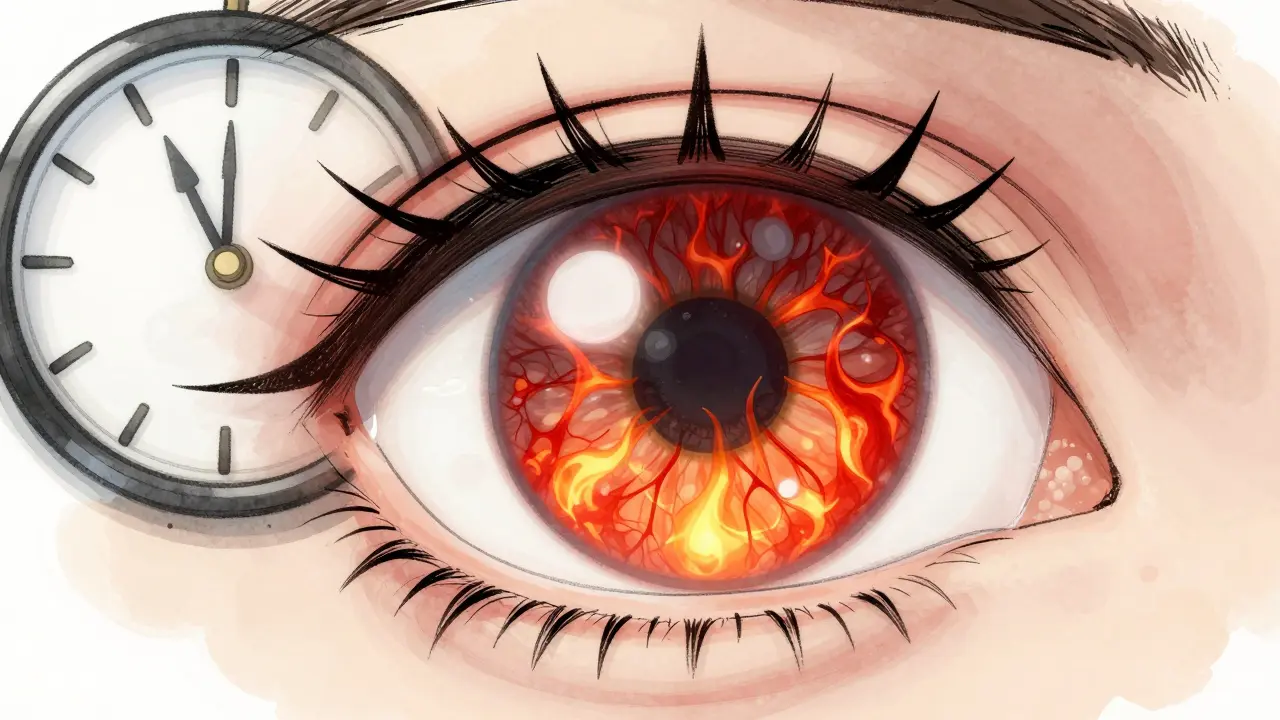
Uveitis is not just a red eye. It’s inflammation deep inside the eye - in the uvea, the middle layer that feeds the retina and iris. Left untreated, it can destroy vision in weeks. Many people ignore early symptoms, thinking it’s just allergies or fatigue. But uveitis doesn’t go away on its own. It needs fast, targeted treatment - and steroids are the frontline defense.
What Exactly Is the Uvea?
The uvea isn’t one part. It’s three layers stacked like a sandwich inside your eye. The front is the iris - the colored part. Behind it is the ciliary body, which makes the fluid that keeps your eye shaped. The back layer is the choroid, a network of blood vessels that feeds the retina. When inflammation hits any of these, it’s uveitis. And because these layers are packed with blood vessels and delicate tissue, swelling can crush vision fast.
The Four Types of Uveitis (And Why It Matters)
Not all uveitis is the same. Where it hits changes everything - symptoms, treatment, and risk.
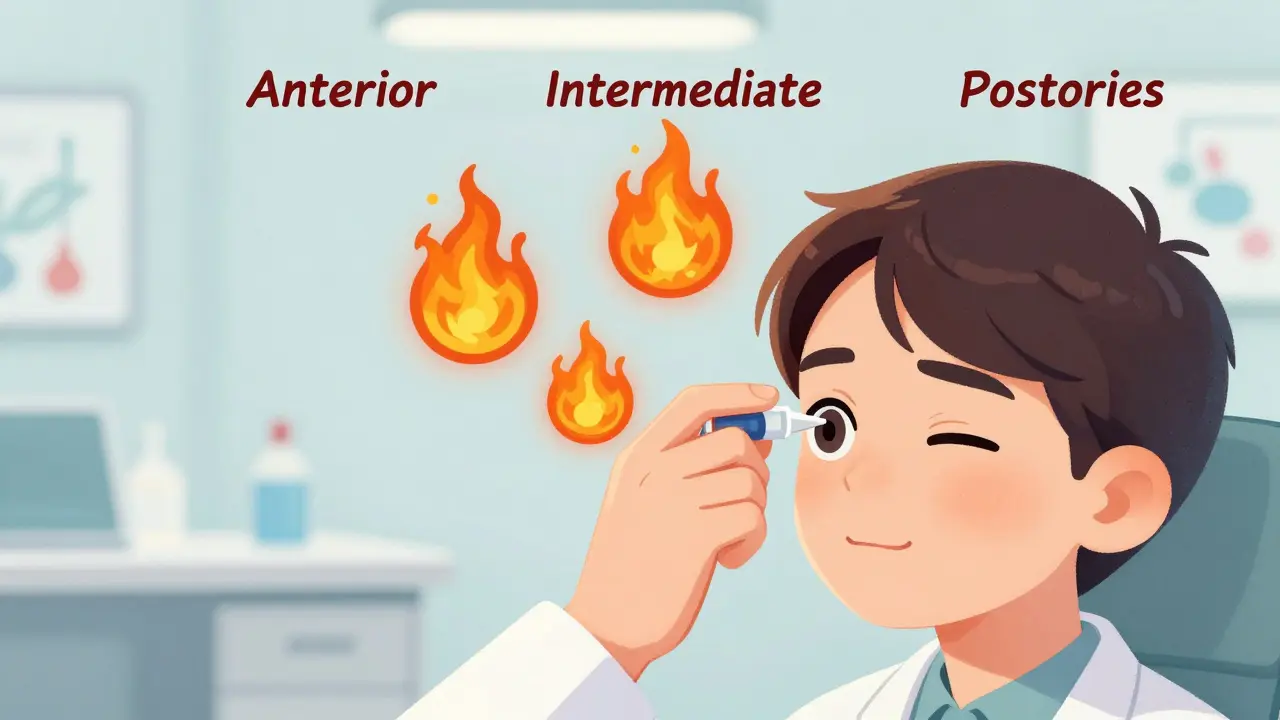
- Anterior uveitis (iritis) hits the front. This is the most common - about 75% of cases. You’ll know it: sudden redness, sharp pain, especially when reading, and light so bright it feels like a knife. Vision blurs. Pupils get weird shapes. This form usually clears up with eye drops, if caught early.
- Intermediate uveitis (pars planitis) targets the vitreous jelly in the middle. No big redness. No sharp pain. Just floaters - those dark squiggles that drift across your vision - and blurry sight. It’s sneaky. Often lasts for years. Comes and goes. Hard to spot without a detailed eye exam.
- Posterior uveitis attacks the retina and choroid at the back. This is the most dangerous. Vision fades slowly. Colors dull. You might not even notice until it’s too late. It often hits both eyes. Causes permanent damage to the retina. Macular edema - swelling in the center of your vision - is common here.
- Panuveitis means all layers are burning at once. You get every symptom: pain, floaters, blurriness, light sensitivity. It’s rare, but it’s the worst. High risk of glaucoma, cataracts, and blindness.
What Causes Uveitis?
Here’s the hard part: in up to 70% of cases, doctors can’t find a cause. It’s called idiopathic. But when they do, it’s usually one of three things.
- Autoimmune diseases: Ankylosing spondylitis, lupus, multiple sclerosis, sarcoidosis. Your immune system turns on your eye by mistake. These often come with joint pain or skin rashes.
- Infections: Herpes viruses (like shingles), syphilis, toxoplasmosis (from cat poop or undercooked meat), CMV, histoplasmosis (a fungus in soil). These can spread from other parts of your body.
- Trauma or surgery: A blow to the eye, a scratch, or even an eye operation can trigger inflammation.
It’s not contagious. You can’t catch it from someone else. But if you have an autoimmune condition, your risk goes up. That’s why doctors always check your full medical history - not just your eyes.
Steroid Therapy: The Main Weapon
Steroids are the only treatment that stops uveitis fast. They don’t cure the cause - but they silence the inflammation before it destroys your eye.
How you get them depends on where the fire is.
- Anterior uveitis: Steroid eye drops - like prednisolone acetate 1% - are the gold standard. You might start with drops every hour, then taper down over weeks. Pain and redness usually fade in days.
- Intermediate uveitis: Eye drops don’t reach deep enough. So doctors inject steroids around the eye (periocular) or put a slow-release implant inside the eye (intravitreal). Oral steroids are also common here.
- Posterior uveitis: Oral steroids (prednisone pills) are usually needed. Sometimes, implants or injections directly into the vitreous are used. IV steroids may be given for severe cases.
- Panuveitis: Systemic steroids - pills or IV - are mandatory. Often combined with other immune suppressants.
Timing is everything. If you wait more than a few days, scarring starts. That’s permanent.
The Hidden Dangers of Steroids
Steroids work - but they come with trade-offs. Long-term use can cause:
- Cataracts: Clouding of the lens. Happens in up to 40% of people on long-term steroids.
- Steroid-induced glaucoma: Pressure builds inside the eye. Can damage the optic nerve. Needs regular pressure checks.
- Bone thinning, weight gain, blood sugar spikes: These are systemic risks if you’re on pills for months.
That’s why doctors don’t just dump steroids on you. They aim for the lowest dose for the shortest time. For chronic cases, they switch to steroid-sparing drugs - like methotrexate, azathioprine, or biologics - to reduce steroid dependence. These take weeks to kick in, so steroids are still needed at first.
When to See a Doctor - Right Now
You don’t need to wait for a routine checkup. If you have any of these, go to an eye specialist today:
- Red eye with pain - especially if it’s worse when reading
- Sudden floaters or blurred vision - not just from aging
- Extreme light sensitivity - even indoors
- Vision that gets worse over hours or days
Uveitis doesn’t wait. The sooner you get treated, the better your vision survives. Many people lose vision because they thought it was pink eye or dry eyes. It’s not.
What Happens If You Don’t Treat It?
Untreated uveitis doesn’t just fade. It destroys.
- Adhesions form between the iris and lens (synechiae), locking the pupil.
- Fluid can’t drain - pressure spikes - glaucoma sets in.
- Macular edema swells the center of your retina - central vision vanishes.
- Retinal blood vessels leak or scar - permanent blind spots.
- Optic nerve dies - total vision loss.
Uveitis is the third leading cause of blindness worldwide. That’s not a statistic. It’s people. People who ignored a red eye. People who waited too long.
Can Vision Come Back?
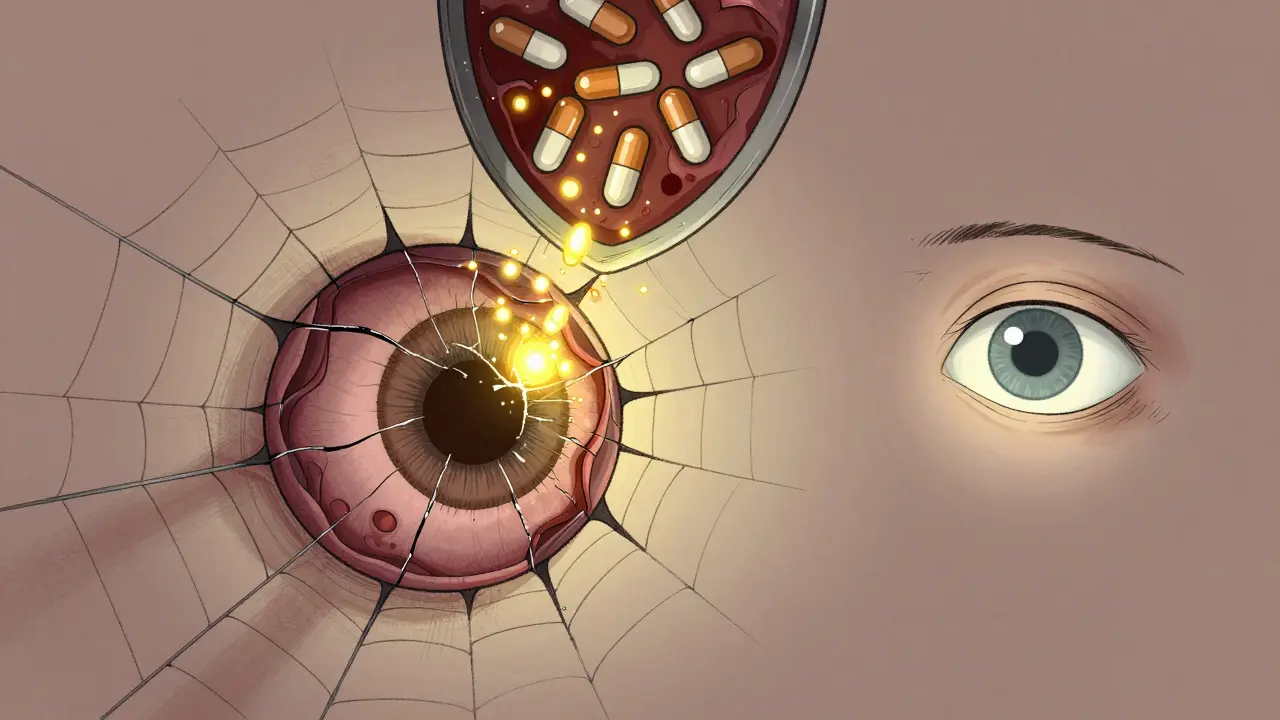
Yes - if treatment starts early. Anterior uveitis often resolves with no lasting damage. But posterior uveitis? Chronic cases? The damage to the retina or optic nerve is often irreversible. That’s why early detection is everything. Steroids can save your sight - but only if they get there before the scarring starts.
Can uveitis go away on its own?
No. Uveitis doesn’t resolve without treatment. Even if symptoms seem to fade, inflammation continues quietly. That’s why it’s called a silent threat - especially in intermediate and posterior forms. Delaying treatment increases the risk of permanent damage like glaucoma, cataracts, or retinal scarring.
Are steroid eye drops safe for long-term use?
Not without monitoring. Long-term use of steroid eye drops can cause cataracts and steroid-induced glaucoma. That’s why doctors don’t prescribe them for months without checking eye pressure and lens clarity. If inflammation persists, they switch to steroid-sparing drugs to reduce dependency.
Can uveitis affect both eyes?
Yes. Anterior uveitis usually affects one eye, but intermediate, posterior, and panuveitis often hit both. If you’ve had uveitis in one eye, the other eye is at higher risk - especially if it’s linked to an autoimmune disease. Regular checkups are critical.
Is uveitis hereditary?
Not directly. But some autoimmune conditions that trigger uveitis - like ankylosing spondylitis - have genetic links. If you have HLA-B27 gene, your risk of anterior uveitis increases. That doesn’t mean you’ll get it, but it means you should watch for symptoms closely.
Do I need blood tests if I have uveitis?
Often, yes. Especially if it’s recurrent, bilateral, or doesn’t respond to standard treatment. Blood tests check for syphilis, Lyme disease, sarcoidosis, or autoimmune markers. Imaging like OCT or fluorescein angiography may also be used to see retinal damage. The goal is to find the root cause - not just treat the symptoms.
What Comes Next After Steroids?
If uveitis keeps coming back, steroids alone aren’t enough. That’s when immunomodulatory therapy kicks in. Drugs like methotrexate, mycophenolate, or adalimumab (Humira) suppress the immune system more precisely. They take weeks to work, so steroids are still used at first. But once they’re in full effect, steroid doses drop - lowering cataract and glaucoma risk. This isn’t a cure, but it’s the best way to keep your vision stable long-term.
Final Takeaway
Uveitis isn’t a minor irritation. It’s an emergency. Red eye? Pain? Floaters? Blurry vision? Don’t wait. See an eye specialist within 24 hours. Steroids can save your sight - but only if they’re given before the damage is done. And if you’ve had it once, you’re at risk again. Stay vigilant. Your vision depends on it.
Casey Tenney
March 22, 2026 AT 09:17Timothy Olcott
March 23, 2026 AT 18:45Desiree LaPointe
March 25, 2026 AT 10:34Shaun Wakashige
March 25, 2026 AT 19:00Paul Cuccurullo
March 26, 2026 AT 17:17Allison Priole
March 27, 2026 AT 21:22Sandy Wells
March 28, 2026 AT 03:28Bryan Woody
March 29, 2026 AT 13:40Chris Dwyer
March 30, 2026 AT 11:24Natali Shevchenko
March 30, 2026 AT 22:31