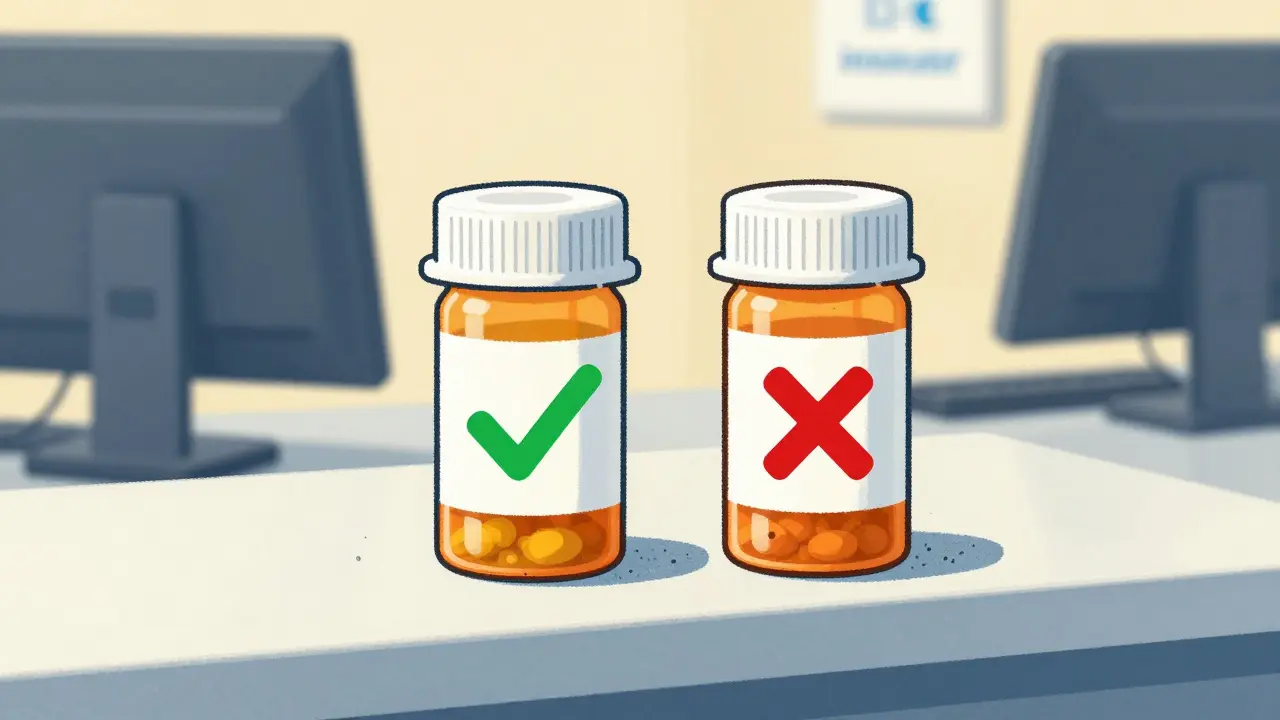
Over 90% of prescriptions in the U.S. are filled with generic drug substitution today. That’s not accidental-it’s the result of insurers aggressively pushing for cheaper alternatives. But behind the scenes, doctors and clinics face a maze of rules, paperwork, and tough decisions. How do healthcare providers navigate this pressure? Let’s break it down.
How insurers enforce generic substitution
FDA data shows generic drugs cost 80-85% less than brand-name versions. Insurers use this to push for substitutions through formulary tiers, where generics have low copays ($5-$15) while brand-name drugs require high copays ($40-$100+). Some insurers remove brand-name drugs from coverage entirely unless providers prove medical necessity. For example, UnitedHealthcare reports 22% higher generic utilization rates than industry averages through their aggressive tiering system. They also use step therapy protocols, forcing patients to "fail" on generics before accessing brand-name drugs.
EHR systems now integrate with insurer databases for electronic prior authorization (ePA). But this creates new headaches. Providers must submit clinical justification within 72 hours for urgent cases, with approval rates varying widely-45% for specialty drugs versus 85% for common chronic conditions. The CMS Interoperability and PA final rule in 2024 mandates standardized electronic prior authorization for Medicare and Medicaid plans by 2027, but inconsistency remains problematic. As the NAIC white paper notes, "definitions of medical necessity differ among insurers, and some insurers define medical necessity without providing the clinical criteria necessary for a provider to determine if the health care service being requested meets the medical necessity threshold."
Real-world challenges for providers
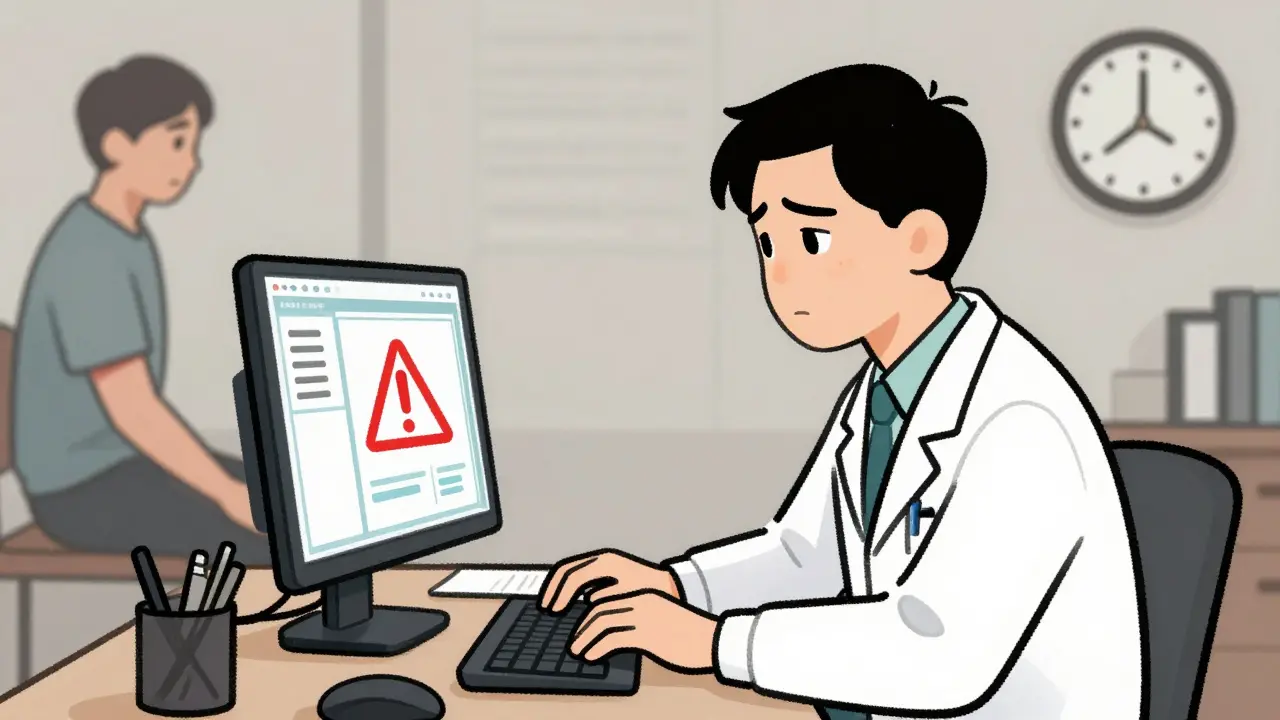
Physicians spend an average of 16.9 minutes per prior authorization request (MGMA 2023), with 78% saying these requirements sometimes lead to treatment abandonment. A Mayo Clinic physician in Minnesota shared a stark example: an insurer denied coverage for a brand-name anticoagulant for a patient with documented gastrointestinal sensitivity to the generic alternative. After three appeals over 22 days, coverage was finally granted-but during that delay, the patient had two emergency department visits for bleeding complications.
On Reddit’s r/Physician community, "DrCardio92" posted in May 2024 that they now preemptively include "medical necessity" documentation in 100% of brand-name prescriptions, increasing their processing time by 40%. Meanwhile, 29% of physicians report prior authorization has caused serious adverse events for patients, including cases where delays led to hospitalizations or death (AMA 2023).
State laws that change the game
| State | Key Legislation | Requirements |
|---|---|---|
| California | AB 347 | 72-hour response for urgent exception requests; 5 business days for standard requests |
| Arizona | HB 2175 | Medical directors must review denials; prohibits reliance solely on AI for medical necessity decisions |
California’s AB 347 (effective January 2024) requires insurers to "expeditiously" grant step therapy exception requests with supporting clinical documentation. Arizona’s HB 2175 (signed May 2025) goes further: medical directors must personally review denials, banning AI-only decisions. These laws directly address provider frustrations, but 89% of physicians still need to learn different requirements for each major insurer (MGMA 2023).
Strategies providers use to cope
Many doctors now use standardized template letters for common exceptions-68% of surveyed physicians do this (AAFP 2023). Others cultivate relationships with specific insurer case managers or use EHR-integrated ePA systems, which reduce approval time by 55% (JAMIA 2024). Medium-sized practices (10-50 physicians) often hire dedicated prior authorization staff, costing $112,400 per position annually (MGMA 2024). One California psychiatrist noted since AB 347, "step therapy exception approvals have gone from taking 14 days to under 72 hours with a 92% approval rate on first submission."

Expert opinions: cost savings vs. patient risk
FDA maintains generics must meet strict bioequivalence standards (80-125% of brand-name pharmacokinetics), but critics like Dr. Arthur Caplan of NYU argue these margins are too wide for drugs like levothyroxine. Meanwhile, Sun Life Financial claims their policies have "zero impact on patient care," citing 98.7% of generic substitutions proceed without complications. But Pharmacy Benefit Managers (PBMs) like CVS Caremark and OptumRx control formulary decisions for 85% of insured Americans, creating vertically aligned systems that maximize pressure toward generics.
Health economists like Dr. Mark Duggan of Stanford acknowledge cost savings but warn: "Excessive generic substitution mandates can undermine therapeutic relationships and lead to non-adherence when patients experience different side effect profiles." Insurers counter that these policies save billions annually-generic drugs represent 90% of prescriptions but only 18% of total drug spending (IQVIA 2023).
What’s next for generic drug policies?
34 states introduced bills in 2024-2025 to regulate prior authorization. The federal Improving Seniors’ Timely Access to Care Act (2022) requires Medicare Advantage plans to respond to prior auth requests within 72 hours for urgent cases. McKinsey predicts CMS’s 2024 rule will reduce processing time by 40-60% when fully implemented. But medical associations warn of backlash if adverse events increase-68% of physicians believe current prior auth requirements negatively impact patient outcomes (AMA 2024). The FDA’s ongoing evaluation of complex generics for narrow therapeutic index drugs may lead to more nuanced policies by late 2025.
What is step therapy?
Step therapy requires patients to try cheaper generic drugs first before insurers cover more expensive brand-name options. Providers must document why the generic isn’t working before moving to the next step. This process can delay treatment, especially for patients with conditions like epilepsy or thyroid disorders where small differences in medication can cause serious issues.
How does prior authorization affect patient care?
Prior authorization delays treatment in 78% of cases where providers report it leads to treatment abandonment. The AMA reports 29% of physicians have seen serious adverse events from these delays, including hospitalizations or death. For example, a patient denied a brand-name anticoagulant due to generic substitution requirements had two emergency visits for bleeding complications while awaiting approval.
Can providers refuse to switch to a generic drug?
Yes, but only if they submit a prior authorization request with clinical justification. Insurers must review these requests, and state laws like California’s AB 347 require expedited responses for urgent cases. However, 89% of physicians say they need to learn different requirements for each insurer, making consistent refusals challenging.
What role do PBMs play in generic substitution?
Pharmacy Benefit Managers (PBMs) like CVS Caremark and OptumRx control formulary decisions for 85% of insured Americans. They often work with insurers to create tiered systems that heavily favor generics. For instance, UnitedHealthcare’s aggressive tiering system increased generic utilization by 22% above industry averages. PBMs also negotiate rebates with drug manufacturers, which can influence which drugs get covered.
Are there exceptions to generic substitution requirements?
Yes. Patients with documented allergies, adverse reactions, or specific medical conditions (like narrow therapeutic index drugs) can qualify for exceptions. California’s AB 347 requires insurers to grant exceptions within 72 hours for urgent cases. Arizona’s HB 2175 mandates medical directors personally review denials. However, 78% of providers report cases where insurers still deny exceptions without proper clinical review.
Lana Younis
February 6, 2026 AT 07:29Hey y'all, this whole generic drug substitution push is a real headache for docs. Insurers are pushing hard for cheaper meds, but the paperwork is insane. Like, 16.9 mins per prior auth? That's a lot. And the Mayo Clinic example where a patient had to wait 22 days for a brand-name med-two ER visits for bleeding? That's messed up. States like CA and AZ are trying to fix it with laws like AB 347 and HB 2175, but insurers still play games. FDA says generics are bioequivalent, but for drugs like levothyroxine, even small differences matter. PBMs like CVS Caremark control 85% of insured Americans, so they're the ones calling the shots. It's a mess. Gotta wonder if the cost savings are worth the patient risks. Maybe we need better standards for narrow therapeutic index drugs. Anyway, healthcare's a complex system, but patients are paying the price. I hope CMS's new rules help streamline things. But honestly, it feels like they're just shifting the problem around. Still, more transparency would help. Let's hope for better solutions soon.
Matthew Morales
February 6, 2026 AT 15:09Yeah, totally agree. The prior auth process is a nightmare. 16.9 mins per request? Oof. And that Mayo Clinic case-two ER visits just because of delays? 😬 Also, the PBMs controlling formularies is wild. They're not even transparent about rebates. But states like CA are making progress with AB 347. Maybe we need more of that. Also, the FDA's bioequivalence standards might need a closer look for drugs like levothyroxine. Maybe the government should step in more. Anyways, it's a tough situation but we need to keep pushing for change. Typos everywhere, sorry!
one hamzah
February 8, 2026 AT 06:52Patients are suffering because of this system.
Diana Phe
February 8, 2026 AT 15:55Big Pharma and insurers are in cahoots. They want to control healthcare to maximize profits. The FDA's standards are too lax. They're pushing generics to save money, but patients are getting worse care. It's all part of the plan. Wake up, people!
Carl Crista
February 10, 2026 AT 08:15Exactly. The whole system is rigged. PBMs and insurers work together to force generics. FDA's 80-125% bioequivalence is a joke for drugs like levothyroxine. Patients die because of this. Government is corrupt. They need to shut it down.
Andre Shaw
February 12, 2026 AT 03:04Y'all are missing the point. Insurers pushing generics isn't the problem-it's the lack of competition. Big Pharma's been charging insane prices for brand names, so generics are necessary. But the real issue is PBMs manipulating formularies for rebates. They're not about patient care, it's all about profits. Let's fix that instead of blaming insurers. Maybe we need to break up the PBMs. It's simple.
Brendan Ferguson
February 12, 2026 AT 13:18Good point about PBMs. They definitely have a lot of power. But it's not just about breaking them up. We need better regulations to ensure patient safety while still keeping costs down. Maybe a middle ground where generics are used when appropriate, but exceptions are handled faster. Like California's AB 347-72-hour response for urgent cases. That's a good start. We need more of that kind of balance.
Katharine Meiler
February 13, 2026 AT 17:41The prior authorization process is a major bottleneck. 78% of providers say it leads to treatment abandonment. That's unacceptable. We need standardized ePA systems across all insurers. CMS's 2024 rule mandating standardized ePA by 2027 is a step forward, but implementation is key. Also, medical directors should review denials personally-Arizona's HB 2175 is a good model. Let's push for consistent policies nationwide.
Danielle Vila
February 15, 2026 AT 17:32Oh, how naive. Standardized ePA? The system is rigged by PBMs and insurers. They're not interested in patient safety-they're in it for the money. The FDA's standards are too lax, and the government is in bed with Big Pharma. It's all a conspiracy to keep patients sick so they can sell more drugs. We need to expose them.
Albert Lua
February 17, 2026 AT 01:46Whoa, that's a bit extreme. Yes, there are issues, but it's not a conspiracy. Insurers and PBMs do have profit motives, but generics do save money and help many patients. Maybe we need better oversight, but not all of it is bad. For example, generics are used 90% of the time but only 18% of drug spending. That's a huge savings. Let's focus on fixing the bad parts without throwing the baby out with the bathwater.
Rene Krikhaar
February 17, 2026 AT 02:35Patients with conditions like epilepsy or thyroid disorders need careful management. Small differences in meds can cause serious issues. Prior auth delays lead to ER visits and worse outcomes. We need faster processes and better exceptions. States like CA and AZ are making progress but it's not enough. Doctors shouldn't have to spend 16.9 mins per request. Let's streamline this.
Dr. Sara Harowitz
February 17, 2026 AT 06:55Exactly! This is a national emergency. The government isn't doing enough. PBMs and insurers are sacrificing patient safety for profits. The FDA's standards are too lax. They need to tighten the bioequivalence requirements for critical drugs. This is unacceptable!
Joyce cuypers
February 18, 2026 AT 14:56Hey, this is a tough issue. Insurers pushing generics saves money but sometimes at the cost of patient care. For example, that Mayo Clinic case where a patient had bleeding complications because of delays. Ouch. Maybe we need better communication between doctors and insurers. Like, pre-approving common exceptions. Also, EHR-integrated ePA systems help reduce time. Let's work together to fix this.
Georgeana Chantie
February 19, 2026 AT 16:40Yeah, but it's not about communication-it's about control. PBMs and insurers are controlling everything. They're making decisions based on profits, not health. The "save money" argument is just a cover. 😒 We need to stop this system. It's broken.
Carol Woulfe
February 20, 2026 AT 22:47The entire pharmaceutical industry is a fraud. Insurers and PBMs collude to maximize profits at the expense of patient health. The FDA's bioequivalence standards are a sham, especially for narrow therapeutic index drugs. This system is designed to fail patients. We need radical reform immediately.