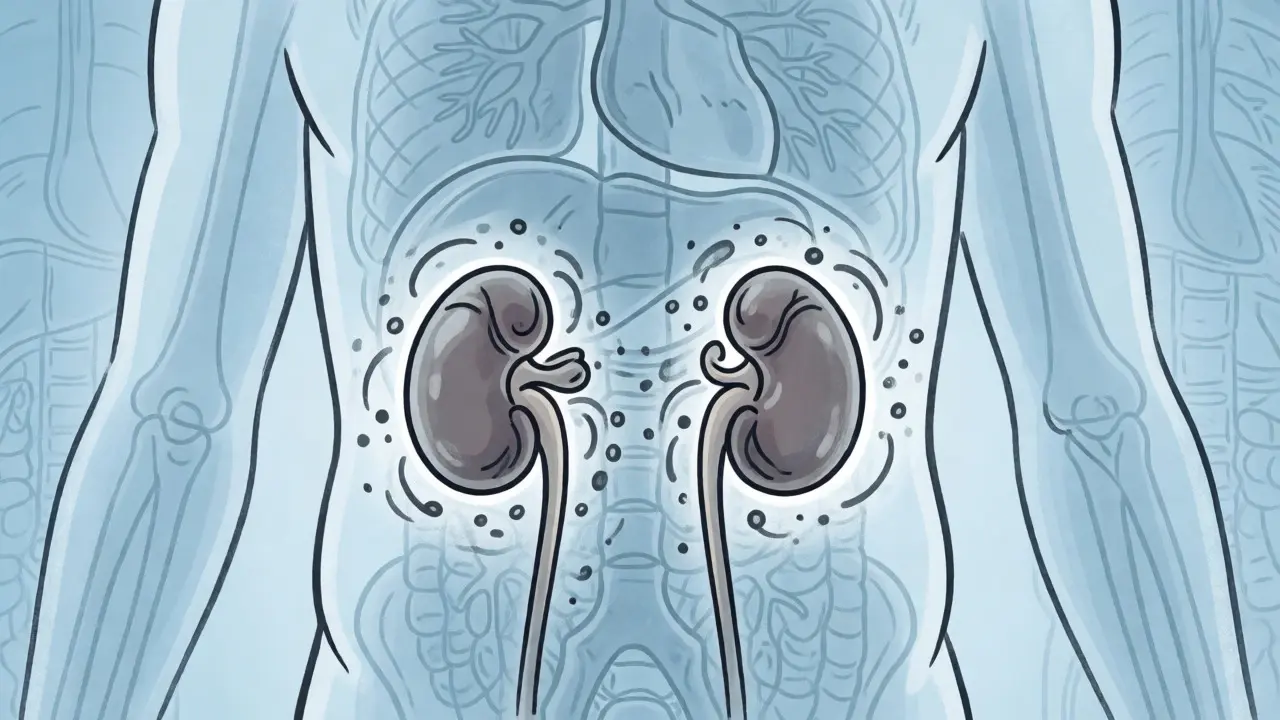
Imagine your body’s filtration system shutting down to less than 15% capacity. That is the reality for someone with End-Stage Renal Disease (ESRD). It sounds terrifying, but it is a manageable condition if you understand your options. You are not just choosing between two machines; you are choosing a lifestyle. The decision between sticking with dialysis or pursuing a kidney transplant changes everything from your weekly schedule to your long-term survival odds.
What Actually Happens in End-Stage Renal Disease?
Your kidneys are hardworking filters. When they fail completely, waste and fluid build up in your blood. Medically, we call this ESRD when your Glomerular Filtration Rate (GFR) drops below 15 mL/min/1.73 m². At this stage, your kidneys have lost about 90% of their function. Without help, this is fatal. But "help" comes in different flavors. The main culprits behind this failure are usually diabetes (about 44% of cases) and high blood pressure (28%). Other causes include lupus, polycystic kidney disease, or long-term drug toxicity.
Here is the kicker: most people think dialysis is the only path. It isn’t. A transplant is often the gold standard, but getting there requires strategy. If you wait until your GFR hits 15 to start thinking about a transplant, you might miss the window for a preemptive procedure. Experts recommend referring patients for transplant evaluation once GFR falls below 30. This gives you time to find a donor and get healthy enough for surgery.
Dialysis: The Daily Grind vs. Home Freedom
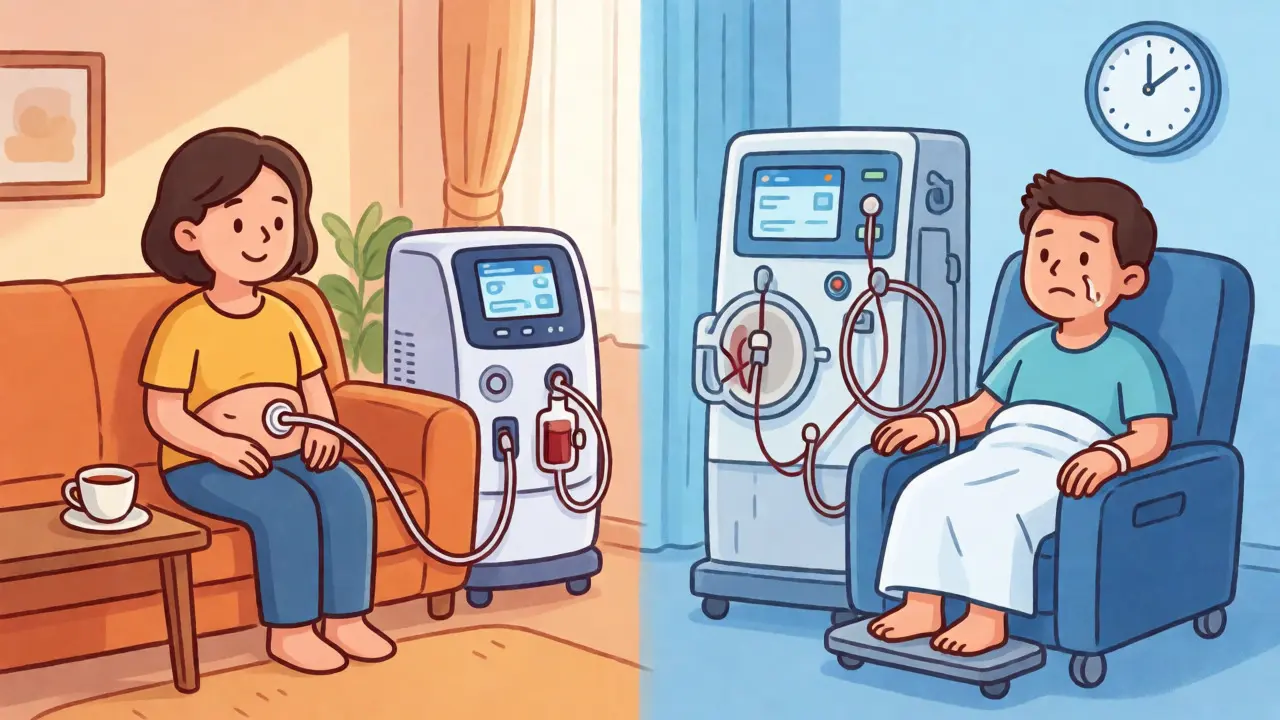
If you choose dialysis, you are signing up for a significant time commitment. There are two main types: hemodialysis and peritoneal dialysis. Most people do in-center hemodialysis. This means three sessions a week, four hours each, plus travel. That is 12 to 16 hours a week gone. Your blood is pumped through a machine that acts as an artificial kidney. It cleans your blood, but it doesn’t replicate the subtle, continuous filtering of a real organ.
Home hemodialysis is growing in popularity. In 2022, about 14% of new dialysis patients chose home care, up from 8% in 2015. Why? Because it offers more flexibility. You can dialyze while watching TV or sleeping. Peritoneal dialysis is another option where you use the lining of your abdomen to filter blood. You swap fluid bags four times a day or use a machine overnight. It avoids needles, which is a huge plus for many. However, it carries a risk of infection called peritonitis, and you need a clean space at home to perform exchanges.
| Feature | In-Center Hemodialysis | Peritoneal Dialysis | Kidney Transplant |
|---|---|---|---|
| Time Commitment | 12-16 hours/week + travel | 4 exchanges/day or overnight machine | Lifelong medication management |
| Dietary Restrictions | Strict limits on potassium, phosphorus, fluids | Moderate restrictions | Fewer restrictions |
| Survival Benefit | Baseline | Similar to hemodialysis initially | Significantly higher (68% lower death risk) |
| Quality of Life Score* | ~53.7 / 100 | ~67.2 / 100 | ~82.4 / 100 |
The Case for Kidney Transplantation
Let’s be honest: a transplant is better. The data is clear. Patients who receive a kidney transplant live longer and feel better. According to the Mayo Clinic, transplant recipients have a 68% lower risk of death compared to those on dialysis. Five-year survival rates tell the story: 83% for transplant patients versus 35% for dialysis patients. That is a massive difference.
Why does it work so well? A transplanted kidney works continuously. It balances electrolytes, manages blood pressure, and produces hormones that dialysis machines struggle to mimic perfectly. Plus, you gain freedom. No more tethering yourself to a machine. You can travel, eat more normally, and sleep through the night without alarms.
But it’s not free. You trade one burden for another. After surgery, you must take immunosuppressant drugs for the rest of your life. These medications stop your body from rejecting the new organ. Common regimens include tacrolimus, mycophenolate, and steroids. They cost between $1,500 and $2,500 a month before insurance. More importantly, they lower your immune system. You become more susceptible to infections. Skin cancer risks also go up. So, a transplant isn’t a cure-all; it’s a different kind of maintenance.
Who Is Eligible for a Transplant?
Not everyone can get a transplant. Doctors look at your overall health, not just your kidneys. If you are over 75 with severe heart issues, active cancer, or uncontrolled mental illness, you might not be a candidate. Severe heart disease, specifically an ejection fraction below 25%, is a common disqualifier because the stress of surgery is too high.
Access to transplants also varies by race and location. Studies like the RaDIANT Community Study showed that African American patients were referred for transplants less often than white patients, despite similar medical needs. Interventions helped close this gap, increasing referrals by 40% among Black patients. If you are facing ESRD, ask your doctor directly: "Am I being referred for transplant evaluation?" Don’t assume it’s happening automatically.
Quality of Life: What Does It Really Feel Like?
Numbers are great, but how does it feel to live with ESRD? Surveys using the Kidney Disease Quality of Life (KDQOL-36) tool show stark differences. Transplant recipients score around 82 out of 100. Hemodialysis patients score around 54. Peritoneal dialysis sits in the middle at 67.
Dialysis fatigue is real. Many patients report feeling wiped out after treatments. This is partly due to rapid shifts in fluid and electrolyte levels during the session. Transplant patients don’t experience these swings. They wake up feeling like themselves. Dietary freedom is another big factor. On dialysis, you watch every bite of banana or orange juice because of potassium. You limit fluids strictly. Post-transplant, these rules relax significantly. You can enjoy a wider variety of foods, though you still need to avoid grapefruit (which interacts with meds) and undercooked meats (due to infection risk).

Navigating the System and Costs
Money matters. In the US, Medicare covers ESRD regardless of age. Coverage starts in the fourth month of dialysis. If you get a transplant, coverage continues for 36 months post-surgery. After that, you rely on private insurance or supplemental plans. The cost of care is staggering-Medicare spends $35 billion annually on ESRD. That’s 7.2% of the total budget for just 1% of the population.
Because of these costs, healthcare systems push for efficient care. Preemptive transplants (before starting dialysis) are cheaper and lead to better outcomes. Yet, only 5% of patients start dialysis already on the waiting list. Why? Lack of awareness and slow referral processes. Start asking about living donors early. Friends, family, or even altruistic strangers can donate a kidney. Living donor kidneys last longer and have higher success rates than deceased donor kidneys.
Key Takeaways for Patients and Families
- Start Early: Ask for a transplant referral when GFR drops below 30, not 15.
- Consider Living Donors: They offer the best outcomes and shorter wait times.
- Weigh Time vs. Health: Dialysis takes hours; transplants require lifelong meds. Choose based on your lifestyle priorities.
- Monitor Labs Closely: Keep phosphate, calcium, and PTH levels within target ranges to protect bones and heart.
- Advocate for Yourself: Disparities exist. Ensure you are evaluated fairly for transplant eligibility.
Can you live a normal life with a kidney transplant?
Yes, most transplant recipients return to work, travel, and exercise. While you must take daily medication and attend regular check-ups, you avoid the strict scheduling and dietary limits of dialysis. Many people describe their post-transplant life as "normal," albeit with heightened awareness of infection risks.
How long do kidney transplants last?
Living donor kidneys typically last 15-20 years, while deceased donor kidneys last 10-15 years. Many patients eventually need a second transplant. Advances in immunosuppression are slowly extending these timelines.
Is peritoneal dialysis better than hemodialysis?
It depends on your lifestyle. Peritoneal dialysis offers more independence and no needle sticks, but requires daily discipline and a clean environment. Hemodialysis provides professional care three times a week but demands significant travel and time. Quality of life scores are generally higher for PD than in-center HD, but lower than transplant.
What happens if I reject my transplant?
Rejection happens when your immune system attacks the new kidney. Symptoms may include fever, pain over the graft site, or decreased urine output. Treatment involves high-dose steroids or antibody therapies. If chronic rejection occurs, the kidney fails, and you return to dialysis or await another transplant.
Can I drink alcohol with ESRD?
On dialysis, alcohol is restricted due to calorie content and fluid limits. Post-transplant, moderate consumption is usually allowed, but heavy drinking can damage the new kidney and interact with medications. Always check with your nephrologist.