
Anticholinergic Burden Calculator
Select Your Medications
Your Risk Assessment
Based on University of Washington ACB Scale
Imagine taking a pill to stop stomach cramps, only to end up with severe constipation, confusion, or a racing heart. This isn't just bad luck; it is likely a classic case of an anticholinergic interaction, where two medications block the same chemical pathways in your body, causing side effects to pile up. Many people take antispasmodics for irritable bowel syndrome (IBS), bladder issues, or muscle spasms without realizing these drugs belong to a broader class called anticholinergics. These medications work by blocking acetylcholine, a neurotransmitter that controls involuntary muscle movements. When you combine them with other common drugs-like allergy meds, antidepressants, or sleep aids-you risk creating a dangerous "anticholinergic burden" that can affect your brain and organs.
The problem is hidden in plain sight. You might see one doctor for your gut and another for your anxiety. Neither sees the full picture. By the time you are on three or four medications with anticholinergic properties, the additive effect can lead to delirium, urinary retention, or cognitive decline, especially if you are over 65. Understanding these interactions is not just about avoiding discomfort; it is about preventing serious health crises.
How Antispasmodics Work and Why They Interact
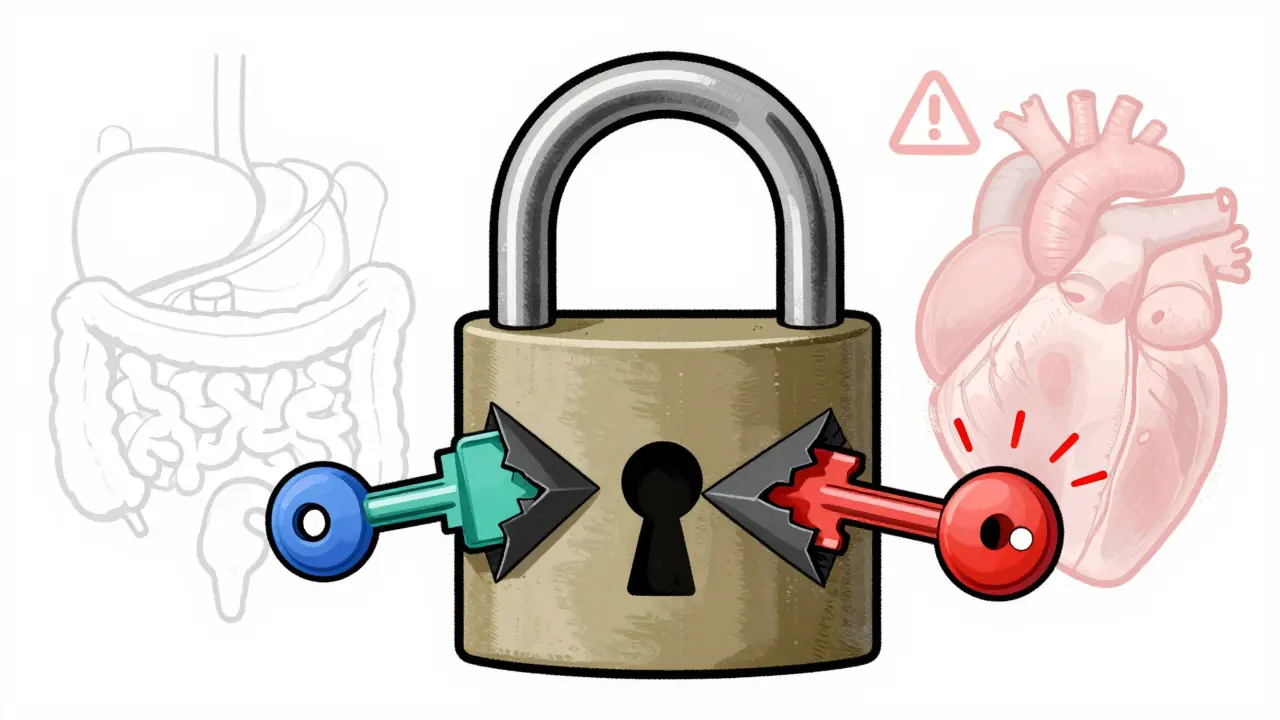
To understand why these interactions happen, you need to look at how dicyclomine and hyoscine (also known as scopolamine) function in your body. These drugs act as competitive antagonists at muscarinic receptors. Think of acetylcholine as a key that fits into a lock (the receptor) to tell your smooth muscles to contract. Anticholinergic antispasmodics jam that lock so the key cannot turn. This stops the spasms in your gastrointestinal tract, urinary tract, or respiratory system.
However, this mechanism is not selective. It does not just target the spasm in your gut. It also affects salivation, vision, heart rate, and memory processing in the brain. According to pharmacological data from StatPearls (2022), dicyclomine reaches peak plasma concentration in 60-90 minutes and has a half-life of 3.8-6.7 hours. Hyoscine has a shorter half-life of about 4 hours. Because these drugs stay in your system for hours, their effects overlap with any other medication you take during that window.
The danger arises because many unrelated medications also block muscarinic receptors. If you take an antispasmodic for IBS and an antihistamine for allergies, both drugs are fighting for the same receptors. The result is not double the relief; it is double the side effects. This includes dry mouth (xerostomia), blurred vision, tachycardia, and decreased gastrointestinal motility, which can worsen the very condition you are trying to treat.
Common Drug Combinations to Avoid
Not all interactions are created equal, but some combinations are particularly risky. Here are the most common pairs that cause problems:
- Antidepressants (TCAs and SSRIs): Tricyclic antidepressants like amitriptyline have strong anticholinergic properties. Combining them with dicyclomine can lead to severe constipation and confusion. A patient review on Drugs.com noted that adding amitriptyline for nerve pain made their dicyclomine ineffective and caused debilitating constipation.
- First-Generation Antihistamines: Drugs like diphenhydramine (Benadryl) are potent anticholinergics. Mixing them with oxybutynin (for bladder control) or hyoscine can cause significant central nervous system depression, leading to drowsiness, blurred vision, and cognitive fog.
- Monoamine Oxidase Inhibitors (MAOIs): These older antidepressants can intensify the anticholinergic effects of antispasmodics, leading to dangerously high blood pressure or severe cardiac arrhythmias. FDA guidelines explicitly warn against this combination.
- Opioid Painkillers: Opioids slow down gut motility. Antispasmodics do the same. Together, they can cause paralytic ileus, a serious condition where the intestines stop moving entirely, requiring hospitalization.
| Drug Class | Example Medication | Primary Interaction Risk | Severity Level |
|---|---|---|---|
| Tricyclic Antidepressants | Amitriptyline | Severe constipation, confusion, urinary retention | High |
| First-Gen Antihistamines | Diphenhydramine (Benadryl) | Cognitive impairment, sedation, dry mouth | Moderate to High |
| Antipsychotics | Quetiapine | Tachycardia, orthostatic hypotension | High |
| Opioids | Oxycodone | Paralytic ileus, respiratory depression | Very High |
| Other Antispasmodics | Oxybutynin | Additive smooth muscle relaxation, heat stroke risk | Moderate |
The Hidden Danger: Anticholinergic Burden
The term "anticholinergic burden" refers to the cumulative effect of taking multiple medications with anticholinergic activity. It is a major concern in geriatric medicine. Dr. Brennan M. Spiegel, Director of Clinical Research at Cedars-Sinai Medical Center, warns that concomitant use of multiple anticholinergic medications creates additive effects that can precipitate delirium, especially in older adults. The American Geriatrics Society Beers Criteria® lists several anticholinergic antispasmodics as potentially inappropriate for patients over 65 precisely because of this risk.
You don't need to be elderly to feel the impact. Younger adults often report "brain fog," difficulty concentrating, and mood changes when combining these drugs. A study cited by the Mayo Clinic found that adverse event rates for dicyclomine jumped to 69% at higher doses compared to 16% with placebo. When you add another anticholinergic drug to the mix, those numbers likely climb even higher.
Why does this matter? Because acetylcholine is crucial for learning and memory. Blocking it in the brain leads to short-term memory loss and increased risk of dementia over time. The University of Washington's Anticholinergic Burden Calculator categorizes 117 commonly prescribed medications into tiers of risk. If your total score exceeds 2, you are in the danger zone. Healthcare providers should use this scale before prescribing additional anticholinergic agents.
Signs You Are Experiencing an Interaction
Recognizing the symptoms early can prevent a trip to the emergency room. Watch for these red flags after starting a new medication or increasing a dose:
- Severe Constipation: If you haven't had a bowel movement in several days and feel bloated or nauseous, your gut motility may be too suppressed.
- Urinary Retention: Difficulty starting urination or feeling like your bladder isn't emptying completely is a sign of excessive smooth muscle relaxation.
- Confusion or Delirium: Sudden disorientation, hallucinations, or agitation, particularly in older adults, indicates central nervous system involvement.
- Blurred Vision and Dry Eyes: Your pupils may dilate excessively, making light sensitive and focus difficult.
- Racing Heart (Tachycardia): Anticholinergics block the vagus nerve's ability to slow the heart, leading to palpitations.
- Heat Intolerance: Reduced sweating can lead to overheating, especially in hot weather. This can progress to heat stroke.
If you experience any of these symptoms, do not ignore them. Contact your healthcare provider immediately. Do not simply stop taking your medications abruptly, as this can cause withdrawal symptoms or rebound effects. Instead, seek professional guidance on how to taper or switch medications safely.

Safer Alternatives and Management Strategies
Good news: you are not stuck with these risks. The market is shifting toward safer options. According to a 2022 IMS Health report, prescriptions for anticholinergic antispasmodics decreased by 22% from 2018 to 2022, while non-anticholinergic alternatives increased by 37%. Why? Because doctors are becoming more aware of the interaction risks.
For gastrointestinal spasms, consider these alternatives:
- Peppermint Oil Capsules: Enteric-coated peppermint oil acts as a natural calcium channel blocker, relaxing smooth muscles without anticholinergic side effects. Studies show it is effective for IBS symptoms with minimal systemic absorption.
- Low-Dose Tricyclic Antidepressants (with caution): While TCAs have anticholinergic effects, low-dose nortriptyline is sometimes used for visceral pain modulation. However, this requires careful monitoring and is not a first-line choice for everyone.
- Dietary Modifications: Identifying and eliminating trigger foods (such as FODMAPs) can reduce spasms without medication.
For bladder spasms, beta-3 agonists like mirabegron offer a different mechanism of action that does not involve blocking acetylcholine. For anxiety-related muscle tension, cognitive behavioral therapy (CBT) or SSRIs (which have lower anticholinergic burden than TCAs) may be preferable.
Management strategies include:
- Medication Reconciliation: Bring a complete list of all prescription drugs, over-the-counter medications, and supplements to every doctor's visit. Include herbal remedies like St. John's Wort, which can interact with many drugs.
- Use Digital Tools: Apps and online calculators can help you check for interactions. The University of Washington's Anticholinergic Burden Calculator 2.0 integrates with electronic health records to flag high-risk combinations in real-time.
- Avoid OTC Pitfalls: Read labels carefully. Many sleep aids, cold medicines, and allergy pills contain diphenhydramine or doxylamine, both of which are anticholinergics.
- Regular Reviews: Ask your pharmacist to review your medications annually. Pharmacists are experts in drug interactions and can spot potential conflicts that doctors might miss.
Future Directions in Antispasmodic Therapy
Science is working on solutions to minimize these risks. Researchers are developing peripherally-acting anticholinergics that do not cross the blood-brain barrier. These drugs would relieve spasms in the gut or bladder without affecting cognition or causing central nervous system side effects. As of late 2023, two such agents were in Phase III clinical trials.
Additionally, precision medicine approaches aim to identify genetic markers that predict how individuals metabolize these drugs. Some people process dicyclomine slowly, leading to higher blood levels and greater toxicity risk. Genetic testing could help tailor dosages to individual needs, reducing adverse events.
The American Journal of Geriatric Pharmacotherapy projects that anticholinergic antispasmodics will decline to less than 20% of antispasmodic prescriptions by 2027. This shift reflects a growing recognition that safety must come first. While these drugs remain useful for specific cases, they are no longer the go-to solution for most functional disorders.
Can I take Benadryl with my antispasmodic medication?
Generally, no. Diphenhydramine (Benadryl) is a first-generation antihistamine with strong anticholinergic properties. Combining it with antispasmodics like dicyclomine or hyoscine increases the risk of confusion, dry mouth, constipation, and urinary retention. Consider using a second-generation antihistamine like loratadine or cetirizine, which have minimal anticholinergic effects.
Are there natural alternatives to anticholinergic antispasmodics?
Yes. Enteric-coated peppermint oil is a well-researched alternative for gastrointestinal spasms. It works by blocking calcium channels in smooth muscle cells, providing relief without anticholinergic side effects. Other options include ginger for nausea and stress-reduction techniques like yoga or meditation for tension-related spasms.
What is the anticholinergic burden scale?
The Anticholinergic Cognitive Burden (ACB) Scale assigns a score from 0 to 3 to medications based on their anticholinergic potency. A total score above 2 indicates a high risk of cognitive impairment and other adverse effects. Doctors use this scale to evaluate the safety of polypharmacy, especially in older adults.
Do all antispasmodics have anticholinergic effects?
No. Traditional antispasmodics like dicyclomine and hyoscine are anticholinergic. However, newer agents like pinaverium bromide act locally in the gut with minimal systemic absorption, reducing interaction risks. Peppermint oil and certain calcium channel blockers also provide antispasmodic effects without anticholinergic mechanisms.
How long do anticholinergic side effects last?
Side effects typically resolve within 24 to 48 hours after stopping the medication, depending on the drug's half-life. Dicyclomine has a half-life of 3.8-6.7 hours, so effects may linger for a day. Hyoscine clears faster, with a 4-hour half-life. Severe cases like delirium may take longer to fully resolve, especially in older adults.